DD
MM
YYYY

PAGES

DD
MM
YYYY

spot_img

PAGES

Home Blog Page 5830

Welcome Nimbus Media Limited To Tekedia Mini-MBA

0

Just a few hours ago, we sent a batch scheduling for Tekedia Growth Hour, through which we work to deepen the playbooks of companies which have enrolled their staff in our institute. This private session offers our corporate clients the opportunity to have deeper conversations with me on growth, innovation and execution.

As that happens, our next edition is welcoming amazing companies. I am very excited to welcome Nimbus Media Limited to Tekedia Mini-MBA which begins June 7. Nimbus provides innovative and affordable platforms including digital signage that enable clients to meet their target audience while adding satisfactory value to all stakeholders.

Nimbus, we look forward to advancing with you. Welcome to Tekedia Institute. Welcome to the new school.

Scheduling Tekedia Growth Hour for Your Firm

0

My team sent this to our Tekedia Mini-MBA corporate members who sent many staff; please if for any reason they missed your firm, email them immediately.

Tekedia Institute is scheduling our growth hour where we have conversations with some corporate members in our community. This meeting is essentially to discuss at more specific levels the mechanics of business systems as they relate with business innovation and growth. We do batch this throughout the program and we have opened a link for your batch.

Go to this link and select a time slot for your company – one slot only as we will meet all the members at once (ask Admin). 

Once you do that, on the day and time, each member should visit this Zoom link  (If you have other alternatives like Microsoft Teams, please send and we will use it).

Please note that besides your members currently attending Tekedia Mini-MBA, you are free to bring other members of the company to this meeting. 

Our Lead Faculty, Prof Ndubuisi Ekekwe, personally coordinates this. His vision is that through these specific conversations, we can point out areas of growth and opportunities in the business, using some frameworks discussed in our school.

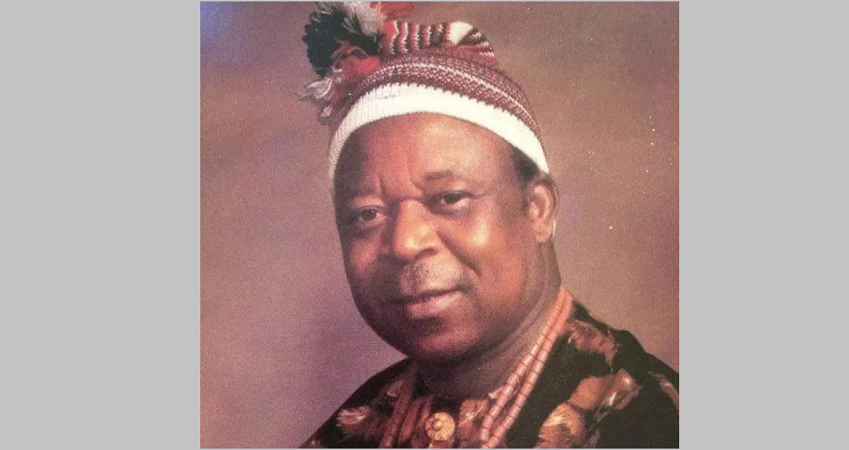
Nigeria, where are men like Sam Mbakwe and Lateef Jakande?

0

What is wrong with Imo state these days? At least in Abia state, you do not expect anything. They run for elections for years and you hope when they get there, we would have different outcomes. But nothing like that. Now, workers have to march to the government house to remind a governor to pay them in the land Sam Mbakwe (God continues to bless him) built.

Like Lateef Jakande (God bless him, he just passed), the legendary Lagos state governor, Mbakwe belonged to a generation of servant-leaders. A man who inspired Imolites to help him build Imo.

Those days as primary school kids, the principals would tell kids that the governor sent a document, asking for parents to make donations to the government. Weeks later, everyone would return with 25k, one naira, etc as the citizens donated money to help the governor on one project or another. At the end of that campaign, Mbakwe would go to IBC to thank the Imolites, and immediately call for action for the next project.

Owerri became beautiful and amazing. Imo rose to the mountaintop. Like Jakande who was building schools on every corner of Lagos, human development was rising.

People, where are men like Mbakwe and Jakande?

FEW DAYS AGO SEN. HOPE UZODINMA SAID HE HAS PAID ALL WORKERS IN THE STATE, THAT ANYONE HE HAS NOT PAID, EITHER THE PERSON IS A GHOST WORKER OR A ROGUE….. HE WENT AHEAD AND SAID, LET THE PERSON BRING HIS/HER DOCUMENTS TO GOVERNMENT HOUSE….

TODAY, THURSDAY, MARCH 18, 2020, THOUSANDS OF IMO WORKERS ARE AT THE GOVERNMENT HOUSE GATE SINGING…. “WE ARE NOT GHOSTS OOOOO”

Despite Government’s Apathy, Kenya Bitcoin Soars

0
Bitcoin is soaring

Since 2017, interest in bitcoin has been on the rise in Kenya. The East African country has witnessed tremendous growth in the use and trading of cryptocurrency, coming behind the biggest name in the African continent, Nigeria.

In 2020, Kenyan bitcoin market leaped 472 percent to $45.95 million in value, making it the second-biggest bitcoin trader in Africa after Nigeria, according to data published on Blockchain News.

Surprisingly, the increasing trading volumes came at the wake of Kenyan government’s skepticism about cryptocurrency, which was supposed to discourage Kenyans from accepting or investing in crypto coins like bitcoin.

In 2018, the Kenyan government, through the Central Bank of Kenya (CBK) issued a warning to the public about cryptocurrency investments. The warning came after nearly two years of deliberation by the authorities on how to regulate cryptocurrency in the country.

“This is to inform the public that virtual currencies such as Bitcoin are not legal tender in Kenya and therefore no protection exists in the event that the platform that exchanges or holds the virtual currency or goes out of business,” CBK said in a warning statement issued to the public.

Some of the risks mentioned by the central bank are that virtual currencies like “bitcoin are largely untraceable” which makes them susceptible to abuse by criminals in “money laundering and financing of terrorism,” and they are traded on unregulated platforms where consumers may lose their money without having any redress in case the “exchanges collapse,” and there is “high volatility in value of virtual currencies” thus exposing users to potential losses.

The CBK concluded saying: “The public should therefore desist from transacting in Bitcoin products.”

It was a campaign to totally halt use and investment activities of cryptos in Kenya, due to its volatility and government’s inability to regulate it. Kenya’s Capital Markets Authority (CMA) took part in the campaign, warning the public to stay away from bitcoin.

But despite this move by the government, Kenyans were undeterred in their resolve to embrace cryptocurrency, particularly bitcoin, taking advantage of one thing the government did not do.

Although the Kenyan government had launched a campaign to discourage the people from trading or investing in bitcoin, it did not tow the path of Nigerian government that banned regulated financial institutions from carrying out crypto-related transactions. That gave Kenyans the freedom to up their cryptocurrency game.

In mid-2020, a study conducted by blockchaincenter.net indicated that Kenya had the highest interest in bitcoin globally, which made it the most bitcoin maximalist country. Kenya had 94.7% of all crypto searches globally, indicating increased interest in the digital assets, even though the government is showing apathy.

Over the years, the fears that the CBK and CMA expressed about cryptocurrency are yet to materialize to lend credence to Kenyan government’s stand on bitcoin trading.

Exchanges, particularly Peer-to-Peer (P2P) platforms like Local Bitcoin in the East African country have established such a credible reputation that have refuted government’s claims and allayed the fears of Kenyans.

P2P crypto exchange service is a decentralized platform whereby two individuals interact directly with each other, without the need of a middleman to broker the deal. Instead, the two individuals negotiate their bitcoin selling and buying rate, and deal directly with each other.

With a pedigree of credibility that started in 2012 when it was founded, Local Bitcoin and other P2P exchanges have made the Kenyan cryptocurrency market an investment-worthy market with their escrow-secure P2P services that protects traders from scam. With its platform that supports hundreds of different payment methods, it offers amicable resolution when there is a trading dispute.

This has been followed by other significant events that happened in the Kenyan bitcoin market over the years.

In 2018, when Kenya had its first bitcoin ATM, it helped a great deal to dispel the rumors and boost the credibility of cryptocurrency. The ATM was designed to help consumers purchase bitcoins, and was connected to various exchanges, linking users to platforms offering the cheapest rates at the time of purchase. It used QR code and phone number to complete transactions, allowed users to buy a minimum of Kshs 500 and above worth of bitcoins, and sent transaction receipts to buyers immediately after.

The news spread, creating more bitcoin awareness and igniting crypto passion among Kenyans.

Blockchain Association of Kenya (BAK) said in 2019 that there has been a significant increase in bitcoin awareness despite the discouraging warning from regulators. Kenya’s self-employed and freelancers see cryptocurrency as a way of beating regulatory bottlenecks in cross-border transactions. BAK said Kenyans are using bitcoin and other coins to pay for education in Kenya and Nigeria, and purchase goods and services from China.

Bitcoin adoption has continued in Kenya that now mobile money platforms such as M-pesa offer crypto vending services.

For businesses, adopting cryptocurrency as means of payment also means embracing technology and protecting themselves from many vices such as theft.

“I decided to adopt the use of cryptocurrency because there was so much theft in my business,” Tony Mwongera, chief executive of Healthland Spa in Nairobi which started in 2018 to accept bitcoin told reporters. “So I said, let me use a way that can be safe, secure and I can also embrace technology.”

Mwongera’s statement underscores the push behind the wide adoption of cryptocurrency in Kenya, which has defied all obstacles to record significant growth.

The growth has continued to attract further interest. Twitter founder and CEO, Jack Dorsey, who is a bitcoin enthusiast said on March 9, that the proceeds from the sale of his first tweet as an NFT, which will end March 21, and has now gone above $2.5 million, will be converted to bitcoin under GiveDirectly charity organization, and Kenya and other African countries will be beneficiaries.

As the African Continental Free Trade Area (AfCFTA), a new bloc created by the African Union to enable economic integration within the continent, takes effect, Kenya’s bitcoin market is expected to witness further increase as many businesses and individuals will count on blockchain to facilitate cross-border payments.

The Africa’s TelFintechs – Airtel Africa MoMO Raises $200M At $2.65B Valuation

0

MTN went all the way when it partnered with Mastercard to link “MTN MoMo (Mobile Money) wallets, to help consumers and merchants engage with brands and businesses abroad through digital commerce, extending their reach to an international marketplace and unlocking a host of opportunities.” That deal made MTN a superb-fintech in 16 countries and with millions of users. In the digital space, one of the most important factors for success is demand. With millions within MTN’s space, the path to the castle is paved with gold.

In the race to win large shares in the growing fintech and e-commerce space in Africa, mobile network providers are taking to partnerships with existing payment companies.

In what seems like a step to expand the MTN MoMo partnership, MasterCard and MTN on Tuesday announced a strategic partnership to enable millions of consumers in 16 countries across Africa to make global e-commerce payments safely and securely.

The partnership is to be facilitated through a MasterCard virtual payment solution linked to MTN MoMo (Mobile Money) wallets, to help consumers and merchants engage with brands and businesses abroad through digital commerce, extending their reach to an international marketplace and unlocking a host of opportunities.


With that sword drawn by MTN, Airtel Africa is out with its own playbook: US-based investment firm TPG will invest $200 million in Airtel Africa’s mobile money business, a division which the company aims to take public in the next four years, Airtel said”. The Airtel Africa mobile money business is valued at $2.65 billion which makes it one of the biggest fintech companies in Africa. Nigeria’s Flutterwave and Interswitch are each valued around $1 billion. If MPESA is a separate company within Kenya’s Safaricom, it would command even more.

The transaction values Airtel Africa’s mobile money business at $2.65 billion on a cash and debt free basis. The Rise Fund will hold a minority stake in AMC BV upon completion of the Transaction, with Airtel Africa continuing to hold the remaining majority stake.

“The transaction is the latest step in the Group’s pursuit of strategic asset monetization and investment opportunities, and it is the aim of Airtel Africa to explore the potential listing of the mobile money business within four years,” Airtel said.

As I have noted in Harvard, the telcos are capturing new revenues via these mobile money operations, from their one oasis (the telecommunication operation). Provided they continue to deepen and win users on the telco operations, they have opportunities in the fintech units. Yet, to manage regulatory challenges, they may go orthogonal via some convoluted partnerships. If they can do disintermediation within their networks, some fintechs will have to change their playbooks.