DD
MM
YYYY

PAGES

DD
MM
YYYY

spot_img

PAGES

Home Blog Page 5838

Finding Value In The Age of Perception Demand

1

In the last two weeks, I have been using different brands in Tekedia Growth Hour – private Tekedia Mini-MBA corporate session – to explain why brands must evolve on how they engage with markets. In the past, the mantra was this: I will just go and execute, and the numbers will do the talking. Interestingly, you can execute, but the numbers will not help you. Simply, how you make money and where you make money are more important than the actual numbers on the balance sheet and P&L.

Tesla is a car company which sells “software subscription” and emission credits, and makes all its competitors look lost, even though most are delivering “better automobile numbers”; Toyota sells more than 10 million cars than Tesla, but Tesla is valued at close to 2.5x. 

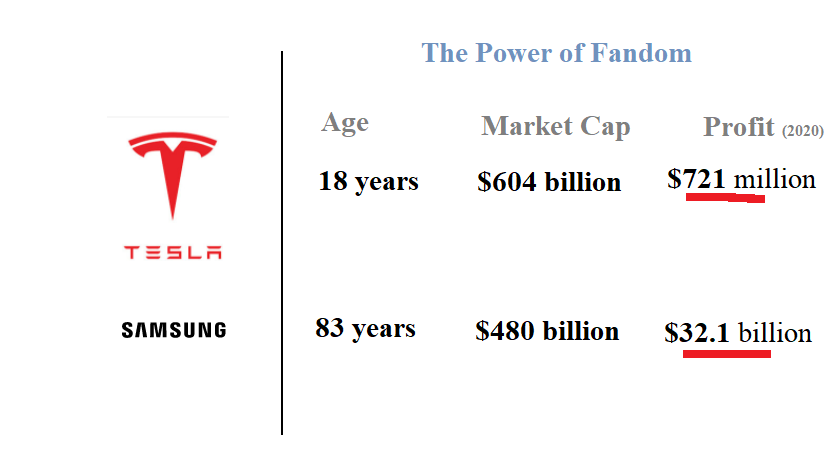
Think about it: how can you make a profit of $721 million and worth over $100 billion more than someone who made a profit of $32 billion? It is called perception demand and it is shaping everything in business.

It took Tesla 4x less years to reap a higher market cap than Samsung

Data calculated and analyzed by Finbold indicates that it took electronic vehicle manufacturer Tesla at least four times less years to amass a higher market capitalization than South Korea’s electronic giant Samsung. By March 23, 2021, Tesla was only 18 years old with a market capitalization of $643.10 billion, which is higher than 83-year old Samsung with a cap of $484.19 billion.

Tekedia Live Tomorrow – Effective Project Management by PMI Future 50 Recipient

0

Friendly reminder that our Project Management faculty will be leading Tekedia Live tomorrow as follows:

Thur, March 25 | 7 – 8.00pm WAT | Effective Project Management – Taiwo Abraham. PMP, Program Manager, Horizant Canada. Zoom link in the Board.

Taiwo is Project Management Institute (PMI)’s Future 50. The Future 50 recognizes emerging project management professionals. He also serves on a global committee of the PMI. Yes, as you prepare for those PMP exams, note that Taiwo, a Tekedia Institute Faculty, is among those shaping the evolution of the global project management domain.

The Intel’s Pivot And Unveiling “Amazon AWS of Chipmaking”

1

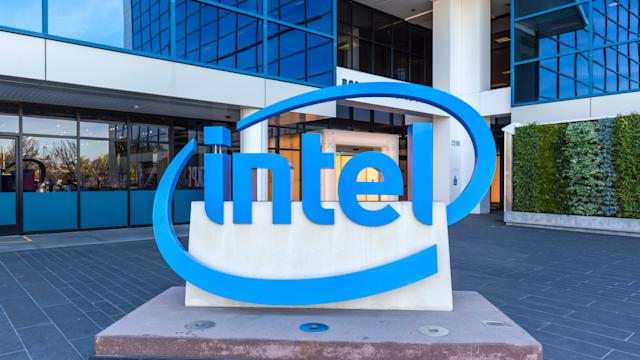
Intel Corp was legendary for decades as it pursued its strategy of designing microprocessors and manufacturing them in-house, with no space for allowing others to use its manufacturing facilities. That integration served well and Intel became the category-king, winning over competitors like AMD. But Intel has faced a double whammy: losing the edge on design to Nvidia (and Qualcomm, AMD, etc) on GPU and mobile chipsets, and lagging on manufacturing to TSMC and Samsung.  There was a frontal attack from TSMC when its contract chip making was bent to disintermediate Intel.

Today, anyone with access to a credit card can design chips and send them to TSMC to fabricate (yes, TSMC is the equivalent of Amazon Web Services (AWS) of chipmaking; AWS is a leader in public cloud computing). Intel’s  moat on manufacturing has been challenged and its  castle lays bay. The ability to fabricate  via TSMC without investing in foundries is a new level of disruption for Intel.

Apple had taken its Mac chips from Intel, and would design and fabricate with possibly TSMC or Samsung since other players like GlobalFoundries remain weak. Other companies will do just that. Provided there is TSMC to make the chips after circuit designs, most companies will go all the way to designing internally and sending to TMSC to fab. This was not possible in the past as TSMC was weak, but over the last few years, TSMC has evolved to be as good as Intel, if not better.

Simply, Intel has to solve TSMC flank attacks even as it looks for ways to defend its design castle from AMD and Nvidia. If not, the Apple Mac effect will become more common. This week, we are learning that Intel’s new boss has a plan: Pat Gelsinger will build new factories at the cost of $20 billion, and most importantly, open its factories to outside customers. Simply, Intel has gone TSMC, and can compound the physical network effects TSMC has been enjoying running. Expect a new dimension of competition in the industry.

Intel Corp has announced plans to greatly expand its advanced chip manufacturing capacity. The new chief executive said the plans involve spending as much as $20 billion to build two factories in Arizona and to open up its factories to outside customers, Reuters reported.

The move by CEO Pat Gelsinger on Tuesday aims to restore Intel’s reputation after manufacturing delays sent shares plunging last year. The strategy will directly challenge the two other companies in the world that can make the most advanced chips, Taiwan’s Semiconductor Manufacturing Co Ltd (TSMC) and Korea’s Samsung Electronics Co Ltd.

In Intel’s history, this is a quintessential moment. Intel will have more ways to capture value, and can actually run a better business, knowing that investments on the factories must not depend on the excellence of Intel designs. Yes, even if its product generation flops, there is a likely chance that one of its manufacturing customers is winning. So, if Intel has a customer A and that customer does well in the market, Intel’s chip revenue will track that customer’s even if Intel’s own design did not fly.

That is what Samsung does: whenever Apple does well, Samsung Electronics does well since it makes some of the most sophisticated Apple chips. That has been the cornerstone of Samsung One Oasis and Double Play strategy. Intel just joined the party.


The Need to Review Nigeria’s Unemployment Status

0

How do Nigerians define unemployment?

According to Investopedia, unemployment is “the term for when a person, who is actively seeking a job is unable to find work.” Oxford Advanced Learner’s Dictionary defines it as “the state of not having a job.” In the terms of Wikipedia, unemployment is “the state of being without any work yet looking for work.” Judging from these definitions, one can say that when a person is unemployed if he does not have a paid job, say the regular 9-5 jobs. This may be the reason the rate of unemployment is said to be very high in Nigeria.

But, does unemployment truly mean a lack of paid jobs as the above definitions imply?

According to Organisation for Economic Co-operation and Development (OECD), unemployment refers to when “persons above a specified age {are} not being in paid employment or self-employment but {are}currently available for work during the reference period” (as cited in Wikipedia). With this definition, one can see that so long as a person has a source of income, he is employed. This also means that a person doesn’t have to work for hours daily to be classified as employed.

So, why has the self-employed not been duly categorised as employed?

It may interest you to know that Nigerians, including government officials, have categorised jobs into three: temporary jobs, permanent jobs, and businesses. Permanent jobs are usually identified as government-paid works, jobs in multinational companies, and any other one that “pays well” and has some levels of job security. Only people in this type of job are considered employed by Nigerians. Businesses, on the other hand, stand for people that voluntarily decided to be their own bosses. This category, however, does not cover people, who are victims of circumstances and those that have no physical office.

Temporary jobs, also known as casual jobs, are never considered as employment in Nigeria. This is the type of job people say, “There is no work so he is managing this one.” The workers here also brand themselves as unemployed. For instance, a bricklayer will be quick to tell you, “I no get job o” because he hasn’t seen himself as having one. However, casual workers change their employment status by themselves when they begin to earn handsomely from their work. By then, they group themselves as entrepreneurs and register among the employed.

So, is it proper to brand casual workers as unemployed? Answers are left for you to provide.

There are also a group of persons that have never been identified as belonging to the labour force. Lots of money comes into their hands but they are not even gazed upon as employed or even having sources of income. These are those that belong to the informal sector of the economy.

Has anyone else wondered if motor-park touts (aka agebro) are regarded as employed by the authorities? Yes, Nigerians tell them to “go and look for jobs”, but has it occurred to you that they actually have jobs? What about beggars, street hawkers, medicine vendors (in buses), bouncers (in clubs and parties), and the rest of them? What employment status is created for them? Ok, shall we look at the illegal professions such as prostitution, cybercrime, fraud, pickpocket, illicit drug peddling, and so on? If we keep morals and the law aside, can we say these people are unemployed? What status defines them? Do we still believe they are victims of circumstances or that they chose to be in those professions? No matter how we look at them, these people have sources of income. Since one does not have to deal in legal jobs to be defined as employed, people doing the above-mentioned jobs are not unemployed.

The essence of this essay is to draw the attention of the concerned authorities to the modalities used in measuring unemployment in Nigeria. The essay hopes to make it known that the number of Nigerians categorised as unemployed may actually have jobs that put food on their tables, clothes on their backs, and roofs over their heads. The essay hopes to influence Nigerian authorities and other stakeholders to review and redefine unemployment in the country.

Jack Dorsey’s Tweet Sold for $2.9m, Augmenting the NFT Frenzy

0
Twitter CEO

Twitter boss Jack Dorsey sold his first tweet as an non-fungible token (NFT) for nearly $3 million on Monday.

The chief executive officer of Malaysian blockchain service Bridge Oracle paid Twitter Inc’s co-founder $2.9 million to buy his first tweet.

Sina Estavi paid for the non-fungible token in cryptocurrency Ether, according to Cent, the operator of auction website Valuables where it was sold. Jack Dorsey, also Twitter’s CEO, announced the sale of the 15-year-old tweet — “just setting up my twttr” — on March 6.

“This is not just a tweet!” Estavi tweeted after his purchase. “I think years later people will realize the true value of this tweet, like the Mona Lisa painting.”

NFT’s popularity has soared in 2021, kicking off a new digital sensation that replicates conventional art.

The function consists of digital art — anything from pictures to sports highlights, with a certificate of authenticity that runs on blockchain technology. Each NFT has its own blockchain-based digital signature, which serves as a public ledger, allowing anyone to verify the asset’s authenticity and ownership.

When a non-fungible token piece is sold, nothing about it changes in a traditional or digital sense. For instance, if a picture or a video clip is sold as an NFT, it doesn’t need to be moved from its original owner’s platform to indicate that it has been purchased. Instead, what changes is the certificate of ownership which is transferred from the original owner to the new owner using the blockchain ledger.

While blockchain keeps track of who has ownership of the file, the art, tweet video, song whatever the file contains would still be distributed digitally after it has been sold.

Dorsey had on March 9, said he would donate the proceeds of the NFT to GiveDirectly, a charity organization helping people impacted by COVID-19 in Africa. And tweeted he has done that after the auction.

The NFT was auctioned on the Valuable platform owned by the US-based company Cent. It was facilitated using the cryptocurrency Ether for 1630.5825601 units.

The NFT frenzy has caught up with the big guys in tech, from Elon Musk to Mark Cuban, and there have been big numbers coming from the auctions.

Beeple sold a piece of work for $69 million earlier in March, while auction house Sotheby’s said it would start a collaboration with digital artist Pak.

Musk’s partner and musician Grimes made around $6 million in a digital auction selling some of her original artwork as NTFs.

Dorsey’s NFT’s auction which started early March received many bids, but Estavi was on top of them with a $2.5 million first bid, which was Dorsey’s asking price, before he increased his bid to $2.9 million.

The NFT’s craze is baffling; economists are yet to unravel the push behind it. There is no consensus yet on whether the value of a commodity is tied to the labor required to produce it or to the degree it meets its purchaser’s needs.

However, the frenzy may be ushering in a revolution that will help creators to make more money from their works and protect ownership rights.