DD
MM
YYYY

PAGES

DD
MM
YYYY

spot_img

PAGES

Home Blog Page 5864

The Union Bank’s Robinhood and Disintermediation of Rainmakers in Banking

0

Union Bank has unveiled an investing app, M36 – “a digital investment platform offering a range of investment opportunities for investors of all levels through a self-service app. In addition to its robust investment product offering, M36 provides access to investment advisors; life-essential products and services and a 24-hour lifestyle concierge, combining simplicity and functionality to deliver a seamless user experience”. Simply, the core aspects of banking are increasingly being digitized. 

When you consider the performance of Goldman Sachs as a public company, you will realize that serving just the 1% may not deliver the alpha since massive reduction in information asymmetry makes relying on extremely expensive financial products a bad strategy. So, today, GS has joined the mainstreet, selling credit cards, looking for $1,000 investors, and more. Since that pivot, the stock performance has been visible. This is what technology does – it reduces marginal cost, removes information asymmetry and makes it possible to serve many customers, optimally. Volume matters because the  unbounded supply of information has diminished the value of old-century proprietary reports. 

You do not need GS to know that a startup’s app is used by 1 million users; just check Google and Apple app stores! You do not need GS to know the traffic on that website as Alexa has that. So, business models which are built on exclusivity and constrained supply of information are facing challenges.

Union Bank desires to become Nigeria’s Robinhood, the extremely popular investing app in the United States. Of course, I am not sure M36 is free as we have for Robinhood. But no matter what, the bank is looking at the scale playbook.

Why am I writing this? I am coming back to strategy. M36 does not have anything with Union Bank on it, from branding perspective.  From color to name, there is nothing Union Bank. In other words, it wants to present this app as an emergent fintech in the market, to swim alone, and possibly thrive. Contrast that with Wema Bank’s ALAT which reminds you that it is from Wema. 

As digital technologies disintermediate rainmakers, banks would be looking for new playbooks. The goal for most would be to be at the edge of the smiling curve and the implication is that everyone wants to be a fintech! At the end, customers will win because better products will emerge in the market.
Congrats Temidayo Ajayi for Completing Tekedia CBIS Certificate Program

2

One of the most amazing works we do in Tekedia Institute is challenging companies and innovators to take time and think through their businesses or functional areas. While the Tekedia Mini-MBA is like your typical college program [courses], the capstone-certificate program is like your “final year” college project [research]. Most companies in our program register their team members and assign them topics to research.

And most founders, innovators and growth makers use the opportunity to articulate their playbooks, putting things down on paper. You need those before we can approve the work and award our Certificate.

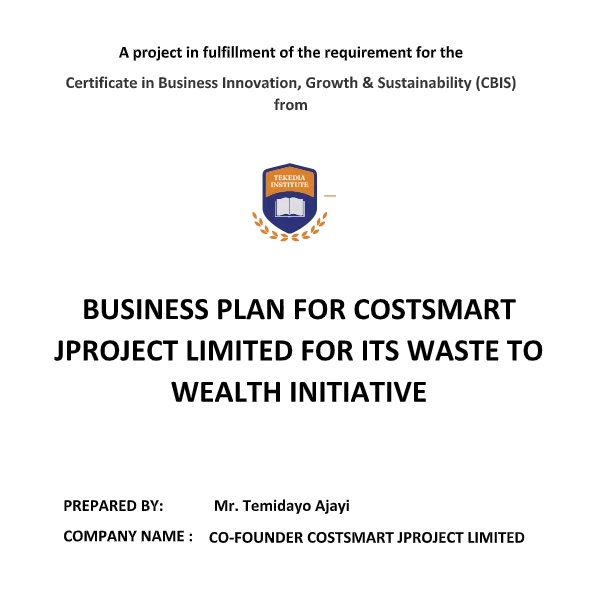
Ladies and Gentlemen, join me to congratulate  Temidayo Ajayi mMBA for completing his Certificate in Business Innovation, Growth & Sustainability (CBIS). For this, he worked on A “BUSINESS PLAN FOR COSTSMART JPROJECT LIMITED FOR ITS WASTE TO WEALTH INITIATIVE”.

Congrats Dayo. Now, make this a business.

“Today’s Africa is much better than … years ago when we started Alibaba” Jack Ma [Video]

1

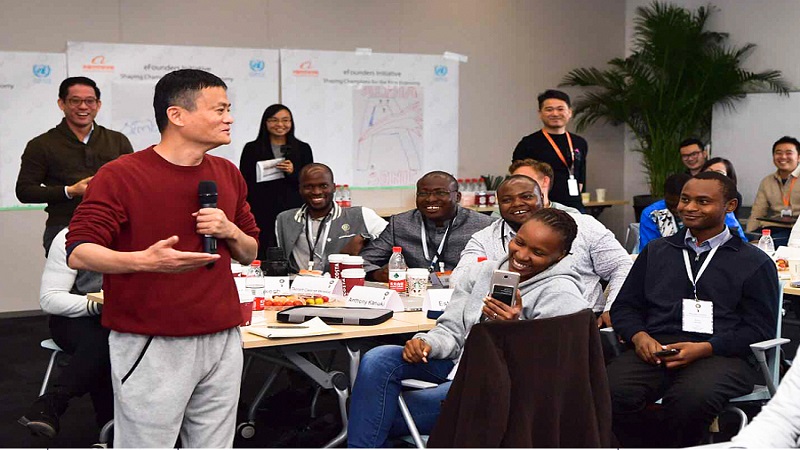
“Today’s Africa is much better than [21] years ago when we started Alibaba” Jack Ma

This is from the ecommerce pioneer in China, Jack Ma, making it known that the environment in Africa today is far better than what he had when he founded Alibaba in 1999. Do we still have more excuses?

Let’s Co-Create That Future With You

0

Before you conclude your corporate training arrangement, Tekedia Institute wants an opportunity to explain what we do for companies. We come with humility knowing that this is your business and you understand it, but within that humility, we bring new insights that would help you thrive. We help you innovate and make growth happen. We want to speak with you – click Ndubuisi Ekekwe and inmail me (my profile is set to receive all messages, connected or not).

You can also email us here . Let’s co-create that future with you.

As UK Regulators Go After Apple, African Union Needs To Wake Up

1
African Union

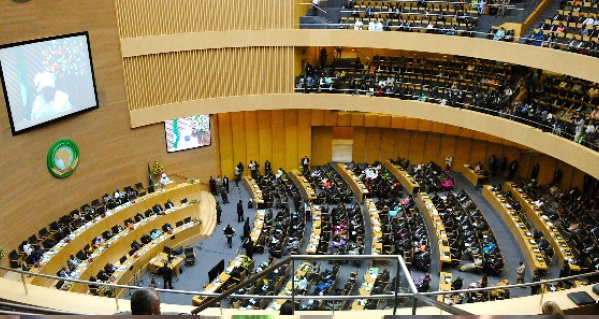
It is always a mystery – why are European courts penalizing oil companies which are operating in Africa, and making tons of money in the process, when the REAL victims in Africa get nothing? Yes, EU and UK courts have made $billions on fines, penalties, etc, in the last two decades, on cases associated with how major oil  majors have operated in Africa. In all these fines, none of the fines made their ways back to Africa. So, it works like this: do wrong in African oil fields, and prosecutors will go after you, and you settle with the state via a penalty; case closed. The citizens of the oil fields get nothing!

Why am I referring to this? The UK and European regulators have opened their high voltage searchlights on the activities of big technology companies like Facebook, Apple, Amazon, and Google, and are taking tons of money as fines and penalties. India has joined the fray. China would not even allow you in. The latest is that UK regulators are after Apple for its iOS policies; Apple is really mean, I must say, when you see how it guards its in-app payment gateway to ensure it collects those taxes.

The UK’s Competition and Markets Authority (CMA) has launched an antitrust inquiry into Apple, due to many complaints coming from developers about the iPhone maker’s App Store.

Apple released the iOS 14 late last year, the newest version of its operating system which came with new policies that have become the center of controversy between the tech giant and developers.

Apple only allows developers to release iPhone and iPad apps through its iOS smartphone platform. Apart from the rigorous process it takes for apps to be approved on iOS, Apple charges 30% on in-app transactions. The CMA said it may amount to unfair practice by the Cupertino firm.

“Millions of us use apps every day to check the weather, play a game or order a takeaway,” Andrea Coscelli, chief executive of the CMA said.

“Complaints that Apple is using its market position to set terms which are unfair or may restrict competition and choice – potentially causing customers to lose out when buying and using apps – warrant careful scrutiny,” he added.

But as these jurisdictions push these entities, from India to the UK, EU to China, and beyond, Africa Union has been frozen. I mean, someone needs to tell AU that Africa has software developers affected by Apple’s policies, and they deserve to be supported and protected. The UK and EU are constantly fighting for their people and companies, African Union needs to do the same.

The digital economy is here and we cannot just give up our rights so that Europe and North America will become the judges, defendants and prosecutors. Someone in Ethiopia needs to push for changes and I am confident that these technology companies will listen because we have the numbers.

The most important thing here is how someone can tell Apple to allow alternative payment systems. If that happens, most of our fintechs will have opportunities. If the UK is fighting for that, AU needs to join that movement. 

UK Regulator Launches Investigation into Apple Store Policies