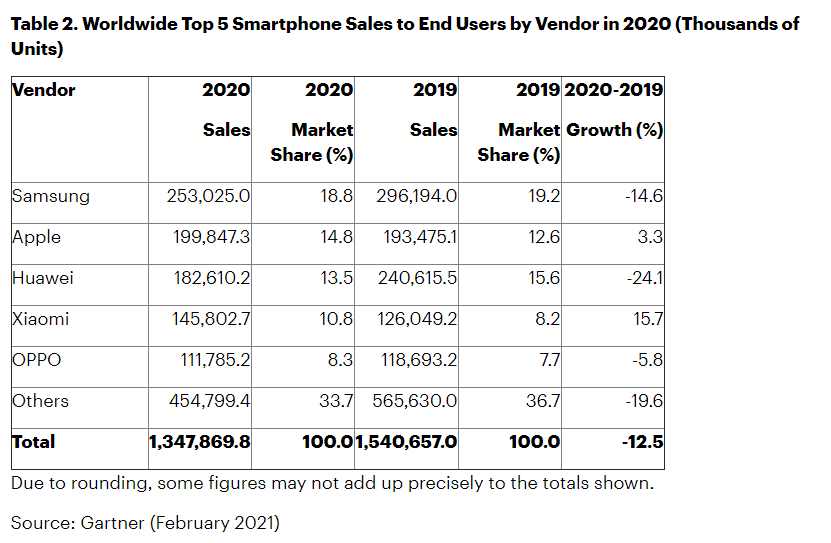
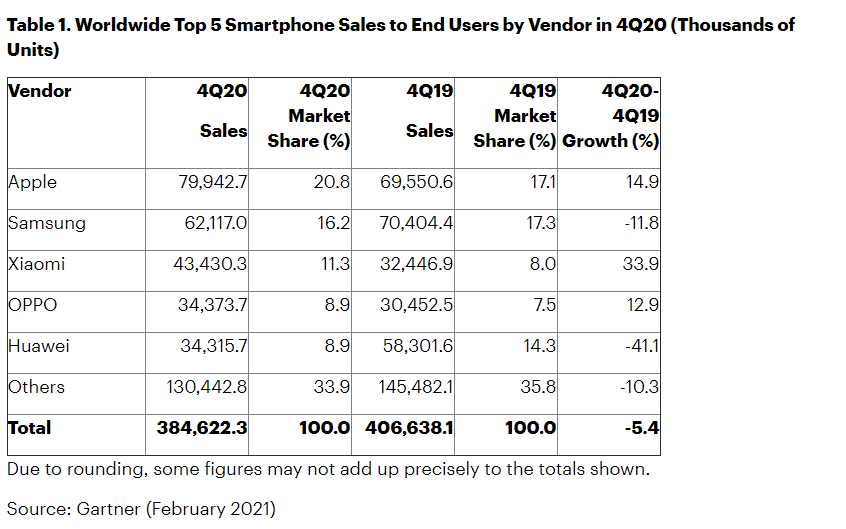
From LinkedIn News: “Apple sold more iPhones than any other smartphone maker in the world in the final quarter of 2020, according to Gartner data, securing the top position for the first time in four years. The tech giant sold nearly 80 million iPhones in the fourth quarter, marking a 15% increase over the same period in 2019, despite an overall 5% decline in worldwide smartphone sales. It’s a sign that the new 5G iPhone 12 series “is a hit in the marketplace,” according to CNBC, heating up competition with Samsung, which sold more smartphones over the full year”.
Yes, the king is back. Apple became top smartphone vendor in 4Q 2020 and surpassed Huawei to move into No. 2 spot in full year 2020 results. According to Gartner, a consultancy, the launch of the 5G iPhone 12 series helped Apple record double-digit growth in the fourth quarter of 2020. Apple surpassed Samsung to retake the No. 1 global smartphone vendor spot. The last time Apple was the top smartphone vendor was in the fourth quarter for 2016.
Huawei had ruled the game before the massive attack from the US government. It may be a while before the company recovers. They have since diversified into pig business.
So, with no option, Huawei has moved into pig farming and improving the mining sector with technologies. Certainly, those ones do not require the precision required in modern smartphones. But this game is not over: China is planning to ban the export of rare earth metals to the United States as a retaliation for cutting Huawei out of the global chip supply chain. If that happens, you can indeed make the designs but will struggle with materials to fabricate the chips. Of course, unlike CAD systems, the US has options on the materials which can be sourced from other areas, though at a higher cost.
Tekedia Career Center at the Hub is Tekedia Institute’s resource ecosystem for our members to access relevant career development support. We connect Tekedia partners with our members and network of alumni. Our goal is to create a strong network of relationships with learners, alumni, recruiters, and all stakeholders in our Institute. We will use this handle to handle mentoring, career guidance, career support, resume review support, etc, to members.
Please like the page – https://hub.tekedia.com/career . It is built to support career aspirations. In Tekedia Institute, career is not just about jobs. But development, fulfillment and more. We are bringing experts to manage the handle, and deliver a career hotline in a modern school.
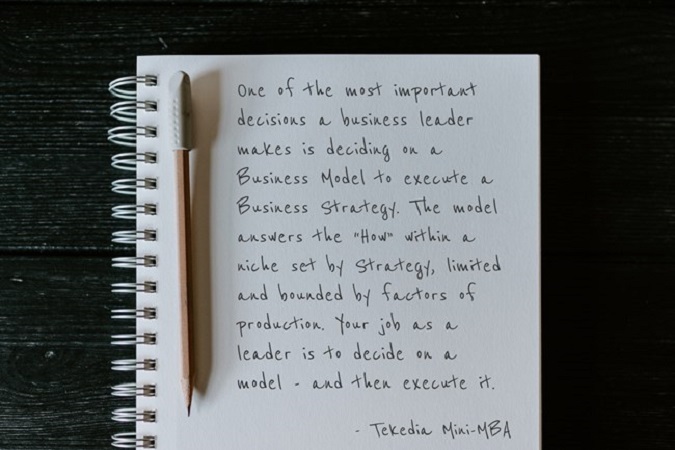
One of the most important decisions a business leader makes is deciding on a Business Model to execute a Business Strategy. The model answers the “How” within a niche set by Strategy, limited and bounded by factors of production. Your job as a leader is to decide on a model – and then execute it.
Our Tekedia Mini-MBA Week 3 focuses on Business Model & Transformation. I sent this to our team to use for the weekly email blast. It is to remind us that deciding on a business model to execute a business strategy is indeed the most important decision a company can make. Yes, within many paths on that HOW question, you have to commit!
In the classnote, I listed dozens of different business models. You have to commit to one or more of them, but not all. But with experience, you know what works. Yes, of the top 20 technology companies in the world, at least 15 are united by one business model. That should tell you what is working in the web era.
Enjoy the near 50-page course note – and the videos, from me, and our Faculty members. Tekedia Institute wishes you a great profitable week.
Greetings. We have posted course materials for Tekedia Mini-MBA Edition 4. Please log into the portal to access Week 3 under LESSON – https://school.tekedia.com/. Week 3 focuses on Business Model & Transformation with the following modules:
Business Models and Strategies – Prof Ndubuisi Ekekwe
Building Your Business Financial Models (templates included) – Michael Olafusi, Financial Analyst Fellow Brightmore Capital
Execution – Business Objectives and Technologies, Nnamdi Onyebuchi, CEO, Weco Systems Group
Please check the Program News, under LESSON (click MY PROFILE, click the Course) for the Zoom links and other important class updates. Our Zoom sessions are scheduled as follows and exclusively for members:
Tue, Feb 23 | 12noon – 1pm WAT | Agile Methodology – Bola Adesope, Sonnet Insurance
Thur, Feb 25 | 12noon – 1pm WAT | Design Thinking – Aderinola Oloruntoye, Workforce Group
Sat, Feb 27 | 7pm – 8.30pm WAT | General Topic, Fintechnolization Playbook (MTN, Mastercard, MPESA, Paystack) – Ndubuisi Ekekwe
Meanwhile, if for any reason you are still having login issues, please go to this page and watch the videos we have put together. Within the week, we are always updating members at hub.tekedia.com to minimize many emails; please go there and sign-up.
This makes sense – “More than two weeks after the ban on cryptocurrency in Nigeria, the Central Bank of Nigeria (CBN) and the Securities and Exchange Commission (SEC) have agreed to collaborate and conduct research with a view to finding ways of regulating the Cryptocurrency market.”
Yes, do intellectual analysis before policy making. By doing that, we will avoid these own-goals. We scored own-goals on border closure and nothing changed before we reversed the call. My prediction is that the bitcoin and broad cryptocurrency ban will be reversed soon as it was done on irrational impulse. Now that the Central Bank of Nigeria (CBN) wants to do what apex banks do – collect data, consult, analyze and make decisions – it will get to the root cause, and deal with issues instead of freezing a sector which it has absolutely no control over, globally. I predict that within 6 months from now, this ban will be reversed. What do you think?
More than two weeks after the ban on cryptocurrency in Nigeria, the Central Bank of Nigeria (CBN) and the Securities and Exchange Commission (SEC) have agreed to collaborate and conduct research with a view to finding ways of regulating the Cryptocurrency market.
They said this at a virtual lecture organized by the Association of Capital Market Academics of Nigeria (ACMAN) in Abuja on Sunday, the News Agency of Nigeria (NAN) reported.
ACMAN is a network of researchers in capital markets, especially lecturers in the country’s universities.
More than two weeks after the ban on cryptocurrency in Nigeria, the Central Bank of Nigeria (CBN) and the Securities and Exchange Commission (SEC) have agreed to collaborate and conduct research with a view to finding ways of regulating the Cryptocurrency market.
They said this at a virtual lecture organized by the Association of Capital Market Academics of Nigeria (ACMAN) in Abuja on Sunday, the News Agency of Nigeria (NAN) reported.
ACMAN is a network of researchers in capital markets, especially lecturers in the country’s universities.
Timi Agama, Head of Department, Registration, Exchanges, Market Infrastructure and Innovation Department of SEC described the cryptocurrency market as an air that could currently not be caged or regulated.
He noted that cryptocurrency was a market of about two trillion dollars which could not be ignored. According to him, the world cannot be moving forward and we will be static.
Agama said that although the SEC or the capital market would not accommodate or encourage any fraudulent practices that allowed for money laundering, cryptocurrency was a market to look into.
“There is a lot of investment moving into the cryptocurrency market and the tendency is that it will reduce the amount of investments in the stock market.
“Part of the desire of the SEC even in the future is to provide a regulatory framework that will take care of all these challenges that we have seen internationally and the entire world is grappling with in terms of cryptocurrency and digital assets.
“For us at the SEC and capital market, it is something to look at, the world cannot be moving forward and we will be static, no.
“It is important for us to review, understand, appreciate and introduce regulations that will guide the movement of the market in this direction.
“A market that has opportunity for ICOs, derivatives, is not a market we can ignore.
“ It is our desire that we do more work, collaborate as regulators and analyze to make sure that we provide a level playing field where Nigerians, international investors and whoever is interested in this space will be comfortable and happy.
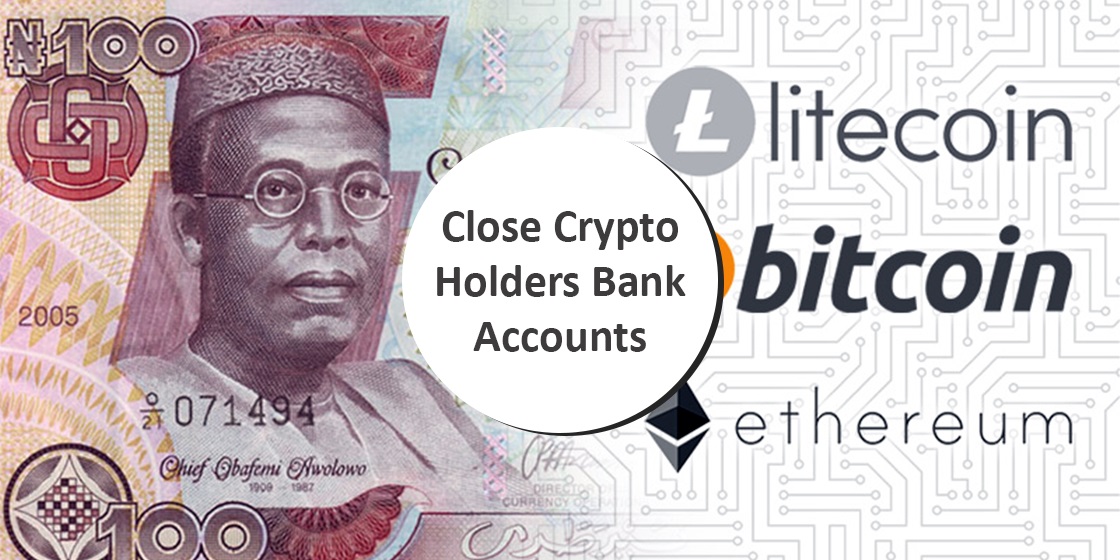
Nigeria has banned crypto from its banking systems
“I hope that in doing that, we are going to be able to drive foreign portfolio investment, Foreign Direct Investment (FDI) into this country and build our capital market,’’ he said.
Kevin Amugo, Director, Financial Policy and Regulation Department of the CBN, said the ban was to enable it to work together with stakeholders in addressing the anonymity of the technology.
Mr. Amugo said the CBN would continue to develop policies that would optimize the opportunities of the financial technology industry and promote the economic landscape of the country.
He said that consumer protection was a huge challenge in the cryptocurrency market as it was speculative and no economic fundamentals drove its price.
“The committee on cryptocurrency headed by the National Security Adviser and members are EFCC, NFIU, SEC, NAICOM and all regulators to strategize and come up with a national position not a monetary policy position.
“We have issued our initial draft but COVID-19 impeded our efforts to conclude our actions.
“Because of interests crypto has regenerated, I think it is high time we reconvened and ensure that we take a national position, so that what is issued is a national position not a CBN’s or SEC’s position.
“We are not stifling fin-tech operations, CBN has been proactive in granting licenses to fin-tech operators.
“The way forward for us will be continuous engagement, ongoing consultations and academic research.
“We are engaging internationally and locally to ensure that we come out with a harmonized and implementable position,’’ he said.
Gbite Oduneye, Chief Executive Officer of the Eagle Global Market (EGM) Lagos, appealed to the CBN and SEC to look at ways to safeguard against money laundering in the market.
Mr. Oduneye appealed to regulators to find ways to regulate the cryptocurrency market as there were prospects in it.
“We understand the difficulties in the market but the regulators must organize and look for ways, organize and make people operate the way they want in the market.
“Every new innovation will come with a number of difficulties but we have the innovative minds, great regulators that can enable us to take advantage in this,’’ he explained.
This development reveals that the CBN did neither research nor consultation with stakeholders before it made the decision to ban the operation of crypto exchanges.
In reaction, analysts have described the decision as “irrational,” saying that it tells terribly about the regulator.