DD
MM
YYYY

PAGES

DD
MM
YYYY

spot_img

PAGES

Home Blog Page 5877

India Unveils New Regulatory Rules for Social Media

0

On Thursday, India announced new rules aimed to expand regulation of contents on social media. In the past weeks, the Asian country has been at brawl with social media platforms over its attempt to influence what they allow to stay up on their platforms.

India has been making legal requests for swift removal of posts and sharing of details on the originators of messages from social media platforms.

The new rule, called the Intermediary Guidelines and Digital Media Ethics Code, will require big social media companies to establish a grievance redressal mechanism and within three months appoint new executives to coordinate with law enforcement.

Social media platforms have been under intense pressure from the public and right groups to up their fight against hate speech and disinformation. At the same time, they are facing criticism for banning users and removing offensive posts. Many have described it as “censorship” and attempt to “suppress free speech.”

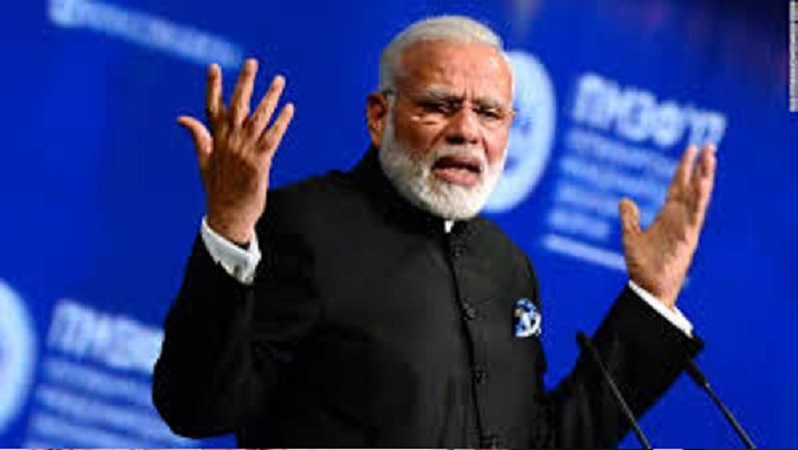
India minister for information technology, Prasad said the Intermediary Guidelines and Digital Media Ethics Code will make social media more responsible and accountable.

Under the rule, social media firms are required to remove content within 36 hours of receiving a legal order. They are also under obligation to assist in probes or other cyber security-related incidents within 72 hours of receiving a request. The rule added that they must disable any post depicting an individual in a sexual act or conduct.

Part of it mandates social media firms to reveal the originator of a message or post when legally ordered, according to Prasad.

Twitter and Facebook, which are among the major social media networks in India said they welcome the new rules but will have to study them. “The details of rules like these matter and we will carefully study the rules,” Facebook said in a statement.

“We believe that regulation is beneficial when it safeguards citizen’s fundamental rights and reinforces online freedoms,” said Twitter spokesman.

Attack on free speech

In early February, India was going hard on its protesting farmers and cut off the internet as the demonstration intensified. At the heat of the protest, when the rest of the world appears to be minding their business, American singer Rihanna tweeted: “Why aren’t we talking about this?” #FarmersProtest. She posted the message with the picture of the protesting farmers.

The tweet drew global attention to the protesting 250 million farmers, prompting unprecedented backlash. In response, Indian ministry of external affairs released a statement criticizing celebrities and others for their “neither accurate nor responsible comments.” Top ministers tweeted in response to Rihanna’s tweet, saying it’s part of propaganda threatening India’s unity.

India went further to ask Twitter to remove 1,178 accounts tweeting about the protest, alleging they are Pakistani accounts working to fuel the discord. Earlier in January, the government had sent a list of 257 tweets and accounts that it wanted blocked in India to Twitter.

Twitter had obliged, removing the accounts and blocking the tweets. But a heavy backlash forced the social media platform to reverse its decision with an explanation.

“Twitter is guided by principles of transparency and empowering the public conversation. If we receive a valid legal request about potentially illegal content on Twitter, we review it under the Twitter Rules and local law. If the content violates Twitter’s Rules, the content will be removed from the service.

“If it is determined to be illegal in a particular jurisdiction but not in violation of the Twitter Rules, we may withhold access to the content in the location only. In all cases, we notify the account holder directly, so they’re aware we’ve received a legal order pertaining to the account. Our goal is to respect local law while protecting our foundational principles of free expression,” Twitter spokesperson said.

This response appears to be the reason India is making the new rules to give legal backing to government orders against social media accounts and posts.

Social media is huge in India

The Intermediary Guidelines and Digital Media Ethics Code will also require video-streaming platforms like Netflix and Amazon’s Video to classify content into five categories based on user’s age. As part of the rules, online news media will be regulated, with the ministry of information and broadcasting creating an oversight system.

Concerns are growing that India, by making these rules, is towing the path of China in suppressing free speech.

Apar Gupta, the executive director at advocacy Internet Freedom Foundation, said the new rules posed risks to freedom of speech.

“To fix the problems in these sectors the government has adopted an approach which carries the risk of political control and censorship,” he said.

Another backdrop to the new rules is the Digital India quest, an estimated $250 billion internet economy. It is part of Prime Minister Narenda Mordi’s program geared toward transforming India into a digitally empowered society and knowledge economy. The program has seen big names in the American tech industry, like Google, Facebook and Amazon rushing to India to establish businesses and secure a share in the huge market.

The companies have policies supporting freedom of speech which is going to be endangered by the new rules.

But India has a booming population that offers a huge market to the tech industry. With many of the American firms already banned in China, another big market in Asia, the Intermediary Guidelines and Digital Media Ethics Code are presenting them with a fight they cannot afford to pick with India now. Their vulnerability means the new rules will likely go into force without contest.
A Nation And Rising To The Mountaintop; Nigeria’s Paradox of Largest Exporter.

1

Since Adam Smith wrote his classic, in 1776, the Wealth of Nations, to upend the mercantilist system and set forward the basic foundations for modern classical economics, we have seen corporations come and go. The core pillars of productivity and division of labour have been the tenets in the organization of firms which thrived. The free market system provided the cement mortars in states.

Andrew Carnegie lived. John D. Rockefeller lived. Bill Gates is living. Jeff Bezos is living. Nigeria needs builders to fix our paralyses as Naira fades as a currency.

Very painful indeed: the Central Bank of Nigeria (CBN) has made it official – Naira has lost more grounds to the US dollars. According to the Vanguard, Godwin Emefiele, the apex bank governor, “who spoke at a summit on the economy by Bank CEOs on Friday, said the drop in crude oil earnings and the associated reduction in foreign portfolio inflows significantly affected the supply of foreign exchange into Nigeria”.

His words: “In order to adjust for the decrease in supply of foreign exchange, the naira depreciated at the official window from N305/$ to N360/$ and now hovers around N410/$.”

These men are icons of their generations, pursuing the noble cause of entrepreneurial capitalism – aligning assets and knowledge to provide services where fictions exist between those that want and those selling. Corporations exist to simplify that interplay of demand and supply, and these legends and others thrived in providing solutions that eliminate most of the frictions. They pursued different levels of innovations for scale using productivity, specialization and uncommon vision.

The path to the rise of Naira will not come from the headquarters of the Central of Nigeria, but from factories, offices, etc, across Nigeria. It goes beyond using financial quick-fixes to pursue ephemeral mercantilist system,  instead of  looking for ways to efficiently form, combine and recombine factors of production, to create innovations, aspiring to be the BEST, regionally and globally, without relying on pure mercantilism!

Nigeria exports more than the world, per capita – but unfortunately, its exports are its future. It has exported most doctors, engineers, etc to America, Canada, and the United Kingdom, per capita. The path to the mountaintop must reverse that. Watch this video.

Inaugural Address by Ndubuisi Ekekwe, President, LinkedIn Nation

For The Rise Of Nigeria, Transition From Inventive Society to Innovation Society

2
Nigerian leaders

I have explained the simple difference between a nation like the United States and another like Nigeria. America is an innovative society, Nigerian is an inventive society. There are so many ideas in the latter but hardly enough products and services to match those ideas. 

Until nations transmute from being inventive to innovative, they will remain poor. No nation has become rich without that translation. Yes, always remember that most of the pioneers of the most fundamental aspects of physics, mathematics and chemistry died poor. They were bright people – but they ended up poor. Why? They lived in societies of ideas with no products because there was no transduction from invention to innovation.

For that I mean, they had ideas on shelves but no mechanism to create products from them. Then, something happened, and a transduction took effect and poor societies evolved to become rich. Unfortunately, not all societies followed that trajectory. And all societies must go through the transduction process to emerge.

Until pioneering entrepreneurs emerge with the energy of entrepreneurial capitalism unleashed in markets, creating products and services, to fix Nigeria’s frictions, Nigeria will not advance. Yes, Nigeria will not advance until its market systems evolve. The path to the mountaintop goes through markets, not state capitals, because all the promises of politicians must be translated within the ordinance of market principles.

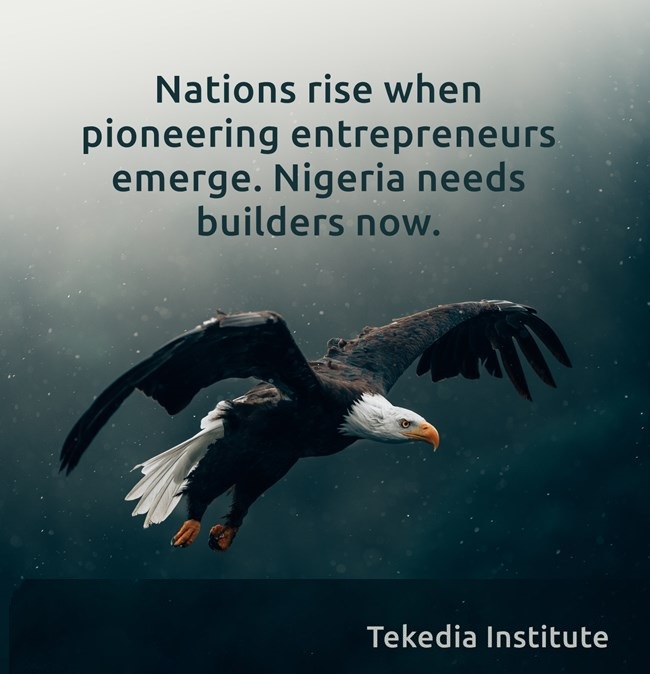
Nations rise when builders emerge. True political leadership will come when politicians become aware that without markets, all their actions are hopeless. And how will that leadership come? Building processes that engineer competition and efficiency, unlocking comparative advantages across states.

Imagine a nation, #believe.

The Need for Grass-Root Political Leadership Enlightenment in Nigeria

0
Nigerian children attend independence day celebrations in Lagos in October 1, 2013. Nigeria's president Goodluck Jonathan said he had formed a panel tasked with laying the ground for a national dialogue to tackle contentious issues such as religious tensions and the sharing of oil wealth during an address marking the 53rd anniversary of Nigeria's independence. AFP PHOTO/ PIUS UTOMI EKPEI (Photo credit should read PIUS UTOMI EKPEI/AFP/Getty Images)

You might be surprised to hear that many Nigerians, including this writer, don’t know who their leaders are and the various duties they, the leaders, owe their communities. If you ask some people who they know as their elected leaders, they will mention the president, the governor, and maybe one or two ministers that feature often in the press. Ask them who is representing them at the National Assembly or the State House of Assembly, and you will find out they have no idea. Bring the query down to the local government chairmen, councillors, and even ward leaders and they will have nothing to tell you. This is how uninformed Nigerians are when it comes to matters about political leaders and their duties.

The way Nigerians have little knowledge of the political leaders they elected is still the way they have little or no knowledge of the duties these officers owe them. It is difficult to decide which political officer has which job to do. Because of this, the majority of them ignore their responsibilities since no one will hold them accountable. Of course, it’s when you know what someone is supposed to do that you can hold him responsible for failing to do it.

But here you are, you don’t know what your governor is supposed to do. You are unsure of the boundary that separates the obligations of your local government chairman and those of your councillors, that is, if you know who they are or even remember they exist. You hear about constituency allowance but you don’t even know what it stands for and what it is meant to do. They tell you there is a security vote that is shared, monthly, to all the states of the federation, depending on their level of security challenges, but the federal government is expected to send troops to protect states. What about the members of State House of Assembly? Are they not meant to handle projects in communities? What bills have they passed that will make life easier for your community? Do you even follow their activities? All these make one ask, “What exactly are the responsibilities of each of these political office holders?”

Speaking on the issue of security, just recently, the former Chief of Army Staff, Tukur Buratai, said that the military alone cannot handle insurgency and banditry without the collaboration of the state governments. According to him, forest reserves are under the control of state governments and that it was the duties of these governments to keep the forests safe. Until Buratai said this, many of us do not know state governments have roles to play in the battle against insecurity. But come to think of it, what are the governors doing with security votes if the military has to secure their states?

Election cycle

Coming to cases of infrastructure and poverty alleviation, whose responsibility is it to provide the basic needs of the people? Which responsibilities are allotted to local government chairmen, state governors, senators, and the federal government? What projects are senators funding with constituency allowances given to them? Does anyone even know the projects they presented before they were allocated the money? How will people know which of their leaders to call on when their roads go bad, winds remove the roofs of their schools, they lack drinking water, or need electricity? Who exactly is in-charge of what?

Nigerians, in the hands of political leaders, are like the proverbial public goat that died of hunger. Since the populace do not know who to hold responsible for any particular work, they, the politicians, ignore their basic duties. Nigerians have been searching in faraway places near them. It is high time they found out who is responsible for which duty so they can ask them to do their jobs. It is time for grass-root governance to begin. But it can only become successful if there is proper enlightenment on political leadership.

Tekedia Advanced Diploma – Immediate Access Upon Payment

0

You asked for it, and we have made it available – the ability to begin learning at Tekedia Institute more regularly instead of waiting for the Tekedia Mini-MBA editions. The Advanced Diploma programs in Tekedia are here to deepen your knowledge and accelerate your business missions.

Each track of Tekedia Advanced Diploma programs runs for 8 weeks (2 months). A track has no Live Zoom component, and it is completely self-paced and online. Upon payment, you have immediate access to start learning. The program includes class notes, flash cases and videos, but no webinar. Cost: Each track costs $100 or N36,000 naira per participant. 

DLSM Advanced Diploma in Logistics & Supply Chain Management
DBIS Advanced Diploma in Business Innovation, Growth & Sustainability
DBPM Advanced Diploma in Project Management
DIRM Advanced Diploma in Risk Management
DIBA Advanced Diploma in Business Administration
DIDT Advanced Diploma in Innovation and Design Thinking
DIAT Advanced Diploma in Accounting, Auditing, Forensics & Taxation

Session runs on our NEW portal and boards.

The following are payment options for Tekedia and Fasmicro services:

A sample certificate

How To Select Between Mini-MBA & Diploma: Tekedia Mini-MBA is comprehensive but each of these tracks are more deepened in their specific areas. For example, while we have a course on Risk Management in Mini-MBA, the Advanced Diploma in Risk Management has more courses which are not in Tekedia Mini-MBA. I will recommend Tekedia Mini-MBA if you do not have specific interests in each of the tracks. But where you want to deepen the capabilities in a specific tract, then Tekedia Mini-MBA and the diploma would be a good idea, or just the diploma.

Part A – General for All Tracks

In the first 4 weeks, all the tracks take the same courses.

 Week Part A – Common to All Tracks
1 Innovation & Growth:

Growth and Innovation of Firms

Digital Transformation, Innovation & Strategy

2 Business Systems & Processes:

Grand Playbook of Business & Entrepreneurial Pursuit

Process Improvement and Operations Management

3 Business Model & Transformation:

Modern Business Models and Growth Execution

Effective Organizational Change Management

4 Design and Innovation Lessons:

Innovation Lessons (5in5, Global, Africa)

Product Design and Packaging

The electives for the tracks are presented on this slider-table.


Tekedia Academic Programs