DD
MM
YYYY

PAGES

DD
MM
YYYY

spot_img

PAGES

Home Blog Page 5885

[Zoom Session] Attend Tekedia Mini-MBA Account Setup – Scheduled Wed, Feb 10

0

Good People, we will have two Technology Setup sessions as follows tomorrow:

Topic: Setting Up Your Tekedia Mini-MBA Account in School Portal

Date: Wed, Feb 10

First session: 12 noon WAT

Second session: 7pm WAT

Zoom Link: Go here https://www.tekedia.com/live/

Both sessions are the same; attend only one if you have not fully set up your account. We will simply go through this video. 

Hopefully, by the end of tomorrow, everyone will be settled for learning.

Let me apologize for the complexity. We used to have a boring one-page board which worked but many said we needed a proper learning management system. Now, we did, but some members need help to get familiar with it. On the link above, we have provided a video for the 2-minute setup.

IMF Urges Nigeria to Further Devalue Naira, Asks CBN to Stop Playing the Role of Main FX Intermediator

3

The article IV of the International Monetary Fund (IMF) report on Nigeria’s economy, published on Monday said the Nigerian economy is at a critical juncture.

“A weak pre-crisis economy characterized by falling per capita income, double-digit inflation, significant governance vulnerabilities and limited buffers, is grappling with multiple shocks from the COVID-19 pandemic,” the report said.

It added that Policy adjustment and reforms are urgently needed to navigate this crisis and change the long-running lackluster course.

The IMF thus made key policy recommendations that cut across many sectors of the economy but with emphasis on Exchange Rate Policies and revenue mobilization.

In the short run, the recommended policy mix is heavily tilted toward exchange rate adjustment given constrained capacity on the monetary and fiscal fronts. In the medium term, revenue mobilization is a top priority, the report stated.

The IMF estimates that the naira was overvalued by 18½ percent, urging the federal government to once again devalue the naira to reflect the current economic realities of Nigeria.

The report reads:

Exchange Rate Policies: A more transparent and market-based exchange rate policy is imperative to instill confidence. IMF recommends establishing a market-clearing unified exchange rate with the near-term focus on allowing greater flexibility and removing the backlog of requests for foreign exchange.

Structural Policies: Significant reforms are underway in the fuel and power sectors as well as in governance and business regulations. Steadfast implementation in these areas along with broad market and trade reforms to open up the economy are needed the long-running policy of a stable exchange rate has produced limited benefits. The stabilized exchange rate policy, combined with administrative control of imports, has led to periods of real effective exchange rate appreciation interrupted by episodes of forced large adjustments.

IMF’s latest estimates suggest an overvaluation of the real effective exchange rate (applied on the current level of the official exchange rate) of 18½ percent, with the external position assessed as substantially weaker than what is consistent with fundamentals and desirable policy settings. Exports remain highly undiversified. Past current account surpluses resulting from commodity price booms have made limited contributions to the build-up of buffers as sizable unrecorded outflows have continued.

Gross reserves levels are significantly below the IMF’s ARA metric and projected to remain so in the medium term. External financing is projected to rely on Foreign Direct Investment, issuance of Eurobonds and some drawdown of reserves as portfolio flows are expected to only gradually recover over the medium-term.

A clear exchange rate policy is needed to instill near-term confidence and bring long-term gains. The current system, with its multiple windows and untransparent rules of FX allocation, creates uncertainties for the private sector. The unification of various rates into one market-clearing rate, including the dismantling of the legal, institutional and operational underpinnings of the various windows, is needed to establish policy credibility and a decisive break from the highly interventionist regime. It would also eliminate existing Multiple Currency Practices (MCPs.

An appropriately valued exchange rate would foster domestic industrialization more effectively than through a system of FX rationing where winners are chosen and protected, and relative prices do not move. A clear exchange rate policy would also help attract larger capital inflows, including foreign direct investments, which have significantly dropped in recent years.

Exchange rate flexibility may have short-term negative impacts, particularly on inflation, which should be mitigated.

IMF estimates suggest that a 10 percent devaluation could push the inflation rate up by up to 2.5 percentage points, but the impact could be less if the parallel market rate is already reflected in the prices of imported goods. Experience from other countries that have undergone exchange rate adjustment generally shows less pass-through and often a more transient impact on inflation.

Some targeted support is likely needed to minimize the impact on the poor. The corporate sector and possibly the banking sector could also face significant impact given that a third of banking sector loans are denominated in FX. Strict and pro-active enforcement of existing prudential measures to limit FX loans to only those with FX earnings should limit this impact.

The exchange rate recommendations

The IMF recommended a multi-step approach to exchange rate unification and flexibility. While such an approach carries some implementation and credibility risks, it seems appropriate given the need for monetary policy to support the economy and steps needed to move from the current system to a well-functioning exchange rate system. At the same time, it will be crucial to follow through with reforms without delays and not to backtrack, to ensure maximum effect. Likewise, clear and timely communications of the FX strategy to the private sector are also important to instill confidence.

Greater adjustment in the exchange rate should be allowed to facilitate CA adjustment (mostly through import compression in the very near term due to limited non-oil exports), eliminate the parallel market premium, remove and prevent further build-up of the FX backlog, and increase non-CBN participation in the I&E market window. To prevent excessive overshooting, the authorities should be prepared to increase interest rates if needed. Higher interest rates will also be needed if inflation accelerates.

All exchange rates should be collapsed into one well-functioning market exchange rate with the CBN conducting FX auctions through a pre-announced schedule following the immediate steps. This should be accompanied by a gradual removal of import restrictions and export repatriation requirements and the phasing out of CFMs.

Medium-term steps: The CBN should step back from its role of main FX intermediator in the country, limiting interventions to smoothing market volatility and allowing banks to freely determine FX buy-sell rates.

IMF advised contingency planning to address large downside risks. Further BOP pressures, through renewed capital outflows and/or weaker oil prices, will make exchange rate flexibility and unification even more urgent. In such a situation, it may be inevitable to temporarily tighten monetary policy to temper possible overshooting of the exchange rate.

Securing external fiscal financing including through borrowing from international financial institutions and issuance of Eurobond would bolster foreign exchange reserves. All available policy options should be considered to support macroeconomic stability and adjustment.

However, the Nigerian authorities did not agree with the need to adjust the naira.

The Nigerian government told IMF that the major burden of macroeconomic adjustment does not need to be borne by the exchange rate, as current pressures are not related to the exchange rate per se but rather reflective of global developments. In their view, investors exited most emerging markets at the onset of the pandemic and will only return when the public health crisis has waned, and global economic activity has picked up.

They further emphasized that Nigeria’s stable exchange rate has contributed significantly to price stability, one of the most enduring objectives of macroeconomic policy. Allowing further depreciation would add to rising inflation. They also emphasized that they are addressing the FX backlog and noted that turnover in the I&E window is on an upward trend.

But as Bloomberg noted, the disagreement underscores the policy challenges for the administration that has resisted growing calls from some businesses and state governors hurt by an artificially overvalued currency to liberalize the exchange rate. It also conflicts with market expectations for further devaluations after the central bank cut the value of the naira by nearly a quarter last year when oil prices collapsed during the pandemic.

Jesmin Rahman, the lender’s mission chief to Nigeria, said in an interview before the release of the report that the IMF’s recommendation is gradual but clear and has multi-step exchange-rate reforms, “so that everybody knows where Nigeria’s going, which is often more important than what you do in terms of devaluation,”.

Inflation in Nigeria reached a three-year high of 15.8% in December and while a 10% currency devaluation could push the rate up by as much as 2.5 percentage points, the impact would be less if the parallel exchange-market rate is already reflected in the prices of imported goods, the IMF said.

The central bank’s financing of the budget deficit must be phased to reduce inflation and higher interest rates may also be needed, the lender said. The central bank held its key rate for a second straight meeting in January.

The IMF warned that slow economic growth coupled with high inflation could continue to fan social discontent, which spilled over last year with protests against a police unit accused of torture and assassinations.

A slow rollout of Covid-19 vaccinations in Africa’s most-populous nation could threaten the IMF’s projections for economic growth of 1.5% this year, from an estimated 3.2% contraction in 2020.

Rahman said adequate vaccine roll out will Nigeria to speedy economic recovery.

“Nigeria has a way to go before ensuring adequate vaccine doses for its population, which will be critical to economic recovery. The IMF expects the economy to return to pre-pandemic era next year.”

The Nigeria’s Electric Vehicles Vision

0

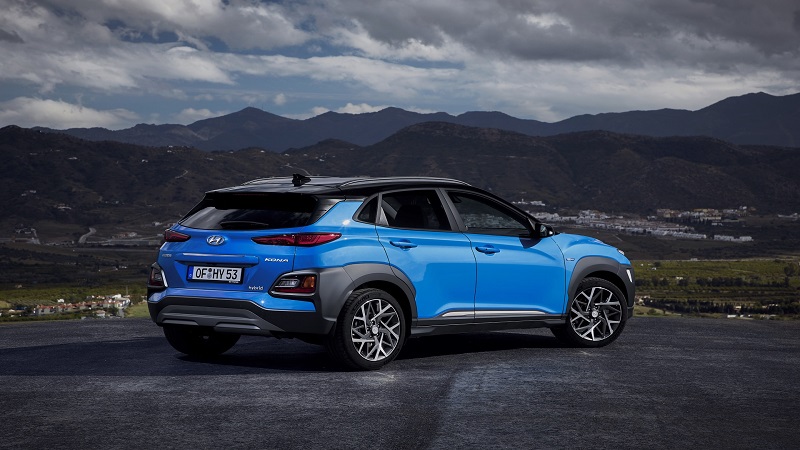
Our nation wants to join the electric vehicles (EV) crusade. Yes, Nigeria, working with Hyundai Kona, will assemble EV  in Lagos. The big news is this line: “The federal government says there is an ongoing plan to make 30% of vehicles being used in Nigeria electric by 2025”. Of course that will not work since Nigeria has to assemble electricity first. But as that debate rages, I want to share this video from a former military leader: Gowon wanted to make cars in Nigeria. 

I support President Buhari’s vision on EVs but I will support him more if he has a better plan on electricity! Nigeria’s problem now is not switching hydrocarbons for electrons to move vehicles. Our #1 issue is that we do not have electrons to power our industry. The national grid is my second backup in the East and with that, there is no excitement on EV yet.

But who knows: electricity can be commanded but now only for EVs! After all, it is Nigeria where flyovers are homes for many while some order London pizzas via British Airways.

Nigeria’s 2025’s 30% Electric Vehicle Target and the Challenge of the Ban Culture

Nigeria’s 2025’s 30% Electric Vehicle Target and the Challenge of the Ban Culture

0

On Feb. 5, Nigeria unveiled Hyundai Kona electric vehicle assembled in Lagos, south west of the country. It came at a time when the oil-rich country is struggling to find its footing in the global push to eliminate combustible vehicles.

The federal government says there is an ongoing plan to make 30% of vehicles being used in Nigeria electric by 2025.

According to the director-general of the National Automotive Design and Development Council (NADDC), Jelani Aliyu, Nigeria will henceforth join the course to embrace cleaner energy vehicles and the Hyundai Kona is just the beginning.

Aliyu said that Stallion Group, which spearheaded the innovation back in 2020, invested as much $300 million in Nigeria. He urged Nigerians to embrace technology as it is helping other countries to create wealth through innovations.

While the Kona EV was welcomed in Nigeria as it is the first of its kind, many questions have been cropping up regarding the sustainability of an EV industry amidst oil concentrated economy, poor infrastructure and business-hostile government policies.

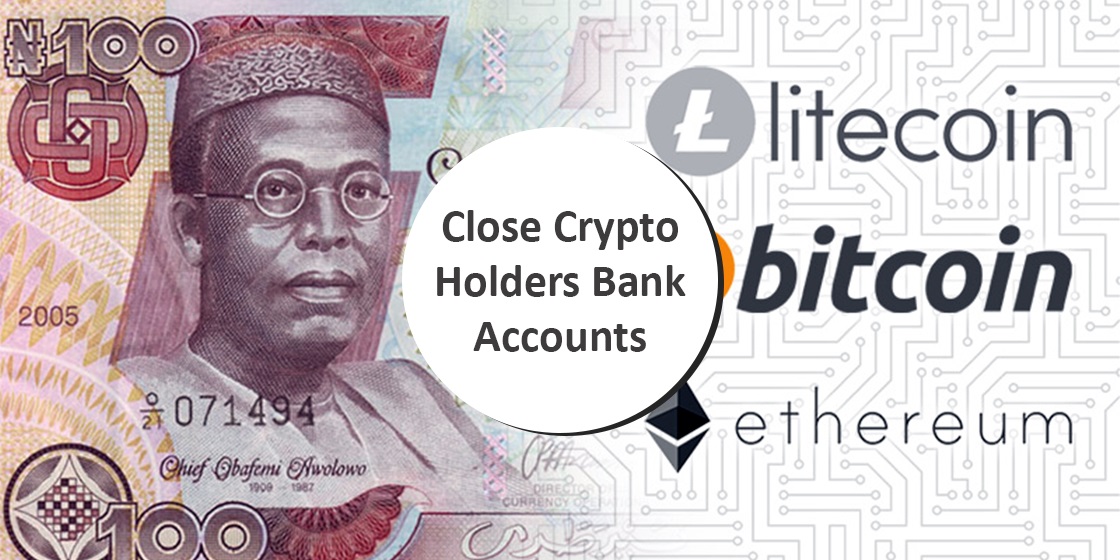
Nigeria has banned crypto from its banking systems

The concern, which rightly emanated from perceived anti-innovation recent events and Nigerian government’s default attitude of ban toward innovative developments in the country that comes with a challenge, reveals how Nigerians and investors see government’s promises on tech and innovative unconventional businesses.

In 2019, Nigeria’s Eight Assembly had a rowdy session debating the Electric Car Bill introduced by Senator Ben-Murray Bruce. The aim of the Bill had been to phase out combustible vehicles in Nigeria by 2035, replacing them with electric vehicles in tandem with global clean energy goals.

The Bill didn’t make it to the second reading, it was considered irrelevant because Nigeria is an oil producing nation. Among the senators who opposed the Bill was the then deputy senate president Ike Ekweremadu, who argued that increase of electric vehicles will be detrimental to our oil-based economy.

“Besides, in economic sense, we are an oil producing country. So, we should do everything possible to frustrate the sale of electric cars in Nigeria to enable us sell our oil,” he said.

In 2018, Lagos State started to witness an inflow of motorbike ride-hailing startups. Lagos has a crazy traffic situation, and the startup idea was developed to help commuters beat it using more flexible means of transport – motorcycles.

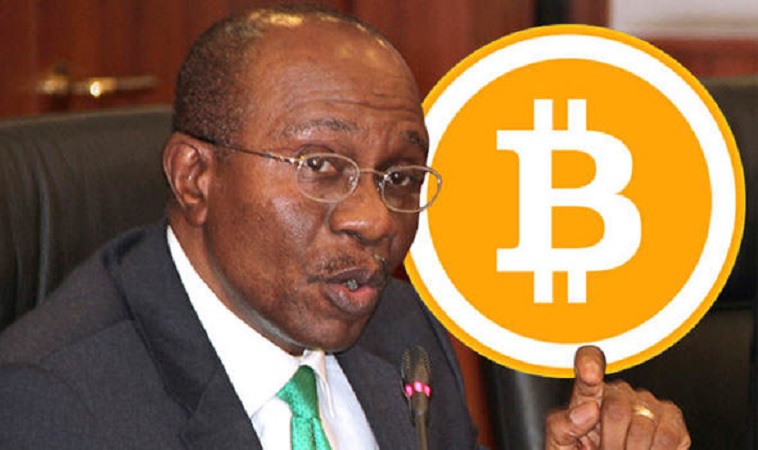
Nigeria’s Central Bank boss

By 2019, Lagos-based motorbike ridesharing services were witnessing a boom with a series of mouth-watering fundraising rounds. Gokada, one of the leading companies in the space, raised $5.3 million in May, marking a breakthrough in the bike-hailing ecosystem and setting a trajectory that others would soon step into across Africa.

A month later, Gokada’s competitor, MAX.ng raised $7 million, OPay’s ORide, another leading player in the field raised $120 million, all to expand the motorbike ridesharing innovation across Africa. TechSci study projected a collective $9 billion revenue pool in the industry by 2021 then.

But in January 2020, the companies met their untimely death following the decision of Lagos State government to ban the operation of motorbike services. It was a shocking development that did not only kill the innovative dreams, but also set a dangerous precedent that investors have become wary of because there is no end in sight as it keeps touching every tech-based field.

Therefore, when the Central Bank of Nigeria (CBN), on Friday released a circular directing all regulated financial institutions in Nigeria to close all crypto operating accounts with immediate effect, it did not surprise many.

“When I saw this news, I was a bit concerned but I am not surprised … the CBN directive is legal but is it the wisest decision? I am not sure about this,” Kingsley Moghalu, former CBN Deputy Governor said on Channels TV Sunday politics.

Although there have always been reasons by the governments justifying the decisions to ban, it tells terribly on Nigeria’s readiness to move along with global tech and innovative trends. Lagos State said commercial motorbike services fuel insecurity in the State, and CBN’s decision to ban the operation of crypto exchanges hinges on the claim that they enable money laundering, fraud and terrorism. But these are seen as peculiar issues.

In the last 10 years, the FBI has made series arrests connected to cryptocurrency fraud. Last week, there was a report of Antonije Stojilkovic, a Serbian man extradited to the US for defrauding investors around the globe to the tone of $70 million. According to DOJ’s charges, the suspect and his co-conspirators created a scheme where they solicited investment in binary options and cryptocurrency mining, using it to defraud people.

There have been more reported high profile cases of cryptocurrency fraud in the US than in Nigeria, yet the United States regulators have not moved, on the excuse of fraud, to ban cryptocurrency exchangers. Rather, the FBI keeps educating crypto users and investors on how to conduct safe cryptocurrency transactions and where to report if they notice anything fraudulent, while the regulators work to develop a sustainable framework that will guide the emerging market.

With these chronicles of ban, Nigeria is building a reputation of a country whose solution to every challenge posed by tech and economic development is to ban the entire idea.

Thus, the dream of having 30% electric vehicles in Nigeria by 2025 is attainable, what potential investors who would make it possible is wary of is; apart from infrastructural deficiencies like poor electricity supply that will stymie the development of charging stations, the threat of ban when the government thinks the evolution is posing a threat to its oil-based economy.

Bitcoin Climbs More Than $43,000 as Tesla Announced Plans to Invest $1.5b, Use as Form of Payment

0
Bitcoin is soaring

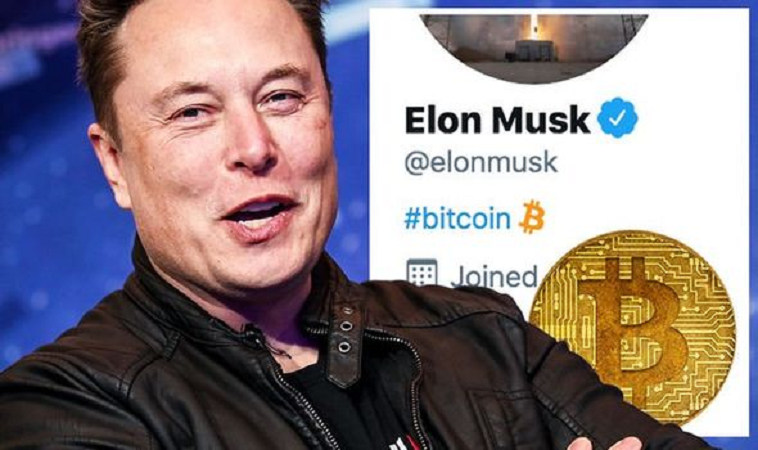
Elon Musk’s Tesla has invested $1.5 billion in bitcoin, and announced it’s accepting the cryptocurrency as a form of payment for its car brands in the near future.

The move has come amidst calls by customers of the electric carmaker on Musk to accept bitcoin as means of payment. Musk, who has been expressing his enthusiasm about cryptocurrency recently, promoting Dogecoin and using bitcoin as his Twitter header, described cryptocurrency as the future but admitted he is late to the party.

Tesla announced Monday in its 2020 annual report it’s investing in bitcoin to maximize returns on cash that is not required to maintain adequate operating liquidity.

“In January 2021, we updated our investment policy to provide us with more flexibility to further diversify and maximize returns on our cash that is not required to maintain adequate liquidity. As part of the policy, we may invest a portion of such cash in certain specified alternative reserve assets.

“Thereafter, we invested an aggregate $1.50 billion in bitcoin under this policy. Moreover, we expect to begin accepting bitcoin as a form of payment for our products in the near future, subject to applicable laws and initially on a limited basis, which we may or not liquidate upon receipt,” Tesla said.

The filing said Tesla ended 2020 with $19.38 billion in cash and cash equivalents.

Bitcoin price went up 10% to more than $43,000 upon the news of Tesla’s investment, breaking it’s all-time high. And Ether, the second most expensive cryptocoin jumped to a record high.

Experts believe Tesla’s move as well as that of other companies will help curb the volatility of bitcoin, and help move the coin toward the mainstream.

“I think we will see an acceleration of companies looking to allocate to Bitcoin now that Tesla has made the first move,” Eric Turner, vice president of market intelligence at cryptocurrency research and data firm Messari said.

“One of the largest companies in the world now owns Bitcoin and by extension, every investor that owns Tesla (or even just an S&P 500 fund) has exposure to it as well.”

Recently, more companies have been betting on bitcoin, pushing its acceptability beyond individuals.

Paypal, a payment platform which was also co-founded by Musk is one of the many companies who have embraced bitcoin, creating digital payment options for its users.

Tesla offering bitcoin as a form of payment gives it an edge over its competitors who don’t have that choice. Other automakers sell directly to dealerships, which independently sell to consumers directly. Tesla sells to consumers directly and does not have any dealership, apart from Tesla-owned sales stores.

The electric vehicle maker’s move into bitcoin will thus make it easier for consumers in countries where moving the amount equivalent for the price of its cheapest model is prohibited by money laundering laws.

The base version of Tesla’s Model 3 costs around $37,690, including destination and documentation charges. The more expensive Model X SUV, might be sold around $100,000. Bitcoin climbed nearly $43,700 Monday; meaning with one or two bitcoins, a consumer can order a model of Tesla from any part of the world regardless of the country’s money laundering laws.

However, Tesla acknowledged in its filing that holding bitcoin may involve some risks, given its fluctuations that have made central banks skeptical of its sustainability.


“Their long-term adoption by investors, consumers and businesses is unpredictable,” Tesla said in its filing, pointing out there are risks of malicious attacks and technological obsolescence for its bitcoin holdings. But the carmaker said it would have to take a charge against earnings if the value falls below the price at which it buys bitcoin, even if it has to sell those holdings.

A list of companies including BlackRock, the world’s largest asset manager, Square and MicroStrategy, have invested in bitcoin, widening the cryptocurrency’s stride of acceptance.

Tesla has a valuation of over $800 billion, and given its CEO’s status as the world richest man, Musk’s interest in cryptocurrency is expected to inspire more companies to invest and use bitcoin as a form of payment.

Analysts say the more reputable companies and individuals use bitcoin, the more attractive it will appear as a long-term store of value, eliminating skepticisms, especially from central banks.

“The argument for bitcoin is evolving. It used to be negative (reasons to buy) but suddenly there are positive reasons, and that’s why you see bitcoin at new highs,” Mohammed El-Erian, chief economic advisor of Allianz, told CNBC.