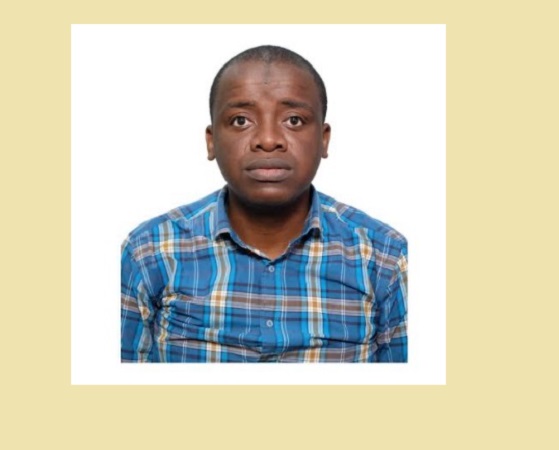
He has vast experience both in Nigeria and Hong Kong as student and lecturer. He holds a PhD in Construction Project Management. He is deeply concerned about the state of the Nigerian education system. Olalekan Oshodi proposed a new model for the Nigerian tertiary education in a chat with Rasheed Adebiyi. Here are the excerpts…
Tekedia: Could you tell us about yourself?
Olalekan Oshodi: I am Olalekan Shamsideen Oshodi by name. I am a Nigerian and I am currently a Lecturer in the field of Construction Project Management within UK. I had my undergraduate and postgraduate training at the University of Lagos. In 2007, I completed a BSc. in Building programme at the University of Lagos. I did my National Youth Service in Auchi where I was a teacher in a secondary school. Between 2010 and 2011, I was studying for a postgraduate degree (Master of Science in Building – Construction Management) at UNILAG. Upon completion of my MSc, I worked in the Nigerian construction sector in several roles. Initially, I worked as a self-employed professional and I provided construction services to firms, such as Bi-Courtney Highway Services.
Also, I worked with a property developer, Hometel Lifestyle Properties. In this role, I was responsible for the management of several projects in the housing and hospitality sector. At the end of 2011, I decided to register for a PhD degree in Construction Management and this programme influenced my decision to join the academia. As a PhD student in UNILAG, I got my first academic position with Lagos State Polytechnic (LASPOTECH). I was a part-time lecturer at LASPOTECH between 2012 and 2014. In March 2013, I joined Bells University of Technology as an Assistant Lecturer in the Department of Building Technology. In 2013, I was part of the team that got the Building Technology programme at Bells accredited by NUC (National Universities Commission) and CORBON (Council of Registered Builders of Nigeria). I worked at Bells until August 2014.
Subsequently, I joined the City University of Hong Kong (CityU) as a PhD student and Teaching Assistant. I got the UGC (University Grant Council) PhD studentship as funding for my PhD studies. Upon completion of my PhD studies at CityU, I joined the University of Johannesburg (UJ) as a Postdoctoral Research Fellow. I worked at the University of Johannesburg for close to 2 years. In May 2019, I joined Anglia Ruskin University as a Lecturer in Construction Project Management. In this role, I am responsible for teaching several modules at undergraduate and postgraduate level of study. Also, I am an active researcher in the field of construction management and I supervise research students.
Tekedia: What is Nigeria not doing right about educating her youths?
Olalekan Oshodi: There is a need for all stakeholders to contribute towards the revitalization of the education sector of the country. First, we need to address the stigmatization associated with other forms of tertiary education. We need to be honest about this. God has given us different skills, talents and abilities to acquire knowledge. So, we should have a system that encourages people to acquire technical or vocational skills. In the United Kingdom, most of the technicians train at colleges. After working for several years, the employers sponsor these technicians to university to train as Engineers. A lot of Professors in the UK passed through this route, some were plumbers in the early years of their career before proceeding to the university for additional training. Second, there is a lot of in-fighting among administrators/managers of our universities. This unhealthy competition is not benefiting the universities and our youths. For instance, some universities do not recognize postgraduate degrees acquired from other universities. Third, most of programs are not accredited by international bodies, such as Sydney Accord and other similar professional bodies. Fourth, there is a need to constantly revise and update our curriculum and teaching practices to meet global standards. For instance, there is so much focus on examination in our universities. This approach encourages rote learning and our students are not able to apply their knowledge to real world scenarios. Also, students are not able to develop soft skills needed for the workplace. Finally, we need to re-orientate our youths, i.e. national rebirth. We need to encourage our people to imbibe the culture of honesty, integrity, fairness, courage, prudence, gratitude and excellence. These virtues are required for the success of our nation.
Tekedia: How could this situation be turned around?
Olalekan Oshodi: There are several issues that need to be addressed. However, I would mention a few here. First, all stakeholders in the education sector must respect and value each other. We need to stop the unhealthy competition among ourselves. Most of the STEM (Science, Technology, Engineering and Mathematics) programmes need to have laboratory facilities, the universities can create a hub for sharing laboratory and library resources. This approach will stop duplication and we can buy more tools for other experiments. For instance, University of Ibadan (UI) could be a laboratory hub for South West Nigeria. All the expensive laboratory tools are kept at UI and all universities in the South West can share the resources via a booking system. Second, education is a service to the community and our students are the consumers of the products offered by the university.
We need to prioritize our students. Universities need to reduce the size of each class. This can be achieved by hiring more academic staff and dividing large classes into smaller groups. It is easy to monitor level of engagement when the size of the class is smaller. Also, we could upgrade our polytechnics to universities. Initially, these new universities could be given the mandate of issuing Associate Degrees after 2 years of studies. Subsequently, the Associate Degrees can be used for direct entry into universities. This would provide more university spaces for our growing population. Third, the universities need to actively engage with employers of labour. For instance, universities can create a unique scale for experienced professionals who may be retiring soon. Those experienced professionals are engaged by the university to teach students. This is one of the strategies for improving employability.
The students get to see how things are done in the industry. Also, the universities need to develop tools for collecting feedback about their products from their employers. This information is essential for revising/updating the curriculum. Fourth, we need to get our programmes accredited by international bodies and align our courses with global best practices. It is obvious that our economy is not generating enough jobs to employ the increasing numbers of our university graduates. Across the world today, the population in developed countries is ageing. Hence, there is a shortage of skilled workers. Can we fill this labour gap? The answer is “yes”. How? We need to ensure that our programmes are recognized. This approach would ensure that our graduates can compete with their peers from other countries. Fifth, there is a need to make efficient and effective use of resources allocated to our universities. For me, we need to reduce the need to create more and more departments. More departments mean that we need more money to run our universities. A department could run five or more programmes. Finally, our universities need to engage with foreign universities. For instance, we could create exchange programmes for our research students.
Tekedia: What should be the focus of the Nigerian curriculum that could stem the tide of rising unemployment in the country?
Olalekan Oshodi: The job market should be the focus of our curriculum. Our graduates need to be job-ready and employable. Some of our programmes need to be revised and renamed. Also, we need to give our students the opportunity to gain additional skills during their studies. For instance, an undergraduate studying for a BSc in English Language could be given an opportunity to take courses in data analytics OR psychology. Upon completion of their studies, the student would be awarded a BSC in English Language with a minor in Data Analytics/Psychology. These approach would improve the employability of our graduates. Also, international certification of our programmes is very important.
Tekedia: What do you think should be the roles of Nigerians in the Diaspora in solving the problems in our tertiary education system in Nigeria?
Olalekan Oshodi: Based on my perspective and experience, it is very difficult for anyone (Nigerians in the Diaspora) to change anything. First, the administrators/managers of the tertiary education sector in Nigeria need to identify and acknowledge the problems. If we can identify the problems, then, we can begin to look for people, possibly Nigerians in the diaspora, who can help us solve the problems. For instance, I am in constant touch with former colleagues and I have observed that our postgraduate students are not treated fairly. A colleague of mine has been an MSc programme for almost 5 years now. Her supervisor has not read her work for about 3 years. How can anyone help resolve this kind of problem? I believe the solutions would emerge when those in-charge acknowledge that a problem exists. Nigerians in diaspora can advise and provide the much-needed support. For example, I know of a few Nigerian colleagues out here who mentor early career academics and research students.
Tekedia: Do you miss Nigeria at all? What are those things you miss most about the country?
Olalekan Oshodi: Nigeria remains home to many of us in the diaspora. Definitely, I miss the feel of staying in Nigeria and, getting to see family and friends. For me, family and friends are my prized possession. I was able to achieve so much because of my family and friends. I miss those cherished moments of spending time with family and friend.
Tekedia: Thank you for your time.
Olalekan Oshodi: It is my pleasure.