DD
MM
YYYY

PAGES

DD
MM
YYYY

spot_img

PAGES

Home Blog Page 590

It’s Tekedia Mini-MBA Graduation Day – Executing A Winning AI Product Strategy in Africa

0

It is Tekedia Mini-MBA Graduation Day, and my Graduation Lecture is titled “Executing A Winning AI Product Strategy in Africa”. The rapid evolution of artificial intelligence (A) has ushered in a new era of product development that operates under a distinct and unforgiving set of rules which do not align with the conventional SaaS business model where digital products benefit from near-zero marginal costs and network effects.

At the heart of this new paradigm lies the brutal economic reality of AI. Unlike traditional software, AI products are built on a foundation of real marginal costs driven by token usage and GPU compute, like what you see in physical products. Simply, the SaaS’ near-zero marginal cost as you grow is replaced by an unpredictable and potentially exorbitant cost of inference. Every prompt is a cost, even as you scale!

My Co-learners, this necessitates an upfront, strategic approach to unit economics and scalable advantages, where profitability must be meticulously designed into the product from its inception. This economic model also dictates a more sophisticated approach to pricing. The Graduation lecture will examine four key pricing frameworks. These are not just pricing options but strategic levers for survival and competitive differentiation.

  • Usage-Based: Users pay per action (e.g., per token, per image generated). This aligns cost with value but can lead to unpredictable expenses for users.
  • Outcome-Based: Users pay only for a successful result (e.g., a perfect output). This is a strong value proposition but can be difficult to implement and measure.
  • Value-Based: Users pay based on the perceived value they receive. This is highly profitable but requires deep understanding of customer needs.
  • Subscription with Soft Cap: A hybrid model where users pay a flat fee for a certain level of usage, with additional charges for going over the limit. This provides cost predictability for both the user and the company.

More so, beyond economics, the defining challenge in the AI space is the illusion of moat, something we have discussed extensively in this program. I have provided cases of how ancestral communities were built with the clan holding the kinship living in strategic locations (hills, etc).

In the past, proprietary technology was the key to a defensible position. However, with powerful foundation models now widely accessible, the AI itself is rapidly becoming a commodity. Yes, the true competitive advantage, or moat, is not the AI model but the system built around it.

This AI redesign demands visionaries who can fluidly bridge the worlds of product strategy, AI economics, and technical fluency. Yes, people who can architect a defensible product system, understand the intricate financial models of AI, and possess a foundational understanding of the technology’s capabilities and limitations. With that, whether it is Oriendu Market Ovim or Wall Street trading desk, AI can help companies to deliver alpha.

Sat, Sept 6 | 7pm – 8.30pm WAT | It’s Graduation Day – Executing A Winning AI Product Strategy in Africa – Ndubuisi Ekekwe | Zoom Link 

Avalon X Price Prediction 2025–2030: Can It Outperform XRP?

0

Avalon X (AVLX) has been making waves lately, its presale has gained major traction as well as its giveaways, one million dollars’ worth of tokens and even a townhouse.

Meanwhile XRP has been rising after a long legal battle finally ended. Now everyone’s watching both and asking the same question: where will prices be by 2030 and which one is the best crypto to buy in 2025?

XRP Price Prediction: What’s Going On With XRP?

XRP has had a rough ride the past few years, mostly due to its legal battle with the U.S. Securities and Exchange Commission. But now that’s all behind them and the case is settled, XRP is rising again.

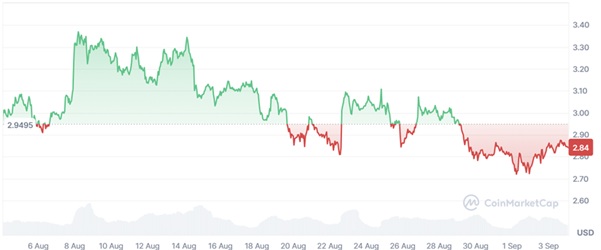
Just recently, XRP price is hovering around the $2.80 level and some are saying it will hit $3 soon. Others are even calling for $5 or more by 2025 if it sees more adoption in the payment space.

There’s been talk of an XRP exchange-traded fund being approved, which could bring more attention from traditional investors. XRP has always positioned itself as a fast, low-cost option for cross-border payments, and with the legal hurdles now out of the way, the project finally has room to grow again.

Still, XRP isn’t a new player. It’s been around for over a decade, and a lot of its future depends on how much traction it can gain with banks and payment platforms over the next few years.

Avalon X Turns Heads With Lifestyle Prizes

While XRP has the benefit of being well-established, Avalon X is going in a different direction. It’s early, yes, but it’s already doing something bold. Instead of waiting to build hype, it’s using massive real-world giveaways to bring people in.

The first giveaway is simple. Avalon X is handing out one million dollars’ worth of its token, AVLX. Ten people will each win $100,000 in tokens. To enter, you just connect your wallet to the dashboard and buy at least $100 worth of AVLX. You can also earn ten bonus entries for every friend you refer.

The second giveaway is even more eye-catching. Avalon X is giving away a townhouse in the gated Eco Avalon, its own sustainable development. To enter, you buy at least $250 worth of AVLX and connect your wallet the same way. Again, referrals give you more chances to win.

Eco Valley Townhouse Giveaway

These aren’t abstract benefits. These are things you can picture. One prize boosts your wallet, the other could change your life. That’s part of what’s helping Avalon X catch people’s attention so early.

Where Could Avalon X Go In 2025?

Avalon X is starting at just $0.005 per token in Stage 1 so it has a lot of room to run if demand picks up. The giveaways are already creating buzz and that will carry through 2025. If the project keeps getting attention and people keep being interested in the rewards then it can build a steady base over time.

2025 is when most early buyers will be watching closely. By then we’ll see the token listed on more exchanges. If it hits the right milestones and stays active with the community a slow and steady climb is possible.

What About 2026 Through 2030?

For Avalon X the years after 2025 will be all about keeping people engaged. That could mean launching new lifestyle campaigns, partnering with travel or home brands or even expanding the Eco Avalon concept.

If the team keeps delivering on experiences that are easy to understand and genuinely appealing then AVLX will hold its ground.

Some are already speculating that if Avalon X keeps its pace the Avalon X token could reach ten or twenty cents by 2030. Of course that depends on a lot of things – market conditions, community support and continued utility. But with the right momentum Avalon X has room to grow.

Avalon X Vs XRP: What’s the Difference?

It’s hard to compare a new token with a veteran like XRP, but it really depends on what kind of investor you are. XRP is tried and tested. It has a specific use case in payments, and many people trust its long-term potential now that the legal uncertainty is gone.

Avalon X, on the other hand, is fresh. It’s offering something more tangible and is a crypto backed by real world assets. You’re not just hoping the price goes up. You’re actually getting the chance to win a house, earn bonuses, and be part of something that feels like a lifestyle brand as much as a crypto project.

Some might choose XRP for its stability. Others might be drawn to Avalon X for its imagination and being able to invest in real estate crypto. Plus, plenty of people may hold both, hoping to benefit from each in different ways.

Why Avalon X’s Approach Is Unique

Avalon X is cutting through the noise. While many projects bury people in whitepapers, Avalon X keeps it simple. You buy a token. You might win a prize. You feel like part of something bigger. It’s an easy concept to understand and that’s what makes it powerful.

The giveaways work as tools to help people connect emotionally to the project. When you imagine yourself living in a modern townhouse or waking up with $100,000 in tokens, it creates a sense of possibility that most tokens never even try to deliver.

Final Thoughts

As XRP builds momentum with legal clarity and growing adoption, Avalon X is going its own way with lifestyle giveaways and a clear, visual story, making it one of the best altcoins to invest in 2025. Over the next 5 years, both will take very different routes, but both have their own appeal.


Join the Community

Website: https://avalonx.io/

$1M Giveaway: https://avalonx.io/giveaway

Telegram: https://t.me/avlxofficial

X: https://x.com/AvalonXOfficial

Best Online Slots That Pay Real Money in 2025: Top Picks for Jackpot Hunters

0

In 2025, players seeking the best online slots real money experience will find plenty of jackpot action at SlotoCash Casino. This long-standing platform has built its reputation as a real cash online casino by consistently offering slots with thrilling themes, strong win potential, and bonus-packed gameplay. Whether you are a casual spinner or a jackpot chaser, the selection at SlotoCash in 2025 is full of opportunities to land real payouts.

Below, we explore the standout real slots online that have captured players’ attention this year and explain why each one deserves a spot on your must-play list.

Spicy Reels Fiesta

SlotoCash’s fiery new release, Spicy Reels Fiesta, brings a colorful Mexican party to your screen. This 5×3 slot offers 243 ways to win and a collection of mouthwatering symbols like smiling tacos, hot sauce dishes, sombrero-wearing avocados, and limes.

It is loaded with features that keep every spin exciting: a Wild (a group wild on reels 2–5) substitutes for other symbols, and a Morphing Symbols feature transforms winning symbols into new ones for extra payouts. Three or more Free Games scatters trigger the free spins round, which starts at 16 spins, where random multipliers of 2×–20× can hit on any win.

Better yet, free spins can retrigger for more plays, and the top prize can reach 20,000× your base bet. With high volatility and the chance of giant multipliers, Spicy Reels Fiesta is a must-play for real money enthusiasts looking for flavor and heat.

God of Wealth

The Chinese-themed God of Wealth slot at SlotoCash invites players to seek fortune from Caishen, the legendary money god. This traditional 5-reel, 25-payline game features a peaceful garden scene seen through transparent reels.

It stars the God of Wealth himself as a Wild, doubling wins when he appears, and Golden Ingot Scatters that trigger the Free Games bonus round. During free spins, players get additional winning opportunities, and the slot even carries a progressive jackpot that can hit at random. With all wins multiplied by the line bet and scatters by total bet, this slot can pay up to 777× for five of a kind (the red planet symbol) and 77× your total bet for five scatters.

Its classic Chinese imagery, combined with wild multipliers, free games, and a jackpot, makes God of Wealth a favourite for real money players chasing big fortune.

Giant Fortunes

Step into the medieval world of Giant Fortunes, a 5×3, 25-line fantasy slot where giants roam a distant village. The graphics are epic, setting the stage for adventure. This game has a solid 96.00% RTP and plenty of winning potential.

Wilds substitute for regular symbols to help form combos, while gem scatters transform into mystery symbols that can enhance payouts. Collecting gem scatter wins sends you to the free spins round, where multiple gem symbols act as large mystery symbols to trigger even bigger prizes. The Vikings and villagers symbols top the paytable, with the Viking paying 1000× on five, so every spin can feel legendary.

Fruit Frenzy

For a lighthearted break from adventure, Fruit Frenzy serves up a vibrant circus-themed slot filled with playful fruit characters. This five-reel, 25-payline game is bursting with color.

You will see a clown-faced orange, ballerina pear, ringmaster banana, and even a daredevil pineapple on the reels. The pineapple acts as the Wild, replacing most symbols for extra wins. Two special scatter symbols, the Fruit Logo and Frenzy Logo, award payout multipliers up to 200× the total bet for multiple scatters.

The highlight is the Daredevil Feature. Land five of any symbol to trigger a mini-game where a strawberry is shot from a watermelon cannon. Each hit on the target earns points, and the points determine your free spins. From 5 free spins, 0 points up to 25 free spins, 3 points.

Even better, Fruit Frenzy has a random progressive jackpot that can drop at any time for a life-changing win. Players love this game for its cheerful theme, fun mechanics, and the chance at huge prizes via free spins or the jackpot.

Nova 7

The sci-fi-themed Nova 7’s slot blasts off into space with intergalactic graphics and intense features. On its 5×3 grid, each spin aligns planets and stars as symbols, but the real excitement comes from the bonus features, which are Red Nova Spins, Blue Nova Spins, Nova 7 Spins, and Supernova Spins.

These rounds are accompanied by falling reels, wild metamorphoses, and great multiplication, which can easily increase your wealth. Being one of the most volatile games, Nova 7 has a fantastic risk-reward gameplay that keeps jackpot hunters on the edge of their seats.

T?Rex Wild Attack

Roar back to the prehistoric era with T?Rex Wild Attack, a 6×4 dinosaur slot packed with high-volatility features. The game’s highest paying symbol is the blue T-Rex, which earns up to 900× your stake for six on a line, followed by other dinosaurs like the Triceratops and Pteranodon.

The Wild symbol is another T-Rex, which substitutes for all except the scatter. When a wild appears on a losing spin, the Cascade feature may trigger. All low-paying symbols are removed to let higher-paying ones tumble in, potentially turning a loss into a win.

Hit 3–6 Free Games Scatters and you get 8, 10, 15, or 20 free spins, respectively. Free spins come with stacked wilds and increasing multipliers. Each spin may reveal a column full of wilds with a multiplier. If that spin doesn’t pay, you earn a respin with the multiplier locked on and incremented up to 5× until you finally win.

These mechanics, stacked wilds and built-up multipliers, mean a single spin can explode into an enormous payout. Thanks to its Jurassic theme and big-win potential, T?Rex Wild Attack has become one of SlotoCash’s most popular high-stakes slots.

Mermaid Queen

Dive deep with Mermaid Queen, a 5×20 aquatic-themed slot featuring the legends of Poseidon’s court. This medium-variance game (RTP 97.5%) surrounds you with vibrant underwater graphics full of coral reefs, treasure chests, and mer-creatures shining on the reels. The Wild symbol is the Mermaid Queen herself, which can substitute for other symbols.

There is also a Progressive Jackpot that grows over time and can randomly drop on any spin. Three or more Scatters activate the free games round, where mermaids grant you multiple free spins. Many wins in this round come with multiplier symbols, often doubling or tripling payouts.

Mermaid Queen’s main features include Wilds, Scatter symbols, Free Spins, and a progressive jackpot. This combination makes it a rewarding choice. Besides its mythic theme, players love chasing the jackpot and enjoying the variety of bonus rounds. Its medium volatility means free spins hit fairly often, giving plenty of action and big multipliers on each spin.

Conclusion

All these SlotoCash titles have been designed to make the most thrilling games that are rewarding with actual money. Each of them provides the opportunity to win big with bonus plays such as wilds, multipliers, sticky respins, and free spins that multiply the winnings. Why not try them today? Join SlotoCash Casino and start spinning these top real-money slots, and you might unlock the very fortune of these games’ legends.


A Look At The Cooling of Bitcoin Perpetual Funding Rates to 6% and Drop in Open Interest

0

Bitcoin perpetual funding rates at 6% indicates a cooling in market sentiment compared to earlier double-digit levels, reflecting reduced bullish pressure or leverage demand in the perpetual futures market.

Funding rates, typically calculated every 8 hours, incentivize price alignment between perpetual contracts and Bitcoin’s spot price by having longs pay shorts (positive rate) or vice versa (negative rate). A 6% annualized rate suggests longs are paying shorts a modest fee, pointing to balanced or slightly bullish sentiment, as traders perceive recent price dips as temporary rather than bearish signals.

Open interest dropping to just over 720,000 BTC-denominated contracts signals reduced market participation or leverage, potentially due to profit-taking, liquidations, or cautious sentiment amid price stabilization.

This decline aligns with historical trends where funding rate spikes often precede volatility or corrections, as seen in May 2025 when rates hit 0.010885% daily during a Bitcoin price surge to $111,000. Lower open interest could indicate traders are de-risking, especially if funding rates remain subdued compared to earlier highs.

For context, high funding rates (e.g., 10%+ annualized) often signal over-optimism and leverage, increasing the risk of sharp corrections if sentiment shifts. The current 6% rate and declining open interest suggest a more cautious market, possibly consolidating after a volatile period.

The decline from double-digit funding rates to 6% suggests a decrease in aggressive bullish sentiment and leverage. Traders are less willing to pay high premiums to maintain long positions, indicating a cooling of speculative fervor. This could stabilize prices short-term but may also signal lower conviction in immediate upward price momentum.

The drop in open interest reflects fewer outstanding contracts, likely due to profit-taking, liquidations, or traders reducing exposure. This suggests caution, possibly driven by recent volatility or uncertainty about Bitcoin’s next major price move, especially after earlier highs (e.g., $111,000 in May 2025).

Lower funding rates and open interest reduce the risk of cascading liquidations, which often occur when over-leveraged positions are squeezed during high funding rate periods. This could lead to less short-term price volatility, creating a more stable trading environment.

A 6% funding rate is relatively low, making long positions in perpetual futures less costly compared to high-rate periods. Savvy traders might see this as an opportunity to enter longs, especially if they believe price dips are temporary, though they should watch for negative funding rates that could favor longs further.

With funding rates at moderate levels, arbitrageurs might find opportunities to exploit price discrepancies between perpetual futures and spot markets. Hedging strategies, such as holding spot Bitcoin while shorting futures, could offset funding costs and capitalize on price convergence.

The combination of lower funding rates and declining open interest often precedes market consolidation or range-bound trading. Without strong bullish or bearish catalysts, Bitcoin’s price may stabilize, potentially awaiting macroeconomic events, regulatory news, or on-chain developments to spark the next trend.

Funding rates vary across platforms (e.g., Binance, Deribit). Traders should monitor exchange-specific data, as differences in rates or liquidity could affect strategy execution. A sustained drop in open interest across exchanges might also hint at broader market deleveraging.

Monitor funding rate trends for entry/exit signals. Low or negative rates could favor long positions, while hedging with spot can reduce costs. A cooling market may suggest a pause in momentum, warranting caution on new leveraged positions. Focus on fundamental drivers like adoption or halving cycles.

Lower open interest reduces systemic liquidation risks, but sudden rate spikes could signal renewed volatility—stay vigilant. Verify exchange data and market conditions, as funding rates and open interest can shift rapidly with sentiment or external events.

Traders might monitor funding rate trends for entry/exit timing—low or negative rates can signal cheaper long positions, while hedging with spot market positions could mitigate funding costs. Always verify exchange-specific rates, as they vary (e.g., Binance, Deribit).

Qualcomm CEO Says Intel “Is Not An Option Today”, Putting Chipmaker’s Comeback in the Spotlight

0

Qualcomm’s CEO Cristiano Amon handed Intel a blunt reality check on September 5 when he told Bloomberg that Intel “is not an option today” for making Qualcomm’s Snapdragon X chips, while adding that “we would like Intel to be an option.”

The short, pointed assessment lands at a pivotal moment for Intel’s long-run bet to become a major contract foundry, and it exposes a widening gap between Intel’s manufacturing ambitions and the supply relationships of the biggest chip designers.

Amon’s comment matters because Qualcomm’s Snapdragon X family is not a fringe product. Those chips are manufactured on TSMC processes tuned for mobile and mobile-class laptops; Qualcomm’s designs, paired with efficient nodes, are already powering Arm-based notebooks that compete on power efficiency with the best x86 silicon. That makes Qualcomm not only a potential customer Intel badly wants, but also a visible barometer of whether Intel’s process technology measures up in real product terms.

Intel’s roadmap is under heavy scrutiny. The company has placed a huge strategic wager on its 18A node and an ultimate return to leadership, while warning it may halt or delay 14A development if it cannot attract major external customers or hit internal milestones. Recent reporting and industry commentary point to yield and execution problems on 18A and other advanced steps, raising the stakes for Intel’s pitch to outside designers. Amon’s public dismissal narrows Intel’s near-term options for landing marquee foundry customers.

Why the rest of the industry’s biggest design houses keep circling TSMC

Apple, Nvidia, and AMD have kept the world’s most advanced nodes tightly booked with TSMC for years, and those relationships show why Intel faces an uphill climb.

• Apple has repeatedly leaned on TSMC for its flagship A- and M-series chips, using TSMC’s most advanced process variants as a strategic lever to extract performance and power gains for iPhones and Macs. That partnership has helped cement TSMC as the go-to supplier for premium mobile and client SoCs.

• Nvidia’s highest-end GPUs — including Hopper-family dies and the H100 — have been manufactured on customized TSMC processes (TSMC 4N variants), and Nvidia continues to coordinate closely with TSMC on cutting-edge packaging and node work to scale transistor counts and performance for AI workloads. That deep technical coupling is hard to replicate quickly.

• AMD has similarly relied on TSMC for multiple generations of CPUs and GPUs, using the foundry’s 5nm/4nm family to keep parity or lead with performance and energy efficiency. Those supply commitments make it difficult for a new entrant to pry away high-volume design partners.

Taken together, these partnerships show a pattern: top-tier fabless and integrated designers choose foundries that already offer proven yields, node maturity, and packaging ecosystems. For Intel to break into that circle, it must do more than announce roadmaps; it has to demonstrate reliable yields, attractive cost per transistor, and production scale that matters to customers used to TSMC’s timetable.

The irony in Intel’s story is visible in product roadmaps. Intel is planning client-class chips (Nova Lake and related lines) that will, in some cases, mix Intel’s own nodes with TSMC’s N2—an arrangement that underlines both the technical interdependence that still exists and Intel’s current inability to fully replace TSMC for its highest-performance tiers. That reality makes Intel’s pitch to firms like Qualcomm harder to swallow: why move away from a supplier already delivering at scale?

What Qualcomm’s stance signals

Amon’s “not an option today” line is a tangible vote of no confidence for Intel’s near-term foundry story. It also sends a message to the market: Qualcomm will stay where the product meets its performance and efficiency targets. The door is left open for Intel if and when Intel can prove it has the process maturity and yields Qualcomm needs, but for now, Qualcomm is staying with proven suppliers.

For Intel, turning statements and roadmap slides into repeatable production at scale is an execution problem that demands capital, time, and — crucially — anchor customers willing to take early risk. Apple, Nvidia, and AMD are not that kind of early-stage customer anymore; they deploy the world’s leading nodes and partner tightly with the foundry that has delivered them for years.

Against this backdrop, public rejections from heads of major chip designers are expected to keep the pressure on the Santa Clara firm until it can show sustained results on nodes customers care about.