In the last edition of Tekedia Institute Mini-MBA, our site crashed on Day 1 as members surged to begin our academic festival. Our technical team has promised me that it would not happen again. We have this scaling thing which is supposed to organically adjust for traffic. Good People, at 12 noon on Monday Lagos time, go to the Board and let us begin an excursion into knowledge.
I hold 7 degrees across disciplines including doctorate in banking & finance, and engineering – and I understand many things. Unlike in the past where we had focused mainly on companies, in this edition, we have added courses on the PERSON. Yes, if the person is great, companies will become great. That is why the Human Productivity Innovation course is there. Yes, if we teach innovation, we must also be innovative as a business school.
Get ready – let us learn, APPLY, and advance our missions. I am so excited because we have something really amazing.
To win in the 21st century digital business, you must invest to control and influence demand. What are your plans to do just that? Facebook can open any digital business it wants in the world because it has demand ( billions of citizens within its Facebook planet).
If you do not understand that fundamental construct, you will struggle on your scaling playbook. No idea is really new and the web has removed information asymmetry to a large extent, making it possible for users to discover products and services. So, the playbook changes from who supplies the product to who can I discover easily.
As Facebook moves into the Nigerian ecommerce, with the demand it has, expect new vistas of growth for the social media empire.
Again, what is your strategy to control and influence demand in your digital venture? I have a video.
In the digital age, what matters is not who controls supply, but who controls demand. Supply is largely infinite as there are many ways to get to the web, and because it is infinite, users congregate to platforms to help them navigate and make sense of the web.
In 1980, before the digital age as we have it today, the most powerful people in media were newspaper publishers. They were the people you needed to reach to get your message to the world. They decided what everyone read on the dailies and they were powerful. They controlled supply and by controlling supply, they shaped everything including advertising.
Facebook Inc has launched an ecommerce business on its own planet – the Facebook. And when that happens, expect a huge level of dislocation in the ecosystem. Yes, “Facebook has unveiled a new marketplace in Nigeria, a buying and selling point where people can search, buy and sell items in their local communities. According to a statement released Wednesday by the social media platform, Nigeria has become the latest African nation to join the market where South Africa, Ethiopia and Kenya are already trading.”
“Sellers and merchants are responsible for complying with all applicable laws and regulations. For high-value items (example: watches, luxury bags), consider requesting a certificate of authenticity or proof of purchase.
“If you’re not satisfied with an item’s condition or have doubts about its authenticity, you can decline to complete the purchase. If the seller offers to ship the item rather than exchanging it in person, keep in mind that you may not have the opportunity to verify the item before completing your purchase.
“If you are meeting, ensure this is in a public place. Don’t invite buyers or sellers into your home. Before going to the agreed location, tell a family member or a friend the exact location where you will meet, bring your cell phone, and consider asking another adult to come with you.
Jiji, OLX and other classified portals will experience a new dimension of competitive attacks. If people are already on Facebook and Facebook can offer them what you are offering, how do you expect them to leave Facebook for you? Every player in the marketplace must have an answer on this Facebook’s moat!
After the latest WhatsApp terms and conditions upgrade, I noted here that Facebook was planning to use WhatsApp as a clearing house for Facebook.com since WhatsApp has one thing other platforms do not have: phone numbers. Those phone numbers are verified and secured with biometrics which means once Facebook can sync WhatsApp backend to Facebook.com, its community and marketplace can allow people with WhatsApp accounts to buy, pay and checkout with minimal fraud! Sure, mess up and Facebook will give out your phone, not email address! Your phone is linked to your National Identity Number (NIN), and suddenly, there is no hiding place.
So, Facebook Nigeria Marketplace is here, and WhatsApp pay will be overlaid on it, making it possible that payments can happen at scale. This is a huge challenge ahead for ecommerce companies especially those running marketplaces. Even Jumia and Konga may not be smiling right now!
But I have laid out a strategy in Harvard Business Review: do not pursue a frontal response, go through the flank by collaborating with Facebook since it is not likely you will thrive if you want to go against it head-on.
Yet, at the end of all, customers will be better service because they will get many things free, and fraud will drop, since Facebook has your WhatsApp-linked phone and integrity will be deepened. But what I am not sure is this: if there would be other marketplaces in Nigeria except Facebook by 2024!
Facebook has unveiled a new marketplace in Nigeria, a buying and selling point where people can search, buy and sell items in their local communities.
According to a statement released Wednesday by the social media platform, Nigeria has become the latest African nation to join the market where South Africa, Ethiopia and Kenya are already trading.
To access the platform, users can simply tap on theMarketplace icon or visit www.facebook.com/marketplace to browse and search for items, sort based on distance or category.
Head of Public Policy for Anglophone West Africa, Adaora Ikenze said the move further underscores Facebook’s commitment to boost local trading and help create local communities of buyers and sellers.
“The launch of Marketplace in Nigeria further highlights our ongoing efforts in helping to boost buying and selling in Nigeria and connecting communities.
“This comes at a crucial time as the effects of the COVID-19 pandemic continue to impact people and businesses, and with many people buying and selling on Facebook, this will provide people with a convenient destination where they can discover new products, shop for things they want or find buyers for the things they are ready to part with.”
Shedding more light on how the Facebook marketplace works, it stated that when a seller lists an item on it, they create a public listing that could be seen by anyone on the social media platform.
This includes people on Marketplace, News Feed, Facebook search, Facebook Groups or search engines.
“Sellers can simply take a photo of an item, enter a product name, description and price, confirm their location, select a category, and post,” she stated.
Providing tips for buying and selling on the platform, she explained: “Items, products or services sold on Facebook must comply with our community standards, as well as the commerce policies.
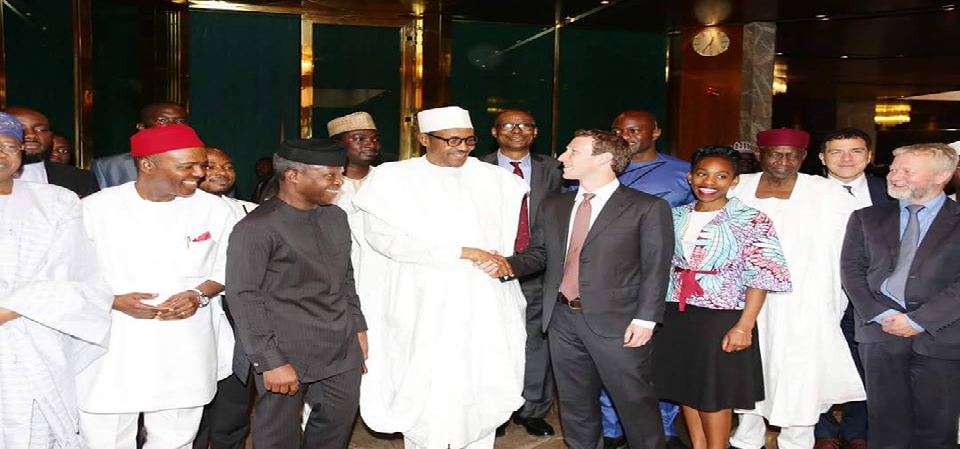
Facebook founder and properties
“Sellers and merchants are responsible for complying with all applicable laws and regulations. For high-value items (example: watches, luxury bags), consider requesting a certificate of authenticity or proof of purchase.
“If you’re not satisfied with an item’s condition or have doubts about its authenticity, you can decline to complete the purchase. If the seller offers to ship the item rather than exchanging it in person, keep in mind that you may not have the opportunity to verify the item before completing your purchase.
“If you are meeting, ensure this is in a public place. Don’t invite buyers or sellers into your home. Before going to the agreed location, tell a family member or a friend the exact location where you will meet, bring your cell phone, and consider asking another adult to come with you.
“If the value of the item you intend to buy or sell requires a significant amount of cash, you might consider using a person-to-person payment method.”
Facebook’s push into online market business play has been gaining ground in developing countries. With the Marketplace, the social media giant is giving people more enticement to get on board its platform, thereby expanding its ad-revenue strength.
Before now, OLX and Jiji were popularly known for this marketplace business model, where people can showcase items, sell and buy from each other. In April 2019, Jiji acquired OLX in Nigeria and other African countries to consolidate its market strength.
Facebook’s launch of Marketplace means the Nigerian space of online community retail market will once again, get competitive. But with its massive number of users, the social media giant has an edge.
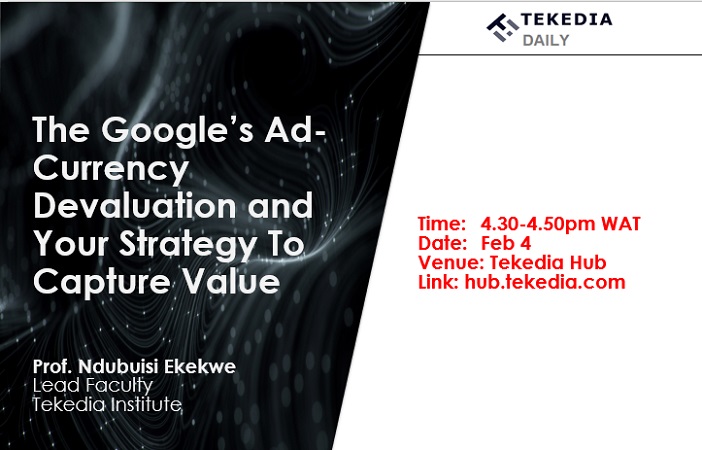
After my Harvard Business Review article on Monday on Value Capture, many in our community have been asking me about how to capture value. Join me at 4.30pm WAT at the Hub hub.tekedia.com as I discuss value capture on a topic I have titled “The Google’s Ad-Currency Devaluation and Your Strategy To Capture Value”. This is a webcast and you can comment during the cast.