DD
MM
YYYY

PAGES

DD
MM
YYYY

spot_img

PAGES

Home Blog Page 5909

University Education: Nigerian Scholars, Stop Quality Knowledge Production War

0
University Graduation Cap with Scroll Icon Student Education Symbol Isolated Realistic Design Vector Illustration

In the last few weeks, Nigerian scholars in Nigeria and those in developed countries have been debating on which group produces quality knowledge in terms of research and teaching. Professor Toyin Falola appears to be the first actor from those in the developed countries, such as the United Kingdom and the United States of America, who ignited the ‘great conversation’ recently. With two different pieces, while was alive, Professor Pius Adesanmi stressed the need for seeking new research and teaching practices by the young and established African scholars in order to be at par with those in the developed world.

After three days of analysing the ongoing conversation on who produces quality knowledge? African scholars in Africa or African scholars in developed world. Our analyst concluded that one group is not really better than the group despite the avalanche of evidences in terms of quality infrastructure, people, strong commitment and shared vision of quick completion of postgraduate studies by supervisors with their students that differentiate the groups.

This is premised on the fact that evidences have shown that outcomes -graduates, research outputs and contribution to the economic growth are mixed. In some countries that constitute the developed world, we have seen how the quality people, infrastructure and supportive framework from the government and the private sector produce moderate outcomes. We have also seen how these inputs led to high outcomes in some countries in the developing world. Likewise, high outcomes in developed world than in the developing one.

Some years ago, Professor Pius Adesanmi wrote on the Academic Staff Union of Universities’ incessant strike, highlighting its impacts on the concerned stakeholders and the country’s higher education growth in particular. The article titled ASUU: A Personal Voyage Around a Strike identified the Union, lecturers, the Nigerian government and universities as actors. In another piece titled Nugget for the Emerging African Scholar, he pointed out what emerging African scholars need to do to be at par with others in the world. He emphasised the place of globalization and internationalization of knowledge through seminar and research collaboration. In his pieces received fewer negative reactions from the scholars in Africa then. Some of the issues, needs and insights in the articles were seen as what could be addressed through collective efforts [by the African scholars in Africa and African scholars in the developed world].

However, Professor Toyin Falola’s piece adds a new angle to the discourse. Since the historian and one of Nigerian prominent professors in diaspora released his piece to the public, there are have been arguments, counterarguments and alternative arguments from the African scholars in Africa, especially in Nigeria. Our checks reveal that both the established and young scholars have expressed their views. Examination of the views indicates that there are two school of thoughts [addressing the issues and addressing personality school of thoughts].

Each of these schools of thoughts have actors and followers. According to our analysis, in some situations, actors played the role of followers not only being the actors. Actors and followers in the addressing the issues school of thoughts believe that identified problems need to be addressed without necessarily attacking individuals and authorities at home. Actors and followers in the addressing personality school of thoughts are of the view that individuals, authorities and governments should be blamed for the poor knowledge production.

Our analysis covers the response of Professor Moses Ochonu [Professor of African History at Vanderbilt University in Nashville, Tennessee, USA] based on Professor Toyin Falola’s piece. Professor Ochonu focused on academic, diaspora, Professor Falola, Nigeria and Nigerian. Following Professor Ochonu’s path, Mohammed Dahiru Aminu, assistant Professor of Petroleum Chemistry at the American University of Nigeria, Yola, titled his piece Of Toyin Falola, African Scholars and the Western Academy.  He focused on quality of doctorate, research, universities. Bode Ojoniyi, who lives in Osogbo, the Osun State Capital, is another person who replies Professor Falola with the title When the Nigerian Diaspora Academics Write Back to the ‘Locals’…He focused on academic, academics, diaspora, gods [referring to some individuals and authorities making knowledge production difficulty in Nigeria] and Nigeria.

Dr Olisa Godson Muojama is one of the people who replied Professor Ochonu. His piece is titled Professor Ochonu’s Vituperation on ASUU strike. He is a Senior Lecturer in the Department of History, University of Ibadan, Ibadan, Nigeria He focused on ASUU, government, Professor Ochonu, universities. Okechukwu Nwafor, a Professor of Art History at Nnamdi Azikiwe University, Awka, has also responded to Professor Falola’s piece. He focused on academics, diaspora, home, Nigerian and West.

Exhibit 1: Dominant Words in Adesanmi’s Write-Up (a)
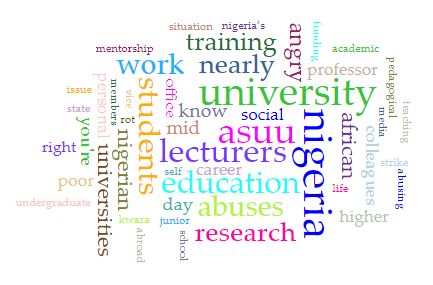
Source: Pius Adesanmi, Infoprations Analysis, 2021

Exhibit 2: Dominant Words in Adesanmi’s Write-Up (b)

Source: Adesanmi, Infoprations Analysis, 2021

Exhibit 3: Dominant Words in Muojama’s Write-Up

Source: Muojama, 2021; Infoprations Analysis, 2021

Exhibit 4: Dominant Words in Okechukwu’s Write-Up

Source: Okechukwu, 2021; Infoprations Analysis, 2021

Exhibit 5: Dominant Words in Moses’ Write-Up

Source: Moses, 2021; Infoprations Analysis, 2021

Exhibit 6: Dominant Words in Bode’s Write-Up

Source: Bode, 2021; Infoprations Analysis, 2021

Exhibit 7: Dominant Words in Aminu’s Write-Up

Source: Aminu, 2021; Infoprations Analysis, 2021

Silicon Valley Just Created How We Yarn in Lagos via Clubhouse – An Audio Social Network

0

It is really painful that Silicon Valley is introducing this one: an audio social network. Yes, an app called Clubhouse has raised around $100 million led by existing investor Andreessen Horowitz at a $1 billion post-money valuation. What this means is this: Instagram, TikTok and the peers have another competitor. This competitor focuses on audio! 

But I must note here that audio social network apps have been trialed in Africa, but none picked any up because a full play social media business is usually hard to execute, when you do not have the financial war chest which typically comes from Silicon Valley and China. So, those ideas just flamed!

Clubhouse is having a really good month. The San Francisco-based audio social network has raised around $100 million, according to Axios, putting its post-money valuation at $1 billion. In addition, the startup, which launched less than a year ago, boasted 2 million weekly active users. So what is Clubhouse? In its own words, it “allows people everywhere to talk, tell stories, develop ideas…” and for now, it’s invitation only.

So, just like that, the natural communication system for Africans – talking, we do not read/write enough, with most parts of the continent failing to invent indigenous ways of writing for centuries, until the colonial warlords arrived – has been invented, socially, in California. Possibly, in a few months, post invitation-only phase, they will open it and we will begin to yarn. Why must California be creating these things for us? 

When I remember that South Africa had a chat service like WhatsApp before we decided that WhatsApp is the operating system for African social communication system, Clubhouse could relax that it will pick traction in the continent since we typically like Silicon Valley products.

Yet, I do not think that Clubhouse is the real deal: there is something amazing about written things. It gives you confidence to sleep because it is there and you can revert and pick where you stopped. Just talking may not do it for many. So, this is what I expect: if this does well, WhatsApp or Instagram will clone the feature and with that most will stay where they are. 

You do not need many apps on your phone – you just need one that can do many things, even decent enough.

The Abuja-Kaduna Rail $2 million Ticketing Concession of 10 years [Updated]

0

Good People, I wrote a post here on the Abuja-Kaduna railway concession. My words were really hard because from what we have on the press, I was offended. But I have received more details from the government and the company. At the end, after looking at the data, what the press is writing is not what happened.

With that information, I have deleted the post. Let me thank NRC and SecureID for reaching out to explain. To both entities, my apologies. But next time, I think we need to spend more time on putting press releases which inform the citizens. The reason why Nigerians are unhappy is this: the press confused everyone.

To Oluwole Dada (DipM MCIM), NRC, and SecureID, go ahead and continue to serve. It would still be a good idea if what I personally received is made public in a blog post to avoid the confusion in the land. The President, the Minister and his team actually served here – and we need to commend them instead of the opposite.

To our readers, my apologies. Relying on public info, I got it wrong. But with the data I have received, my post was not fair.  For that, I write – my apologies!

The 2021 Winning Playbooks – Ndubuisi Ekekwe [Video]

4

In case you missed our first (open) webinar, here is the recording. It is about 90 minutes comprising presentation and Q/As.


“The 2021 Outlook: Growth After A Redesign” session was well received. In the next few hours, members will receive an email for Tekedia Institute’s first meeting of 2021. We will begin with a pre-Tekedia Mini-MBA edition zoom session titled “The 2021 Winning Playbook”.

As a community of innovators and growth champions, this will be a knowledge excursion into the year. For us here, 2021 will be a year of accelerated growth because the construct of digitization which has advanced due to the dislocation from Covid-19 will improve productivity.

What would be the winning playbook? I will share perspectives and together we will co-share and co-learn. To our members, Happy New Year.

The outlook is here, we will then discuss how to win in the new year.

Future Gets Bleaker for Oil, and Brighter for Cleaner energy

0

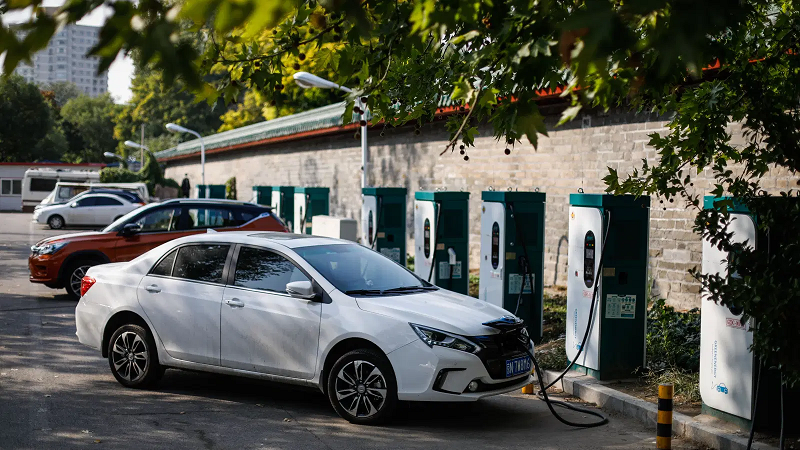
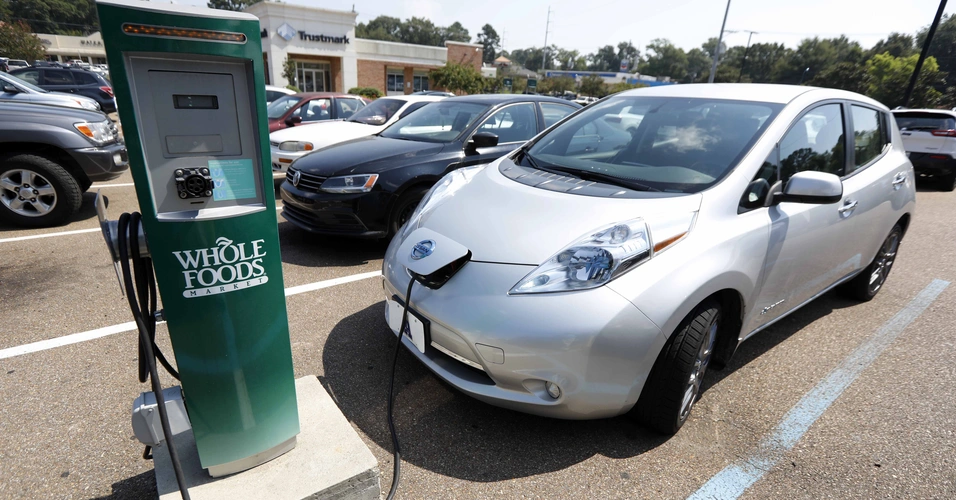
As the world increasingly turns away from fossil fuel, the search for cleaner energy is widening in scope and thus leaves the conventional energy industry with a dire future to reckon with. The evolution of electric cars that is gradually becoming a global race kicked off a movement that supports the campaign of environmentalists pushing to implement the Paris climate Accord.

Every day, reports of companies joining the trend of electric vehicle (EV) production hit the news. Also, off-grid electricity generating companies are creating emerging markets globally, all with the goal of eliminating greenhouse-gas emissions.

The goal has given birth to “climate tech”, a broad set of sectors which tackle the challenge of decarbonizing the global economy, with the aim of reaching net zero emissions before 2050. PwC noted in its State of Climate Tech 2020 report that the scope is getting broader.

“It now encompasses low-to-negative carbon approaches to cut key sectoral sources of emissions across energy, built environment, mobility, heavy industry, and food and land use; plus cross-cutting areas, such as carbon capture and storage, or enabling better carbon management,” the report said.

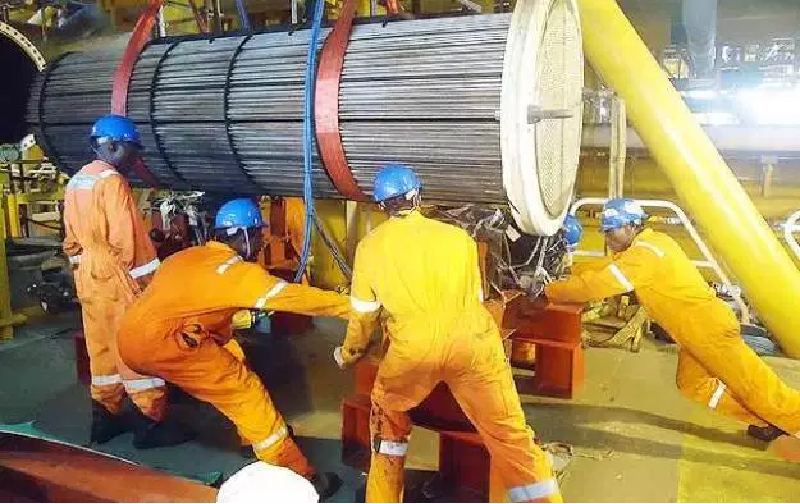
Oil workers

Each success they score marks a significant shift from the old energy system to cleaner energy, and it is good news to the cleaner energy industry as much as it is bad news for the oil industry.

Tesla, a leader in the EV market saw its shares surge after Democrats, who are pro cleaner energy, won the Georgia senatorial election which gives them the majority to control the US Congress.

As the US rejoins the Paris Accord following Joe Biden’s presidential election win, there has been an upsurge in environmental friendly energy emotionalism. Biden backed up his executive order that returned the US to the climate agreement with an order that stops companies from drilling oil and gas on federal lands, halts construction of the Keystone XL pipeline, and directs agencies to review and reverse more than 100 Trump actions on the environment.

Recently, the electric vehicle and solar energy industries have witnessed a surge in investment interest, while the oil industry, immobilized by the outbreak of COVID-19 which crippled travel and industrial activities, saw a decline that reduce global emissions to about 34 billion tonnes a year. Encouraged by this development, investors who are concerned about environment are now pumping money into clean energy startups and companies, with the goal of widening the progress.

Breakthrough Energy Ventures (BEV), the clean-tech fund backed by billionaires including Bill Gates, Jeff Bezos and Michael Bloomberg, raised $1 billion to help start-ups capable of cutting global emissions. BEV had earlier raised $1 billion that it used to back 45 emerging companies. Now the venture capital fund intends to support between 40 and 50 new energy businesses.

BEV used its first $1 billion to support companies working on complex technologies such as clean cobalt and lithium mining, electric aviation, hydropower turbines and emissions-free steel.

The result of these investments has underscored partly, the push behind the interest of investors in cleaner energy. For instance, QuantumScape, maker of next-generation lithium-ion batteries, listed on the New York Stock Exchange in September has leaped in growth. Although its batteries won’t be available before 2025, its market capitalization is currently close to $20 billion, up from $3 billion.

But it is just one among many new energy startups that have emerged from the intimidating shadow of traditional energy to challenge the status quo, and now are disrupting the energy industry.

PwC’s report noted that investment in cleaner energy has soared over the past two years. It said that capital money flowing into start-ups that can help cut emissions hit $16 billion in 2019, up from $400 million in 2013.

While these gains cut across all cleaner energy sectors, electric vehicles and solar energy stand out. The electric vehicle market is projected to hit $802.81 billion by 2027, while solar energy is expected to reach $223.3 billion in 2026.

International Energy Agency (IEA)’s 2020 report indicates that the increase in emerging markets for solar electricity has made it 20-50% cheaper than it estimated in its 2019 outlook. The report said the cost capital for solar is much lower at 2.6-5.0% in Europe and the US, 4,4-5.5% in China and 8.8-10.0% in India.

As many countries join the trend and make policies that enable infrastructure that will foster solar growth, the cost is seen to be winding down below that of grid electricity. The IEA said that the new utility-scale solar projects now cost $30-60/MWh in Europe and the US and just $20-40/MWh in China and India, where revenue support mechanisms such as guaranteed prices are in place. The report projected electricity generation from non-hydro renewables in 2040, reaching 12,872 terawatt hours (TWh), up from 2,873TWh last year.

There is an ongoing race between North America, Asia and Europe to lead the EV market.

The AMR said Asia-pacific and Europe had a combined 78% share in 2019, with the former accounting for 52.3% share. North America and Asia are expected to see improved Compound Annual Growth Rates (CAGRs) of 27.5% and 25.3% respectively. The cumulative of these segments was 40.1% in 2019, and it is expected to reach 51.0% in 2027.

Although there is threatening progress in the cleaner energy industry, the gap between the old and new energies is still wide, and it will take years before it could be bridged. But the time left isn’t for the oil industry to bounce back; it’s more like giving the companies therein the opportunity to switch to cleaner energy.

As the oil industry foresees a bleak future through the evolution, many of its companies are beginning to create exit routes.

Shell is exploring ways to reduce spending on oil and gas production by 30% to 40% for its upstream sector, its largest division. For the downstream sector, the company is cutting 45,000 service stations, the biggest in the world, from its network. This means limiting its oil production to a few key places that include Nigeria, Gulf of Mexico and the North Sea.

British Petroleum (BP), Chevron and Eni had already taken similar steps, cutting jobs and shutting down operations to build new low-carbon businesses in the next decade in preparation for the era of cleaner energy.

Saudi Aramco is also focusing on pumping cleaner fuel. Analysts and sources said the company is working on cutting greenhouse gas emissions to have a better chance to compete as environmental concerns push governments to tighten carbon regulations.

With pro-cleaner energy lawmakers and president in control of the Congress and White House, the United States only needs a legislative backing to seal the fate of the oil industry.