DD
MM
YYYY

PAGES

DD
MM
YYYY

spot_img

PAGES

Home Blog Page 5914

The Intel’s Double Whammy And Why Splitting Into Design and Manufacturing Looks Better

2
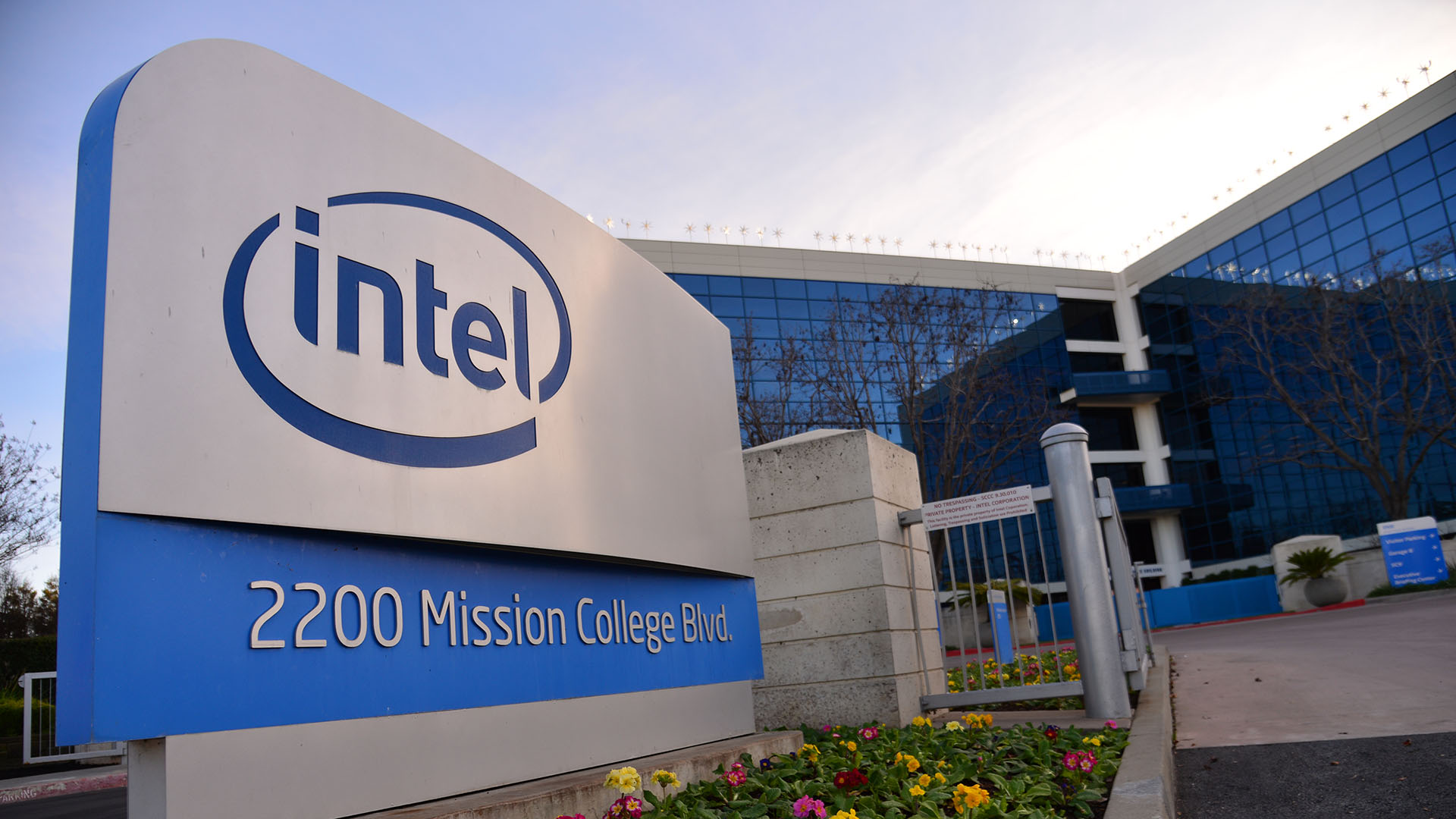
The Robert Noyce Building in Santa Clara, California, is the world headquarters for Intel Corporation. This photo is from Jan. 23, 2019. (Credit: Walden Kirsch/Intel Corporation)

Intel Corp was legendary for decades as it pursued its strategy of designing microchips and manufacturing them in-house. For decades, that integration served well and Intel became the category-king, winning over competitors like AMD. But Intel faces a double whammy: losing the edge on design to Nvidia (and Qualcomm, AMD, etc) on GPU and mobile chipsets; and lagging on manufacturing capabilities to TSMC and Samsung.

But in a recent update, from the incoming new Intel boss, Intel noted that it would continue its old strategy: design chips and make them in-house even though in some cases, it could outsource the manufacturing. Nvidia makes the best chips for graphical processing units. Qualcomm is the industry leader in advanced mobile chipsets. AMD has also picked itself together and now makes extremely great chips.

Intel’s incoming CEO Pat Gelsinger said the company will largely continue to make its future products internally and work to regain its lead in chip manufacturing, even as it uses outside factories “for certain technologies and products.” Intel had for months been considering whether to keep its longheld strategy of both designing and making chips, or outsource to rivals. The company also released its fourth-quarter results a few minutes ahead of schedule on Thursday, saying a hacker stole financially sensitive information from its website.

This is tragic for the United States but not totally unexpected. By the time I graduated with my PhD in Electrical Engineering from Stanford in 2012, it was clear to me that the United States was losing its edge on this area. It’s one of the reasons I decided to reorient my career towards software engineering. There seems to be bipartisan agreement in DC that restoring American semiconductor manufacturing leadership is important for the future of the country. It’s the private sector that needs to understand this and come up with ways to make it happen. “Mr. Gelsinger on Thursday said Intel would have other chip companies make more of its products, even if the bulk of its new chips in the coming few years would be made in house. The shift marks a break from Intel’s traditional reliance on its own factories to make its most-advanced chips—effectively an acknowledgment that it has fallen behind chip-making rivals.”

The only promising sector where Intel remains dominant has been server chips. But unfortunately, that may not matter as most companies like Amazon, Google and Facebook do not need advanced server chips to run their data centers: they parallel common chips and still get the expected results. So, just like that, the differentiation Intel has in a high growing sector, in the cloud mobile era, looks muted.

So, what should Intel do? I think Intel needs to be broken into two companies. Yes, HP did it – and it is time for Intel to follow. Intel design unit has a hangover from the manufacturing business since it will not like to advance faster than the manufacturing capabilities. That makes it hard for the design unit to compete with the likes of Nvidia who do not manufacture their chips but rely on TSMC to make them.

Pat, new Intel boss

TSMC has gotten better on the strength that it has volume since everyone is a customer, from Amazon to AMD to Facebook and indeed everyone not using Intel, Samsung and GlobalFoundries. Due to that financial warchest, TSMC has leapfrogged Intel on manufacturing. Samsung, relying on the “one oasis” and “double play”, remains dominant in the most advanced chip manufacturing domain, making it the preferred customer to Apple. 

So, what has happened here is that Intel is not attracting the best customers because some of those customers are Intel direct competitors. Unlike TSMC which manufactures only, Intel competes on design with many firms. So, separating the companies will allow the design unit to fly and also allow the manufacturing business to bring in new clients. The current hangover between the two businesses is making it hard for Intel to thrive. That it worked in the past when TSMC did not exist does not mean that it can work now. 

(Intel’s focus on speed – the Moore’s law – has distracted it. Today, great processors do not just deliver speed, they offer better power management for mobile systems besides making it easier to run AI processes. Nvidia has done a great job there and with ARM going to Nvidia, that edge is expected to continue.)

Intel has been disintermediated by TSMC with its legendary manufacturing moat dismantled by the global contract chip manufacturer. The implication is that the castle which Intel has protected for decades is largely vulnerable now. Nvidia does not build big foundries but focuses on R&D designs while its manufacturing partners make the chips. It is a leader in modern chips for datacenters, gaming, AI and more. If ARM goes to Nvidia, it will pick a huge part of the mobile sector, and if that happens, Intel will bleed for years
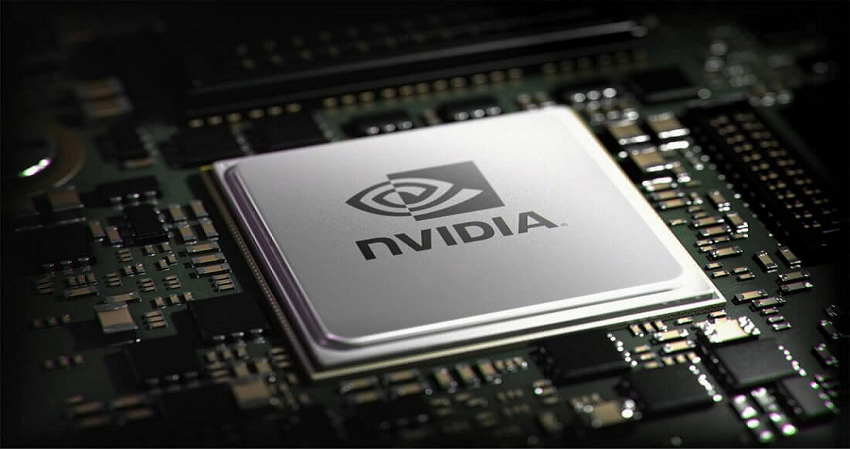
Nvidia chip

TSMC has broken the veil in chip business just like cloud companies have removed the moats of starting digital technology startups. The implication is that more design houses will emerge since manufacturing has been taken care of by TSMC. So, Intel design unit will see more competitors and certainly needs to stay more focused, unbundled from the manufacturing business. On the Intel manufacturing unit, with TSMC there, its future will remain challenged as not many companies will now do business with it since supporting it means making Intel design stronger. On that ground, breaking Intel into two – design and manufacturing – would have been the best outcome. It may not happen immediately but it will happen very soon.

It is an irony: the most important company for American tech is in Taiwan! And it is bringing down Intel, after IBM (the foundry) and will rewire everything.

On Wall Street, two stocks that have been left out of tech’s rally reported earnings that were more about promises than results. Intel said its fourth quarter sales got a boost from the COVID home PC boom, while more lucrative sales to cloud providers and corporate servers dropped. New CEO Pat Gelsinger says he’s getting excited about chips to come. Intel shares, up just 3% over the past year, are down 5% in pre-market trading on Friday. Similarly, IBM reported revenue fell 6% while CEO Arvind Krishna offered visions of a brighter tomorrow. IBM shares, down 5% over the past year, dropped another 8% in pre-market trading. (Fortune newsletter)


Challenges of Small-Scale Businesses in Nigeria

0

People are encouraged to start businesses, no matter how little, instead of searching for jobs they might not find. In Nigeria today, small-scale businesses are springing up in every nook and cranny, providing sources of livelihood to many Nigerians. This is an encouraging development, especially when considering how many people they will remove from the labour market. Even the government has set up several intervention programmes to encourage small and medium enterprises (SMEs). However, many small scale business owners are passing through a lot of difficulties and many of them have closed down their businesses as a result of these challenges.

Experiences of Some Small Scale Business Owners

In this section, the challenges of four small scale business owners are narrated to reveal what is affecting or has affected their businesses.

Challenges Faced by Uche, the Poultry Farmer

Uche started his small poultry farming business with two hundred birds and was hoping to increase the number to two hundred and fifty birds when he sold off the ones he was growing. Unfortunately for him, the price of feed shot up a few weeks after he started the farm so he had to borrow to buy more feed for the chickens. That was not all, some birds died and some became stunted. He also complained of a few birds with “factory faults”, which he had to consume because he was sure no one would buy them. By the time the birds were ready for sale, they were short by eleven. But that was the least of the problem.

When Uche went to the contacts he made before and while rearing his birds, he discovered that “I will buy” is different from “I want to buy”. These people began to give funny excuses why they couldn’t buy his birds. After much effort, he found customers but the amount they priced the birds were not as palatable as he had expected. That was when he learnt that people preferred patronising big established farms to small start-ups. To cut the long story short, Uche’s next batch of birds was one hundred and seventy in number and no longer two hundred and fifty as he initially planned. His reason was that the cost of feeds and chicks have gone up and he was afraid of being stranded again.

Challenges Faced by Jane, the Event Planner

Jane went into her business with the savings she made from her NYSC. Because the business is capital intensive, she bought some pieces of equipment and invested most of her capital in publicity. She worked with different vendors, who provided the things her customers asked for. So, Jane gets the contract and then pays other business owners to work with her. Jane’s problem started when these vendors began to disappoint her, steal her contracts, and/or increase their prices. Jane found herself in a fix because she had no capital to get all she needs for the job, including labour. Today, she is considering quitting the business and searching for a 9-5 job.

Frank, the Auto Mechanic

Frank went into the auto mechanic business shortly after his NYSC but he had no physical workshop. He printed flyers and business cards and shared them around. He had good patronage because he made it easier for people to repair their cars: he goes to their homes for the repair or they meet at an agreed place that is convenient for the customers. However, he complained that many people don’t pay him the agreed amount for his services once he is done with the work. Some plead with him to accept the little they have while others use threats and intimidation to force him into collecting what they wanted to pay. There are also those that promise to pay up later but, to date, they are nowhere to be found. Right now, Frank is wondering whether his mobile auto mechanic workshop is worth it at all.

Onyinye, the Restaurateur

Onyinye had a shack, where she sells food to her numerous customers, who were mostly artisans and secondary school students. She had hoped to grow the business into a big restaurant, considering the profit she made from it. Onyinye’s business was booming until she employed her husband to help in collecting money from absconding customers. The man’s presence spelt doom for Onyinye and her business because he did not only allow his friends to buy food on credit and never pay, he also took her money to drink and gamble. Other miscreants, who discovered Onyinye’s weak point, began to buy food on credit and later claimed they paid her husband. Furthermore, since Onyinye was the breadwinner of the family, she ran her home from her little business. Bit by bit, the business began to go down until finally, it packed up. Today, Onyinye hawks polythene bag at a popular market in Enugu.

Analyses of the Challenges

The experiences of these small scale business owners are what many others face in Nigeria today. Note that these persons did not complain about taxes and levies they had to pay, even for Onyinye that had a physical office. This shows that tax is not their problem and so should not be regarded as one of the major challenges faced by business owners in Nigeria. So long as they are not making sales, they can pay those taxes. From the stories of these persons, it will be discovered that their challenges are:

  1. Inflation
  2. Insufficient funds
  3. Competition from larger companies
  4. Natural disaster
  5. Poverty
  6. Lack of managerial skills
  7. Fraudulent customers
  8. Bad employees and partners

Some of these challenges are beyond the control of business owners but many could be handled through the development of good managerial skills. However, many small-scale business owners have been able to battle through these challenges and came out victorious. It is, therefore, worthy to state that business owners encountering any of the listed challenges should seek professional advice so they can scale through them. Quitting is never the best option.

Google Reached Agreement with France to Pay News Publishers As Australia Pushes Legislation to that Effect

0
The US is after Google also

Google and French media have reached a landmark agreement to pay publishers for their contents. The web search giant and APIG, which represents French media said on Thursday in a joint statement that they have agreed on principles for how news outlets should be compensated for their online publications being used as search results by Google.

“This agreement establishes a framework within which Google will negotiate individual licensing agreements with IPG certified publishers within APIG’s membership, while reflecting the principles of the law. These agreements will cover publishers’ neighboring rights, and allow for participation in News Showcase, a new licensing program recently launched by Google to provide readers access to enriched content,” the statement said.

Controversy has trailed the financial relationship between Google and publishers for years, as news outlets seek due compensation for their contents being used by the Silicon-based company to answer search queries and serve ads.

Under the 2019 European Union copyright laws, search engines and social media platforms are required to share revenue with publishers if their contents are displayed. EU members have June 7 deadline to implement the law. Given its longstanding take on the Google/publishers’ financial tussle, France swiftly translated the copyright laws into national laws, becoming the first EU nation to do so. Other EU member states are expected to do the same before the June 7 deadline.

Based on the new rule, Google will negotiate licensing agreements with individual publishers. The agreement said the “pay” will be determined by criteria such as the contribution of the newspaper to political and general information, the daily volume of publications or the monthly internet audience.

CEO of Google

Sebastien Missoffe, Managing Director of Google France said the agreement proves that Google is committed to upholding publishers’ right to earn from their online content.

“This agreement is a major step for Google. It confirms our commitment to press editors within the framework of French law on neighboring rights. It opens up new perspectives for our partners, and we are happy to contribute to their development in the digital age and support journalism,” he said.

Last year, Google doled out $1 billion for a news-support program, News Showcase, designed to help struggling newsrooms. The program was announced months after the search engine operator halved adsense earnings for publishers citing the impact of COVID-19 pandemic on businesses which potentially reduced ads. Google has signed agreements with about 450 media outlets across more than 12 countries since then.

However, the France agreement has set a trajectory for other countries in and outside Europe, and it may birth controversies that will disturb Google and social media platforms.

Australia has been working on a law that will force Google and social media platforms to pay publishers. Google and Facebook have dominated the advertising space for years now, serving ads through publications and paying publishers little to nothing. Critics believe that the situation leaves publishers reeling on the barest minimum.

The new legislation means Facebook and Google will have to bargain with newsrooms either individually or collectively – and to enter arbitration if the parties can’t reach an agreement within three months, the Australian Competition and Consumer Commission which put out the legislation said.

Google said its services will be halted in Australia if the proposed legislation takes effect.

“If this version of the Code were to become law, it would give us no real choice but to stop making Google Search available in Australia,” Google Australian managing director Mel Silva told lawmakers. “That would be a bad outcome not just for us, but for the Australian people, media diversity and small businesses who use Google Search.”

According to Silva, the major part of the controversy is that the proposed Code “would require payments simply for links and snippets just to news results in Search.” This is so because “the free service we offer Australian users, and our business model, has been built on the ability to link freely between websites,” she explained.

Both Google and Facebook have opposed the code, saying it will have a negative impact on how their services are served in Australia.

Facebook’s vice president of public policy for Asia, Simon Milner said the company could ultimately block news content in Australia.

But Prime Minister Scott Morris said the threat to halt services in Australian will change nothing.

“Let me be clear, Australia makes our rules for things you can do in Australia. That’s done in our parliament. It’s done by our government and that’s how things work here in Australia and people who want to work with that in Australia, you’re very welcome. We don’t respond to threats,” he said in a press briefing.

Although Australia’s proposed legislation is a bit different from France’s law, they both show that many countries are becoming more determined to confront the American big tech companies. Google is proposing that it’d be allowed to use the News Showcase to pay publishers in Australia, as it already has seven publishers in its payroll in the country under the program.

While antimonopoly advocates believe Australian proposed legislation will encourage competition by giving other players equal chance in the country, and also uplift the livelihood of publishers, Milner fears it would hurt the World Wide Web.

Quoting inventor of the web, Sir Tim Berners-Lee, he told Australian lawmakers: “Sir Tim Berners-Lee said, this precedent set by this law could make the web unworkable around the world.”

Limited Velocity On The Forbes’ Richest Africans

0

The velocity of wealth in Africa is very low. Two decades ago, Forbes (global) had the Walmart heirs within the 3rd to 6th positions as America’s richest people. But today, most of them have disappeared from the top league. Sure, Gates, Buffet and some regulars remain. 

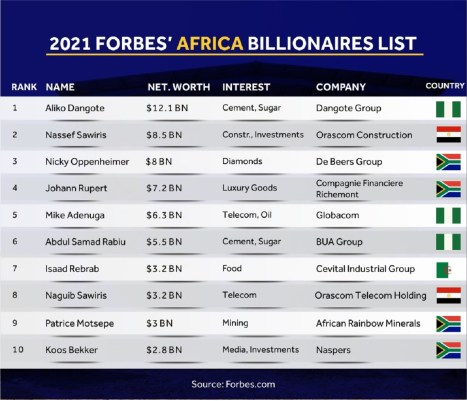
But you can see movements with Elon Musk, Jeff Bezos, Zuckerberg, etc coming up. But the Forbes Africa list is pure and plain static with no movement. Nigerian billionaires – Aliko Dangote, Mike Adenuga and Abdul Samad Rabiu – are on the list. There is no women in this year’s ranking.

Technology-anchored super-wealth remains an alien in Africa – but that will change within a decade!

The full list of African Billionaires

Rank Name Net Worth Age Origin of Wealth
#1 Aliko Dangote $12.1 B 63 cement, sugar
#2 Nassef Sawiris $8.5 B 60 construction, investments
#3 Nicky Oppenheimer $8 B 75 diamonds
#4 Johann Rupert $7.2 B 70 luxury goods
#5 Mike Adenuga $6.3 B 67 telecom, oil
#6 Abdulsamad Rabiu $5.5 B 60 cement, sugar
#7 Issad Rebrab $4.8 B 77 food
#8 Naguib Sawiris $3.2 B 66 telecom
#9 Patrice Motsepe $3 B 58 mining
#10 Koos Bekker $2.8 B 68 media, investments
#11 Mohamed Mansour $2.5 B 73 diversified
#12 Aziz Akhannouch $2 B 60 petroleum, diversified
#13 Mohammed Dewji $1.6 B 45 diversified
#14 Youssef Mansour $1.5 B 75 diversified
#15 Othman Benjelloun $1.3 B 88 banking, insurance
#16 Michiel Le Roux $1.2 B 71 banking
#16 Strive Masiyiwa $1.2 B 59 telecom
#18 Yasseen Mansour $1.1 B 59 diversified

The Central Bank of Nigeria’s Big Threat On Nigerian Exporters

3
Central Bank Governor, Nigeria

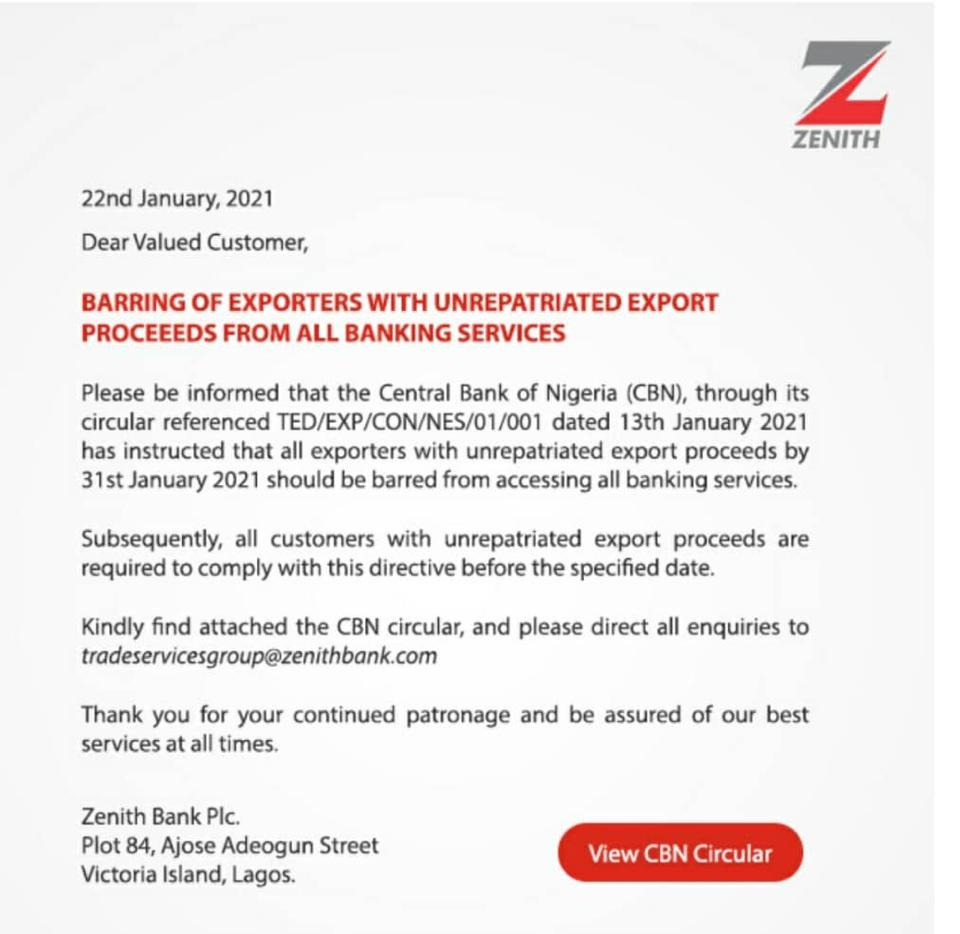
The Central Bank of Nigeria is always fighting moving targets. The latest is that the apex bank wants to bar exporters who do not repatriate their export proceeds from participating in Nigeria’s banking services. I am happy the CBN now understands the “voodoo”  in the system where some companies exist to “export” exchange rate arbitration and make tons of money on it. 

Nigerian exporters that have not repatriated export proceeds will be barred from all banking services from Jan. 31, the central bank said. The new directive applies to exports up until June last year, central bank spokesman, Osita Nwanisobi said by text message on Saturday. “Proceeds for oil is to be repatriated within 90 days and non-oil within 180 days.

The measures are part of an effort to defend the country’s currency by targeting importers and exporters with tougher regulations. That’s after a plunge in oil prices and the coronavirus pandemic led to dollar shortages in Africa’s largest crude producer resulting in a wide spread between the official exchange rate and the parallel market. The differential of about 25% has created an incentive for exporters to divert forex income to unofficial channels.

Yes, someone wants to “ship” money out of Nigeria to New York. He comes to you who exports palm oil from Umuahia to London; he credits you. The person paying you in London instead of wiring money to you in Lagos pays the person in New York. Magically, that New York company has moved money and the apex bank has no trace of it. Do that many times, the Naira remains beaten down.

Of course, companies are resorting to that because CBN gave them a really bad choice: The CBN expects exporters to sell their export proceeds through the I&E window. I&E window currently trades at N395/$1. No exporter will sell their foreign exchange at that rate when they can get willing buyers at N485 to N495.

So, most exporters have gone to open overseas accounts or alternatives, and CBN has lost control! Now, you see this letter (below)