
DD
MM
YYYY

PAGES

DD
MM
YYYY

spot_img

PAGES

Home Blog Page 5930

Google Loon Becomes First Casualty of Elon Musk’s SpaceX Starlink

2

Good night, Google Loon: “The Google’s balloon-internet project aimed at providing internet services for the underserved is getting shut down. The subsidiary announced the project is winding down because it’s no longer sustainable”. Blame Elon Musk’s Starlink for this. As we teach in our Tekedia Mini-MBA innovation course, when a company sets a new basis of competition, incumbents could just lose hope and give up. That is what happened here: Loon has no future and any product iteration would be hopeless because Musk’s SpaceX has  recorded numbers which many thought were not possible.

“We talk a lot about connecting the next billion users, but the reality is Loon has been chasing the hardest problem of all in connectivity – the last billion users: the communities in areas too difficult or remote to reach, or the areas where delivering service with existing technologies is just too expensive for everyday people,” Alastair Westgarth, Loon CEO wrote on Medium.

“While we’ve found a number of willing partners along the way, we haven’t found a way to get the costs low enough to build a long term, sustainable business. Developing radical new technology is inherently risky, but that doesn’t make breaking this news any easier. Today I’m sad to share that Loon will be winding down,” he added.

Last July, Loon launched the internet balloon in Kenya in partnership with Telkom after many trials, and recorded a measure of success that kept hope alive that the project will be successful.

This testimonial did it:  “Hall [a British user] had been getting download speeds of only 0.5 megabits per second with BT internet, he said. Now with Starlink, he’s averaging 85 Mbps.” With that, many providers would be shutting down very soon because Musk has changed the game even before he starts!

There has never been in the history of the world where a man focuses on dealing with many big problems, at once, and making tons of money doing so. He is peerless, and the world is better that he is here.

But his work has been largely esoteric when it comes to places like Africa, the land of his birth. But that is changing very soon. Yes, Elon’s other company – SpaceX, the rocket one – is now shipping his Starlink kits to selected customers in Europe: “Hall had been getting download speeds of only 0.5 megabits per second with BT internet, he said. Now with Starlink, he’s averaging 85 Mbps. “Within the hour we ran a Zoom quiz with grandchildren — it was wonderful,” he said.”

All these balloon-based companies will fade as the satellite era begins for rural broadband. Satellite has better unit economics and the technology will just keep getting better. Some GSM operators would be on this crosshairs also.

Comment on LinkedIn Feed

Comment #1: Of note, rural dwellers tend to be at the bottom of any national average household income. It will be interesting to see how affordability will come in to play with Starlink’s setup cost at about USD 500 and a monthly recurring cost of USD 100.

Comment #2: This is why I have issues with Silicon Valley perspective. The RISE of one thing is always literally interpreted as the DOWNFALL of another. Starlink is not the reason Loon went down. When most people were busy here celebrating the launch of Loon just few months ago, I made it clear that the thing “ain’t gonna fly”. It was so obvious then, not because of Starlink, but because of the nature of those businesses (and the way the Future is shaped). They were designed to fail from the beginning. The e-commerce drone hype is next, it will take longer to collapse, and to be fair, even though it won’t be a total collapse like the Loon, it’s still going to be a collapse. It won’t take off in the manner people are expecting it will. There’s a cap on its Promise.

One thing is clear to me, and it’s the fact that Siliconites don’t usually have Clarity of Purpose and or Process before doing anything. They just run it like an experiment. If it works, good, if not, good. Google Loon is exactly that, an experiment. It was never serious, by design. Loon puncturing isn’t anything to be surprised about. Starlink didn’t kill it, it killed itself by Design. A time will come when you all will start taking the things I say very seriously.

My Response to #2: Great insight – but would there still be Loon if there is no Starlink? I do think so. Loon was heading to win a rural broadband connectivity contract with US government. That was Loon’s deal. But just from nowhere, Starlink took it. I still believe this: without Starlink, Loon would have picked that close to $1 billion and it would still be here. That Loon’s issue does not mean it could not serve “niche” rural areas the big telcos have forgotten. But with Starlink there, from US to EU, Loon’s sees no future.

Comment #3: He is selling 100Mbps/ 20 Mbps (monthly information rate) at $99. He has killed terrestrial telecommunication companies. Behold here comes the satellite based internet with no line of sight challenge and at low earth orbit less latency challenge. The speed means the stock market will be his friend soon. And the whole fiber thing will be like a past glory. Then he will begin to deliver 5G. And with his space ship he can do robotic repairs and replacement easily. Musk is the future of business.

Elon Musk’s Playbook for Disruption of Global Telecom Sector
Loon, Google’s Balloon-internet is Winding Down

0

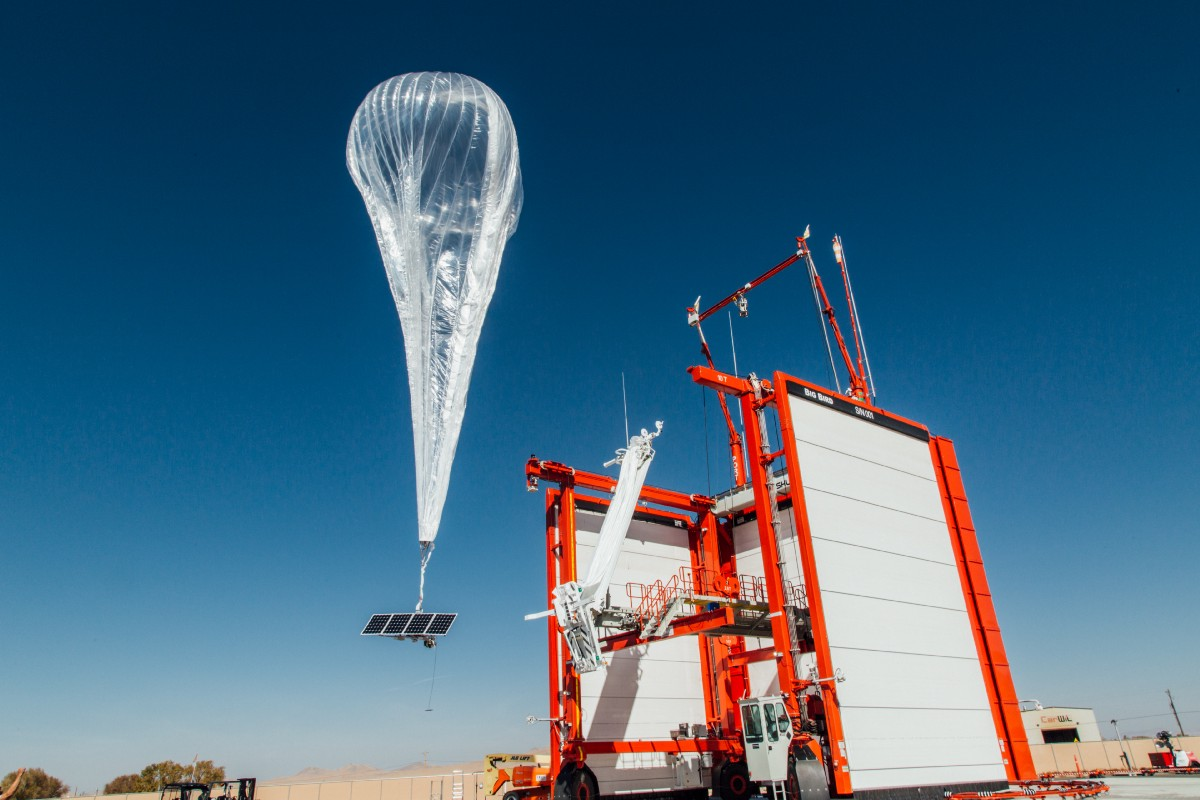
Loon, Google’s balloon-internet project aimed at providing internet services for the underserved is getting shut down. The subsidiary announced the project is winding down because it’s no longer sustainable.

“We talk a lot about connecting the next billion users, but the reality is Loon has been chasing the hardest problem of all in connectivity – the last billion users: the communities in areas too difficult or remote to reach, or the areas where delivering service with existing technologies is just too expensive for everyday people,” Alastair Westgarth, Loon CEO wrote on Medium.

“While we’ve found a number of willing partners along the way, we haven’t found a way to get the costs low enough to build a long term, sustainable business. Developing radical new technology is inherently risky, but that doesn’t make breaking this news any easier. Today I’m sad to share that Loon will be winding down,” he added.

Last July, Loon launched the internet balloon in Kenya in partnership with Telkom after many trials, and recorded a measure of success that kept hope alive that the project will be successful.

The service was designed to cover a region of about 50,000 sq.km of rural Kenya.

In the past, Loon had been used to provide internet services in times of distress. For instance, in 2017, during the massive flooding in Peru, and after Hurricane Maria in Puerto Rico, it helped provide the internet for about 200,000 people.

Founded in 2011, Loon works by beaming internet connectivity from ground stations to balloons 20 km overhead. The balloons are linked to the ground stations that have been connected to Telkom’s network. The ground stations use millimeter wave spectrum to send connectivity from the ground to the balloons overhead.

However, there were challenges. For instance, in Kenya, Loon acknowledged that impediments like the wind patterns and restricted airspace would hinder internet service. And because the balloons are solar-powered, users will only have the 4GLte internet service from 6: 00 am to 9: 00 pm. But the companies hope that the technology will get better as they gain more experience flying in Kenya, and dispatching more balloons to the service region.

The shutdown means that the 2019 partnership between Loon and SoftBank’s unit, HAPSMobile, who invested $125 million into the internet company, to bring more people, places, and things online, may have ended.

Loon was created using what engineers called a “garbage bag-looking” balloon for early stage prototypes. After years of tests, in 2018, it became Alphabet, Google’s parent company subsidiary.

Loon’s failure means that Africa now lost a close chance of filling its wide internet deficit. A 2019 report by the Alliance for Affordable Internet said only about 28% of Africa’s over 1.3 billion people have access to the internet. Majority of those who lack access to the internet are rural dwellers, and that made Loon their only viable option to get online.

Google and Facebook have satellite and undersea cable projects aimed to provide internet service for the world’s underserved, but they have been dragging feet.

Remember To Join Tekedia Live Webinar On Saturday, Jan 23, 4pm WAT

0

A friendly reminder on Tekedia Live scheduled on Saturday, Jan 23. It is an open one and everyone’s invited as we kickstart the new year.

  • Topic: The 2021 Winning Playbooks
  • Presenter: Prof Ndubuisi Ekekwe, Lead Faculty, Tekedia Institute
  • Structure: Lead presentation and then Q/As
  • Date: Saturday, Jan 23, 2021
  • Time: 4pm – 5.30pm WAT
  • Zoom Link:  click here for it

As China Digitizes Yuan For Potential Attack on US Dollars, Nigeria Has Lessons for Africa

4

President Biden has one key challenge in his presidency: China. Yes, everything is going to come around China as China opens a playbook to “overtake” US economically, and disintermediate the US dollars. China is creating a digital Yuan, and if that happens, and it reduces transactional friction in commerce, China can scale that mission through its global sovereign lending apparatus.

China has begun the third round of its digital currency testing. The exercise took off on January 20, in Shenzhen, as part of a larger scheme to introduce the E-Yuan in mainland China. As part of the project, a total of 20 million digital yuan will be issued to residents of the local Longhua District.

Pandaily reported that up to 100,000 so-called “red envelopes”, each with an amount of 200 yuan, will be given out to those who have purchased social insurance from the commercial entities they work for and intend to stay in the jurisdiction for the upcoming lunar new year holiday.

While dislodging the US dollars may not happen in North America and Europe easily, Africa and Latin America could easily fall into place, faster. And if that happens, you could see a new equilibrium on currency emerge. 

Sure, people do argue that China cannot assume that position due to its recent history. Possibly, but we need to understand one thing: technology reduces the trust burden by making it easier for demand and supply to attain new equilibrium faster through removal of information asymmetry.  

A digital yuan will do what Uber did on our fears (allowing strangers to give us rides), and Airbnb did on grandma’s warning (comfortably sleeping in a stranger’s house). So, while the analog Yuan may not have been trusted, the digital yuan can tap into the pervasive digital trust-enhancing systems to elevate its acceptability in global commerce.

So, as we thank Mr. Biden for taking Nigeria out of that dreaded 13-nation “ban” list which his predecessor lumped Nigeria alongside Yemen and Somali, he has work to do to keep his national currency the default for global commerce.

For Nigeria, I have long maintained that if we move fast, we can make Lagos the epicenter of the new (digital) currency in Africa. The opportunity remains for that. We need to watch both frontal and flank attacks from mid-size and smaller nations like Rwanda and their positioning on this. The US has largely not bothered on the potential dislocation from cryptocurrency but the fact remains that Bitcon may not be its challenge, rather e-yuan may be the real threat to the US dollars.

Jerome Powell, the U.S Fed Reserve Chairman, spoke on Bitcoin and cryptocurrency, among others. Here are excerpts. The full video below.

“Since we are the world’s reserve currency, we actually think we need to get this right, and we don’t feel an urge or need to be first,” he said. “We effectively already have a first-mover advantage, because we’re the reserve currency.”

“We’ve been very focused… on potential regulatory answers for global stablecoins, in particular,” said Powell in response to a question about CBDCs, or central bank digital currencies.

“So that’s been a high-level focus, and that will continue to be a high-level focus because they could become systemically important overnight and we don’t begin to have, you know, our arms around the potential risks and how to manage those risks, and the public will expect we do and has every right to expect that… It’s a very high priority.”

Comment on LinkedIn Feed

Comment #1: Prof. Bitcoin is a liquidity blackhole; and every enlighten government is aware of the inherent threats it poses to her hegemony of its economy. China is not the first to go this route. Venezuela came up with the Petro (digital fiat) in 2017, but it flopped.

While creating a digital Yuan is one thing, the nature of the currency is another. Will it be inflationary or deflationary; will it have a limited supply, or it will be infinite printing like the traditional fiat of every nation state is today.

Digitization of fiat currencies by any sovereign state is, for me, an attempt to compete with Bitcoin or other digital protocols and assets like Ethereum. The missing pieces are decentralization, trust, freedom and perception.

Bacause a sovereign state is always susceptible to the financial priest, governments, politicians, and most of all, inflation; I don’t see the people adopting any of her copycat digital currency for long, as these are the antithesis of, e.g. Bitcoin.

As more of these smart contract platforms continues to scale in usage, economic bandwidth and more technological advancements like we’re witnessing with the rise of DeFi on Ethereum, the digital Yuan or any similar nation state currency, will be dead on arrival.

My Response: I am not sure we can compare Venezuela with China in anyway. Unlike the South American nation, China has leverages at global level: it is the world’s factory. If China digitizes Yuan, buyers from China will save between 10-15% lost via USD intermediation. Doing that is not rocket science: have fintech and banks (OPay, Flutterwave, GTBank) as agents where people can use Naira to get E-Yuan with wallet credited. Go to Alibaba website and pay Chinese merchants (who will not list on Yuan, not USD) directly. Because transactions are cleared in Beijing, USD goes. It does not need to be decentralized at origination but it needs agents to work.

China is on the 3rd trial after the 1st and second trials went fine. E-Yuan is not crypto, it is avoiding clearing global transactions from New York and London via wallets maintained in Beijing. The deal is eliminating inter-border frictions but warehoused in China. People will use it to save 15% on cost. Visit NAU Awka, Igbo traders are learning Chinese in the Confucius school to help them cut-out merchants in China and buy directly from factory who typically speak only Mandarin. Tell those men by removing USD, they can save more, you will be surprised.

China Launches Third Trial for its Digital Currency – E-yuan

China Launches Third Trial for its Digital Currency – E-yuan

1

China has begun the third round of its digital currency testing. The exercise took off on January 20, in Shenzhen, as part of a larger scheme to introduce the E-Yuan in mainland China. As part of the project, a total of 20 million digital yuan will be issued to residents of the local Longhua District.

Pandaily reported that up to 100,000 so-called “red envelopes”, each with an amount of 200 yuan, will be given out to those who have purchased social insurance from the commercial entities they work for and intend to stay in the jurisdiction for the upcoming lunar new year holiday.

The pilot run will be conducted in the form of a lottery, similar to former experiments. At 10:00 a.m. on Jan. 26, the event will draw lots to select 100,000 winners, according to local media Yangcheng Evening News.

This is the third round of digital currency experimentation going on in the city.

The first test was held in Luohu District, where the central bank issued 10 million e-yuan in October 2020. When a second round was conducted in Futian District at the beginning of this year, transactions rose to as much as about 18 million yuan in the ten days between Jan. 7 and 17.

The second round also expanded the e-yuan use scenarios, increasing participating merchants and shops from 3,000 to more than 10,000. Among the fields covered were transportation, medical, entertainment and retailing.

The newly-launched round also added two more supporting banks – the Bank of Communications and the Postal Savings Bank of China.

Besides Shenzhen, the central bank last year carried out closed tests in Suzhou and Beijing.

Pandaily reported that the digital currency frenzy is not confined to the mainland, as Hong Kong is also looking forward to testing digital currencies in the near future.

On Dec. 4, 2020, the city’s Monetary Authority began working with the Central Bank’s Digital Currency Research Institute to study technical tests for the use of digital currency for cross-border payments, and make corresponding technical preparations, according to the official former’s website.

Since 2014, China has been studying merits and demerits of digital currency and how best to roll it out so that it doesn’t disrupt existing financial structure. Developing a national digital currency involves complex technicalities that take time, and if done wrongly, would make users lose their money.

China is pushing to become the first major country in the world capable of monitoring economic activity in real-time through digital currency called e-yuan, and the central bank governor, Yi Gang wants to learn real-time data management from the private sector to guide the growth.

The e-yuan, called Digital Currency Electronic Payment (DC/EP), will facilitate e-wallet payments in place of fiat, allowing citizens to carry out financial transactions digitally. The Chinese central bank is speeding the project up as it aims to develop a cashless economy.

Former IBM executive, Richard Turrin who is writing a book on China’s digital currency said “the time table has been sped up by the coronavirus and the realpolitik of US-China relations.”

But apart from that, China recently has increased its oversight on its online industry, including the fintech sector which has blossomed without government’s regulatory interference over the years. The recent clampdown on big players in China’s online financial space, including Ant Group, shows the government’s growing interest in the sector. And the launch of e-yuan which is supposed to be in partnership with big players in the fintech, is believed to be part of the government’s ploy to keep an eye on the industry.

Moreover, China appears keen to lead the world of digital currency by being the first country to launch national digital money that is widely used across the country. The plan is believed to have been accelerated by the outbreak of COVID-19 and US’ disapproval of Libra.

“China is positioning itself as a trailblazer when it comes to the future of money,” said Henri Arslanian, a cryptocurrency mogul and adviser to central bank. “Libra was the catalyst, and COVID-19 has accelerated central bank activities.”

However, there have been concerns about how a national digital currency will affect the banks.

The PBOC told the IMF that the e-yuan will be likely limited to small retail transactions by setting maximum daily and yearly limits on payments and that it will only process large amounts by appointment. It added that it may apply charges for large sum or high-frequency transactions, and will not offer interest on accounts.

The central bank conducting the third digital currency trial indicates that a promising amount of success has been recorded, and that China is on the verge of releasing e-yuan for national use.