DD
MM
YYYY

PAGES

DD
MM
YYYY

spot_img

PAGES

Home Blog Page 5950

Nigerian Telecom Subscribers Hit 208 Million – NCC

0

Nigerian Communications Commission (NCC) said on Thursday that the number of active telephone subscribers across the country has risen to 208 million, in the latest data indicating continuous month-on-month growth in the telecom industry.

NCC’s Executive Vice Chairman, Umar Danbatta, was at a briefing for the new Permanent Secretary of the Federal Ministry of Communications and Digital Economy, Festus Daudu, on the functions and regulatory activities of the commission, when the achievement was announced. Danbatta through the commission disclosed this among other developments in the telecom industry.

“As at November 2020, active telephony subscribers stood at 208 million with teledensity standing at 108.92 per cent while active internet subscriptions were 154.9 million and a broadband penetration of 45.07 per cent, among others,” he said.

The EVC said that third generation (3G) and fourth generation (4G) base transceiver stations deployment in Nigeria had increased from 30,000 to 53,460. He added that fibre optic transmission cables expanded from 47,000km to 54,725km in the last five years, resulting in improved broadband/telecoms service delivery to Nigerians.

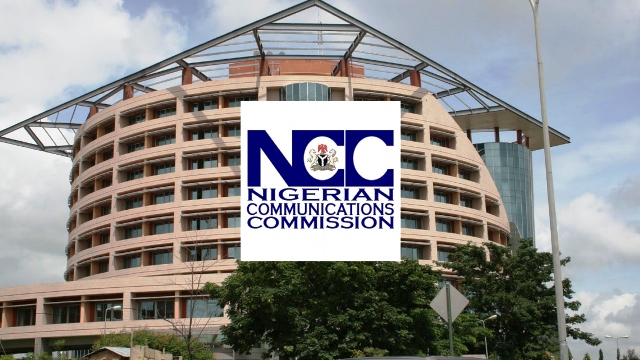
NCC HQ

“The BTS, fibre optic cables and other related infrastructure are central to the provision of improved service experience for Nigerians by their respective telecoms service providers,” he said, adding that the licensed Infrastructure Companies (InfraCos) are also expected to add 38,296km to optic fibre cables when they commence full operations.

Before the latest figures announced by the NCC, industry operators had put the number of telephone subscribers in Nigeria at about 207 million.

Danbatta said the commission had introduced various interventions such as the issuance of directives to mobile network operators to protect consumers from being shortchanged. According to him, they include the declaration of 2017 as year of the Telecom Line for lodging and resolving consumer complaints and the provision of the 112 Emergency number and activation of 19 emergency Communications Centers (ECCs) across the country.

Others include the enforcement of mobile number portability as well as the introduction of the Do-Not-Disturb 2442 to check cases of unsolicited text messages, and issuance of various directions to protect the consumers from being short-changed, ensuring smooth transition of Etisalat to 9Mobile, and enforcement of mobile number portability.

He said the number of subscriptions to DND service had hit over 30 million as the service empowered Nigerians to be able to protect themselves from the menace of unsolicited text messages.

Danbatta promised that the commission will do more to ensure that the telecom industry attain greater heights that will contribute to the growth of the economy.

“The Commission will continue to put in its best in the discharge of its mandates, especially in facilitating the deployment of broadband, which is central to diversifying the Nigerian economy and national development.

“Also, it is our belief that the communications industry, under the leadership of the Ministry of Communications and Digital Economy, will experience more quantum leaps and retain its current leadership role in the telecommunications space,” he said.

Speaking on the progress, the new permanent secretary said the contribution of the telecoms sector to the country’s Gross Domestic Product had been impressive.

Daudu, however, urged the commission to increase its collaboration and teamwork with the communications ministry, other agencies and industry stakeholders towards achieving the Federal Government’s objective of a digital economy.

“I want to thank NCC for its contribution to the Nigerian economy so far. I am not exaggerating about the achievements of NCC, in terms of contribution to GDP and how NCC’s effective regulatory role has been helping the economy in so many ways,” he said.

The Nigerian Bureau of Statistics (NBS)’ Q3 report listed the telecom industry among the top six contributors to the Nigerian economy. The order of contribution to GDP is as follows: Agriculture 30.77%, Trade 13.88%, Info & Communication 13.47%, Manufacturing 8.93%, Mining & Quarrying 8.91% and Real Estate 5.58%.

The Need to Make Health Insurance Mandatory for Pregnant Women and Children

0

Ada found out she was pregnant barely five months after the previous one. She was thrilled and afraid at the same time. Her husband, Obi, was uncomfortable because his business was going through some challenges and he still had to take care of his family, including his five-month-old twins. However, considering that Ada delivered the set of twins vaginally, they hoped this second one would also come without complications. But alas, they were about to be shocked.

Seven months into her pregnancy, Ada began to notice the pregnancy came with challenges she didn’t experience in the first one. She began to experience false labour, especially at night. She complained at the antenatal clinic and was told it happens to many women and she has nothing to worry about. By the eighth month of her pregnancy, the contractions continued even though the cervix wasn’t opening. In addition to this, she began to retain water on her legs. But maybe she didn’t see it as a problem, after all, it happens too. However, the midwives at the clinic began to worry because the foetus was lying in a non-cephalic presentation. She was sent for a scan and it was also discovered the foetal weight was much. That was when Ada was referred to a doctor.

Of course, doctors don’t take chances with pregnant women, especially when there are issues. The doctor told Ada to start preparing for the caesarean section (CS) and nothing more. Ada told her husband, Obi, and they both went to meet the doctor to see what it will take to have CS. Well, your guess is as good as mine. Anyway, Obi didn’t have the amount of money the doctor mentioned as the initial deposit. He began to call for help but many turned deaf to his plea – it’s his responsibility, right? Well, suggestions began to come from left, right, and centre; and the poor man and his wife began to listen to them – do they have a choice. This was how Ada was taken to a woman that is “an expert in repositioning foetus”, and later taken to another hospital for delivery when labour started fully. To cut the whole story short, Ada’s labour lasted longer than normal and they still had to go for CS. But unfortunately, Obi lost Ada and the beautiful daughter that would have been born to him.

This story is real; the only difference is the changes in the names.Many people may relate to this couple’s experience. Some women died as a result of something like that. Many have been incapacitated for life because of such an abysmal experience. It is easy to blame people like this when you have not been in their shoes but, believe me, you may do exactly what that couple did if you find yourself in their position. Today, Obi laments his wife’s death and blames it on lack of funds. According to him, if he had the amount the first doctor demanded, he wouldn’t have sought help or even heard all the suggestions they followed. This is why it is unacceptable that pregnant women should be expected to pay for their delivery through the out-of-pocket method. They should be mandated to obtain health insurance before their due date.

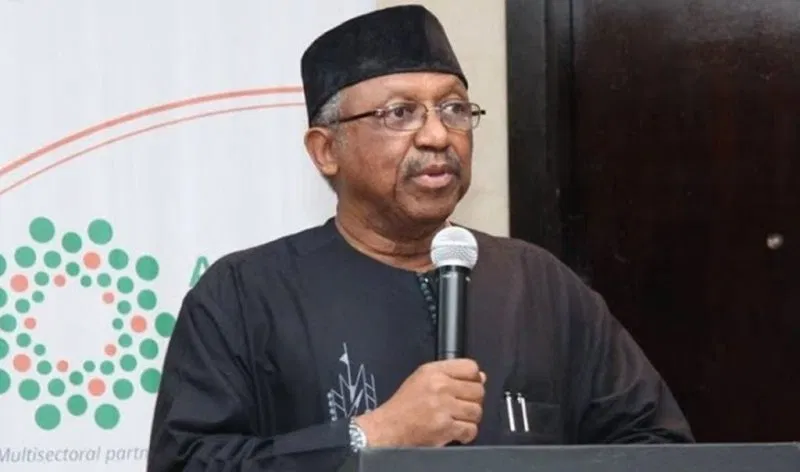
Nigeria’s health minister

Pregnant women are not the only ones that need compulsory health insurance. Children do too. According to the World Bank, in 2019, the mortality rate of children below the age of five was 117 deaths per every 1000 live births in Nigeria. Of course, this figure was derived from reported cases when deaths happen in hospitals. This does not include children that died at home because their parents could not afford hospital bills. Furthermore, the World Health Organisation (WHO) reported that in Nigeria, the maternal death rate in 2015 was 800 deaths per every 100 000 live births. According to the organisation, 58 000 maternal deaths occurred in the country in that year alone. The problem here is that the rate is increasing because, according to Index Mundi, the maternal mortality rate in Nigeria in 2017 is 917 deaths per 100 000 live births. This is becoming worrisome.

It should be noted that infant and maternal mortalities in Nigeria are not caused by poor medical services. This is far from it. Even to date, we still hear about women going to non-professional midwives for delivery. We still see those taken to “churches” for prayers because their labours are prolonged and, hence, it must be the hand work of the “enemy”. We still see people avoiding antenatal classes because they couldn’t afford them (especially when the Primary Health Centres in their communities are non-functional). In Nigeria today, the major cause of maternal mortality is the lack of access to proper health care. This is the same with infant mortality.

It will be improper to blame the government for these death rates because the government has put things in place to curb them. For instance, antenatal classes in government hospitals are free and so are deliveries. All that the woman had to provide are materials needed for the delivery. However, if CS is needed, delivery is no longer free; this is where many women encounter challenges.

But a woman that is covered by health insurance does not have to worry about money for delivery. As far as I know, a woman that is duly registered under National Health Insurance Scheme (NHIS) does not pay a dime for her delivery, even if it is through CS. Even the child she gave birth to will be covered by her insurance until he/she is three months old. So, why do our people take chances with their lives when there is an easy way out?

Many people, to date, think NHIS is a scam. Some think it is for government employees alone. They are not to be blamed because the level of publicity of NHIS is low. But those that have discovered about it and its benefits do not hesitate to register with them. However, NHIS is still voluntary in the country; something I believe should be changed for pregnant women and children. It is left for the appropriate quarters to insist that pregnant women and children should, compulsorily, be covered by health insurance. How they will go about it is up to them.

The Nigeria’s Excess Crude Account (ECA) Balance of $72 Million

2
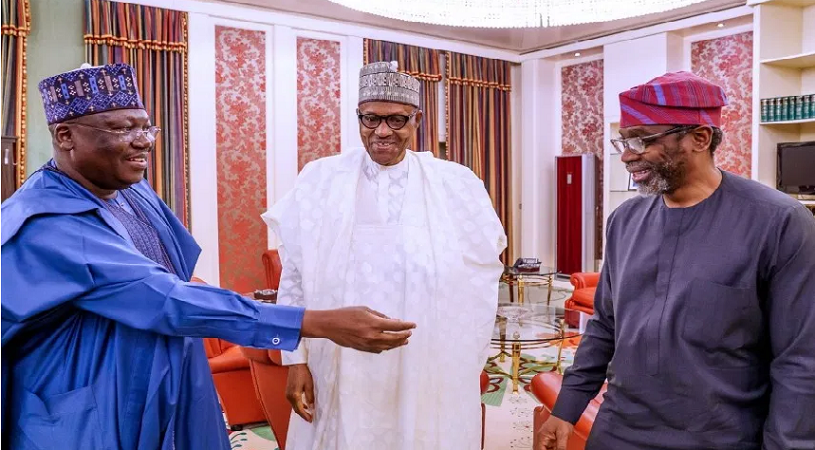
Nigeria leaders

This is a bombshell: The Federal Government  has announced that Nigeria’s “Excess Crude Account (ECA) balance as at 20th January 2021 is $72,411,197.80.” Yes, $72 million. In Feb 2014, that number was $3.6 billion and as at August 2015, it was $2.2 billion. Simply, we have blown the “saving” from crude oil in less than a decade! 

Other updates at the NEC meeting include account balances as at 20th January, 2020 given by the Minister of Finance, Budget and National Planning, as follows:

Excess Crude Account (ECA), balance as at 20th January, 2021, $72,411,197.80; Stabilization Account, balance as at 19th January, 2021, N28, 800, 711,295.37; Natural Resources Development Fund Account, balance as at 19th January 2021, N95, 830,729,470.82.

My position which I put forward in my speech in the National Assembly in 2019 remains: put 50% of the fund into accredited local venture capital  firms who must invest at parity of 50-50 in Nigerian companies. Those VC firms must have independent investment boards from SEC, CBN, BOI and private sector. Under no scenario should ECA be used to cover the cost of bureaucracy. Had we done that, we might have stimulated the economy and built the foundation for new growth drivers.

Meanwhile, President Muhammadu Buhari has approved N6.45 billion for the setting up of gas plants in 38 locations nationwide in a bid to enhance the treatment of Covid-19 patients who need oxygen. That is a commendable one as many lives have been wasted due to the lack of this basic tool. Yet, it would have been better if they had gone through the private sector instead of doing it directly as a government. 

Nigeria should STOP building things because we spend N10 billion to build, and in 3 years, we “privatize” for N1 billion. Haba!

That is the reason why I am not celebrating the inauguration of the  National Oil and Gas Excellence Centre (NOGEC) Lagos, which is aimed at strengthening Nigeria’s position as a regional leader in the oil and gas industry. It would have been great if they established it inside a university instead of the Lagos Annex of the Department of Petroleum Resources (DPR). Personally, it is either we want to have universities or not. Yes, you cannot be funding AI & robotics centers in NITDA when such could not be put inside universities, limiting the need to expand national bureaucracy.

Of course, you can argue that the government had no option since schools now strike all the time. Sure but funding centers this way will not fix the long-time paralysis.

Comment on LinkedIn Feed

Comment #1: Yeye dey smell. Fela talk am. 6.45 Billion to make oxygen? in 38 locations!!!!!!!! A smarter person would have: Called all the Vice-Chancellors of all federal and private universities and given then that mandate, in return for an equal split in the fund. Give a gas plant that would make oxygen so that your universities will serve as production facilities and then sell on to the end users. It would be a double investment benefit.

One simple modular design, 38 universities, then they use the facility for study and research and expand knowledge from there. Why do we have all the Federal Universities??????????? jeez…. these guys just stumble from one side to the other. By now, the Federal universities should have been working with the defense ministry to build military hardware to fight Boko-Haram, and not mint graduates for the Canadian market!!!!!!!!!!!!!!!!!!!!1

Comment #2: There is nothing in your speech that the government doesn’t know about. Politicians are just wicked. They want to continue milking the country till the country dies.

My response to #2: I agree 100%. We need to avoid the illusion that we (outside govt) are smarter than anyone. The fact is this – unless we have the hearts of service, nothing will change. I mean, it is not rocket science that if you want to save for the future, you INVEST, and not spend on frivolities. Possibly, in 3 months, ECA will go to zero. Then, we will begin looking for another to drain.


Tax Law At Tekedia Institute

0

He holds a PhD in Energy Law from the prestigious University of Ibadan. He earned LLM from the amazing University of Lagos. But it all began in the land of lions and lionesses, the enviable University of Nigeria Nsukka, where he graduated in Law.

Today, he is a partner in one of the nation’s top law firms, Hermon Legal Practitioners, where he leads the firm’s tax law and energy tax business, among others. Dr. Jerome Okoro PhD, a Tekedia Institute Faculty, will teach Tax Law during the next edition of Tekedia Mini-MBA.

Taxation is a big area in our Institute. We already have a manager in the Federal Inland Revenue Service (FIRS) developing a course on Global Tax Treaties. Essentially, I want our members to get comfortable with tax and use the available tax laws to advance their missions.

To join the next edition of Tekedia Mini-MBA, click here.

Tekedia Mini-MBA Edition 4

Merchants of Lost Futures

4

‘’The better the gambler, the worse the man.’’

Publilius Syrus

There is this famed biblical statement that state – ‘’the one who think he is standing firm should take heed lest he fall’’. That statement properly encapsulate my foray into the world of sports betting and the suicidal destination it almost dumped me.

I have always detest gambling in any form. I believe any act that provides a shortcut to financial success can only end up in regrets. And so, in the days of MMM when people around me were making brisk money from the platform, I refused to participate despite all entreaties and temptations to do so.

I knew that when the chicken comes home to roost, there will be far more tears than joy. When MMM finally crashed, tears really did flow for many.

But there is a form of gambling that is surreptitiously taking over the soul of the nation. It is called SPORTS BETTING.

Its modus operandi has acquired so much sophistication that even informed minds are falling prey to its dubious allures.

It is estimated that 60 million Nigerians between the ages of 18 and 40 are involved in active sports bet. They spend almost 2 billion naira on sports betting daily which translates to about 730 billion naira annually.

But that is just half the truth. There is a huge population of young people below the age of 18 who are also actively involved in sports bet. Never mind the window dressing ”not for persons below the age of 18”gimmicks that bet companies bandies around in their adverts and on betting platforms.

The presence of multiple sports bet shops are immediately conspicuous in many towns and communities in the country.

The cancerous spread of online betting shops is perhaps the most underrated. There is a high chance of its presence in every home on your street. You just wouldn’t know because it thrives on the secrecy religiously maintained by those who patronize it.

Two factors were spotlighted as the reasons behind this huge and surging gambling population – 1. Increasing poverty and unemployment 2. Growing use of internet and smart phones.

In my case, the second factor was the major undoing. The first factor played some role too.

Many times, I have been unsuccessfully persuaded by some friends to make ‘small change’ from soccer bets. I have seen innumerable adverts on the TV and internet blaring sumptuous returns on sports bet by Nigerian betting companies such as Betway, Bet9ja, Nairabet, Sportybet, BetKing and the likes.

In my heart, I laughed them all off for the lies that I know they represent.

But then, he who think he was standing firm was not taking enough heed.

Sometime in the middle of 2018, I lost a job. I wasn’t really bothered. I was so confident in my abilities that I believed I would get a better one soon. In fact, a month into my unemployment, I got a job offer that I confidently rejected in the hope of getting a better one.

I was at a bar in August 2018, quietly sipping my drink and watching a soccer game on TV when an elderly man and a complete stranger came to take a sit beside me – obviously to watch the game too. We engaged in the usual football banter that takes place in such environment and in the process, he told me about how he has been staking his money on football matches for many years and how he has made so much from betting to the extent of building a house from the returns.

Strangely and unfortunately, those words found good reception in my ears that night.

The second day, I visited a Bet9ja outlet operated by a friend and made the first gambling of my life – a 5,000 naira stake on a football match. I lost.

I was so mad.

You see, I have a personality that intensely hate failure. I hate the feeling of being defeated or outwitted.

So I upped my game geometrically – my next stake was a 100,000 naira stake on a Serie A game between Juventus and Chievo. I won, and that victory came with a 19,000 naira profit.

I felt good again. Now, I am the boss.

My third football bet was a little riskier. I staked 50,000 naira on 3 premier league matches combined. I won and with that victory came a 70,000 naira profit.

I felt really good. Now I am on my way to becoming rich from football bets, or so I thought.

Then I staked 50,000, 100,000, another 50,000…..and I lost them all. The mental and emotional disequilibria sets in again.

All these time, I was visiting a Bet9ja shop to place my bet. I decided to change strategy.

I opened an account directly with Bet9ja on my smartphone in order to engage in football bets efficiently. This time, I am going to be more focused and make smarter stakes. In few minutes, I would move huge amounts from my bank account into my Bet9ja account.

Big big mistake!

Within three months of being a football punter, I had lost more than a million naira of my hard earned savings to gambling. In another 3 months, I lost about half a million to football betting. By now, I had lost more than 85% of my savings to sports bet.

I literally lost a grip on my life. I lost my self-confidence, I became pessimistic about almost everything, my relationships and my faith suffered and I lived with severe depression for a very long time.

Even after these heavy losses, I still continued betting for more than a year. Though this time, with subdued amounts like 5,000 naira, 10,000 naira etc.

I would tell myself – ‘’I am not betting again’’ and a week after, I am actively back on track as a football punter.

Someone told me recently that gambling addiction is worse than cocaine addiction. I absolutely concur! Once it takes hold of your mind, it holds on very tight.

I fought a long, tough and lonely battle till I was finally able to let go completely.

Gambling is estimated to be the cause of at least 500 suicides in the UK every year.

Sometime in 2018, Kelvin Sluman (a British) while on a boat with his son (Aaron), noticed a Bet365 app on his son’s smartphone and warned him to desist from gambling like a good father would do. Four months later, Aaron who was 23 years committed suicide after losing £750 in one night to football betting.

Joshua Jones (23 years old) who was finishing his first year working with a major accountancy firmed jumped from a 9th floor balcony to his death, tormented by his gambling habit.

Chris Bruney (25 years old), a British with a job that pays £60,000 annually and a loving wife, committed suicide after being lured back into betting through promotional tie-ups with football. Oh yes! those advertisement from sport bet companies in-between the soccer matches you watch on TV led to the death of a promising young man.

He committed suicide after losing £119,000 in the 5 days prior to his death. A coroner ruled that he died from the ‘’shame of gambling’’.

Joshua Jones, a musician, began betting at 17 and by 6years later when he committed suicide, he owed up to £30,000. His family tried to help after he admitted his gambling addiction to them.  They installed blocking software on his computer and took him to a specialist clinic, but he could not beat his addiction.

Natasha White (34 years old) would spend more than £1,000 of her £1,900 salary in online betting in less than 24 hours. As her parents later found out, Natasha spent £20,000 in a year on her addiction which was more than her annual salary. In August 2018, Natasha was found hanging at her home.

There are examples of tragic endings for football punters that are close to home.

In 2016, Uchenna Akachukwu committed suicide by hanging himself in his room in Akwa Ibom state after losing 22,000 naira to sports bet. He was a perpetual sports gambler and had use his boss’ money for the bet in the hope of replacing it after his big win.

In 2018, police in Ilorin, Kwara state, confirmed that a 25 year old man killed himself by hanging because he lost out in a betting over the outcome of a European Champions league match. The young man staked his motorcycle, which is his source of livelihood, on the match.

In 2020, a 28 year old man identified simply as Suga committed suicide in Bayelsa state after using his boss’ money worth 150,000 naira to play Bet9ja virtual games.

Recently, a friend told me of a young man who staked 500,000 naira on a match. He lost and promptly went to commit suicide. My sister told me of her friend’s husband who took the money he was supposed to use to execute a contract for a client and staked it on football match. He lost, couldn’t get another fund to execute the contract and is currently languishing in a police cell.

In countries like China, Singapore, United Arab Emirates, Qatar etc, gambling is either banned in some form or totally banned.

It is not a coincidence these countries are either developed or developing countries. Their governments were smart enough to recognize the silent socio-economic devastations and human development catastrophes that gambling is capable of unleashing. They saved their citizens the calamitous distractions of pursuing shortcuts to prosperity at the expense of pursuing ambitions that add value to the society and bring sustainable prosperity.

It will be instructive to note that the prosperity of betting companies is tied to the losses of their customers. They live large on the tragedies and tears of those who patronize them.

The flexibility and sophistication that internet and smart phones provide has further expanded the customer reach of these bet companies. In fact, sports betting appears like the in-thing among Nigerian youths presently.

Today, someone somewhere is ignorantly walking into a life-altering trap due to the mouth-watering monetary gains being aggressively advertised by bet companies that is based on false hope.

The ideal thing would be for the Nigerian government to totally ban gambling in all forms within its territory. With the extent to which sports betting has eaten deep into the national social consciousness, a partial ban would fail woefully.

But one can hardly trust the Nigerian government to toe that path given their notoriety for awful governance and ignoble/nonchalant leadership.

From the eyes of my experience, my advice to anyone reading this is:

If you have never been involved in gambling in any form, do not ever make the mistake of going down that road.

If you are already into gambling or sports bet and you’ve recorded more gains than loss, stop now and forever. You are just a stone-throw away from tears should you chose to proceed.

If you are into gambling or sports bet and you are mostly counting losses, do not cling to the hope that you will ‘hammer’ overnight by continuing. The tears will only flow harder.

When you are in a hole, the first thing you must do to stand a chance of coming out is to stop digging.

Slow and steady does it.

Be content with the little you have and keep working. One day, you will hit your gold and when it comes, you have a better chance of sustaining it.

Be wary of the merchants of dubious hope. Your pain is their joy and the odds will always be far more in their favour.

Cheers to the storms that shook us without blowing us away.

Happy new year!