If you have Twitter shares, you may consider dumping them. The company has an issue, and the problem is not the banning of the President of the United States, but that Twitter has the ability to actually do that. In any company’s history, you look for the inflection point when things begin to change. Samsung has its own history (that meeting in Germany – “change everything except your wife and children” ), Google (add the search box in toolbars), etc. Those advanced the companies.
Twitter, unfortunately, will see the opposite after the BIG Ban. It has frightened world leaders and everyone knows that on Twitter, there is only one Grand President – Jack Dorsey, Twitter CEO.
Why we buy newspapers with faces of politicians on the cover pages is not because they are the smartest or useful or coolest or respectful people in the land. We buy those papers because even when they are not making sense, we want to know because they decide the future for most people via policies.
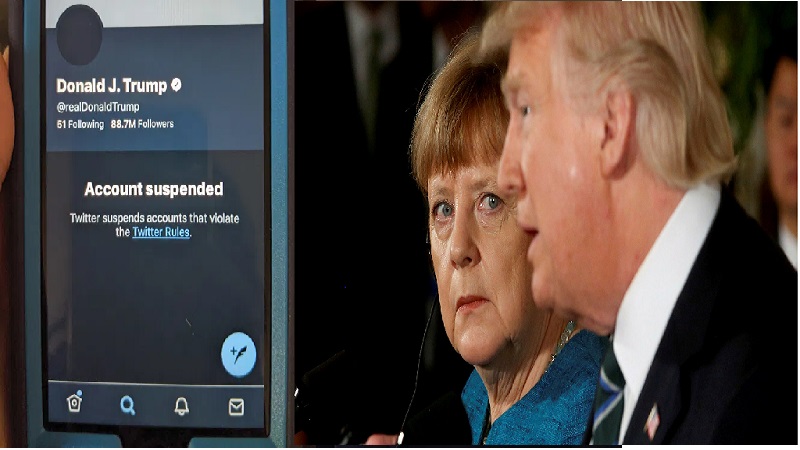
I voted against Trump; he is an exceedingly flawed leader. But he is the President. Warehousing him out of Twitter cripples the aspirational perception of Twitter. Yes, your “bias test” before you can lead Twitter? Why not filter him and allow whatever you want the world to see to be seen from his feed.
The opinion of Angela Merkel, German Chancellor, mirrors the one I have maintained here: “the chancellor considers it problematic that the accounts of the US president have been permanently blocked…While tech giants were right not to ‘stand back’ and were justified in red-flagging Trump’s tweets, banning his account altogether was a step too far”.
Trump was permanently booted off the platform on Friday because of the ‘risk of further incitement of violence’ after his supporters stormed the US Capitol while Congress was certifying his election defeat.
Merkel – a longstanding critic of Trump – said she was ‘furious and saddened’ by the rampage, but her spokesman Steffen Seibert said today that ‘the chancellor considers it problematic that the accounts of the US president have been permanently blocked’.
‘The fundamental right to freedom of opinion is a fundamental right of elementary importance,’ he said.
‘This fundamental right can be interfered with, but through the law and within the framework defined by the legislature, not according to the decision of the management of social media platforms.’
While tech giants were right not to ‘stand back’ and were justified in red-flagging Trump’s tweets, banning his account altogether was a step too far, he said.
He added that social media bosses ‘bear great responsibility for political communication not being poisoned by hatred, by lies and by incitement to violence’.
I personally characterize firms into two broad categories; philanthropies (firms that create value, but have failed to effectively extract value), and businesses (firms that have been able to both create and extract value). Ideally most technology firms will start up as philanthropies, and as economies of scale begin to set in, eventually migrate to become businesses. However, a good number of technology firms fail to perform that migration, and keep on burning venture capital to nowhere until they eventually get sold at a discount (Konga), perform an IPO (Jumia, Palanthir) or eventually close down (Efritin, Quibi).
In Africa, this trend has gotten out of hand. Nigeria (Africa’s biggest economy) has a startup failure rate of 61% – in other words, 6 in every 10 Nigerian startups fail.
The major reason for this trend is usually not the inability to create value, but the inability to effectively extract value. Designing Data Double Plays may just be the way to help firms solve this conundrum.
This piece is the second part in a series on designing for data double plays I’m sharing. If you missed the first article, you can follow this linkto it.
Law and Order
One of the most important traits of an entrepreneur is optimism. Optimism isn’t ignoring the facts – optimism is seeing the facts, looking for the opportunities inherent in them, and looking for ways to exploit those loopholes to both create and extract value.
In the first part of this series, I had more than one comment where the readers shared how negative government policies are having an adverse effect on both the entrepreneurial culture, and the entrepreneurial ecosystem in Nigeria.
As much as those concerns are true (and they are), I also like to see the light at the end of the tunnel that most entrepreneurs can exploit – Ignorance.
As much as the government isn’t making enough tangible policies that support the scale up of technology startups in Nigeria, the government is not tech-savvy, and therefore business models that exploit governmental ignorance at very little damage to the customer will find it very easy to scale in Nigeria.
European laws like GDPR (General Data Protection Regulation), will probably never happen in Nigeria because of the governments relative ignorance to the true monetary value of data. Indomie acquired Dangote Noodles in 2017 for an undisclosed fee to strengthen its position in the noodles segment. As at early 2019, Indomie accounted for more than 70% of the Nigerian noodles market. Is this anti-competitive behavior? Yes. Did the government do anything about it? No.
When P&G tried to acquire Billie’s last year (2020), the FTC (Federal Trade Commission) blocked the acquisition due to antitrust concerns.
In Nigeria, the government doesn’t regulate monopolies. Our monopolists drive Lamborghini’s, live in Banana Island, and rent private jets. They also ‘spray’ money, and ‘make it rain’ on the officials who are supposed to be regulating their businesses.
It is very difficult to regulate the man who ‘sowed’ a BMW M5 into your life last week. Very difficult.
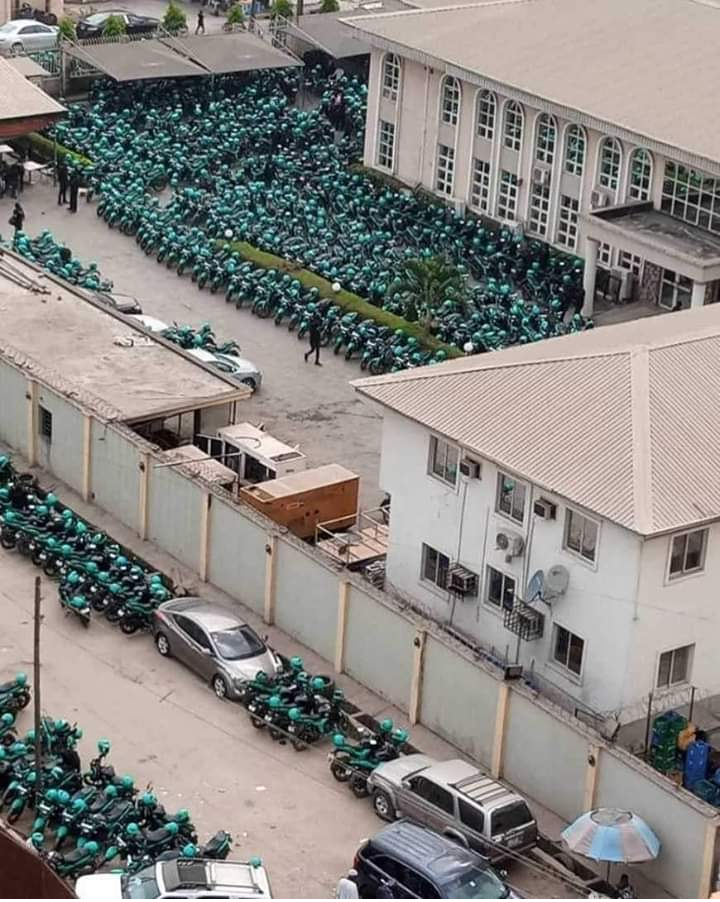
Although banning businesses like Gokada that were solving massive frictions in the transportation space was likely uncalled for (we probably can’t quantify the mental damage Lagos traffic is doing to people), our government still remains largely ignorant of the power of technology, and what it needs to regulate.
The strategy for any entrepreneur is very simple and clear – find ways and strategies to exploit governmental ignorance at scale.
With ban, the riders are home at Gokada!
Data Double Plays
Like I shared in my last piece – a Data Double Play is a strategy that allows businesses to take advantage, create monetary value and design new products from the data they generate from their business operations.
Data Double Plays allow businesses sell the perception of God (the partial ability to be omnipresent and omniscient). A Data Double Play allows businesses to create new product lineups from the data they generate that can now be scaled to users/businesses to allow them have a clearer view of the world they operate or innovate in.
Facebook ads are one of the most prominent examples of a Data Double Play. Unlike traditional advertising (TV commercials and Radio ads) where people have less data and information about how users interact with their ads, Facebook ads allow you to see in real time how people on their 2 billion user platform are interacting with your advert in real time.
Facebook ads turns you into a kind of digital marketing god that has a very clear overview of how an advert is performing, what geographical locations are making the most impressions, what gender is interacting the most, and what demography is finding this advert most meaningful.
In most cases, you get none of that information through traditional television advertising. In traditional television advertising, you push the African Magic ad, cross your fingers, and hope those ads will increase sales. Hope is not a strategy.
Nobody wants to walk in darkness; everyone wants to be a god.
Operating Systems
The most powerful businesses are operating systems. It is very smart to have a platform strategy at the onset of your business that helps you build a system that doesn’t just sell a product, but helps others sell theirs.
The reasoning behind platforms is simple – everybody may not buy or use your product, but as long as the majority of that product/service is sold through your platform – whether it is your product or not, you will get a cut.
The Apple store is a US$15 billion operating profits a year generating business, and the platform and operating system for all mobile applications on IOS. The Federal Republic of Apple’s strategy allows them constitutionally take a 30% cut on almost all in app purchases that occur on their platform. In other words – Apple through its country (the Apple store) has turned itself into a government that takes a 30% tax from all its citizens (applications).
Indomie Noodle
Apple Music competes with Spotify in the music streaming segment. Spotify exists (and is a citizen) on the Apple store.
Almost every Nigerian knows that competing with the government (in most cases) is not a very smart thing to do. Spotify has taken Apple to court on multiple occasions for anti-competitive behavior. Apple is the government. Apple doesn’t care.
Apple Music makes money from those who patronize its services, and a 30% cut from those who do not. It’s literally a win/win situation for Apple.
Being an operating system makes it extremely easy for businesses to build Data Double Plays because of the data they have inherent access to. This data gives them a clear picture of what both them and their competition are up to. They will usually have to structure and process that data into meaningful formats that can be sold as products and/or services to end users.
The same way crude oil has very little value if it isn’t processed, raw data has very little value unless it is processed and structured properly.
The Switch’s Data Double Play
I shared in my last article that I was going to ‘switch’ and share a practical example of an African business and how it can design its own Data Double Play. If you didn’t get what I meant by ‘switch’, it’s safe to say you don’t actively follow or work at Interswitch.
Our practical example today is none other than Interswitch.
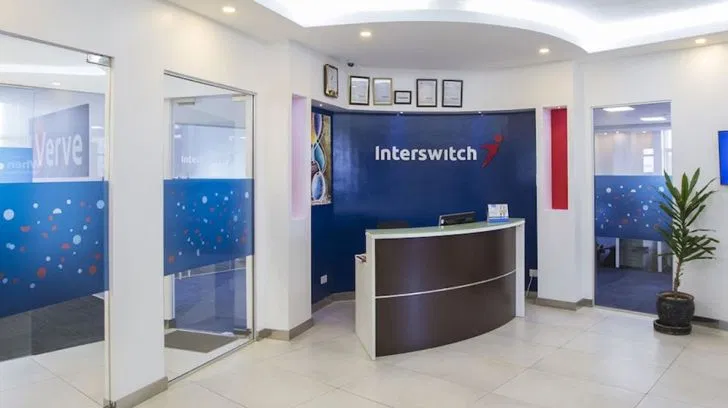
Interswitch is a leading financial technology firm operating in Africa. Interswitch pioneered the switching technology that allows banks, merchants and customer’s seamlessly connect and integrate to make transactions happen.
Interswitch is one of the few firms largely responsible for the digitization of finance in Nigeria, and in Africa by extension.
How Interswitch designs its DDP
A firm’s ability to design a Data Double Play is really dependent on two things; one is how seriously those in charge of doing so take this article, and two is the context of data available to the firm. Not all data can be used for this process, as the design of a DDP is highly dependent on the context of data being extracted.
To some degree, Interswitch is arguably the operating system for digital financial transactions in Nigeria. Depending on the context of data that Interswitch gathers, it should have info on where transactions are made (location), how much is made (amount), and the type of retailer making these transactions (kind).
Through its Verve cards, and its partnership with VISA, it also has more detailed information on the nature of transactions being made. Although there are no serious laws forbidding the use of data in this context – best practices suggest only generalized data should be utilized, and nothing specific that can tie transactions directly to individuals.
Interswitch can use this data to create a data sight product (I may need to give it a better name) or service that allows businesses gain a clearer view of the financial environment of specific locations.
What metrics do businesses utilize before expanding to certain physical locations? Interswitch’s data product could help you make a more data informed decision by analyzing the spending patterns and trends in that geographic location and presenting this information to the user/business to help them know; how financially viable the people in that environment may be? The amount of working class people in that environment (whether most transactions occur early in the morning or in the evenings and less in the afternoons), whether people are more likely to use ATMs or POS systems (an indicator of many things if analyzed properly) and what kind of retailers (no need to specify the business) are enjoying rapid amounts of patronage. ATM and POS withdrawals are very key data points that point to a lot of things.
With this information, a business expanding to a new physical location can have a clearer oversight of what to expect based on data, rather than just entering an environment based on guesswork (and this area looks very busy, or is residential).
Value Extraction (Data as a Service)
How does Interswitch extract value with this product?
It is highly unlikely that I recommend a one off payment for a product of this magnitude. I would recommend a Data as a service model. Interswitch’s data product doesn’t just help you move into a new environment, it also helps you understand in real time the bigger picture of what is going on in your environment.
Businesses can make informed marketing and advertising decisions based on real time data available to them.
The product is scaled as a largely B2B subscription business where businesses pay a monthly (or yearly) subscription fee to access those analyzed data points.
Different subscription plans exist based on how much information/data and analysis the business may need.
Who already does this?
Goldman Sachs.
Goldman Sachs has a data as a service analytics product called Marquee that helps its investors make sense of the deep market data sets it has access to.
Marquee gives investors top-shelf state of the art access to data and analysis from one of the most prominent firms on Wall Street.
Marquee is a delivered as a data as a service product, and investors are largely charged a subscription fee to access the product.
Conclusion
One source of value extraction may not be enough to extract value from the Nigerian, and by extension African space. Embracing double plays, especially data double plays may just be the key to unlocking and extracting meaningful value in this space.
Interswitch is well positioned to unlock and design a Data Double Play model that allows it to move beyond just switching transactions for its users and being just a financial services player to providing a data informed bird’s eye view to firms of the business landscape they innovate in.
Inspired by the Holy Spirit
P.S: if you found this piece meaningful, please like, share it, or leave a comment.
P.S2: to talk more about data double plays, or for consultation services, you can send me a message to the email below.
On Saturday, 16 January, 2021, experts, business executives and human resources practitioners would converge on the online venue of a book launch written by Ismail Tiamiyu, the Team Lead of the Research and Development Unit of Farm Konnect. The book titled Moral Licensing Syndrome which focuses on an overlooked office or workplace phenomenon examines the pros, cons and solutions to the issue that commonly confuse administrators and managers.
This is made known in a press statement released by the writer, Ismail Tiamiyu, who will play host to an array of guests that will grace the occasion. Leading other guests to the book launch is Prof. Ndubuisi Ekekwe, the US based Nigerian professor who is the founder of Famiscro and Tekedia Institute in Boston, United States. Ndubuisi would serve as the chairman of the occasion. The enigmatic Human Resource practitioner and author, Lara Yeku, would do a review of the book giving industry perspectives on the contributions of the newly published book to the handling of the office space phenomenon.
The Chief Launcher is Founder and CEO of FarmKonnect, Nigeria, Azeez Oluwole Saheed. He would lead other co-launchers to give the book the needed boost. Also expected at the online occasion are Sheriff Popoola, Senior HR Executive 9Mobile; Mr. Engr. Hamzat Ismail Abiodun, Team Lead, Deepwater Well Operations, Shell; Mr. Sunday Saanu, Media Adviser at the Office of the Vice Chancellor, University of Ibadan; Mobolaji Bamidele, a John Maxwell Certified Coach and Motivational Speaker amongst other dignitaries.
In an earlier interview, the author, Ismail Tiamiyu, has said that the new book is his own contribution towards organizational peace and harmony as the Moral Licensing Syndrome has the capacity to reduce work place efficiency and productivity. He said “the book is my own way of contributing to knowledge and resolving problems usually generated by Moral Licensing Syndrome in the workplace. I aspire to direct the attention of administrators, employers and managers toward some organisational practises that are often taken for granted but are actually integral to promoting growth-driven processes and resolving Moral Licensing Syndrome in organizations.”
The author, Ismail Tiamiyu, is a graduate of Sociology from the University of Ibadan, Nigeria. He is a researcher who has passion for writing. He is currently the Research and Development Officer at FarmKonnect, Nigeria, a leading Agritech company in Nigeria. He is usually motivated to always seek to understand human behaviours and appraise issues through sociological imagination.
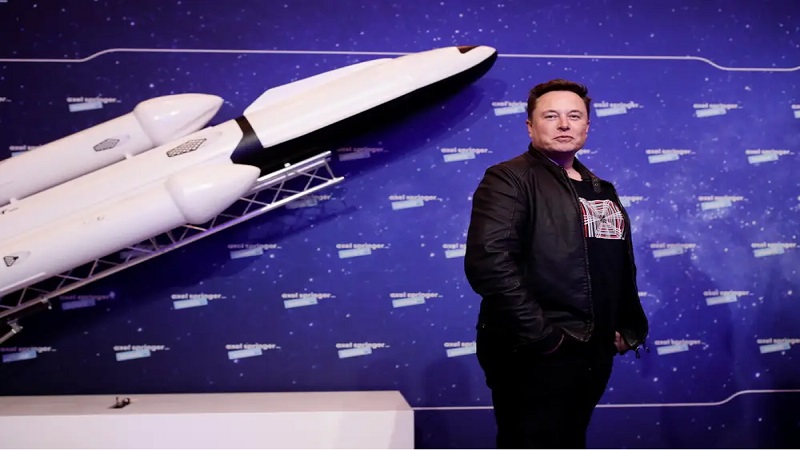
He is the world’s richest man, and he is his generation finest innovator. He has brought a new basis of competition in the electric vehicle sub-sector, and he is changing the ordinance of manned and unmanned space transportation. Elon Musk is seated alone because there is really no one to compare him with.
There has never been in the history of the world where a man focuses on dealing with many big problems, at once, and making tons of money doing so. He is peerless, and the world is better that he is here.
But his work has been largely esoteric when it comes to places like Africa, the land of his birth. But that is changing very soon. Yes, Elon’s other company – SpaceX, the rocket one – is nowshipping his Starlink kits to selected customers in Europe: “Hall had been getting download speeds of only 0.5 megabits per second with BT internet, he said. Now with Starlink, he’s averaging 85 Mbps. “Within the hour we ran a Zoom quiz with grandchildren — it was wonderful,” he said.”
Elon Musk’s Starlink satellite internet service has been approved by the UK regulator Ofcom.
Starlink, from Musk’s aerospace company, SpaceX, will compete with the likes of BT Group and OneWeb to provide internet to people across the UK.
People in the UK have already started receiving the Starlink kit.
One user told Insider that he received his Starlink equipment on New Year’s Eve and that his download speed jumped from 0.5 megabits per second to 85 Mbps.
Like I have said, immersive connectivity is coming to placeslike Nigeria by 2022 as I see products like Starlink having the capacity to reach many at scale. The UK government has approved Starlink. I expect the South African government to do so this year. And very soon, it would become the denominator in Africa.
The GSM players disrupted CDMA after the CDMAs had punted landlines in Nigeria. Satellite internet will give heat to GSM players in coming years. The good news: customers will win! May the best product WIN.
No one can say the founders of Agritech companies have their passion and skills translated to businesses in a wrong country. They discovered lack of information, insufficient financial support to smallholder farmers, market access and transportation challenges as frictions that must be fixed for everyone to have food and for the manufacturing industry to have ram materials for production. Throughout the developing world, Agritech companies operate with the framework of connecting investors with the smallholder farmers in the rural areas. When investors subscribed to agricultural production and distribution package, the financial proceeds are remitted to the farmers for farming and distribution activities.
Usually, investors are assured of security of their money and return. According to various sources, return on investment could be as high as 35%. In our analysis of 20 companies using average and static approaches, 30.05% was found as ROI. This promise remains unrealistic when one considers economic recession, unstable macroeconomic and microeconomic policies, and how the COVID-19 pandemic is testing the promise. The pandemic has led to a number of uncertainties in many industries without the exemption of agriculture industry. Investors thought that the sector may save them from the harsh impacts of the recession and the pandemic. Despite the uncertainties, Onyeka Akumah, co-founder and CEO of Nigeria’s Farmcrowdy believes that the potential for sizeable returns for investors in Agri-tech startups are as big as the sector.
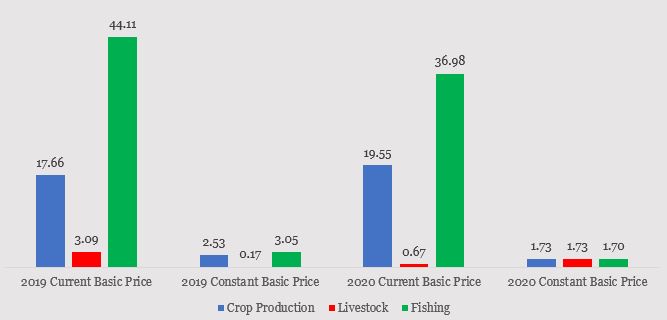
Since Nigeria is experiencing a number of economic downturns, which have been used by local and international bodies for classifying the country among low-growth economies, our analyst hypothesized the companies’ ROI in this regard. This was done with a view of finding linkages between real and nominal Gross Domestic Product contribution [using crop production, livestock and fishing categories being used by the National Bureau of Statistics for measuring agriculture industry contribution to overall GDP], and ROI [average and static approach] of some companies.
Groupfarma, Farmsponsor, Requid, Thrive Agric, Farmcrowdy, Farmpower, Farm Agric FarmKart, Goldvest, Foxygreen, Kenfarms & Agrovet, Shopagric, Farmnow, Farm4me, Farmkonnect, Abadini, Green fold, Farmtrove, DivaRice and Eatrich are analysed. Our analyst also analysed real and nominal GDP growth of crop production, livestock and fishing. These categories were used because select companies are providing solutions that resonate with the categories. While using the real and nominal GDP growth, attention was paid to the current and constant basic prices. Nominal GDP is the market value of goods and services produced in an economy, unadjusted for inflation. Real GDP is nominal GDP, adjusted for inflation to reflect changes in real output. Trends in the GDP deflator are similar to changes in the Consumer Price Index, which is a different way of measuring inflation.
From 2019 Q1-Q4 to 2020 Q1-Q3, analysis reveals N20.5 million as average of the current basic price of all categories [crop production, livestock and fishing], while it was N1.8 million for constant basic price. Analysis of the select 20 companies’ ROI shows that on average the brands promise 30.05% within the average of 8 months and 2 weeks farm cycle. While other brands seem to have normalised solutions [common solutions], FarmKonnect has a number of unique packages which could not be analysed with other 19 brands. Therefore, for the benefit of a strong inclusion in the average and static ROI approach, standard package of FarmKonnect was factored into the analysis.
Our analysis indicates that these companies had less than 50% capacity to pay the average ROI [30.05%] when the current and constant basic prices were considered. With the current basic price of the chosen measurement categories of the agriculture industry, the companies 15.02% capacity of paying the return and capital. It was over 48% for constant basic price. Analysis further reveals that the 48% capacity threshold was lower than the return on investment promised by Farm4me [73%], Requid [60%], Kenfarms & Agrovet [55.66%], and higher than what Farmtrove [38.25%], Abadini [30.83%], Shopagric [26.08%], Farmcrowdy [25.5%], Groupfarma [24%] Goldvest [20.04%] and Farmkonnect [30%] proposed to investors.
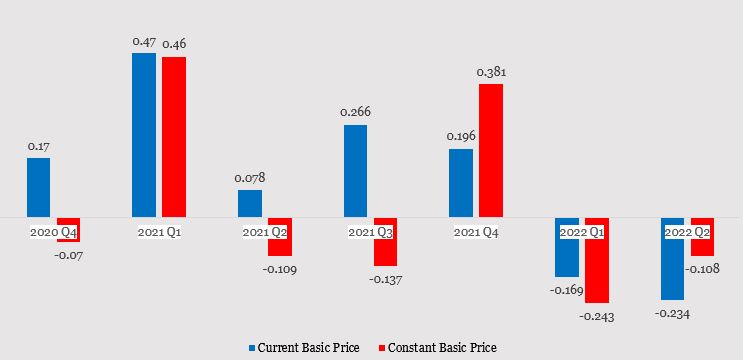
The impact of the two basic prices in the future is presented on Exhibit 2. Examination of the payment capacity within the context of the farm cycle period shows that one month of farming activities increases likelihood of paying the return by 13.4%. However, out of 140 months and 3 weeks of farming cycle, analysis shows that these companies only had a capacity of paying in 21 months. This result indicates that Nigerian Agritech companies have been defaulting in paying ROI to investors since July, 2019. This is further justified with our check which reveals that the public had significant interest in return on investment along with Thrive Agric and Farmcrowdy more than others.
Exhibit 1: Average Nominal and Real GDP in Million [2019-2020]
Source: National Bureau of Statistics, 2019-2020; Infoprations Analysis, 2021
Exhibit 2: Real and Nominal GDP versus Return on Investment Projected Linkage
Source: National Bureau of Statistics, 2019-2020; Infoprations Analysis, 2021
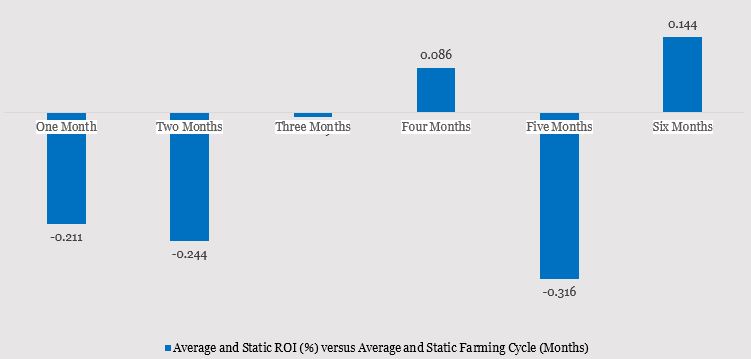
Exhibit 3: Return on Investment and Farming Cycle in the Future
With the current farming cycle months [use for payment in month] and consideration of the ROI of the selected companies, investors would not have their capital and returns in January, February and March, 2021. During these months, our analysis suggests that the players will have some challenges due to the ongoing pandemic and economic recession. However, in April 2021, analysis indicates less issues with the payment. If policies and measures being formulated and implemented by the government at state and federal levels fail to yield positive results for the agriculture industry, analysed companies would not be able to fulfill their promise in May, 2021. But, in June 2021, our analysis suggests a positive situation for the players.
The Implications and the Need for Regulation
The emerging insights have many implications for the sector, especially promise ROI of companies. It has emerged that players need to factor the two basic prices into their ROI percent formulation framework. This is more imperative for the players that provide solutions that resonate with crop production, livestock and fishing. It is obvious that the current economic uncertainties being driven by the recession and the pandemic are having significant impacts in the sector. Therefore, the current ROI should be adjusted to fix the reality of the business environment. Before the sector is turned to the Ponzi Scheme sector, the government needs to devise means of regulating activities of the players and investors. The Securities and Exchange Commission, and the Corporate Affairs Commission are needed for sustainable investor protection.