DD
MM
YYYY

PAGES

DD
MM
YYYY

spot_img

PAGES

Home Blog Page 5975

Tesla to Start Operations in India in 2021

0

Tesla is planning to set up a plant in India as it pushes for more market share in Asia and Europe. India’s transport minister Nitin Gadkari told national daily, the Indian Express on Monday that the electric vehicle giant will arrive in the country early next year.

The move underscores Tesla’s plan to explore emerging markets and India’s determination to embrace cleaner energy. India has a 2030 target to make the country a 100% electric vehicle (EV) nation, as it seeks to reduce its dependence on oil and curtail its pollution problem. But the target has been stymied by lack of investment in manufacturing and infrastructure such as charging.

Gadkari said although the world’s most valuable automaker is setting up a plant in India, a lot of other Indian companies are also working on electrical vehicles that might be more affordable, but technically as advanced as Tesla.

According to him, Tesla will start operations with sales and then, depending on market progress, look at assembly and manufacturing. He added that “India is going to become a number 1 manufacturing hub for auto in five years.”

Apart from its push for cleaner energy, India has been fighting for a market in the tech space in Asia, where China rules. The recent border conflict between the two Asian giants appears to have triggered the quest now more than ever.

Tesla CEO Elon Musk had in October, in a tweet response to a question about Tesla’s intention to establish in India, acknowledged the company’s plans to do so “next year.” He confirmed in another tweet response on Sunday that the plan still holds, but it’s not happening in January.

Model 3, Tesla’s cheapest model will be the first to be launched. Economic Times on Sunday said the prices will start at over $74,739 (5.5 million Indian rupees), a price considered affordable for the Indian market, and sales will start in the second half of the year.

The move will offer Tesla a chance to amend the dented relationship it has had with some of its Indian customers who were among the first to make $1,000 deposits for Tesla cars back in 2016 and are yet to receive their cars. Some of the customers told Indian Express that they felt let down by the company.

The move also marks the first time that Musk is taking a shot at a plant in a developing nation, and its success may well determine if the American company will show interest in other nations, particularly in Africa. But it will be a long shot as electric vehicle infrastructure is still lacking in most developing countries.
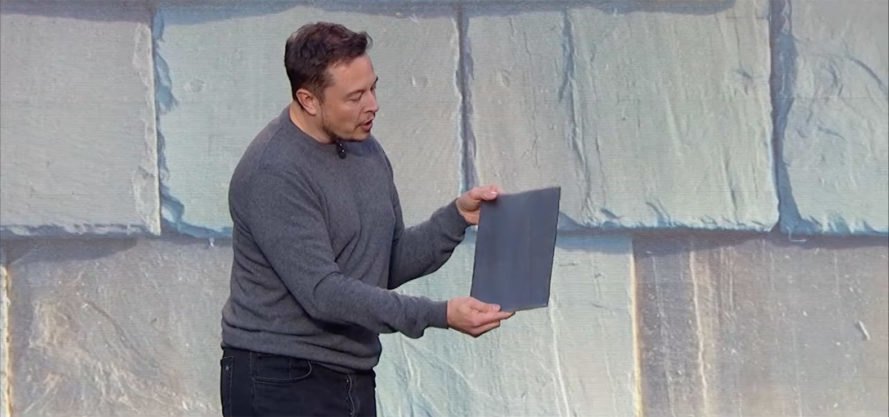
Elon Musk, Founder of Tesla

In 2017, Musk said Tesla cars would come to India in summer. But that didn’t happen, and resulted in the delay in delivery of cars to Indian consumers who had made subscriptions. Musk blamed the situation on the government’s FDI policy which he said in a tweet, required “that 30% of parts must be locally sourced and the supply doesn’t yet exist in India to support that.”

India was grappling with infrastructural deficiencies that will enable the operation of electric vehicles then. But a lot has changed now. There are over 10 world class EV manufacturers in India, including Mahindra Electric, the pioneer of electric vehicles in the country, who built its first car as early as 2001. And there is Tata Motors, the largest automobile manufacturer in India, who is among new entrants in the electric vehicles manufacturing.

With the increased EV infrastructure in India, including rampant charging stations, Tesla will only have to worry about competition with indigenous manufacturers, whose cars are likely to be more affordable, not the FDI policy.
Fintechnolization of Platforms – Expect This Redesign in Startups

1

Good People, what are your expectations for 2021? I am calling it the year of accelerated growth. The massive shift to technology-driven productivity which the pandemic has seeded will unlock more vistas in markets. I have been working on a framework which is based on the construct that all digital platforms have one final steady state for capturing massive value: offering financial services. Yes, when you have a platform, in any domain, you must offer a financial services product!

Looking at Chinese digital platforms (Tencent, Alibaba) and US counterparts (Google, Facebook), my conclusion is this: every platform will become a fintech company at the end. So, I do want to see how Tekedia would become an investment club, a lending ecosystem, etc, at the lowest marginal cost, to members and readers in the ecosystem.  This construct tracks the recent trajectories of Facebook and Google. Alibaba and Tencent have validated my thesis as I have studied their evolutions and revolutions in the markets.

MPesa thinks it has a great platform, and wants to add wealth management and other services in addition to payment.

The pioneer of a mobile-banking revolution in sub-Saharan Africa is in talks with financial-services providers about expanding its offerings over the next five years, as it seeks to emulate the success of Ant Group’s Alipay.

Safaricom Plc. is in negotiations with fund managers, investment banks and insurance companies to partner on a raft of mobile phone-based savings and wealth-management products, Chief Executive Officer Peter Ndegwa said in an interview in Nairobi, Kenya’s capital.

What do I need to do for Tekedia? Get a partnership with a licensed operator in that domain, and make the services available to where the demand is already available. As I have noted, the empires of tomorrow would be built by those who control demand, and not the suppliers.

In the digital age, what matters is not who controls supply, but who controls demand. Supply is largely infinite as there are many ways to get to the web, and because it is infinite, users congregate to platforms to help them navigate and make sense of the web.

In 1980, before the digital age as we have it today, the most powerful people in media were newspaper publishers. They were the people you needed to reach to get your message to the world. They decided what everyone read on the dailies and they were powerful. They controlled supply and by controlling supply, they shaped everything including advertising.

So, Tekedia could become a mini-bank, investing entity, etc, because we have people. Yes, Fintechnolization of Platforms is a promise in the next coming years.

Attend free Remote Work Administration training with Tekedia Mini-MBA

0

Good People,  we have updated our agreement with Krozu, Florida, USA, and all members in Tekedia Mini-MBA edition 4 will have the option to participate in the Remote Work Administration training. So, there is no need to contact Admin; if you are registered, you are in (there is no extra cost). Once class begins in Feb, you will get further instructions.

This is an optional Session Lab which Tekedia Institute has worked out to help our members. We hope this prepares co-learners to become better workers/ managers even when they find themselves in a remote work setting.

Other two session labs scheduled are Blockchain, Cryptocurrency & Decentralized Finance (by Bitfxt, Nigeria), and Cybersecurity & Digital Forensics (by Infoprive, Australia). These are all live sessions on live systems to experience practical business systems.

I am very excited for the business/academic excursion starting in Feb. Join us 

Tekedia Mini-MBA Edition 4


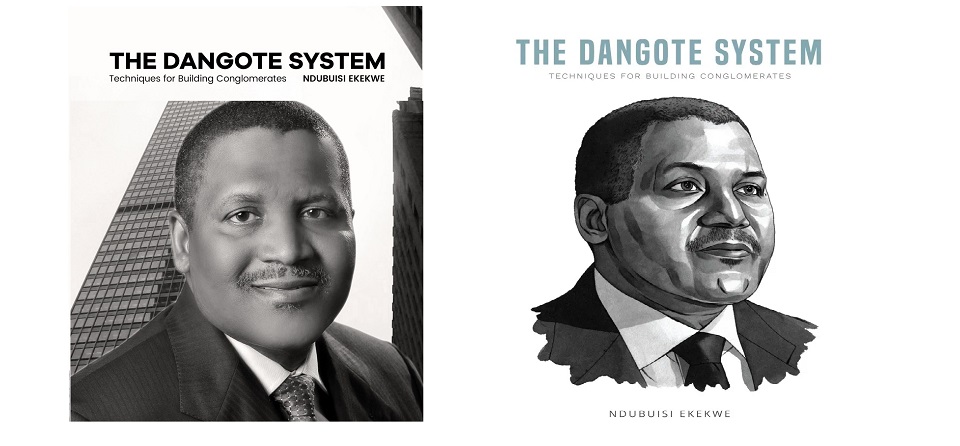
Immediate Access To “The Dangote System” Book Once You Register for Tekedia Mini-MBA

0

It is amazing: I received a call from the Dangote Group! And critics continue to praise “The Dangote System” as a business book. One wrote: “This book is a worthy read to all aspiring, low-fly and high-flying entrepreneurs, including those envious of the privileges that Dangote Empire has enjoyed. Noteworthy to say, I doubt Mr Aliko Dangote himself understands these privileges as a Conglomerate Tax (reward for helping Government out on high-pains by moving upstream) and not benefits of tribalism, feudalism, and/or Northern Nigeria cabalism.”

Immediate access once you register for Tekedia Mini-MBA.

Tekedia Institute offers an innovation management 12-week program (Tekedia Mini-MBA), optimized for business execution and growth, with digital operational overlay. It runs 100% online. The theme is Innovation, Growth & Digital Execution – Techniques for Building Category-King Companies. All contents are self-paced, recorded and archived which means participants do not have to be at any scheduled time to consume contents.

It is a sector- and firm-agnostic management program comprising videos, flash cases, challenge assignments, labs, written materials, webinars, etc by a global faculty coordinated by Prof Ndubuisi Ekekwe.


Comment on Feed

Comment: Professor, I’m ready to sit with you to x-ray Dangote business model, financials and governance operations……..and lets see if Dangote can be classified as a responsible organisation meeting key ESG obligations.

My Response: He will become a monopolist for fixing fuel in 3 years and Marcel will blame him for Nigeria’s problems. He will fix electricity by 2035 and Marcel will blame him for doing that. Give this man a break my friend. Dangote’s problem is that all of us are not serious people. If we have 10 Dangotes in Nigeria, you will understand what govt gives him is common for conglomerates. Washington state pays Boeing $100M yearly.

Do you know how much Virginia waived for Amazon for HQ2? Do you know that GE did not pay tax for years for helping invent something for US military? Conglomerates tax nation; Dangote Group is one. His problem is that none of us has picked our sector to get the same benefits. Go and fix power, you will be blessing from Nigeria. Or pick agriculture or roads or healthcare?

I hate this bashing of Dangote when the people are not doing anything to fix anything. Tanzania rankled him, he left, only for the govt to beg him to come back. He does not solve small problems; he goes for hard one and puts his prices!

Commenter’s follow-up: Professor…. I respect your opinion.

For clarity sake….. I’m not blaming Dangote.

I’m worried about the system that allowed a Dangote to unilaterally determine the prices of commodities in an economy of 200million people.

If Govt gives any Nigerian 10% of the licenses and privileges awarded to Dangote at the start of any of his business ventures without hindrances….. they’ll outperform Dangote.

I do not support a monopolistic market…. Government should check it and give room for small businesses to grow and compete with Dangote. Its for the benefit of all.

My further response: Marcel Ngogbehei “I’m worried about the system that allowed a Dangote to unilaterally determine the prices of commodities in an economy of 200million people. ” – you are not worried. If you are, go and build power plants with 24/7 electricity and Nigeria will dance for you. Go and build hospitals and Nigeria will bow for you. Name your price and you get it.

In Anambra, the state governor gave money to private universities because they are helping him educate young people. That is not bad. He is essentially saying: everyone is talking of no access to school but these people are doing something, I will support them. Lagos plans to wire money to private schools. Every bank founder in Nigeria gets his own via voodoo forex. Nigeria is saying: start something and we will support you.

America funded Elon Musk’s Tesla. NASA ships its budget to SpaceX. Why? He is solving uncommon problems. Find yours and you get it. That is how the world works for conglomerates. Study them or read my book as a starter.

The Idea Of “Vaccine Passport” Is Scary

1

This would be fearful. Yes, the idea that one would need a passport, before air travel, that is linked, and  which authenticates that the owner has taken a Covid-19 vaccine should be a concern. But you may ask: if some countries already require yellow fever vaccination documentation, for entry, why not Covid-19 vaccination documentation?

Vaccination records aren’t new, but there will be new ways to use them: There’s nothing revolutionary about needing to prove you’ve had a vaccine. Some countries require evidence of a yellow fever shot before you can clear customs, and many schools will not let you enroll your children in school unless they’re up to date on mandatory immunizations. Official tracking of who gets what vaccine is old news too. National and local governments around the world run registries where doctors send their vaccination records.

This is going to become the new reality and I just think that it will happen, not in some big nations, but in those mid-tier nations which like to throw everything on people. The problem, though, is that instead of asking Americans and British to show they have been vaccinated, poor countries in Africa which currently are not under the most severe direct health-burden of coronavirus would be the target. So, there would be waivers for British and Americans, but Gambians, Nigerians and the typical must show vaccine-ready passports.

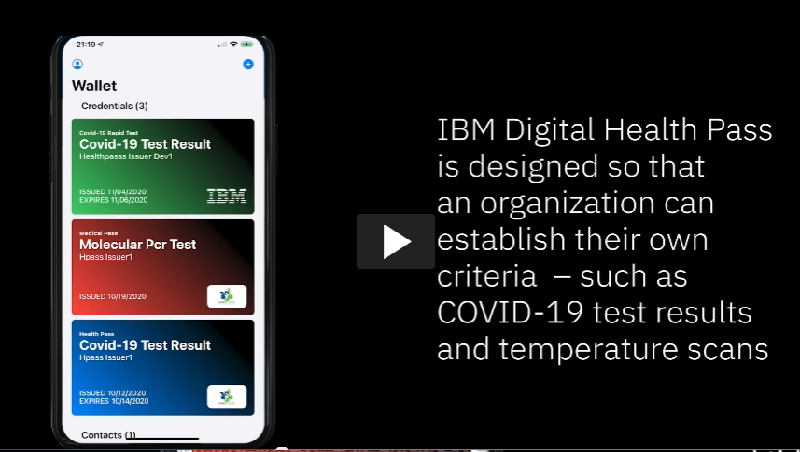
While coronavirus vaccines are distributed around the world, a Geneva-based nonprofit is teaming up with airlines and The World Economic Forum to create a “vaccine passport” app to ease air travel during the pandemic. They say the digital credentials can also be used at stadiums, movie theaters and offices. According to developers, users will receive a private QR code once test results or proof of vaccination are uploaded. IBM has developed a similar app, Digital Health Pass, that lets companies and venues customize what they require for entry to a physical location.

IBM has a product – Digital Health Pass – ready for customization for countries: the product is “ designed to provide organizations with a smart way to bring people back to a physical location, such as a workplace, school, stadium or airline flight. Built on IBM Blockchain technology, the solution is designed to enable organizations to verify health credentials for employees, customers and visitors entering their site based on criteria specified by the organization. Privacy is central to the solution, and the digital wallet can allow individuals to maintain control of their personal health information and share it in a way that is secured, verifiable, and trusted.  Individuals can share their health pass to return to the activities and things they love, without requiring exposure of the underlying personal data used to generate the credential.”