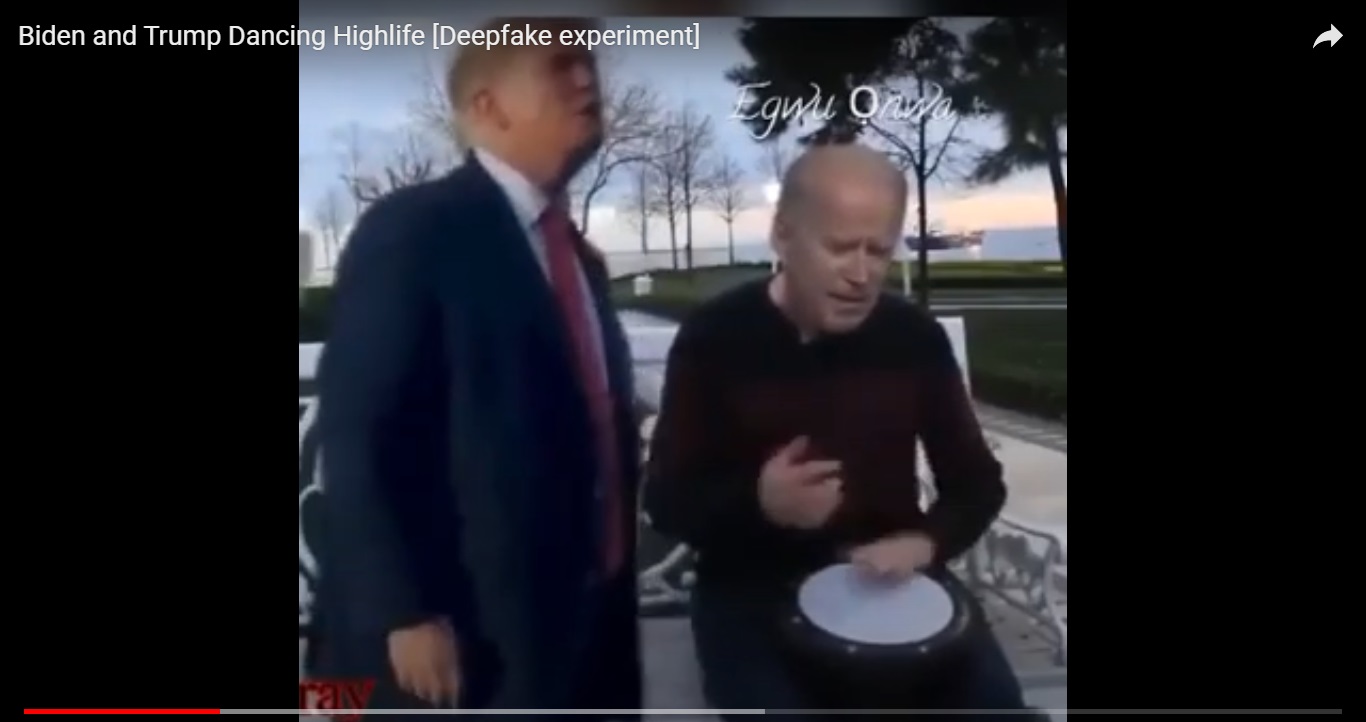
For research and academic purposes on the power of emerging deep fake computational systems. It turns out that anyone can do this now. It could have cost the guy $40 to do this. Give him $10,000 and a judge will struggle to rule on which is real or fake. But of course, highlife brings the fun to Mazi “Biden” and Mazi “Trump” here. Brace for a stochastic future!
This is actually the type of song for White House. , egwu oma [good music]. egwu di mma si na chukwu [good music comes from God]. umu uwa gee zie nu nti [the world should listen]. Ugo chi mere eze [ only the lord can enthrone to the throne ]
Actually, there is a subscription package which you can pay $1,900 for tools to make this. You do not need $10k. Some tech firms offer same on beta as they refine models and collect data. Possibly, they will NOT release it for deepfake but people will use it for that!
The real deal is on editing: why waste $20k to go and re-shoot a movie segment when you can fake that small section? Can you sign artistes on contracts and create a Nollywood movie from software with none ever needed to be physically present? Your look is what you sell, not your time!
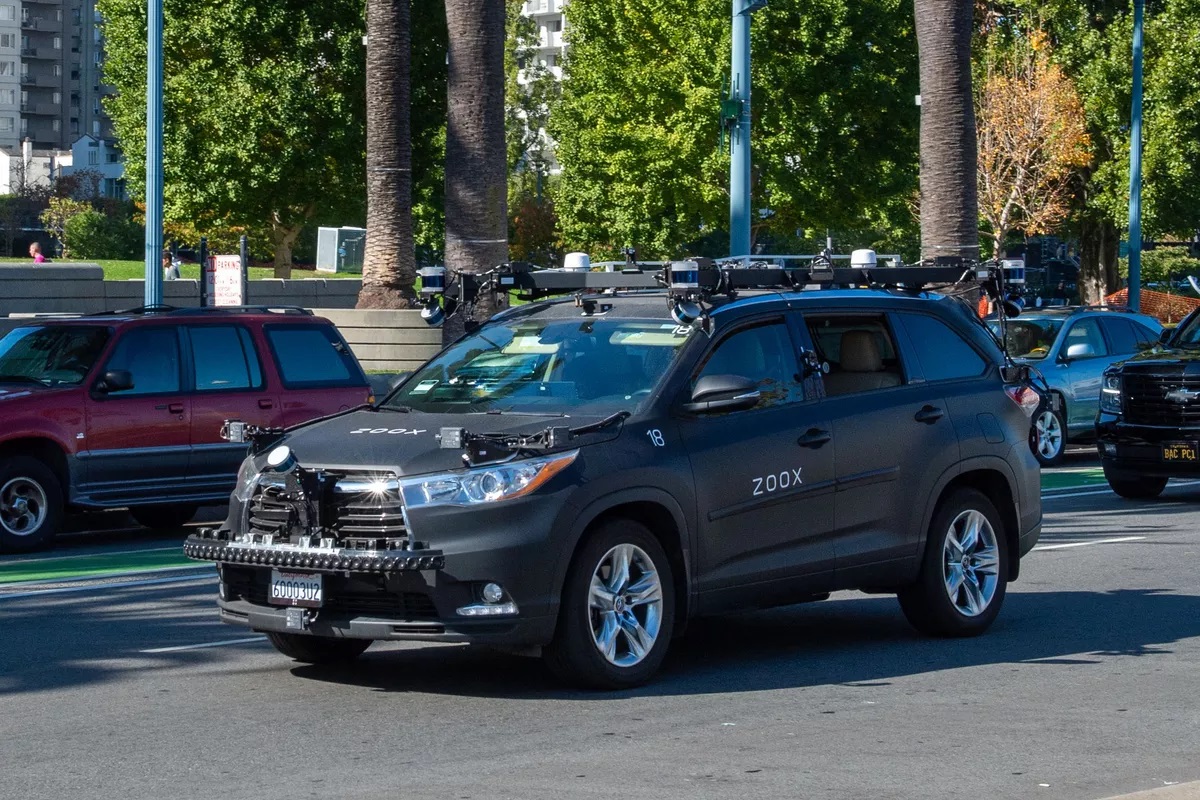
The driverless car was unveiled by Amazon’s Zoox, a startup it acquired in June as it pushes to attain its goal of running a transport company.
It follows the recent push, masterminded by COVID-19 pandemic, to seek alternatives to manned vehicles.
The pandemic ushered in safety measures around the world that involve social distancing, forcing the ride-hailing industry to shift operation to deliveries or stay out of business.
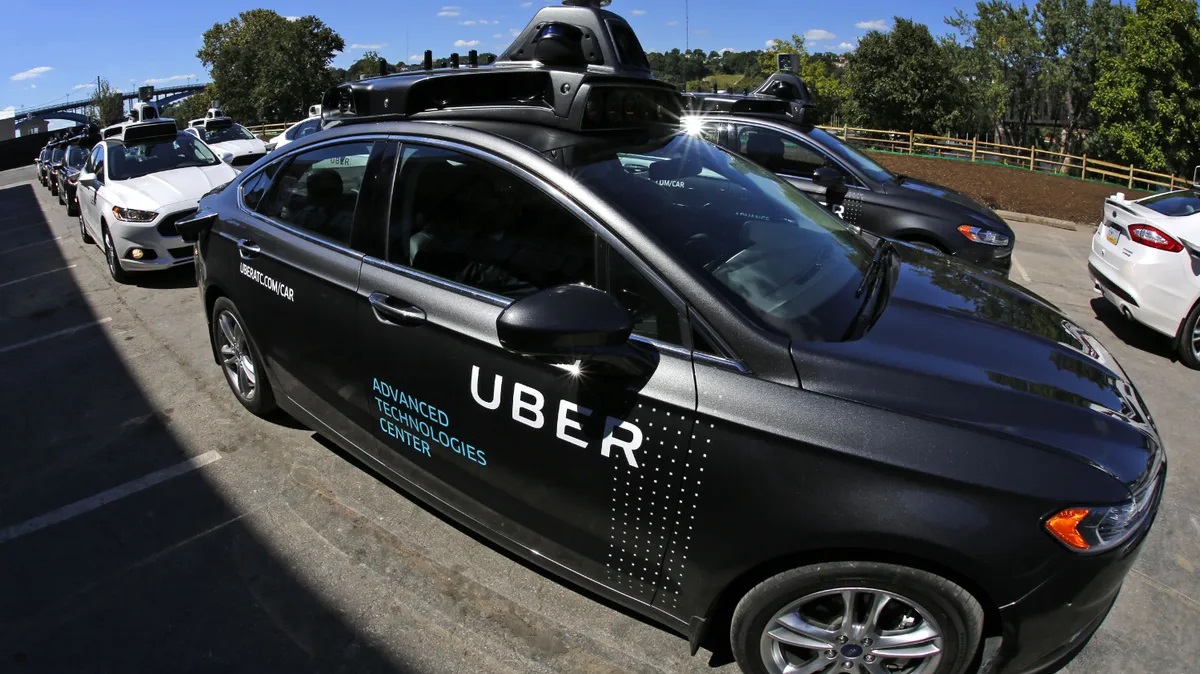
Before now, there have been a lot of regulatory bottlenecks hindering driverless vehicle manufacturers from putting their vehicles on the roads. In 2018, a pedestrian was struck dead by an autonomous vehicle operated by Uber. The cause of the pedestrian’s death, as determined by the National Transportation Safety Board (NTSB) was “inadequate safety culture” and “deficiencies in state and federal regulation,” and it thus fueled the tight approach of regulators on approval of unmanned vehicles.
Apart from the challenge of navigating through the roads, cybersecurity concerns involving the threat of autonomous vehicles (AVs) being hacked heightened the fears of both the NTSB and U.S. lawmakers working on laws that will govern the entire autonomous vehicle ecosystem, and hindered the automakers’ quest for approval.
In East Asia, where China is leading the quest for autonomous vehicles, it has been the same regulatory story as questions about the vehicles navigational capabilities keep regulators in doubt and consequently, stall the push by driverless automakers to get licensed to operate fully autonomous vehicles.
In February, the China’s National Development and Reform Commission and ten other governmental agencies of the Strategies for Innovation and Development of Intelligent Vehicles (the Strategies) released a two-step plan for autonomous vehicle development in China.
The plan includes first, a framework for technological innovation, industrial ecology, infrastructure, regulation, and network security in the autonomous vehicle market; second, the aim to fully establish an ecosystem for AVs from 2035 to 2050.
While the plans offer autonomous vehicles a path to a future in China’s booming auto market, it reels on setbacks emanating from many areas of driverless responsibility. For instance, the Ministry of Transport issued in 2018, the Administrative Rules on Intelligent and Connected Vehicle Road Testing, stipulating that autonomous vehicles are permitted only in designated areas in China for road testing. And there is also a policy of insurance coverage of about $700,000 to cover cases of accidents.
However, despite the regulatory and technological challenges in both AV leading markets, there has been a recent shift indicating progress. The pandemic has emphasized the need for autonomous vehicles now more than before, and it seems to have eased the tightfistedness of regulators on matters of AV concerns.
AutoX’s launch of its robotaxi early this month defied the rule which mandated driverless vehicle operators to have a safety driver on the wheels while testing or using the vehicle around town. It thus underscores advancement in technology and software engineering that could get the authorities to bend the rules.
Zoox on the other hand came in a unique way that distinguishes it from other autonomous vehicles. It’s a carriage-style car, which means that passengers face each other and there’s no space for a driver or passenger seat, because it has no steering wheel.
With space for four passengers, Zoox has the capabilities of bidirectional driving which allows it to change directions without the need to reverse and navigate in compact spaces. It also has an array of cameras, radar and lidar sensors, mounted on all four corners of the car, to eliminate blind spots and give it a 270-degree field of view on the road. The car can travel up to 75 miles per hour and can run up to 16 hours on a single charge. It has airbags for each of the four seats.
With each new autonomous vehicle rolled out, there is a significant tech breakthrough erasing regulatory concerns and filling a tech gap.
While the approval of full commercial operation of autonomous vehicles seems a long shot, the progress so far spells doom for many career drivers in the ride-hailing industry. With the number of companies indicating interest in operating robotaxi growing, cab service is poised to be another victim of robotics.
Alphabet’s Waymo, GM’s Cruise, Uber and Tesla among other emerging companies are all in a mission to deliver approved driverless robotaxis as soon as possible. So the ride-hailing industry is about to witness a shift that will save it some troubles.
In November,Uber and Lyft narrowly survived being shut down in California over the classification of its drivers as independent contractors, thanks to prop.22. Commercial robotaxis means that ridesharing companies using the gig business model will have not to worry anymore about minimum wage and employee benefits.
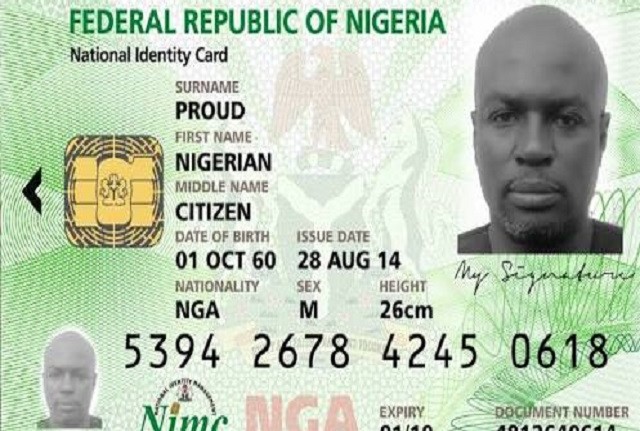
The Federal Government has approved 173 centres and 30 state government institutions to conduct enrolment of all persons including legal residents into the National Identity Database (NIDB) on behalf of the National Identity Management Commission (NIMC).
This was disclosed on the National Identity Management Commission (NIMC) website on Wednesday with the title, ‘Approved Data Capturing Agents (Digital Identity Ecosystem)’ on Wednesday.
This move is coming after a two-week ultimatum was issued by the government to telecom service providers to block phone numbers without NIN.
Also, all registered persons can retrieve their NIN by dialing *346# on their registered phone number for all the major networks.
Categorically divided to quicken the pace of registration so as to beat the deadline, the approved institutions are as follows:
Bitcoin is flawed but NairaCoin offers promise in Nigeria
Bitcoin leaped to its highest height on Thursday, surpassing $22,000 for the first time to make 2020 its best year so far.
The crypto giant had a rough early year, tumbling through the first and second quarters of the year while gold thrived amidst the heat of COVID-19.
Since the bitcoin halving in May, the digital coin has been relentlessly trying to prove its worth to investors looking for a safe haven from the pandemic’s economic storm. The digital coin started recording a surge after it has consistently recovered from areas where corrections were expected.
On Wednesday, the world largest coin made a giant over 10% leap to over $23,700.92 in New York to vindicate earlier projections, thanks to Wall Street big names crowding into the asset.
Bitcoin’s rally to its best performance this year has attracted investors who were looking for a safe haven against the pandemic, and thus propelled further forecasts of higher price for the digital gold.
“We have a new line sand and the focus shifts to the next round number of $30,000,” said Antoni Trenchev, cofounder and managing partner of Nexco, a crypto lender. “This is the start of a new chapter for Bitcoin. It’s a narrative the media and retail crowd can properly latch onto because they’ve been noticeably absent from this rally.”
Investors expect the cryptocurrency to reach its all-time high, the $20,000 2017 peak in December.
Last month, Citibank executive, Tom Fitzpatrick said bitcoin will trade at $318,000 by the end of 2021. Though he admitted the prediction seems improbable, but there is a new wave of investor interest to drive the surge.
Fizpatrick said the surge will be the weakest rally for the digital asset when compared to other assets such as gold. In his argument, bitcoin is all about the “unthinkable rallies followed by painful corrections,” which means, it will likely see huge price swings before finally settling at the predicted price.
SALT LAKE CITY, UT – APRIL 26: A pile of Bitcoins are shown here after Software engineer Mike Caldwell minted them in his shop on April 26, 2013 in Sandy, Utah. Bitcoin is an experimental digital currency used over the Internet that is gaining in popularity worldwide. (Photo by George Frey/Getty Images)
In March, bitcoin crashed, losing 25% and leaving investors in doubt about its strength to withstand a global crisis. Over $26 billion was wiped off the cryptocurrency market in 24 hours.
But it picked up again, winning the interest of doubting investors including some Wall Street firms. Twitter CEO Jack Dorsey among other big shots in the tech industry threw weight behind the coin with multi-million dollar investments.
Demand for its perceived quality as an inflation hedge and expectations of mainstream acceptance have become other factors aside corrections, driving its rally.
The interest spurred bitcoin to further growth as many investors spurned gold. In November, the coin hit $18,000 and has kept smashing its previous peaks.
Other coins have kept growing along bitcoin. Ether, the second largest digital coin, also rose as much as 6.9%, according to data published by Bloomberg. It was so much that Coinbase, a cryptocurrency exchange said it was experiencing congestion issues and delays in sending the token.
Bloomberg reported that the rally came as CME Group Inc., announced that it plans to expand its suite of cryptocurrency derivatives offerings to include Ether futures beginning in February.
The chief strategy officer at Coinshares, Meltem Demirors said bitcoin’s surge above $20,000 will pave way for further growth.
“The biggest thing is the macroeconomic conditions – this is the perfect setup for Bitcoin. From here things are going to move very quickly and I wouldn’t be surprised if we touched $35,000 in the next three to six months,” she said.
Bitcoin has surged 170% this year.
The contagious excitement about the digital asset’s growth is fuelling a massive flow of coin to North America from East Asia, as more investors embrace bitcoin.
“While this is a major milestone for this nascent asset class, as retail, institutional, and blue-chip investors alike allocate more capital to this space, it would not be surprising to see other coins follow in BTC’s footsteps and for this upward trajectory to be sustained into 2021,” said Scott Freeman, co-founder & partner at trading firm JST Capital.
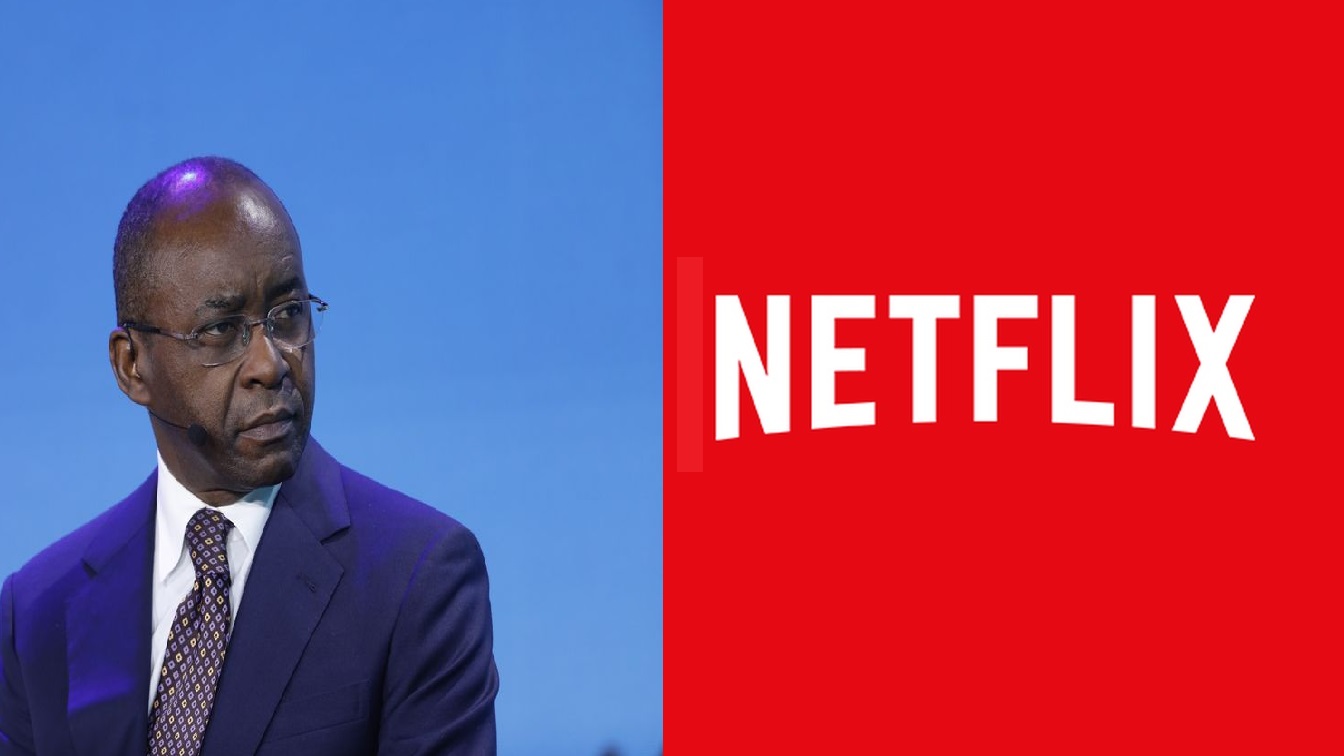
Netflix hasappointed Zimbabwean billionaire Strive Masiyiwa to its board. This is a clear evidence that Netflix sees Africa as part of its future. Besides buying movie rights and signing producers to produce more, having Strive on its board takes the playbook to a new level. Across all domains, this is epochal when it comes to regional SVOD (subscription video on demand) strategy. Yes, Strive knows Africa and has the networks and connections to everybody he needs in the continent.
Masiyiwa is the founder and executive chairman of Econet Global, a telecommunications company that operates across Africa, Asia, Europe and Latin America. Econet offers phone, broadband and satellite service, and is also a major provider of mobile payments….
For now, Africa is a small market for paid streaming video. In a continent of more than a billion people, Netflix has just a couple million customers, according to Digital TV Research. But the company has long argued that it would play the long game adding customers in Asia and Africa, home to the majority of the world’s people. Toward that end, Netflix has started offering cheaper, mobile-only plans and has commissioned a slate of original series and movies.
Of course, this also shows that Strive does not want to turn away from contents and videos after his own venture went nowhere. But the experiences he picked along the process would be valuable to Netflix.
“We are delighted to welcome Strive to the Netflix board,” Chairman and Co-Chief Executive Officer Reed Hastings said Wednesday in a statement. “His entrepreneurship and vision in building businesses across Africa and beyond will bring valuable insights and experience to our board as we work to improve and serve more members all around the world.”
This is going to be the most challenging equation for MultiChoice, the owner of GOtv and DStv:
Netflix + Elon Musk’s Starlink Satellite = Disruption of SVOD in Africa.
Yes, Netflix can practically pay for ahigh speed channel via Starlink and pipe videos to most parts of the content in the next coming years. Expect this playbook to role out at scale from 2025. Netflix has been known for paying ISPs to pipe its contents through a faster Internet in the U.S!
Tik tok is launching its app on Samsung smart TVs, if this collabo scales, then it’s time for Netflix to reposition. This playbook will blow cable TV out of the water, can someone please tell DSTV that it’s time to be afraid. Who needs the repetitive boredom of uninteresting contents when there are thousands of Tik Tik videos to entertain?. So even if Netflix adds Opera Winfrey sef to their board and makes the next “house of cards’ series in ibibio, social media and TV is having a hybrid baby and the hybrid is called Disruption.