We usually perform better in fields where we have a good amount of practical information. Take me for instance – for a guy, I know very little about football except that the best players are Lionel Messi and Christiano Ronaldo, Lewandowski just won the FIFA men’s award (which I found rather surprising), and that Manchester United is no longer the top-tier club it used to be. I don’t gamble, but if I chose to, Sports Betting would be the wrong platform for me to patronize.
The same goes for investing in the stock market. If you’re like the vast majority of people I have met who know very little about investing, think Tesla is a drink, know the iPhone – but think Apple is primarily a fruit, and are of the opinion that the last part of Berkshire Hathaway sounds more like an Airline (Heathrow – Airways) than a multinational holdings company, you’re probably better off buying shares through hedge funds, mutual funds, and other money managers that give you safer returns on very little risk.
This is conventional business wisdom – no joke – do stuff you understand.
Warren Buffet runs with this investment philosophy, that’s why except for Apple, most of the stocks in his portfolio are really decent, simple and straightforward – Gillette, Coca Cola, Bank of America etc. Stocks that usually pay dividends, and are run in ways he can understand.
If you’re doing business in Africa, your philosophy shouldn’t be any different.
Africa is the next billion – the land of opportunities, the land with a teeming 60% youth population, the land with an extra 1.3billion people for you to push your product that has made a name in the West too. It’s also the worst land to parachute blindfolded, wearing a black Burberry suit with pockets stocked full of money. My drift – Africa is the wrong place to not know what you’re doing.
This isn’t just theory, many have learned the hard way, are learning the hard way, and will learn the hard way.
Take Atlas Mara for instance who have lost 96% of their value since listing on the London Stock Exchange (LSE) in 2013. It was founded by former Barclays Bank executive Bob Diamond and entrepreneur Ashish Thakkar, and was recently in the news for making moves to exit some of its markets, and offload some key assets. I don’t really know what their core strategy is, but according to what I’ve heard, they depend primarily on data – which may be wrong, biased or maybe even nonexistent.
Access Bank is in talks to acquire some of Atlas Mara’s African assets, which is really a sign that Access Bank believes their problem is less of a fundamental one, and more of an operational and structural one.
One of the most successful foreign tech firm doing business in Africa is none other than Transsion Holdings.

Here’s why;
Transsion Holdings
I have a habit of personifying businesses, and so almost every business I’ve come across has a unique personality I use to define them.
Transsion Holdings in my opinion is an Asian guy who got a first class studying Yoruba at the University of Lagos, and is more street than street itself.
Very few businesses understand the Nigerian, and by extension African business environment better than Transsion Holdings. For a business that made US$3.86 billion in global revenue in 2019 with more than 75% of that coming from Africa alone, Transsion Holdings in my opinion is among the few businesses that have the right to start a school that teaches foreign tech firms how to prosper in Africa.
For context, 75% of US$3.86 billion is almost US$2.9 billion. In other words – Transsion Holdings makes almost US$3 billion selling a non essential product in one of the most price sensitive markets on the planet. I really wish Transsion Holdings was the business representing Africa on the NYSE (New York Stock Exchange). If we check very well, maybe Zhu Zhaojiang (Transsion Holdings founder) is really a Yoruba guy from Akure in Ondo state. It’s possible, at least some people still believe that Buhari is really Jubril from Sudan, so you never can tell, But I digress.
Transsion Holdings success has been hinged on many factors, one of which is its Glocalization strategy. However, my focus today isn’t really on Glocalization, my focus is on something else that Transsion does.
The Fallacy of Essentialism
I’ve been preaching the gospel of essentialism for the past couple of weeks, if not months – it’s a simple gospel; the only way to scale a big business in Africa is to sell to a very large audience, and the only way to scale for a large audience is to sell or provide an essential product.
Am I wrong? Not really, the results on ground don’t disprove it. The biggest businesses operating in Nigeria mostly provide services people consider to be essential – we all need shelter, so Dangote Cement is a US$1.6 billion per year revenue generating business, we can’t keep large swathes of cash in our houses (at least not anymore), so the banking industry is a multi billion dollar industry, and since witchcraft is not legal, and mysteriously appearing to work on a Monday morning is more likely to get your boss to fire you out of fear than recommend you for a promotion – the Nigerian transportation industry is a multi billion dollar industry.
In my opinion, one of the biggest products in Nigeria is Garri, but since it’s a fragmented product, multiple players are responsible for its supply, and no one really has a monopoly on its production, measuring it’s real value remains challenging.
In a document I’m presently working on, I sketch out what I call a Product essentiality Graph, which is my way of aligning businesses, how much they’re valued at, and where they lie on the basis of essentiality.
Indomie generated US$304 million in revenue for Dufil Group in 2017. The thing is Indomie is not a major player in the vertical it operates (food), Indomie is a small player, a very small player. Indomie doesn’t sell noodles, Indomie is the easiest way to leave your house without preparing food for your kids and not feel guilty. I strongly believe that there is – no joke – a direct correlation between how busy a woman is, and how quickly Indomie finishes in her house. But I digress.
My point is, what we refer to as essential is really a function of our individual preferences. These days, a good number of girls need Bone Straight (a kind of wig). It’s not an essential product (in my opinion), but as long as they think it is (and I’m not the one paying for it), sales will continue to go through the roof.
Market Perceptions
Human beings are deeply emotional beings, regardless of where they lie on the economic ladder – being poor rarely changes that. If you’re trying to scale a valuable product in Nigeria, and by extension Africa, you’ve got to find a way to make people believe your product is an essential product, you’ve got to find a way to make people believe that your product solves the highest need in Maslow’s hierarchy of needs – the need for self actualization – or something in the higher levels beyond physiological needs (shelter, food, water).
Until you can successfully do this, people will continue to see your product as a nice-to-have, and not an essential product – making you struggle to create value for a very small and negligible total addressable market.

There was a time when mobile phones were reserved for the rich, today It’s practically almost impossible to live in an urban city and not own a mobile phone.
The idea behind an effective market perception strategy is to influence demand. There is no special marketing required for you to buy fuel today – as long as PHCN remains unreliable, and you have to drive a car to anywhere today – you will need fuel – maybe not today, but someday in the future, you’ll need that product eventually.
I have never seen a petrol ad – I’ve seen engine oil advertisements, but definitely not gasoline. Unless a business is trying to market its gas station specifically, it may not need those ads, because as long as your goal isn’t to cook party jollof with firewood, and you have no intention of stressing yourself, when your gas cylinder at home runs out, you’ll look for a gas plant to do a refill.
Businesses in this space usually win by proximity to customers, superior product quality (I have bought fuel once that messed up the car’s carburetor), and superior customer experience (everyone is bias to businesses that make them feel welcome, not the ones that just want to collect their money, give them a product, and chase them away).
However, businesses like Indomie, MTN, GTBank and the likes continue to advertise so they can keep on influencing demand regardless of how large the brand moats they have built are. Influencing product demand is extremely important.
Influencing Demand through marketing or other means is only half the equation, and will really only be effective when you mix it with the next strategy.
Democratization
In my opinion, Innovation is really about creating the perfect balance between three key variables – Technology, Design and Business.
Technology makes it work, design is really about beauty and customer appeal, but in the end – if it can’t be sold at a price that’s relatively affordable to most users, or can help the businesses bottom line, it isn’t truly innovation.
The major reason most new product innovations fail to scale is because they miss the third variable. The product is technologically advanced, solves a real problem users have, is attractive to users, but is too downright expensive. So it ends up being used by a very small subset of the population (early adopters), who may or may not continue to use the product everyday. The product eventually dies a natural death because the masses (or a good number of them) can’t afford it.
Take Tesla for instance, in a recent earnings call, Elon told investors he wasn’t so concerned about making profits, but embracing more production efficiency initiatives that make the product cheaper. In other words, Elon’s main concern is making Tesla cheaper rather than making more profits (which I think is weird, but considering I’m not a big money institutional investor in Tesla – my opinion may or may not count).
Tesla makes fully electric cars (massive technological innovation) that scale mainstream primarily because their price points are reasonable and attainable, and they are highly desirable cars. The Standard range Tesla Model 3 has a starting price of around US$39,990 which is actually cheaper than the 2020 Toyota Camry, and maybe just US$10,000 costlier than a 2020 Toyota Matrix.

Democratization allows businesses to extract more commercial value for their products by tapping into lower market classes and segments. The lower you go on the market class chart, the more users you can tap into (here’s an article I wrote on market sizes and classes that can help you understand this better).
It’s really simple logic – the core purpose of a car is to take you from A to B fast, but as we go higher on the market class chart, a car begins to have a different meaning.
At some point, having a car becomes more about signalling your worth and class to a larger array of people than just going from A to B. Signalling your worth has a cost, the higher you go on that chart, the costlier the vehicle.
The most popular Luxury car in Nigeria is the Rolls-Royce. Because of democratization, there are more people who drive the Toyota Camry as a single car model than every other model of Rolls Royce in the country – whether it’s a Phantom, Wraith, Ghost, Cullinan or what have you.
Democratization allows you to create a cheaper product that allows you to broaden your product tentacles as your value proposition begins to find more meaning in the nether regions of the market class chart.
Multichoice’s flagship product DSTV is a household name in Nigeria. DSTV offers some of the best channels you can watch on satellite TV in Nigeria. The problem became pricing – DSTV’s value proposition began to look more meaningful to those in higher market classes, and less to those in the lower regions.
Competitors like Startimes and HITV saw this market friction as an opportunity to capitalize on. MultiChoice quickly released GOTV as a lower market segment product. Some of the cheapest GOTV bouquets cost N2,100 a month to subscribe to. I’ve seen people you may term as poor installing GOTV in their homes. I have – no joke – seen a tricycle rider (Keke) with GOTV installed in his tricycle. It’s a way to both entertain commuters, and also help them forget to drop at their bus stops because apparently Tom Cruise just jumped out of a moving car, and under no circumstance can they miss what will happen next.
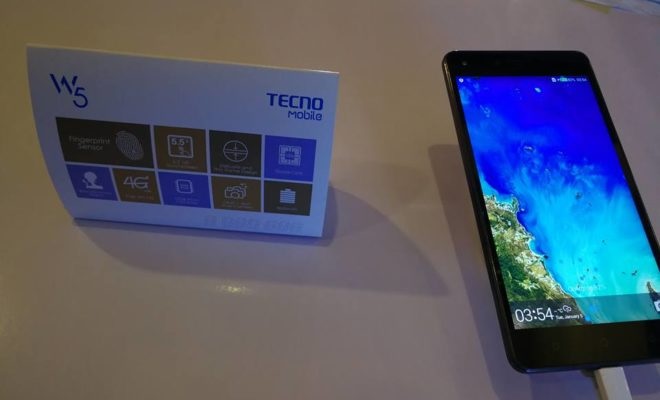
Transsion Holdings has a massive democratization strategy. At almost every below market price point, there’s a Transsion Holdings product that can serve your need (if you’re reasonable enough to ask for what you can afford). This helps Transsion tap into more potential customers at the lower end of the matrix and create more value for its shareholders.
Transsion Holdings works with data, a lot of on the ground and practical data. Transsion was in Africa as a feature phone brand for 6 years before finally expanding into the African smartphone segment where it presently holds a 40.6% market share.
Transsion had 6 years to learn practically what works in this market and redesign their offerings and products to suit this market. Dual SIM cards, and a large emphasis on battery life were not features they guessed from a well heated Manhattan apartment somewhere in New York City, they were features inferred from on the ground observation. You won’t win in Africa playing remote, you need to be on ground.

I’ll say that again;
You won’t win in Africa playing remote, you need to be on ground.
Conclusion
Transsion Holdings is largely responsible for the around 20% smartphone penetration we presently enjoy in Nigeria (and that Uber employs as a basis for its innovation endeavors in Africa).
Influencing demand aggressively through almost ubiquitous visual content, and employing well thought out democratization strategies have helped this brand build what in my opinion is one of the most successful foreign tech firms operating out of Africa.
If you’re a tech firm operating in Africa, Transsion Holdings is a model you should definitely pay serious attention to.