DD
MM
YYYY

PAGES

DD
MM
YYYY

spot_img

PAGES

Home Blog Page 5986

Nigeria is Now the World’s Second Largest Bitcoin Market

0

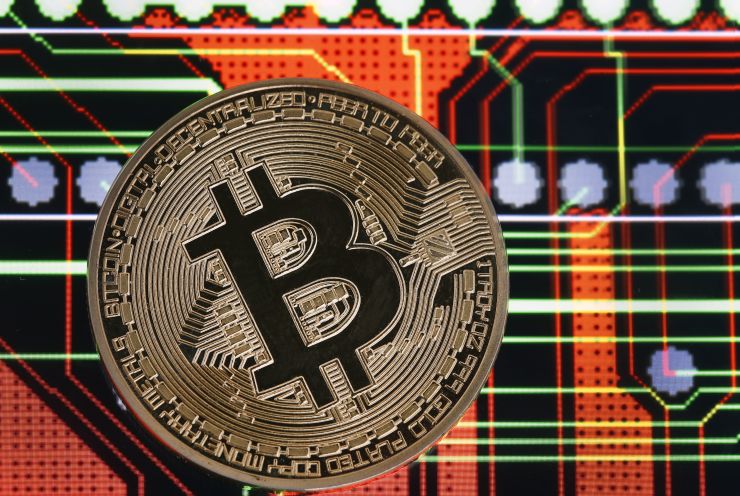
As the price of bitcoin defiantly surges in the face of COVID-19 economic turmoil, investors are racing to secure a share of the boom in the U.S. and Europe. More countries around the world are also changing their rules to allow investment in the digital asset.

Hong Kong on Thursday issued its first-ever crypto license to OSL Digital Securities to commence cryptocurrency trading.

While many affluent countries are yet to embrace the digital coin, Nigeria, Africa’s largest economy surprisingly leads the way.

Bitcoin trading platform Paxful analyzed the coin’s transaction flow for the past five years (2015-2020), to find that Nigeria traded more than $566 million worth of bitcoin during the period. It thus becomes the world’s second largest peer-to-peer (P2P) bitcoin market after the U.S. which traded $3.75 billion in the same period.

Paxful’s analysis noted that Nigeria traded the equivalent of 60,215.7 BTC, a transaction record that puts it ahead of other countries apart from the United States with trade volume of 535,660.3 BTC.

Paxful’s co-founder and Chief Executive Officer Ray Yussef attributed the success to cross-border challenges that the West African country has been facing.

“Africa’s largest economy has problems and restrictions in sending and receiving money from inside and outside its borders,” he said.

Adoption of cryptos

Bitcoin transactions have given Nigerians a way out of the country’s tight money laundering laws. High volume money transfers are converted to bitcoin to evade government’s money laundering consequences, and there has been an increase in the use of bitcoin in everyday businesses in Nigeria.

Nigeria’s central bank keeps pushing policies to protect the naira from increasing dollar dominance. Some of these policies limit to the barest minimum, the amount of money a Nigerian bank card can dispense abroad or while using international POS.

As bitcoin becomes popular among Nigerians, the number of people who trade the digital currency for a living increases. Data from Coin Dance indicated a yearly increase of not less than 19% in bitcoin trade since 2015.

Nigeria’s highest volume of trade was recorded in 2020 during the lockdown when a 30% spike took place. Paxful said between January to September, it recorded a 137% increase in new registrations from Nigeria.

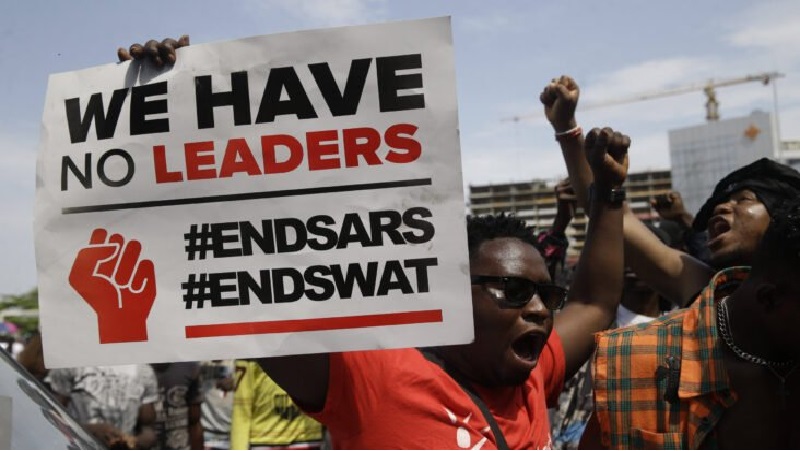
The popularity of bitcoin in Nigeria was also noted during the End SARS nationwide protests that the Nigerian government attempted to quell by restricting protesters’ access to financial services. To beat the hurdle, the innovative young minds quickly switched to bitcoin to receive donations. Bitcoin accounted for nearly $400,000 raised in donations.

In 2020 alone, more Nigerians have signed up to cryptocurrency trading platforms as it offers a path to earning a living and saves them from the regulatory bottlenecks that hinder financial transactions in Nigeria’s mainstream financial institutions.

“People want to be able to buy and sell, transact internationally and the more the traditional channels are being restricted the more people trade crypto and mainly bitcoin. And the best thing about it is that it’s almost impossible to stop. If you block the exchange it moves to peer-to-peer platforms that are non-custodial,” said Eleanya Eke, co-founder of BuyCoins Africa.

Other African countries like Kenya and Zimbabwe, who share common institutional financial challenges with Nigeria have also experienced an increase in bitcoin transactions, although they’re behind Nigeria in volume of trade.

International crypto exchange platforms like Binance, SouthXchange, Luno and Paxful are popular among Nigerians and so are local ones such as BuyCoins, Birrions and Quidax. There are also Telegram and WhatsApp based exchange platforms that have put bitcoin trading at the tip of people’s fingers.

The recent surge in bitcoin price has become another force driving the increase in the volume of the coin trade in Nigeria. As Wall Street investors rally around the digital asset, its growth is attracting the flotsam and jetsam.

Why You Should Strike A Balance Between Conformity and Nonconformity

0

“Whoso would be a man must be a nonconformist” (Ralph Waldo Emerson).

“Conformity is the jailer of freedom and the enemy of growth” (John F. Kennedy).

The above quotes will shock a lot of people. Many of us are used to conforming to societal norms, or even to that of our social groups. We stick to the unwritten rules and principles laid down by others because we were made to believe they are the right things to do. We have been stereotyped into doing things in certain ways or believing in certain ideologies. Going against those norms creates problems for us because we will be condemned, chided, or, worse, excluded. Hence, in order to belong and fit in, we conform.

But the question we should ask ourselves today is, “Is it proper to be a conformist or not? If yes, why? If no, why not?” Put simply, when should a person conform to existing rules and when should he not? Or rather, should a person even consider conforming to those rules at all?

Note that the word, “obey” is avoided here even though it is synonymous to “conformity”. But semantically, obedience has positive connotation while conformism does not. Apart from that, obedience, unlike conformity, refers to performing a direct request. However, conformity here refers to adopting certain behaviours in order to adhere to social group’s convention. This is what makes it dangerous.

“The opposite of courage is not cowardice, it is conformity” (Jim Hightower).

A lot of sociologists and psychologists kick against conformity. They believe every individual should be himself. Some believe societal and group pressure on people takes away their individuality and causes them to lose their identities. Many educators have also discovered that many students perform poorly in their academics because they conform to the ideologies and behaviours of their social groups (cliques). Of course, all these are true; but does it mean conformity is totally wrong?

Yes, like JFK said, you can’t grow by becoming a copy of others. Hence, for you to stand out, you need to be different. Innovations today happened because some people decided to do things differently. Maybe we would have still been in the Stone Age if not for the past nonconformists. But then, if we all choose to become nonconformists in all aspects, well, what will become of the society? How do we pass on our good culture to our younger generations?

Whenever we think of societal influence, we should also think of culture. We maintain our culture by behaving in the accepted way. We also learn positive behaviours by copying others or allowing them to influence us. Imagine if a child decides not to greet his elders in this society, where greeting is cherished. Imagine a child in Igboland addressing his elders by their first names. Imagine students deciding not to dress properly to school. Imagine people taking what is not theirs without seeking for permission. And just think of adults that lack proper table manners or refuse to brush their teeth in the morning. All these and more are behaviours the society expects its inhabitants to imbibe in order to make life easier and smoother. None of them could be learnt without the influence of others. All I am saying here is that not all group influences are bad; some also help people to grow.

The truth is, no extremism is right. Being a nonconformist is good; but when it becomes as extreme as the likes of Ralph Waldo Emerson advocated, the people in the society will suffer. On the other hand, when a person conforms without limitations, he is bound to lose himself. Hence, a person should strike a balance between conformity and nonconformity; the scale should not be allowed to tilt on one end.

NIN: PIN Asks Court to Stop NCC from Disconnecting over 100m Nigerians

0

Nigeria’s telecom subscribers were thrown into panic after the Ministry of Communication and Digital Economy mandated the country’s telecom regulator, Nigeria Communication Commission (NCC), to ensure that all mobile network subscribers have their National Identification Number (NIN), linked to their phone numbers.

The regulator therefore gave marching orders to mobile network providers to that effect, threatening to cut off those who failed to harmonize their NIN with their phone numbers from telecom services.

The decision has generated condemnation from Nigerians for different reasons; one being that only about 28 million Nigerians have their national identification number and it will take far more than the allotted time for over 180 million telecom subscribers in the country to enroll into the database of National Identification Management Commission (NIMC), where the NIN will be generated from.

In view of this, digital rights group, Paradigm Initiative (PIN) has asked the court to restrain the Nigerian government and telecommunications service provider from carrying out the order requiring that all SIM cards not linked to the National Identity Numbers be disconnected by the telecoms service provider by December 30, 2021.

The organization decries the Nigerian government’s order requiring all telecommunication service providers to ask their subscribers to link their National Identification Numbers (NIN) to the SIM cards within two weeks.

PIN says it is seeking a perpetual injunction restraining the government and the service providers from carrying out the draconian order as it believes it is a violation of fundamental rights to freedom of expression of Nigerian Citizens as guaranteed by Section 39 of the Nigerian 1999 constitution (As amended).

Adeboye Adegoke, Senior Program Manager at Paradigm Initiative said the proposed blocking of SIM cards not linked with the National Identity Number is unlawful and unconstitutional.

“Many young people and others, using their mobile phones for expression or to do business online will be affected by the poorly thought-out policy. No reasonable Nigerian will support such a policy that is geared to make life unbearable for Nigerian citizens,” he said.

In June 2020, the Director-General of the NIMC, Aliyu Aziz said only 38% of Nigerians have any form of identification. According to him: “over 100 million Nigerians have no identity (ID). These include the poorest and the most vulnerable groups, such as the marginalized – women and girls, the less-educated people, migrants, refugees, asylum seekers, stateless persons, people with disabilities and people living in rural and remote areas.”

The said policy has created panic in the polity since it was announced. Nigeria at the moment is experiencing a second wave of the COVID-19 pandemic according to the daily numbers from the Nigeria Centre for Defence Control (NCDC) in the past one week.

Valery Nijaba, Communications officer at Paradigm Initiative said the decision is a fire brigade approach to governance that will expose Nigerians to the second wave of COVID-19.

“This is a time when we need to discourage public gatherings, crowding, and the likes, but it appears that the government is not sensitive enough to see those nuances and has asked that 100 million Nigerians should go and register for the National Identification Number within 2 weeks, so we are left with no choice but to seek the intervention of the court.

“Requiring over 100 million Nigerian citizens to register for NIN in two weeks is not only unrealistic but a fire brigade approach to governance that will not bring any value to the people,” she said, adding that decisions like this only encourages corruption.

“Whatever the government is trying to achieve by the strange directive is ignoble. When the same government tried to compel students writing UTME examinations to register for the NIN as a prerequisite to sitting for the examinations last year, many students couldn’t register, with documented cases of government officials and law enforcement officials weaponizing the desperation of the students to register for NIN to extort them and their parents. The government was forced to walk back on the policy at that instance. These are the type of effects the fire-brigade approach to policy making leads to” Valery added.

Telecom service providers were already billing subscribers N20 to check their NIN status until the Minister of Communication Dr. Isa Pantimi asked them to stop.

Tekedia Person of the Year 2020 – “The Nigerian Healthcare Professionals”

0

The Tekedia Person of the Year 2020  is “The Nigerian Healthcare Professionals”. We recognize them for their commitment, can-do attitude, and service to their fellow citizens. When the world was in the miry clay, due to coronavirus, experts around the world predicted that deaths would follow across Nigerian cities. But these men and women rose to the challenge, and saved a nation!

Many of them remain unpaid for months; yet, they continue to support their fellow citizens. We recognize these men and women for designing and executing better protocols than their peers in most parts of the world. We celebrate the decency, honour and service that many did not give up, despite the lack of protective equipment, but went ahead to answer a bigger call in their nation.

For once, Nigeria prepared for something. Yes, the national center for disease control (NCDC) was just months-old before coronavirus came! We recognize the visioning which made NCDC possible. Across all domains, we commend our doctors, nurses, medical assistants, health-sector  cleaners and everyone in that industry.

They served Nigeria in 2020, and we are honoured to select them as our “Person of the Year”.

Who Wins Africa’s Subscription Video On-Demand (SVOD)?

0

Who wins Africa’s subscription video on-demand (svod)? I think it could come down to this equation:

Platform + Satellite Broadband = Disruption of SVOD in Africa.

Yes, I think the path may be satellite broadband (like SpaceX Starlink), not terrestrial (as in MTN, Glo, Airtel) due to coverage. If Netflix does what it does in America – pay internet service providers (ISPs) to make its videos “run faster” than other contents to customers – you can have a scenario where Netflix + Elon Musk’s Starlink broadband may be a bundle.

Then, the question would be: would the high voltage animosity on DStv move to Netflix when that happens? I am looking at the data, and it is increasingly looking like a US player will come and dominate SVOD in Africa despite our “first mover advantages”. After all, they just hired a man who promised he could do it, only to fail on that mission.

Netflix has appointed Zimbabwean billionaire Strive Masiyiwa to its board. This is a clear evidence that Netflix sees Africa as part of its future. Besides buying movie rights and signing producers to produce more, having Strive on its board takes the playbook to a new level. Across all domains, this is epochal when it comes to regional SVOD (streaming video on demand) strategy. Yes, Strive knows Africa and has the networks and connections to everybody he needs in the continent.

Why must U.S. companies win these games even when we started well ahead of them? Do not be surprised if Netflix becomes absolute, by 2025, in Africa’s SVOD!