DD
MM
YYYY

PAGES

DD
MM
YYYY

spot_img

PAGES

Home Blog Page 6

U.S. EV Sales Collapse 28% in Q1, Following Trump’s Green Policy Reversal, Tax Credit Expiration: Giving China a Wider Lead

0

The U.S. electric-vehicle market has entered a far harsher phase.

Fresh first-quarter 2026 estimates from Cox Automotive show that new EV sales in the United States fell roughly 28% year over year to about 212,600 units, marking one of the sharpest contractions the sector has faced in recent years.

The collapse is becoming a direct referendum on Washington’s policy reversal under President Donald Trump and a stark warning that the United States risks ceding further ground to China in the global race for automotive leadership.

The immediate trigger is the market adjusting to the expiration of the $7,500 federal EV tax credit, one of the most consequential reversals of the previous administration’s clean-energy push. The Trump administration’s broader rollback of green-energy initiatives has removed a key support pillar just as the industry was still trying to scale production and reduce costs.

What is unfolding now is a brutal post-subsidy stress test. Without federal incentives, automakers that lack Tesla’s scale are seeing demand crater, inventories swell, and product plans unravel.

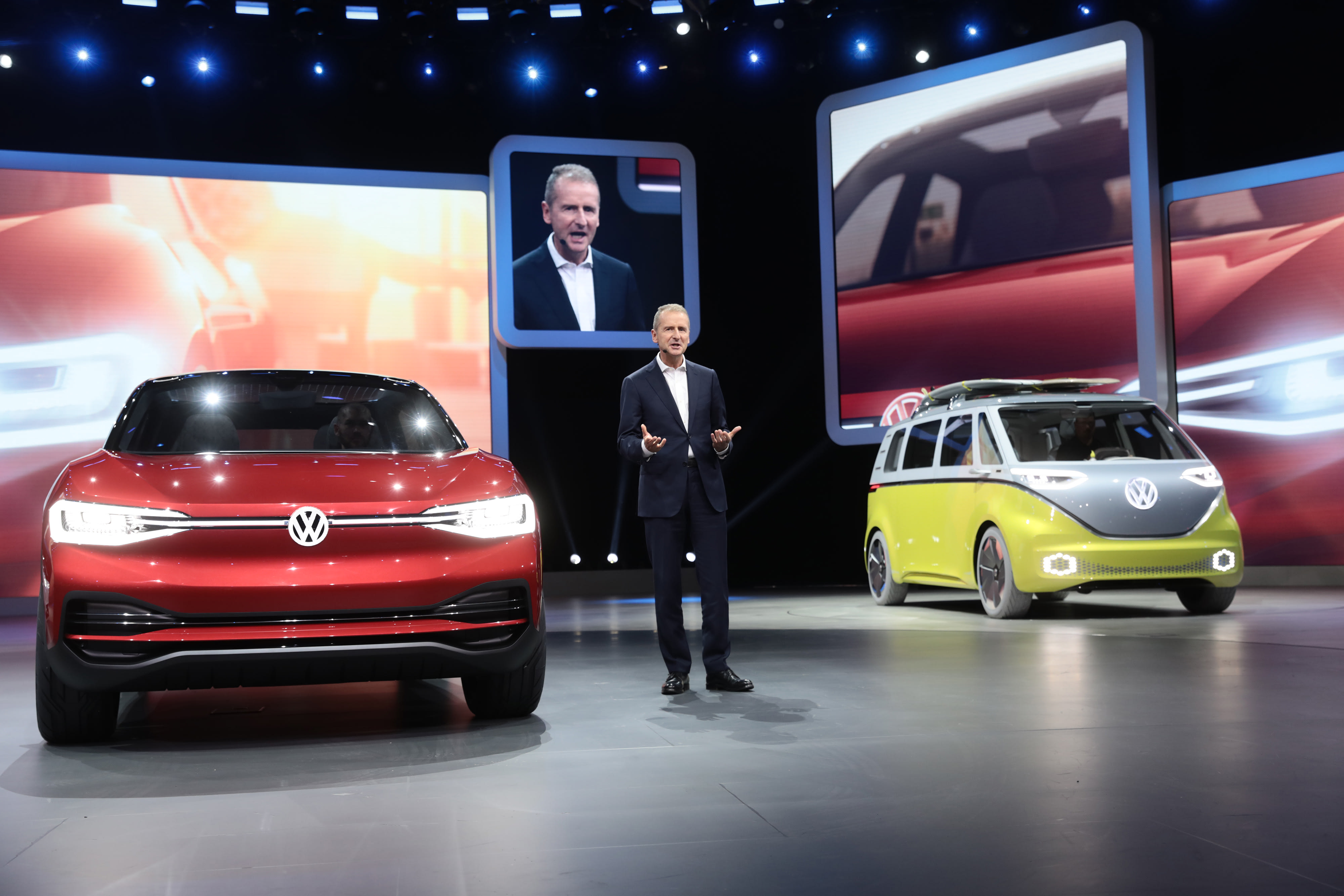
Volkswagen, for instance, has moved to halt production of its flagship ID.4 electric SUV in Tennessee by the end of April, a decision directly tied to the post-credit slowdown. Ford’s EV sales plunged roughly 70%, while other major manufacturers posted similarly severe declines, underscoring how fragile the economics of the U.S. EV market remain when government support is withdrawn.

This is where the policy story becomes larger than quarterly sales. Trump’s reversal of green-energy and EV support measures is significantly reshaping the competitive landscape, and not in America’s favor. While U.S. automakers are cutting output and shelving models, Chinese manufacturers continue to operate at a massive scale, backed by mature battery supply chains, deep industrial coordination, and years of state-supported investment.

And the gap is widening.

China remains the global leader in EV manufacturing and exports, with companies such as BYD, Geely, and others continuing to expand overseas even as U.S. demand slows. China’s EV industry is responsible for over 70% of global EV production and more than 50% of global sales in 2024–2025. Reuters recently highlighted growing alarm in the U.S. auto sector over the rise of Chinese EV makers and their pricing power.

In the United States, policy has moved toward retrenchment, while in China, policy has long been aimed at industrial dominance. That difference is helping Beijing stay ahead not only in vehicle production but across the full EV value chain, from battery minerals and cell manufacturing to software integration and export infrastructure.

Every quarter of weak U.S. EV demand risks eroding economies of scale for domestic manufacturers, making it harder to compete on price with Chinese rivals whose cost structures are already lower.

However, Tesla remains the major exception. The company sold 117,300 vehicles in Q1, retaining a commanding 54% share of the U.S. EV market, with the Model Y once again emerging as the dominant product.

But the EV giant is not insulated from the policy shift. Reuters reported that the company is developing a smaller, lower-cost EV as it tries to defend market share and stimulate volume amid weakening demand and rising competition, especially from China.

That move suggests the market can no longer sustain premium pricing at scale without either subsidies or materially cheaper vehicles.

The challenge is more severe for legacy automakers. Many of them entered the EV race late, invested heavily in dedicated platforms and factories, and are now being forced to confront a U.S. consumer base that remains highly price-sensitive.

The result is a market split. New EV sales are falling sharply, yet used EV sales have surged 12%, indicating that consumer interest in electrification remains intact, but affordability has become the defining variable.

However, some analysts have noted that Americans are not necessarily rejecting EVs; they are rejecting the price point of new EVs in a policy environment that no longer cushions the cost difference. This has major implications for America’s long-term competitiveness.

China’s lead is understood to be not simply about selling more cars. Many believe it is about maintaining momentum in battery innovation, manufacturing learning curves, and export scale while the U.S. market loses speed. The longer domestic sales remain under pressure, the more difficult it becomes for U.S. automakers to justify fresh capital expenditure in EV production lines, battery plants, and supplier ecosystems.

That, in turn, risks reinforcing China’s lead.

In strategic terms, Trump’s reversal of green-energy initiatives may save short-term federal spending, but it is significantly impacting the U.S. EV industry at a moment when global market leadership is still being contested. The danger for Washington is that a temporary policy rollback could produce a lasting industrial consequence.

If China consolidates its lead in cost, scale, and technology while U.S. automakers retrench, America may find itself permanently behind in one of the defining industries of the next decade.

While the second-quarter numbers are expected to show whether higher fuel prices can revive demand, the first quarter already tells a larger story: policy choices are now directly shaping who leads the global EV future.

U.S. Denies Iranian Claim of $6bn Asset Release as Islamabad Talks Focus on Hormuz

0

A fresh dispute over Iran’s frozen assets has cast an early shadow over delicate U.S.-Iran negotiations in Islamabad, after Tehran claimed Washington had agreed to release billions of dollars held in foreign banks, only for the White House to swiftly reject the assertion.

The conflicting narratives underline the fragile nature of the talks and the high stakes surrounding the Strait of Hormuz, a maritime chokepoint critical to global oil flows and central to the current negotiations.

A senior Iranian source told Reuters that the United States had agreed to unfreeze Iranian assets held in Qatar and other foreign banks, describing the move as a sign of Washington’s “seriousness” in pursuing a broader understanding with Tehran. A second Iranian source put the amount at $6 billion.

However, a senior U.S. official flatly denied the report, saying, “False. The meetings have not even started yet.”

That blunt rebuttal immediately turned the issue into more than a dispute over facts. It now raises questions about whether Tehran was attempting to shape leverage ahead of the talks, or whether back-channel understandings exist that Washington is not yet prepared to acknowledge publicly.

The asset largely includes the $6 billion in proceeds from Iranian oil sales to South Korea, funds that have become one of the most politically charged financial issues in U.S.-Iran relations. The money was first frozen in 2018 after President Donald Trump, during his first term, withdrew from the nuclear agreement and reimposed sanctions on Tehran. In 2023, the funds were transferred from South Korean banks to Qatari accounts under a prisoner swap deal mediated by Doha.

That exchange secured the release of five American detainees held in Iran and five Iranians held in the United States. At the time, U.S. officials stressed that the funds were strictly ring-fenced for humanitarian use, limited to payments for food, medicine, medical equipment, and agricultural imports under Treasury supervision.

But following the October 7, 2023, attacks on Israel by Hamas, the Biden administration moved to effectively refreeze access, saying Tehran would not be able to use the money for the foreseeable future.

This history makes the current claim especially significant, as many analysts believe that if the funds are genuinely part of the Islamabad agenda, it would signal that financial sanctions relief is once again being used as a diplomatic bargaining chip.

The Iranian source directly linked any asset release to safe passage through the Strait of Hormuz, indicating that Tehran may be tying financial concessions to maritime guarantees.

The Strait of Hormuz handles a substantial share of global seaborne crude exports, making it one of the most sensitive energy corridors in the world. Any suggestion that progress on shipping access could emerge from the talks will be graciously welcomed by oil traders, insurers, and central banks already grappling with elevated energy prices.

Even the perception of progress can move markets that have been under the strain of the conflict. A credible reopening or stabilization of passage through Hormuz could ease pressure on crude benchmarks and shipping premiums. Conversely, public contradictions between Tehran and Washington risk reinforcing uncertainty and keeping a geopolitical premium embedded in oil prices.

Diplomatically, the episode also exposes a persistent trust deficit. Iran appears to be signaling that sanctions relief and access to frozen assets are essential preconditions for any durable arrangement. Washington, by contrast, is publicly maintaining that no such concession has been made.

This disconnect may become one of the first major tests of whether the Islamabad channel can produce a meaningful de-escalation framework or simply serve as a forum for posturing. Some believe that it could be serving another purpose: Publicizing a claim of U.S. flexibility may help Tehran project negotiating momentum to domestic and regional audiences, while the denial may be intended to preserve bargaining leverage and avoid the appearance of making concessions before formal talks begin.

Either way, the contradiction itself is now part of the story. But at this stage, however, no release of funds has been officially confirmed by the United States or Qatar, and the status of the $6 billion remains unresolved.

Honored at Home: FUTO, Merit, and the Making of a Life

0

Count your blessings when you are honored at home, because only a few receive that privilege. My alma mater, Federal University of Technology Owerri (FUTO), and the uncontested (lol) Africa’s finest technical university has honored me many times, and I remain deeply grateful.

When I received the IGI Global “Book of the Year” award, the University invited me to deliver the Public Lecture, making me the first alumnus in its history to mount that podium. That moment was profound. Yet, even more special was when my professors and alumni community recommended me to return to deliver the 32nd Convocation Lecture. Standing before men and women who helped shape my professional journey was truly humbling.

I recently came across a publication where the University documented that speech, and it brought back many memories. FUTO gave me confidence, discipline, and a belief in merit. The system we experienced was deeply rooted in excellence and merit. When companies came to recruit, Heads of Department presented their very best, and we knew that hard work would open doors to organizations like Shell and Schlumberger.

I still remember when Prof. S.O.E. Ogbogu raised the bar even higher, requesting that top students be hired without interviews, out of respect for FUTO’s standards. Indeed, many of us received job offers months before graduation, without sitting for a single interview. That was the power of institutional credibility built on merit.

“Ekekwe, I have accepted a job for you,” Prof. Ogbogu told me. I received it, nine months before graduation. Then came another instruction on another job: “You must go to Trans Amadi and formally decline the offer.” That directive gave me my first flight, from Lagos to Port Harcourt, just to turn down a job, all to protect the reputation of our school.

FUTO, I sincerely appreciate all you have done for me. Next year, I will return to honor this journey by investing in the next generation, contributing in a meaningful way to deepen excellence and expand opportunity. I came as a village boy from Ovim, and you prepared me for the world. Now, I will play my part in ensuring the rise of many, not just a few, in Nigeria.

Nigeria worked for me; Nigeria is working for me. It MUST WORK for all.

OpenAI Plans To Reserve Portion of its IPO Shares for Retail Investors 

0

OpenAI’s CFO Sarah Friar confirmed that the company plans to reserve a portion of its IPO shares specifically for retail investors.

This was stated in a CNBC interview as OpenAI prepares for a potential U.S. public listing, possibly as early as the second half of 2026 with some reports eyeing late 2026 or a $1 trillion+ valuation range. Friar noted that the company tested retail participation in its most recent private funding round and saw really strong demand from individuals—reportedly oversubscribed by about 3x in some accounts. She said they will for sure extend this to the IPO.

Why This Matters

Breaking from norms: In typical tech IPOs, institutional investors like hedge funds, mutual funds, etc. get the vast majority of shares. Retail investors often receive only 5–10% and frequently miss out on the initial pop due to allocation priorities and flipping by pros. OpenAI is signaling a more inclusive approach, which could help broaden its shareholder base and align with its democratizing AI branding.

Friar has tied it to building public trust in AI. The company recently raised significant private capital; one report mentioned a $122 billion round at an ~$852 billion valuation. Enterprise revenue has grown to ~40% of total, with projections it could match consumer revenue by 2026. The IPO is expected to be one of the biggest in tech history if it hits high valuations.

No specific percentage for the retail slice has been disclosed yet, and details like filing timeline, exact valuation, or how retail access will work via brokers, direct programs, or platform remain unclear. IPOs can shift based on market conditions, regulatory approvals, and internal factors.

On X, reactions are mixed: Bullish takes see it as a rare chance for Main Street to participate in a massive AI wealth-creation event. Skeptical views note it could be a way to distribute shares amid high burn rates, leadership changes, or competition from xAI, Anthropic, or a narrative play to boost hype and valuation before listing. Some compare it to past IPOs where retail enthusiasm fueled pops followed by volatility.

Historically, giving retail a meaningful allocation can generate buzz and loyalty but doesn’t guarantee strong long-term performance—plenty of hyped IPOs have underperformed after the debut. This is still early-stage planning; watch for SEC filings or further comments from OpenAI for concrete details.

Traditional tech IPOs heavily favor institutions, with retail often getting minimal allocations and missing the initial pop due to flipping by pros. OpenAI’s move—tested successfully in its recent $122B funding round where retail contributed ~$3B and oversubscribed parts by 3x—could give individuals a meaningful chance to buy at the IPO price.

If the stock debuts strongly driven by AI hype and OpenAI’s 900M weekly ChatGPT users, early retail buyers could see gains. However, many hyped IPOs experience post-listing volatility or corrections. High valuations; $852B post-money now, with IPO talk of $1T+ already bake in massive expectations around revenue growth and profitability.

Friar explicitly tied this to democratizing AI and fostering public trust—AI needs to garner trust… everyone partakes, not just a very small group. It aligns with OpenAI’s consumer-facing image versus a pure B2B play, potentially boosting user loyalty and turning customers into shareholders. Could create a more stable, long-term holder mix less prone to quick institutional exits.

It mirrors approaches like Square and Block and echoes SpaceX’s reported ~30% retail allocation. Helps signal strong demand already proven privately and supports a premium valuation. But it’s also pragmatic hygiene for becoming a public company. OpenAI is burning cash heavily; projected $14B loss in 2026 from compute and infrastructure, so the IPO provides a path beyond endless private rounds.

Yugalabs Ends Multi-year Litigation with Ryder Ripps and Jeremy Cahen 

0

Yuga Labs has settled its long-running trademark infringement lawsuit against conceptual artist Ryder Ripps and his business partner Jeremy Cahen.

The settlement, announced via court filings on April 7–8, 2026, in the U.S. District Court for the Central District of California, ends a dispute that began in 2022 over Ripps’ RR/BAYC NFT collection, which reused and reinterpreted imagery from Yuga Labs’ Bored Ape Yacht Club (BAYC) NFTs.

Yuga Labs accused Ripps and Cahen of creating and selling counterfeit-like NFTs that mimicked Bored Ape designs and branding, allegedly profiting millions while confusing consumers. Ripps framed his project as satirical appropriation art or expressive commentary on the NFT space and BAYC’s cultural impact.

In 2023, a district court ruled in Yuga’s favor, awarding about $1.5 million in damages which grew to over $8.8 million with attorneys’ fees and costs plus an injunction. The Ninth Circuit Court of Appeals later vacated the damages award and remanded the case, questioning aspects of consumer confusion and the balance with artistic expression.

This set the stage for further proceedings before the settlement. The parties resolved all claims without proceeding to a full trial. Public details include: Ripps and Cahen are barred from using Yuga Labs’ trademarks, imagery, or related branding in commercial or promotional contexts going forward. Additional requirements in some reports mention transferring control of related NFTs, domains, and smart contracts within 10 days in certain filings.

Financial terms; remain confidential, as stated by Ripps and confirmed in court documents. Yuga Labs’ attorneys declined to comment. The settlement avoids further litigation and provides Yuga Labs with strong IP protections, while Ripps has described the agreement as confidential overall.

This case was one of the more high-profile loose ends from the 2021–2022 NFT boom, highlighting tensions between brand owners enforcing trademarks and artists claiming parody or fair use in the digital space. It underscores how courts and parties often resolve such disputes through injunctions focused on preventing ongoing confusion rather than massive payouts after appeals.

The NFT market has evolved significantly since the suit was filed, with BAYC and the broader sector facing ups and downs. It signals that courts and parties lean toward injunctions focused on preventing ongoing confusion rather than prolonged battles. Similar disputes involving parody, appropriation, NFT projects may now face quicker resolutions or stronger brand leverage.

However, it does not create binding new law on fair use boundaries, as no final merits ruling occurred post-remand. Yuga gains direct control over residual RR/BAYC assets, removing a persistent source of alleged consumer confusion and counterfeit NFTs in the market. This strengthens BAYC’s brand integrity amid the collection’s post-boom challenges.

Ending the multi-year litigation avoids further legal fees and distraction, allowing Yuga to focus on ongoing projects, metaverse efforts, or other IP enforcement. The win via settlement may deter future copycat projects targeting BAYC or other high-profile NFT collections, reinforcing Yuga’s position as an aggressive IP protector.

Ripps is permanently enjoined from reusing BAYC-related elements, limiting this specific avenue of critique or satire. He has described the overall agreement as confidential but has not issued major public criticism post-settlement. The case highlighted tensions between First Amendment protections for expressive art and trademark law in digital contexts.

While Ripps framed RR/BAYC as commentary on BAYC’s cultural impact, the settlement prioritizes brand protection over continued commercial exploitation of the parody. Any prior damages or profits from RR/BAYC are resolved privately; the earlier ~$1.5M–$9M awards including fees were vacated on appeal and not reinstated.