FILE PHOTO: A Shell logo is seen at a gas station in Buenos Aires, Argentina, March 12, 2018. REUTERS/Marcos Brindicci
Shell has agreed to sell its BG Cyprus subsidiary to Hungarian energy company MOL Group for up to $720 million, continuing its portfolio reshaping strategy as the British energy giant concentrates capital on its high-return liquefied natural gas (LNG) business.
The transaction transfers ownership of BG Cyprus, which holds a 35% non-operated interest in the offshore Block 12 license containing the Aphrodite gas field in the eastern Mediterranean. The deal is expected to close in 2027, subject to regulatory approvals and customary closing conditions.
The divestment is part of Shell’s broader plan of streamlining its upstream portfolio while strengthening its leadership in LNG, a business that has become one of the company’s largest earnings drivers amid growing global demand for cleaner-burning fuels and rising geopolitical concerns over energy security.
BG Cyprus traces its roots to BG Group, which acquired the Aphrodite stake in 2015 before Shell completed its landmark acquisition of BG Group in 2016. That $53 billion takeover transformed Shell into the world’s largest LNG trader and significantly expanded its global natural gas portfolio, making LNG a central pillar of its long-term growth strategy.
The sale demonstrates Shell’s continued focus on concentrating investment in assets where it has greater operational control and stronger integration across the LNG value chain.
The Aphrodite field, while regarded as one of the eastern Mediterranean’s largest offshore natural gas discoveries, is a non-operated asset for Shell, limiting the company’s influence over project development and investment decisions.
By monetizing the stake, Shell can recycle capital into projects that offer higher returns or greater strategic value, particularly in LNG production, trading infrastructure and integrated gas operations, businesses that have consistently generated stronger earnings than conventional upstream assets.
For MOL Group, the acquisition represents a significant expansion beyond its traditional Central and Eastern European operations. The purchase provides exposure to one of the Mediterranean’s most promising gas developments and supports the Hungarian company’s strategy of diversifying its upstream portfolio while strengthening long-term gas supply opportunities.
Aphrodite’s Growing Strategic Importance
The Aphrodite gas field, discovered in 2011, is estimated to contain substantial recoverable natural gas resources and is considered a key component of Cyprus’ ambitions to become a regional gas producer.
Located in the Levant Basin of the eastern Mediterranean, the field forms part of a broader energy province that also includes major discoveries offshore Israel and Egypt, transforming the region into an important source of natural gas.
Development of Aphrodite has gained renewed momentum as Europe continues seeking to diversify natural gas supplies following years of geopolitical disruptions and efforts to reduce dependence on Russian pipeline gas.
Although commercial production has yet to begin, the field is expected to contribute to regional energy security through exports that could be processed via Egypt’s existing LNG infrastructure before reaching international markets.
The divestment comes just one day after Shell reported stronger-than-expected second-quarter earnings, highlighting the growing importance of its integrated gas business. The company posted net profit of $9.84 billion for the quarter, more than doubling from the same period last year and comfortably exceeding analysts’ expectations.
Higher oil and gas prices, together with heightened market volatility during the Middle East conflict, boosted trading opportunities across global energy markets.
Shell’s Integrated Gas division, which includes the world’s largest LNG trading operation, generated $2.7 billion in profit during the quarter, surpassing market expectations and rising 55% from a year earlier.
The strong performance came even though gas production declined 31% from the previous quarter, underscoring the resilience of Shell’s LNG trading and marketing operations. The results reveal that the company is deriving value not only from producing natural gas but also from transporting, marketing and optimizing LNG cargoes worldwide.
Capital Discipline Remains A Priority
The Cyprus sale aligns with Shell’s broader strategy of improving capital efficiency through targeted asset sales while directing investment toward businesses capable of generating stronger and more stable cash flows. In recent years, the company has steadily reshaped its portfolio by exiting non-core upstream assets, reducing exposure to lower-return operations and expanding investments in LNG, chemicals, deepwater production and low-carbon energy businesses.
The approach has enabled Shell to strengthen shareholder returns through higher dividends and share buybacks while maintaining financial flexibility during periods of commodity price volatility.
The transaction highlights two important trends reshaping the global energy industry. It reinforces Shell’s transformation into an integrated gas and LNG powerhouse, where value creation comes from global gas trading, infrastructure and marketing rather than simply owning upstream production assets. For MOL Group, the acquisition provides entry into one of the eastern Mediterranean’s most strategically important offshore gas projects at a time when European energy companies continue seeking diversified and secure natural gas supplies.
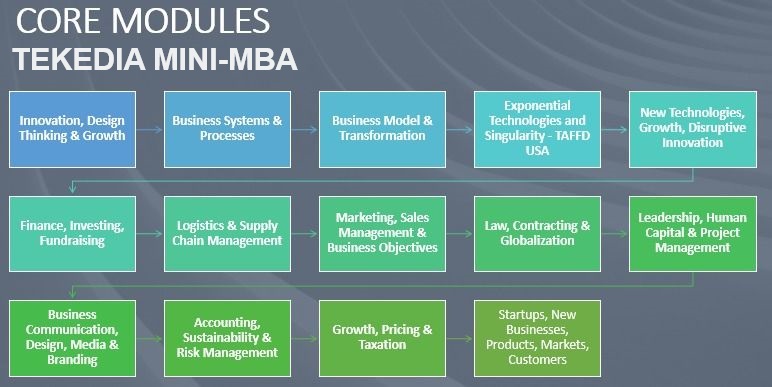
Invent, innovate and drive organizational transformation, performance, and growth. Capture emerging opportunities in changing markets while optimizing innovation and profitability. Digitally evolve your business or functional area, turning digital disruption into a competitive capability and advantage. Master the concepts of building category-king companies, and thrive.
Registration for another edition of Tekedia Mini-MBA opens. Tekedia Mini-MBA, from Tekedia Institute, is an innovation management 12-week program, optimized for business execution and growth, with digital operational overlay. It runs 100% online. The theme is Innovation, Growth & Digital Execution – Techniques for Building Category-King Companies. All contents are self-paced, recorded and archived which means participants do not have to be at any scheduled time to consume contents. Our programs are designed for ALL sectors, from fintech to construction, healthcare to manufacturing, agriculture to real estate, etc.
More so, the sector- and firm-agnostic management program comprises videos, flash cases, challenge assignments, labs, written materials, webinars, etc and is delivered by a global faculty coordinated by Prof Ndubuisi Ekekwe. When we finish, we will issue a certificate from the Tekedia Institute, Boston USA.
Register and join us. You will emerge transformed with tools and capabilities that engineer confidence, performance and growth. Accelerate your leadership ascent with us! Here are our programs and costs.
Program Cost
Code
Description
Cost
MINI
Tekedia Mini-MBA. And WhatsApp School
US$170 or N120,000 naira
MINF
Annual Package: 3 consecutive MINI, and 2 optional capstones.
$340 or N180,000
MINR
(optional) Homework review; faculty will review your homework with feedback.
$30 or N10,000
CAPS
(optional) Tekedia capstone is a research paper, analogous to final college project.
Supply Chain Management, Global Partnership & Contracting – Adebayo Adeleke, ex-Chief of Contracting and Deputy Chief, Business Operations Division, US Army
Intellectual Property: Strategy, Management & Commercialization – Ifeanyi Okonkwo, University of Cape Town & Jackson, Etti & Edu
Business Relationship Management & Negotiation Skills - Charles Okeibunor, CEO IRMP
Due Diligence and Business Intelligence – Chike Obimma, Partner at NICCOM LLP (Commercial Law Firm)
Week 10: Leadership, Human Capital & Project Management
Leadership, Knowledge Management – Prof. Ayodeji Oyebola, Saint Mary’s University of Minnesota
Human Resources Management - Adora Ikwuemesi, Director Kendor Consulting
Leading and Managing Teams, Stakeholder Management with NICER Model – Dr. Chisom Ezeocha, Project Delivery Manager, Shell
Career Planning – Precious Ajoonu, Manager, Jobberman
Tax Treaties and Their Benefits - Emmanuel Eze, Manager, Federal Inland Revenue Service (FIRS)
Regional Case: Tax Law and Compliance in Lagos State - Abimbola Abdur-Rahman Lekki, Lagos Internal Revenue Service
Effective Product & Service Pricing, Accelerated Revenue, Profit Maximization - Saima Khan, Partner, Strategic Pricing Management Group, Toronto, Canada
Establishing Business Consulting & Advisory Services - Mustafa Yusuf-Adebola, Founder, Provisio Professional
Driving Profitable Growth, Marginal Cost, Scaling – Prof. Ndubuisi Ekekwe
Stimulating New Markets Through Innovation and Perception Demand – Prof Ndubuisi Ekekwe
Week 14: Startups, New Businesses, Products, Markets, Customers
The Mechanics of Minimum Viable Product and Product Development - Prof Ndubuisi Ekekwe
The NEP Framework – Discovering and Listening to Customers - - Prof Ndubuisi Ekekwe
Customer Validation and Building for What Customers Really Want. - - Prof Ndubuisi Ekekwe
Knowing and Defining Your Market - Prof Ndubuisi Ekekwe
Navigating Business Growth Phases - Prof Ndubuisi Ekekwe
ChatGPT, DALL-E 2 and Emerging AI Innovations: Business Opportunities in Africa - Zion Pibowei, Head of Data Science, Periculum Canada
How to Scale a Business/Startup - Jane Egerton-Idehen, Head of Sales Middle East & Africa at Meta (Facebook parent company)
Final Week: Execution and Closure
The Call to Business Execution, Closure – Prof Ndubuisi Ekekwe
Graduation Day – Prof Ndubuisi Ekekwe
Tekedia Live: Optional Zoom session which holds thrice per week (Tue, Thur, Sat at 7pm WAT). It is archived for those unable to make the session live. Our faculty members and invited guests rotate to anchor the sessions. Live provides a platform for members to ask questions and get live responses.
Welcome! Unleash your leadership potential, master business excellence, and embrace transformation with Tekedia Mini-MBA. Join us and experience a cutting-edge business management & leadership program: online, self-paced, and world-class. At Tekedia Institute, we co-learn with thousands of professionals and students, from many countries, on the mechanics of business, connecting innovation, growth and operational execution, across market territories and industrial sectors.
Our faculty members come from Microsoft, Google, Shell, Flutterwave, Nigerian Breweries, NNPC, Jobberman, Coca Cola, PwC, BUA Cement, and other great organizations. Besides pre-recorded courseware, thrice weekly, we hold live Zoom sessions (Tue, Thur and Sat at 7pm WAT) – Prof Ndubuisi Ekekwe, Tekedia Institute Lead Faculty.
Access to any Facyber Certificate program for free. Facyber offers online cybersecurity programs on policy, technology, management, and forensics.
Capstone Program
Here are the 12 tracks:
CLSM: Certificate in Logistics and Supply Chain Management
CBIS: Certificate in Business Innovation, Growth & Sustainability
CMAB: Certificate in Media, Advertising & Branding
CSBM: Certificate in Startup and Small Business Management
CIBA: Certificate in Business Administration
CPFM: Certificate in Personal Finance & Wealth Management
CMSM: Certificate in Marketing and Sales Management
CDBG: Certificate in Digital Business Growth
CIAM: Certificate in Agribusiness Management
CHRM: Certificate in Human Resources Management
CETS: Certificate in Exponential Technologies and Singularity
CBPM: Certificate in Business Transformation & Project Management
The program is completely capstone-based. Tekedia capstone is a research paper or a case study exploring a topic, market, sector or a company. It is the project component of Tekedia Min-MBA.
Theme: Innovation, Growth & Digital Execution – Techniques for Building Category-King Companies
Introduction
Over the last few decades, digital technology has emerged as a very critical element in organizational competitiveness. It has transformed industrial sectors and anchored new business architectures, redesigning markets and facilitating efficiency in the allocation and utilization of factors of production. The impacts have been consequential: continents like Africa are moving towards knowledge-based economic structures and information societies, comprising networks of individuals, firms and states that are linked electronically and in interdependent relationships. In this program, we will examine this redesign within the context of fixing market frictions and deploying growth business frameworks in a world of perception demand where meeting needs and expectations of customers are not enough.
Program Time: Sep 14 – Dec 5, 2026
Venue & Format: Online via videos, articles, webinars, and flash cases. Program is self-paced which means you consume the materials at your own time and pace. It is completely online. Where you live or your time zone would not be an issue as program is not live-delivered.
Cost: US$170 (N120,000 naira). We have a payment plan, i.e. installment payment plan (email us for details)
Target Audience: This program is designed for professionals and students across functional areas like sales, marketing, technology, administration, legal, strategy, finance, etc across all business sectors and domains. The program is designed for:
Ambitious mid-level managers seeking to advance their careers by acquiring essential business knowledge and skills.
Busy professionals who value continued education but require a flexible alternative to a traditional MBA program.
Experienced professionals aiming to broaden their business acumen, enhance leadership capabilities, and explore new career opportunities.
Professionals in transition, committed to staying informed about business trends and developing skills for continuous professional growth.
Mid-level managers and executives across industries, driven to accelerate career growth and take on increased responsibilities.
Technology and innovation-focused professionals looking to strengthen business acumen and strategic thinking.
Aspiring entrepreneurs seeking a solid foundation in business management and growth strategies.
Consultants and advisors aiming to expand their knowledge base and provide comprehensive solutions to clients.
Professionals transitioning into new roles or industries, recognizing the value of upskilling for success.
Students and recent graduates seeking a competitive edge in the job market by combining academic qualifications with practical business skills.
Tekedia Mini-MBA program offers a flexible and comprehensive learning experience tailored to the needs of ambitious professionals, providing the tools and knowledge necessary to thrive in today’s dynamic business landscape. Participants will have the opportunity to acquire knowledge that has value and can be used in everyday business activities.
Learning Objectives: To innovate is to set a new basis of competition in an economy, business sector or market. Sometimes, it results in disruption. This program is designed for private (large, SMEs, startups, sole businesses), public and government institutions, and individuals. Participants will:
Master the mechanics of growth – the reward of innovation – through frameworks, cases and evolving strategies.
Understand how to undergo transformation journey that is fully aligned with corporate objectives through measurable and realizable benchmarks.
Acquire business capability tools that do not just RUN their firms but can TRANSFORM them.
Design corporate growth experiments in Lab sessions based on One Oasis Strategy, Aggregation Construct, Double Play Strategy, Accumulation of Capability Construct, and more.
ETC
Why Tekedia Institute
Interactive Online Learning: Engage with industry experts and fellow professionals through our state-of-the-art online learning platform, where you can access course materials, participate in discussions, and collaborate on real-world case studies.
Comprehensive Curriculum: Gain a deep understanding of key functional areas such as strategy, marketing, finance, operations, and more, equipping you with the knowledge and skills to excel in any business environment.
Practical Case Studies: Apply your learning to real-world scenarios through hands-on case studies and projects, allowing you to develop critical thinking and problem-solving skills.
Flexibility and Convenience: Access the program online from anywhere at your own pace, fitting your studies into your busy schedule without compromising your professional and personal commitments.
Expert Faculty: Learn from renowned industry practitioners and thought leaders who bring their expertise and real-world insights to the program, ensuring you receive the most relevant and up-to-date knowledge.
Benefits of Tekedia Mini-MBA
Enhance Your Leadership Potential: Unlock your leadership capabilities and develop the skills to lead teams, drive innovation, and navigate complex business challenges with confidence.
Master Business Excellence: Gain a holistic understanding of business functions, strategies, and best practices, enabling you to make informed decisions and contribute to organizational success.
Embrace Digital Transformation: Stay ahead of the curve by embracing digital technologies and leveraging them to transform your business and stay competitive in the digital age.
Accelerate Your Career: With the Tekedia Mini-MBA on your CV, you’ll stand out to employers, demonstrating your commitment to continuous learning and your readiness to take on new responsibilities.
Network and Collaboration: Connect with a diverse community of professionals, expand your network, and foster collaboration opportunities that can lead to future partnerships and career advancements.
Cost-Effective Investment: Enjoy the benefits of a comprehensive business education at a fraction of the cost of traditional MBA programs, maximizing the return on your investment.
We run optional three Live Zoom sessions (two weekdays and one Saturday). This provides a way for our members to ask our Faculty and experts live questions and get feedback.
Tekedia Mini-MBA certificate sample
Tekedia Institute offers certificates at the end of all programs.
Our Contact Email: info@tekedia.com
Refund policy is full refund within 6 days from start of a program; after that, none, but we can defer as requested.
Lead Faculty of Tekedia Institute
Prof Ndubuisi Ekekwe is the Lead Faculty of Tekedia Institute
PhD, Electrical & Computer Engineering, Johns Hopkins University, USA
MBA, University of Calabar, Nigeria
BEng Electrical & Electronics Engineering ( Federal University of Technology, Owerri, Nigeria)
Prof Ndubuisi Ekekwe invented and patented a robotic system which the United States Government acquired assignee rights. Dr Ekekwe holds two doctoral and four master’s degrees including a PhD in engineering from the Johns Hopkins University, USA. He earned undergraduate degree from FUT Owerri where he graduated as his class best student. While in Analog Devices Corp, he co-designed an accelerometer for the iPhone. A recipient of IGI Global “Book of the Year” award, a TED Fellow, IBM Global Entrepreneur and World Economic Forum Young Global Leader, Prof. Ekekwe has held professorships in Carnegie Mellon University and Babcock University, and served in the United States National Science Foundation Committee.
The South African press called him “a doctor of innovation” for helping organizations on the mechanics of business innovation, strategy, and growth. Since 2009, the Chairman of Fasmicro Group which controls many startups and entities has been writing in the Harvard Business Review. He was recognized by The Guardian as one of 60 Nigerians Making “Nigerian Lives Matter” on Nigeria’s 60th Independence Day (Oct 1, 2020).
Amazon delivered a strong quarterly performance, surpassing Wall Street expectations and sending its shares up roughly 7% in after-hours trading.
The results reinforced investor confidence in the company’s ability to balance rapid growth across its e-commerce, cloud computing, advertising, and artificial intelligence businesses despite a challenging global economic environment.
The earnings report highlighted Amazon’s continued success in expanding revenue while maintaining operational efficiency.
Strong consumer demand, improved logistics, and disciplined cost management helped the company exceed analyst forecasts for both revenue and profit.
Investors viewed the results as evidence that Amazon’s long-term strategy of investing heavily in technology and infrastructure continues to generate substantial returns. One of the biggest contributors to Amazon’s performance was its cloud computing division.
Although competition in the cloud market remains intense, AWS demonstrated resilience by attracting enterprise customers seeking scalable AI infrastructure and cloud services. The growing demand for generative AI applications has increased the need for computing power, positioning AWS as a key beneficiary of the AI boom.
Businesses across industries continue to migrate workloads to the cloud while adopting AI tools that require advanced computing capabilities. Amazon’s advertising business also continued its impressive expansion.
Advertising has become one of the company’s fastest-growing and highest-margin segments, benefiting from the massive amount of shopping data generated on Amazon’s marketplace.
Brands increasingly allocate larger portions of their digital advertising budgets to Amazon because it offers direct access to consumers at the point of purchase. This diversification has helped reduce the company’s reliance on traditional retail profits.
The retail division likewise showed encouraging signs of strength. Faster delivery speeds, improved inventory management, and expanding fulfillment networks have enhanced customer satisfaction while lowering operating costs.
Amazon’s ongoing investments in automation and robotics have streamlined warehouse operations, allowing the company to process orders more efficiently and improve profitability without sacrificing service quality.
Artificial intelligence has emerged as another important driver of Amazon’s future growth. The company continues to integrate AI across its ecosystem, from personalized shopping recommendations and warehouse optimization to cloud-based AI services offered through AWS.
Management emphasized that AI investments are expected to create new revenue opportunities while improving productivity across nearly every aspect of the business. This aligns with broader industry trends.
Where major technology firms are racing to build the infrastructure needed for the next generation of AI-powered applications. The market responded enthusiastically to the earnings announcement.
A 7% overnight jump in Amazon’s share price reflected renewed optimism about the company’s growth prospects and its ability to capitalize on expanding demand for AI and cloud services.
The rally also lifted sentiment across the broader technology sector, as investors interpreted Amazon’s results as a positive signal for digital infrastructure and enterprise technology spending.
Amazon appears well-positioned to sustain its momentum. Continued innovation in AI, steady expansion of AWS, growth in advertising revenue, and ongoing improvements in logistics provide multiple avenues for long-term success.
While challenges such as regulatory scrutiny, competitive pressures, and macroeconomic uncertainty remain, Amazon’s diversified business model offers significant resilience.
Overall, Amazon’s better-than-expected earnings demonstrate the company’s ability to adapt to changing market conditions while investing for the future.
The strong quarterly performance and positive investor reaction underscore Amazon’s status as one of the world’s most influential technology companies, with multiple growth engines capable of driving value in the years ahead.
ExxonMobil and Chevron posted sharply higher second-quarter profits on Friday after the U.S.-Iran conflict pushed crude oil prices higher, boosting earnings across their upstream and refining operations.
The results add to the spike in crude prices and tighter fuel markets that have strengthened the financial performance of the world’s largest oil producers, even as concerns persist over the security of global energy supplies.
Chevron delivered the stronger earnings surprise, while Exxon reported record production but narrowly missed Wall Street’s profit expectations.
Chevron Posts Nearly 400% Jump In Profit
Chevron reported net income of $12 billion for the second quarter, nearly five times the $2.5 billion earned in the same period last year.
Adjusted earnings came in at $6.06 per share, comfortably ahead of analysts’ expectations of $5.56 per share, according to LSEG.
Revenue rose to $70 billion, surpassing forecasts of $62 billion.
Chief Executive Mike Wirth said the company is benefiting from strong performance across its operations.
“We’re kind of firing on all cylinders, which is good, because the world needs it,” Wirth told CNBC.
He also warned that risks to global oil supplies extend beyond the Strait of Hormuz, noting that attacks by Iran-backed Houthi forces in the Red Sea are threatening another critical shipping corridor used for Saudi crude exports.
“The situation is under stress and I’m afraid it’s going to continue to do so,” Wirth said. “We’re running out of time. Every day that goes by, the situation gets more difficult.”
Exxon Doubles Quarterly Earnings
ExxonMobil reported second-quarter profit of $14.5 billion, roughly double the $7.1 billion earned a year earlier.
Adjusted earnings were $3.52 per share, slightly below analysts’ expectations of $3.60 per share, although revenue significantly exceeded forecasts.
Revenue climbed to $116 billion, well above the consensus estimate of $97.8 billion, reflecting higher oil prices and stronger production volumes.
Despite the earnings miss, Exxon continued to demonstrate operational strength through record output and improved refining performance.
The earnings surge followed a sharp increase in crude prices during the quarter. U.S. benchmark crude averaged $92.45 per barrel between April and June, up 27% from the previous quarter, as concerns over supply disruptions intensified following the escalation of the U.S.-Iran conflict.
The conflict has heightened fears over shipping through the Strait of Hormuz, a vital artery for global crude exports, while attacks in the Red Sea have complicated alternative export routes.
Higher crude prices generally translate into stronger cash flows for oil producers, while tighter supplies of refined fuels such as gasoline and diesel have also boosted refining margins.
Production Reaches Record Levels
Chevron reported record U.S. oil and gas production of approximately 2 million barrels per day, supported by higher exports as disruptions in the Middle East tightened global supplies.
Worldwide production increased to 4 million barrels per day, up from 3.4 million barrels per day a year earlier, representing roughly 20% growth.
Exxon also achieved record operational performance.
The company said upstream production reached its highest level in more than two decades, excluding disruptions related to the Middle East.
Production in the Permian Basin reached a record high, while total global output rose to 4.5 million barrels per day.
The strong production growth reflects years of investment in low-cost shale assets and large offshore developments that continue to generate higher volumes even as global supply risks increase.
Refining Becomes A Major Profit Driver
The surge in fuel prices significantly improved refining profitability for both companies. Chevron’s refining business generated $4.9 billion in earnings, more than six times the $737 million reported a year earlier, as gasoline and diesel prices climbed following supply disruptions linked to the Middle East conflict.
Exxon’s refining segment reported $5.5 billion in earnings, marking a dramatic turnaround from a $1.3 billion loss in the first quarter.
Compared with $1.4 billion in the same quarter last year, the improvement was driven by strong Gulf Coast refinery utilization and record diesel production.
The results reveal that integrated oil companies are benefiting from multiple parts of the energy value chain during periods of elevated prices. While upstream operations capture gains from higher crude prices, refining businesses often earn stronger margins when fuel supplies tighten.
Upstream Earnings Strengthen
Chevron’s oil and gas production business generated $8.2 billion in earnings, compared with $2.7 billion a year earlier, reflecting the combined impact of higher oil prices and increased production.
Exxon’s upstream division earned $7.9 billion, up from $5.4 billion in the second quarter of 2025.
The strong upstream performance reaffirmed the sector’s sensitivity to crude price movements, particularly during periods of geopolitical disruption.
The results show that geopolitical developments have once again become a key driver of energy markets. Although ceasefire efforts have reduced immediate fears of a wider regional conflict, continued tensions involving Iran, the Strait of Hormuz and Red Sea shipping routes have kept risk premiums embedded in oil prices.
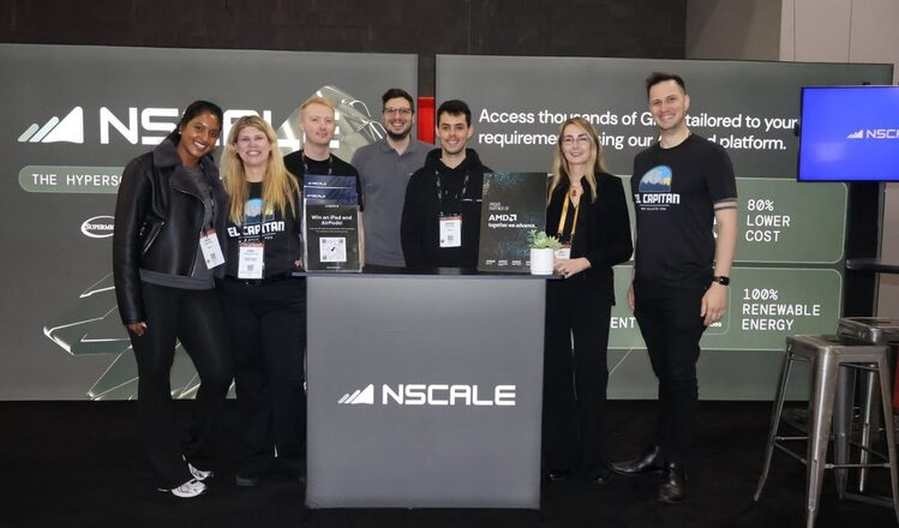
Cloud infrastructure provider Nscale has agreed to acquire AI software startup Anyscale in a deal reportedly valued at about $1.65 billion, marking another step in the rapid consolidation of the artificial intelligence infrastructure market as providers race to offer end-to-end platforms capable of powering increasingly complex AI workloads.
The acquisition, announced on Thursday, combines one of the emerging “neocloud” infrastructure providers with a fast-growing software company whose technology enables enterprises to deploy, manage and scale AI applications more efficiently across large clusters of graphics processing units (GPUs).
Bloomberg News, which first reported the transaction, said the deal is worth approximately $1.65 billion, citing a person familiar with the matter. Nscale declined to disclose the financial terms.
The transaction is expected to close in the second half of the year, subject to customary closing conditions.
San Francisco-based Anyscale develops software that allows organizations to orchestrate distributed AI workloads across thousands of computers simultaneously, helping customers optimize computing resources, improve reliability and reduce the cost of training and deploying large AI models.
Its technology is built around Ray, the open-source distributed computing framework originally developed at the University of California, Berkeley. Ray has become one of the industry’s most widely adopted frameworks for scaling machine learning, generative AI, data processing and reinforcement learning applications across large GPU clusters.
By integrating Anyscale’s software with its cloud infrastructure, Nscale aims to offer enterprises a more comprehensive AI platform that combines computing capacity with software tools needed to build, train and deploy advanced AI systems.
Infrastructure providers in the AI industry are increasingly seeking to differentiate themselves by offering fully integrated technology stacks rather than competing solely on access to GPUs.
“Customers increasingly want a single platform that provides not only compute capacity but also the software layer required to manage increasingly sophisticated AI workloads,” industry analysts have noted, as enterprises seek to improve efficiency while controlling rapidly rising AI infrastructure costs.
Nscale said Anyscale will continue operating under its existing brand while serving its current customer base. The startup’s approximately 200 employees across the United States, Europe and India will join Nscale following completion of the transaction.
Full-Stack AI Platforms Becoming The New Battleground
The acquisition reveals that competition in AI infrastructure has expanded well beyond simply providing access to Nvidia’s latest processors.
As companies invest billions of dollars in AI development, attention has shifted toward software that maximizes GPU utilization. AI accelerators are among the most expensive components of modern computing infrastructure, making efficient scheduling and workload management increasingly valuable.
Training and running large language models often requires thousands of GPUs operating in parallel across multiple data centers. Software platforms such as Anyscale’s help coordinate those distributed systems, ensuring workloads are balanced efficiently, minimizing idle hardware and reducing training times.
That capability has become increasingly important as enterprises seek stronger returns on massive AI investments.
Industry executives have repeatedly acknowledged that simply adding more GPUs does not guarantee better performance. The ability to orchestrate workloads efficiently is becoming a critical competitive advantage as AI clusters grow in size and complexity.
Neocloud Providers Challenge Traditional Hyperscalers
Founded in 2024, Nscale belongs to a new generation of cloud providers often referred to as “neoclouds.”
Unlike traditional hyperscale cloud providers, neocloud companies are purpose-built around AI infrastructure, combining ownership of data centers, GPU clusters, and software platforms into vertically integrated businesses optimized for machine learning workloads.
The model has attracted significant investor interest as demand for AI computing continues to outpace available capacity.
Nscale competes with specialist AI cloud providers including CoreWeave and Nebius Group, both of which have positioned themselves as alternatives to larger cloud providers such as Amazon Web Services, Microsoft Azure and Google Cloud for customers requiring dedicated AI infrastructure.
Rather than serving general-purpose enterprise computing, these companies focus on high-performance AI training, inference and model deployment, enabling customers to access large-scale GPU resources without building their own infrastructure.
The acquisition of Anyscale strengthens Nscale’s competitive position by adding a software layer that complements its infrastructure business, allowing it to compete more effectively for enterprise AI customers seeking integrated solutions.
The transaction is the latest example of consolidation sweeping through the AI infrastructure sector as providers seek to broaden their capabilities amid surging enterprise demand.
Rather than purchasing individual AI tools from multiple vendors, many organizations now prefer integrated platforms that combine computing infrastructure, orchestration software, model deployment and lifecycle management under a single provider. That trend has encouraged infrastructure companies to acquire software developers while software companies pursue partnerships with cloud providers to deliver more comprehensive AI ecosystems.
Anyscale said in a blog post that revenue grew 70% sequentially in its most recent quarter, highlighting the rapid growth in demand for software that helps enterprises deploy AI applications at scale.
The global AI infrastructure market has expanded rapidly over the past two years as companies accelerate investment in generative AI. While Nvidia has dominated the market for AI chips, a broader ecosystem has emerged around cloud infrastructure, data centers, networking, orchestration software and developer platforms needed to build and operate advanced AI models.
This has fueled the rise of specialist AI cloud providers, or “neoclouds,” including Nscale, CoreWeave and Nebius, which compete by offering dedicated GPU infrastructure optimized for AI workloads.
At the same time, software platforms such as Anyscale have become increasingly important because they enable organizations to efficiently manage distributed AI computing across thousands of GPUs.