DD
MM
YYYY

PAGES

DD
MM
YYYY

spot_img

PAGES

Home Blog Page 6

Technology Trends Transforming Global Sport

0

Sport is now argued frame by frame. A tight offside at Qatar 2022, a player-tracking possession in a WNBA arena, and a referee body-cam angle at the 2025 FIFA Club World Cup all sit inside the same dispute: which evidence should fans trust? The 2026 World Cup schedule has stretched the sport across 104 matches and 16 host cities. The screen no longer waits for halftime.

Offside Lines Became a Data Problem

FIFA’s semi-automated offside system uses 12 tracking cameras under the stadium roof to follow the ball and up to 29 data points on each player, 50 times per second. The connected match ball used at Qatar 2022 added an inertial sensor that sent ball data to the video operation room 500 times per second, helping officials identify the kick point. That still leaves human validation: VAR officials check the proposed line and touch point before the referee receives the decision. The gain is repeatability, especially when a striker’s knee or shoulder decides whether a goal survives.

The Referee’s View Has Entered the Feed

The IFAB approved an extension of referee body-camera trials at the professional level on July 30, 2025, after tests at the FIFA Club World Cup. The footage gives broadcasters a view from the referee’s running lane, which is different from the high tactical camera that fans usually see. A shoulder charge near the touchline can look cleaner or rougher depending on bodies blocking the angle. The camera adds context, not innocence.

Mobile Sport Has Merged Odds, Clips, and Live Data

For many fans, the phone is now where the game happens: whether it’s a Champions League night, a UFC card, or a World Cup match watched on a train, in a bar, or during a late shift. Live betting markets shift quickly with red cards, substitutions, corner pressure, takedown attempts, and injury stoppages often faster than studio analysts can react. MelBet apk sits alongside live scores and team news as a tool for adults already keeping an eye on line movement and bankroll exposure. The basics still matter most: KYC checks, stake limits, suspended markets, and tracking how odds move.

Tracking Cameras Are Rewriting Scouting Reports

The WNBA announced in March 2024 that Genius Sports’ Second Spectrum system would bring league-wide 3D tracking data to every WNBA arena from the start of that regular season. The system collects player pose and ball-tracking data, giving teams information on shot quality, paint touches, contest quality, maximum speed, and distance covered. That changes coaching language. A missed closeout can be measured by distance, angle, and timing rather than reduced to a vague bench complaint after the possession.

Athletics Is Testing the Shape of Events

World Athletics tied its research and development work to the Pioneering Change 2024-2027 strategy after launching an R&D unit at the 2023 World Championships in Budapest. The governing body has tested ideas around competition flow, predictive modeling, instant measurement, viewer behavior, and discipline formats. Its long-jump take-off zone work is still best treated as experimentation, not a settled rulebook rewrite. In field events, speed matters because waiting for measurements can drain tension from a stadium session before the next athlete even starts the run-up.

Apps Turn Access Into a Product Decision

Sports platforms now compete on how quickly a user can move from the fixture list to a live market, account screen, or cash-out status during a 90-minute match. That speed matters when a football game shifts after a 62nd-minute red card or a UFC bout turns after one clean calf kick in Round 1. Downloading the MelBet (French: telecharger MelBet) is part of that access equation, since the app can cut down the steps between registration, verification, pre-match odds, and in-play markets. It’s not just about download speed, though; users should also look at licensing details, payment options, account limits, and how clearly the market rules are explained before placing a bet.

The Machine Still Needs a Judge

Technology has made sport more accountable, but it hasn’t smoothed everything out. Semi-automated offside can catch the slightest lean, yet it still struggles with messy moments in a packed penalty area. A body camera might show the referee’s angle, but it won’t hush the roar. What comes next will likely be tools that sharpen decisions while still leaving room for the human call.


Clear Remote Exam Rules Beat Student Guesswork

0
A university

Clear remote exam design gives assessment directors a practical way to protect students’ attention before the first question appears. When identity checks, equipment requirements, permitted materials and interruption procedures are communicated upfront, students can focus on demonstrating what they know rather than trying to interpret the process.

Explicit instructions, visible timing and consistent conditions have always been part of sound exam design. Remote delivery makes those established principles more visible because every stage, from login to submission, must be communicated through a combination of guidance, technology and human support.

Confidence begins with an agreed exam journey

Assessment directors can build clarity by mapping the exam journey backwards from final submission. Every point at which a student must make a decision should have a defined instruction, an agreed owner and a clear route for support.

A 2024 study, What Is the Student Experience of Remote Proctoring?, reviewed 21 papers and found that experiences were influenced by technological challenges, fairness concerns and stress. Its recommendations included involving students in decisions about how remote proctoring is used. For assessment teams, that turns student feedback into design evidence rather than treating it only as a reaction after the exam.

Guidance can then be delivered in stages. An early notice establishes device and room requirements. A reminder confirms identification, permitted materials and support arrangements. A practice check allows students to experience the decisive steps before those steps carry assessment consequences.

The practice check is most useful when it reproduces the real sequence rather than offering a generic system tour. Logging in, granting permissions, completing an identity check and locating technical support become familiar actions. When that familiarity is established before exam day, students can begin with greater confidence and direct more of their attention towards the assessment itself.

Instructions work from the moment of login

Pre exam guidance cannot carry the entire communication task. The platform must reinforce that preparation as soon as the student logs in, with instructions that appear when they are needed and actions that follow a predictable sequence.

A useful design test is whether a student can immediately identify three things: their current status, the next required action and the correct route to help. Permissions should be explained before they are requested, timers should have one unambiguous meaning, and messages should distinguish general information from warnings that require action.

This sequencing is particularly important when institutions use live remote proctoring technology. Assessment directors can define where the platform provides instructions, where the proctor offers procedural reassurance and where an issue must be referred to technical or academic staff. Clear boundaries prevent conflicting guidance during a timed assessment.

Jisc’s Beyond Blended: Rethinking Curriculum and Learning Design, updated in 2025, notes that digital environments can blur boundaries and create situations in which expectations are unclear. Applied to remote exams, that observation makes sequencing a professional design responsibility. The interface should clarify what happens now, what comes next and which decisions remain with the student.

Consistent rules support performance and integrity

Schools and assessment providers that invest in clear communication are creating conditions in which students can perform at their best. The benefit does not come from making an exam easier. It comes from ensuring that procedural uncertainty does not compete with the knowledge or skills being assessed.

Assessment directors can reinforce that consistency by using the same rule language across candidate guidance, platform instructions, proctor scripts and support responses. This gives proctors a shared basis for handling ordinary questions and helps administrators distinguish misunderstanding from deliberate misconduct.

Exception planning is equally important. A dropped connection, failed identity check or unexpected room interruption should lead to a predetermined process. When assessment teams document who decides whether an exam continues, pauses or requires later review, students receive comparable treatment rather than improvised responses.

The 2025 TEQSA case study An Educational Approach to Generative AI reported that 57 per cent of surveyed students agreed or strongly agreed that not fully understanding assignments could motivate academic misconduct. Although the study considered broader assessment practice, it reinforces a useful principle for remote exams: explicit expectations give educators a stronger foundation for supporting appropriate decisions.

Review keeps good practice dependable

Clear communication is proactive professional practice, but it still benefits from regular review. After each assessment period, directors can compare support queries, practice check results, interrupted sessions and proctor referrals. Repeated questions reveal where wording or timing needs attention, while differences between cohorts may indicate where further preparation would be useful.

That review protects an established principle of good assessment design: students should understand the conditions under which their work will be judged. Technology changes how those conditions are communicated, but not the responsibility to make them clear.

Remote exam rules work best when students barely need to think about them. The process is predictable, the boundaries are visible, and attention remains on the work being assessed. When students feel confident from the start, that confidence is a direct result of the care schools, assessment teams and providers have built into the exam design.

Meet the ContiSX Phone: Built for Privacy, Security, and Investment Inclusion

0

The ContiSX Phone is built for people who value privacy, security, and true digital ownership. It is more than a smartphone, it is a blockchain-native communications and productivity platform designed to make finance and collaboration accessible to everyone, regardless of language, location, or income level. Inspired by ContiSX vision of investment inclusion, it integrates secure communications and intelligent services into a single device.

-Whether you are an entrepreneur in Aba, a farmer in Bauchi, an investor in Lagos, or a professional in Nairobi, the ContiSX Phone enables you to participate in Africa’s economy with technology that works for you. Some of its key capabilities include:

-Blockchain-native identity, payments, applications, and security. Your digital identity and assets are controlled by you, not by centralized platforms. Privacy is built into architecture, eliminating unnecessary intermediaries while giving users greater ownership of their digital lives.

-Secure communications by design. The phone includes an encrypted email platform, private messaging, voice calls, and high-quality video conferencing. Unlike conventional communication tools, these services are designed with privacy as a foundational principle.

-AI-powered multilingual collaboration. Users can communicate naturally in Igbo, Hausa, Yoruba, Pidgin, or English. For example, an investor can leave instructions for a licensed broker in their preferred language, and the system intelligently translates them into the recipient’s language, lowering language barriers to capital market participation.

-No data plan required within the ContiSX ecosystem. Connectivity is integrated into the operating environment, allowing users to browse ContiSX applications, communicate, and access supported services without purchasing separate data bundles. This removes one of the biggest barriers to digital participation across Africa.

  • Built-in AI assistant. The operating system includes a native AI capable of answering questions, automating daily tasks, assisting with workflows, and helping users create new applications and services directly from the device.

The ContiSX Phone reflects our belief that digital infrastructure should serve everyone, not just those in major cities or with expensive data plans. By combining blockchain technology, artificial intelligence, multilingual support, secure communications, and integrated connectivity, it provides a platform where individuals, businesses, and institutions can communicate, transact, collaborate, and innovate securely.

Our solutions will be available on the web (Chrome, Edge, Opera, etc), Apple iOS, and Google Android via the usual devices you use.  Through our local proprietary devices, you can participate via smartTVs and new devices we are introducing.

Our launch date is Sept 24, 2026. Please go here and register on our wailtlist https://contisx.com/

ContiSX >> exchanging prosperity

Contisx Phone – Blockchain-Powered, No Data Plan Required

Clock Ticking on BlockDAG’s 50% Bonus at $0.0000077 While Hedera & Stellar Price Consolidate

0

Major networks are refining their infrastructure as trading activity stabilizes across major trading pairs. Hedera trades near $0.07 after posting a 7.6% weekly increase, while institutional inflows into spot HBAR ETF products continue. Meanwhile, Stellar holds around $0.180 as 3 Tier 1 validators join its main network.

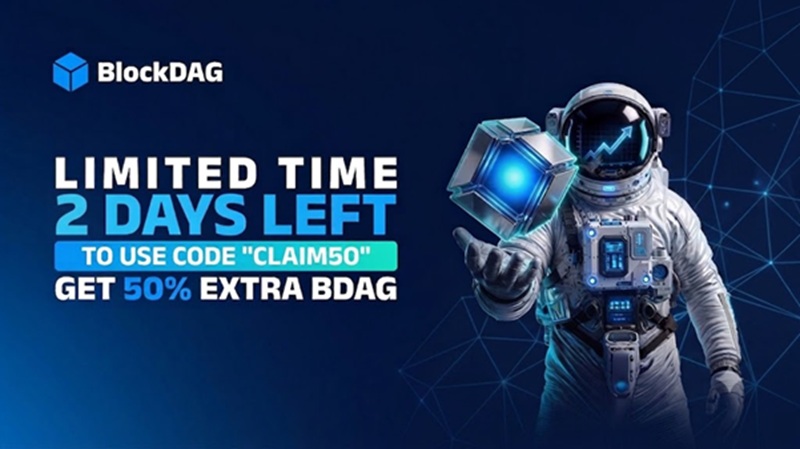
Beyond these network upgrades, BlockDAG is gaining attention among top crypto gainers today by pairing structured user incentives with working products. BlockDAG (BDAG) currently features an entry price of $0.0000077 alongside a CLAIM50 bonus, giving participants a 50% reward allocation.

The network has already processed over $200 million in wagering activity, while early buyers gain early access to a September 1 buyback program. These elements keep BlockDAG closely watched heading into its public rollout.

Hedera Price Consolidates Within Narrow Trading Range

The Hedera price recently showed modest short-term gains, climbing above $0.07 despite broader technical resistance. While HBAR gained roughly 7.6% over the past week, it remains below key moving averages, indicating ongoing pressure from sellers. On the fundamental side, the network continues to attract institutional interest, backed by inflows into spot HBAR ETF products and expansion in real-world asset tokenization.

Technical indicators suggest the Hedera price is currently navigating a period of weak momentum and oversold market conditions. Analysts expect price action to consolidate within a narrow range between $0.0640 and $0.0780 over the coming days.

Unless market buyers can reclaim critical resistance levels, the Hedera price may remain vulnerable to sideways trading or further near-term downside risks.

Stellar Price Consolidates Following Validator Addition

The Stellar price currently sits around $0.180 following a minor daily pullback. Despite recent chart weakness, buyers are actively defending key support near $0.175 while the broader network continues to expand.

To strengthen decentralization and network security, the Stellar Development Foundation recently added three major Tier 1 validators, including payment provider MoneyGram. While technical indicators point to cooling short-term momentum, the overall Stellar price remains bounded within a firm trading range.

On-chain metrics reveal that user activity and open interest remain steady, suggesting market participants are staying engaged despite the price consolidation. Traders are now watching resistance near $0.189, as a breakout could help stabilize the Stellar price and signal a renewed upward trend.

BlockDAG Takes the Lead With Its Limited-Time 50% Bonus

When evaluating the top crypto gainers today, promotions alone rarely tell the full story. The more important question is whether a project is creating lasting value beyond temporary incentives. BlockDAG currently presents both.

The immediate attraction is the CLAIM50 campaign, available for only two more days. Buyers who complete three qualifying purchases unlock a 50% BDAG bonus that applies to existing claim allocations as well as newly acquired tokens. Combined with the current entry price of $0.0000077, the promotion allows participants to increase their holdings before the sale closes.

Long-term appeal comes from the broader ecosystem. BlockDAG’s casino and sportsbook platform has already generated more than $200 million in wagering activity, providing measurable evidence that the network is supporting real transactions. Development has continued with the introduction of BDAG AI, a launch that contributed approximately $500 million to the project’s valuation.

Another milestone is approaching with the planned rollout of a dedicated exchange featuring both spot and futures markets on Apple and Google app stores. Early participants also receive access to the buyback program beginning September 1, allowing redemption at $0.02 a full month before the October 1 date available to everyone else. That earlier timeline adds another incentive alongside the promotional bonus.

Rather than depending on a single catalyst, BlockDAG brings together utility, ecosystem expansion, and structured incentives, qualities that support its place among the top crypto gainers today.

Conclusion

Hedera and Stellar maintain defined trading ranges during this period of market consolidation. Hedera trades near $0.07 supported by spot ETF inflows, while Stellar holds near key $0.175 support following recent validator additions. Both networks continue to prioritize fundamental infrastructure over price swings.

Meanwhile, BlockDAG stands out among top crypto gainers today. Its CLAIM50 campaign provides a 50% bonus on 3 qualifying purchases at $0.0000077 for 2 more days.

Beyond promotions, $200 million in sportsbook wagering, a $500 million boost from BDAG AI, and planned Apple and Google app store exchanges for spot and futures show real utility. A September 1 buyback at $0.02 precedes October 1. Utility drives value.

Presale: https://purchase.blockdag.network

Website: https://blockdag.network

Telegram: https://t.me/blockDAGnetworkOfficial

Discord: https://discord.gg/Q7BxghMVyu

LayerZero and Keeta Network Bring Tokenized Bank Deposits to Solana

0

LayerZero and Keeta Network have expanded the scope of real-world assets on Solana by introducing tokenized bank deposits, a development that could significantly reshape how traditional finance interacts with blockchain technology.

Rather than relying solely on stablecoins as digital representations of fiat currency, tokenized bank deposits allow actual commercial bank liabilities to move across blockchain networks while remaining linked to regulated banking infrastructure.

This advancement represents another major step in bridging decentralized finance (DeFi) with the global banking system.

The collaboration combines the strengths of LayerZero, a leading omnichain interoperability protocol, and Keeta Network, a blockchain focused on high-speed financial settlement and real-world asset tokenization.

They enable regulated financial institutions to issue tokenized deposits that can be transferred onto the Solana blockchain, where they can be used for payments, settlement, lending, and other financial applications.

Unlike traditional stablecoins, which are typically backed by reserves held by issuers, tokenized bank deposits are direct digital representations of deposits held within regulated banks.

This distinction is important because tokenized deposits remain integrated with existing banking systems while benefiting from blockchain’s speed, transparency, and programmability. For institutional users, this creates a familiar financial product with significantly improved settlement efficiency.

LayerZero’s interoperability infrastructure plays a central role in this integration. The protocol enables secure communication between multiple blockchain networks, allowing tokenized deposits to move seamlessly across ecosystems without fragmenting liquidity.

Financial institutions can therefore issue assets that are not confined to a single blockchain but instead remain accessible wherever demand exists.

Keeta Network contributes the banking-focused infrastructure required to connect traditional financial institutions with decentralized networks.

Its technology is designed to support compliance requirements such as identity verification, transaction monitoring, and regulatory reporting while preserving the speed and efficiency expected from blockchain-based transactions.

This combination of compliance and interoperability makes the solution particularly attractive to banks exploring digital asset adoption. For Solana, the launch further strengthens its position as one of the leading blockchains for institutional finance.

The network’s high throughput, low transaction costs, and fast finality make it well suited for handling payment systems and tokenized financial products at scale. As more regulated assets migrate on-chain, Solana continues to establish itself as an infrastructure layer capable of supporting both retail and enterprise-grade financial activity.

The introduction of tokenized bank deposits also reflects a broader trend toward tokenizing real-world financial instruments.

Governments, asset managers, and financial institutions worldwide are increasingly experimenting with tokenized treasury securities, money market funds, private credit, and other traditional assets.

Bank deposits represent another major category moving onto blockchain, expanding the range of financial products available within decentralized ecosystems. Institutional adoption could accelerate as tokenized deposits reduce settlement times from days to seconds while lowering operational costs.

Cross-border payments, corporate treasury management, and wholesale financial settlements are among the areas likely to benefit most. Businesses could transfer value globally around the clock without relying on legacy payment rails that operate only during banking hours.

For the broader blockchain industry, the partnership signals continued convergence between traditional finance and decentralized infrastructure. Rather than replacing banks, blockchain is increasingly being used to modernize existing financial systems by improving efficiency, transparency, and interoperability.

As regulatory frameworks mature, collaborations like the one between LayerZero and Keeta Network may become increasingly common, bringing more institutional capital and financial products onto public blockchains.

The arrival of tokenized bank deposits on Solana therefore represents not just another blockchain integration, but a meaningful milestone in the ongoing transformation of global finance through tokenization and interoperable digital infrastructure.