DD
MM
YYYY

PAGES

DD
MM
YYYY

spot_img

PAGES

Home Blog Page 6

JPMorgan Tokenized Money Market on Ethereum is a Massive Boost for RWAs

0
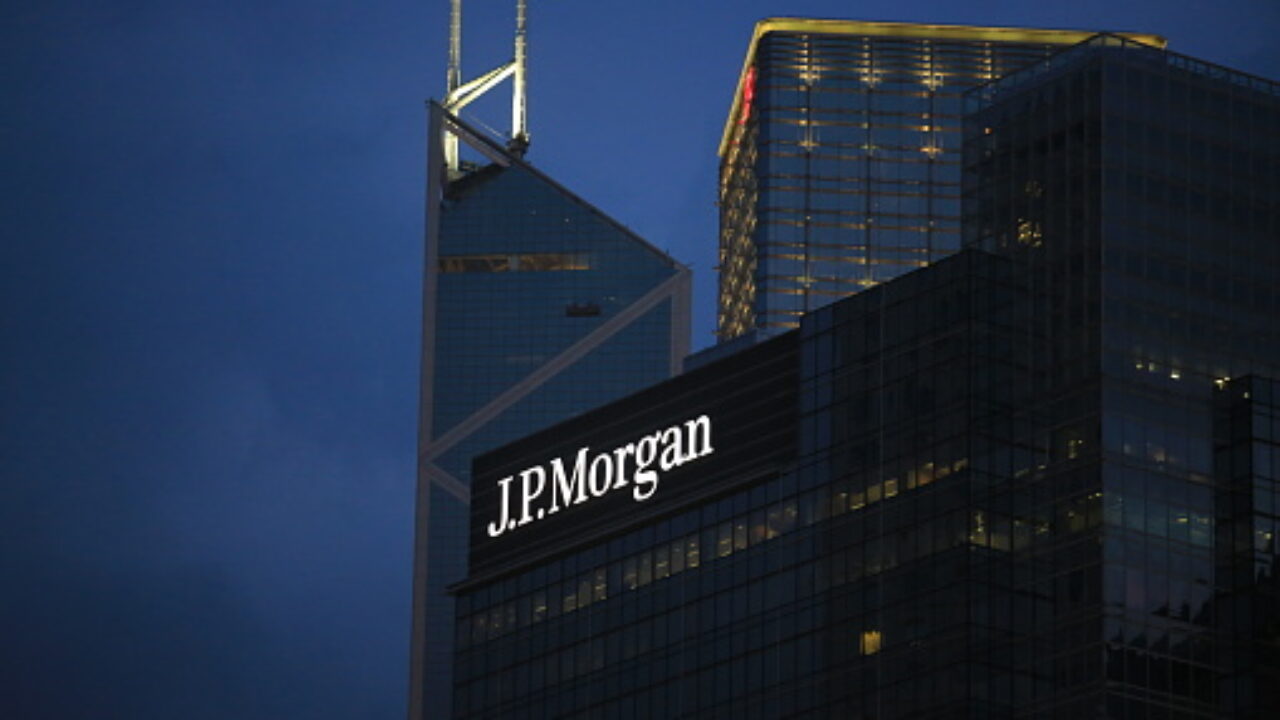
Hong Kong, October 08 2017: JPMorgan Chase & Co. building in Central, Hong Kong . JPMorgan is a Swiss global financial services company, One of big financial company in the world

J.P. Morgan Asset Management officially launched its first tokenized money market fund on the public Ethereum blockchain. The fund, named My OnChain Net Yield Fund (MONY), is a private placement (506(c)) available only to qualified investors through the bank’s Morgan Money platform.

It was seeded with $100 million from JPMorgan itself and invests in short-term U.S. Treasury-backed instruments and repos, offering daily yields similar to traditional money market funds. Powered by JPMorgan’s Kinexys Digital Assets tokenization platform.

Investors subscribe/redeem using cash or USDC stablecoin and receive ERC-20 tokens representing shares directly in their wallets. Minimum investment: $1 million. Qualified investors: Individuals with ?$5M in assets or institutions with ?$25M.

This makes JPMorgan the largest global systemically important bank (GSIB) to issue a tokenized money market fund on a public blockchain, following peers like BlackRock (BUIDL fund) and Franklin Templeton.

The launch reflects surging institutional demand for blockchain-enabled liquidity products, with faster settlement and on-chain interoperability.

Tokenized real-world assets (RWAs) represent traditional assets like bonds, treasuries, credit, real estate, and commodities brought on-chain as digital tokens. This enables fractional ownership, 24/7 liquidity, faster settlement, and DeFi integration while maintaining regulatory compliance.

2025 has been a breakout year for institutional adoption, driven by major players entering the space. The on-chain RWA market excluding stablecoins has exploded in 2025: Reached $30–36 billion by late 2025, up from ~$5–8 billion at the end of 2024.

Private credit dominates ($17–19 billion), followed by U.S. Treasuries ($7–8 billion) and institutional/money market funds. Holder base expanded significantly, with over 571,000 wallets across categories.

Projections vary widely: Some forecasts see $50–600 billion by end-2025, with long-term estimates of $10–30 trillion by 2030–2034. This growth reflects a shift from pilots to scaled operations, with slower but sustainable inflows in Q4 2025 focused on yield-bearing products.

U.S. Treasuries and Tokenized Money Market Funds — Safest and fastest-growing segment ~$7–8 billion on-chain. Offers ~4–5% yields with blockchain efficiency. Private Credit — Largest category (~$17–19 billion), appealing for higher yields (9–10%) in short-duration financing.

Commodities like gold via tokens like XAUm/PAXG— ~$3–4 billion, providing inflation hedges. Real Estate, Equities, and Others — Smaller but emerging ~$150–200 million for real estate, enabling fractional ownership.

Major traditional finance institutions are leading: BlackRock’s BUIDL is the largest tokenized fund ~$2.5–2.9 billion AUM, backed by U.S. Treasuries; expanded multi-chain like Ethereum, Solana, BNB Chain, etc. and accepted as collateral on Binance.

J.P. Morgan’s MONY

Newly launched on Ethereum seeded with $100 million. Franklin Templeton (BENJI/FOBXX), Ondo Finance (OUSG/USDY), Hashnote/Circle (USYC), Centrifuge, and Apollo. These funds target qualified institutional investors, often with high minimums, but provide daily yields and on-chain interoperability.

JPMorgan’s public Ethereum launch marks the largest GSIB entering public-blockchain RWAs. BlackRock BUIDL integrated with Binance for collateral and BNB Chain expansion.

Tokenized commodities/stocks hit all-time highs ~$3.7 billion for commodities. Regulatory progress: Clearer frameworks in U.S., Singapore, Hong Kong, and Europe boosting confidence.

Multi-chain adoption: Ethereum dominates, but Solana, Base, and others gaining for scalability. Institutional Demand — For efficient treasury management, collateral in DeFi/trading, and yield on idle capital. Reduced intermediaries, transparency via immutable ledgers, global access, and programmability.

Tokenized products serve as compliant on-ramps, with oracles via Chainlink ensuring real-world backing. Challenges remain, including liquidity in secondary markets, interoperability, and regulatory nuances.

But 2025 data shows RWAs maturing into a core financial infrastructure. With projections pointing to trillions long-term, tokenization is reshaping ownership and liquidity in global markets.


A Look At Recent Digital Asset ETP Inflows (> $700M Weekly)

0

Digital asset exchange-traded products (ETPs) recorded weekly inflows exceeding $700 million in recent reports from CoinShares, a leading digital asset manager.

CoinShares‘ most recent updates highlight positive momentum: One week showed $716 million in inflows, pushing total assets under management (AuM) to $180 billion still below the all-time high of $264 billion.

A subsequent week saw $864 million in inflows, marking the third consecutive week of gains and reflecting cautious optimism despite mixed price performance after the US Federal Reserve’s interest rate cut.

Bitcoin led with inflows around $352–522 million, though year-to-date figures lag behind 2024 levels. Standout performers included XRP up to $245–289 million in prior weeks, with YTD inflows surging and Chainlink record inflows relative to AuM.

Other assets like Ethereum, Solana, Aave, and Chainlink saw smaller positive flows, while selective outflows hit assets like Hyperliquid. Geographically, the US dominated, followed by Germany and Canada, accounting for most of 2025’s demand.

This trend signals recovering investor confidence following earlier outflows in November, driven by improving sentiment, regulatory clarity, and anticipation of macroeconomic easing. These inflows represent broad-based but concentrated interest in established digital assets via regulated ETPs.

The sustained inflows into digital asset exchange-traded products (ETPs)—ranging from $716M to over $1B in recent weeks as of mid-December 2025—signal a notable shift in the crypto market following earlier outflows and volatility.

These flows, primarily into regulated vehicles like ETFs, have several key implications: After four weeks of heavy outflows totaling ~$5.7B earlier in the period driven by hawkish Fed signals and macroeconomic uncertainty, the reversal to consecutive positive weeks reflects cautious optimism.

Investors appear to be interpreting potential Fed rate cuts and stabilizing macro conditions favorably, viewing dips as buying opportunities. Short-Bitcoin products seeing outflows (e.g., $18-19M) further indicates waning bearish bets, often a precursor to sentiment bottoms.

Inflows directly increase demand for underlying assets via ETP issuers buying spot crypto, providing structural buying pressure. Bitcoin has led absolute inflows ~$352M in recent weeks, but year-to-date figures lag 2024, suggesting room for catch-up if momentum builds.

Altcoins like XRP record inflows, YTD surging due to ETF launches and regulatory clarity and Chainlink highlight diversification, potentially supporting broader market rallies. Despite mixed price action in December 2025, Bitcoin price is fluctuating around $85K-$92K amid volatility, these flows could stabilize prices and fuel rebounds, especially if rate cuts materialize.

Heavy concentration in the US often >80% of flows, followed by Germany and Canada, underscores reliance on regulated markets with strong infrastructure. Shift toward “flight to quality” assets— large-cap like BTC, ETH, XRP over speculative ones, with selective outflows in niche products.

This points to crypto’s evolution into a strategic asset class for institutions, hedging macro risks rather than pure speculation. Rising AuM to ~$180B from November lows, though below $264B peak boosts liquidity and visibility in traditional finance.

Encourages further product innovation and integration with TradFi, as seen in projections for tokenized assets and stablecoin growth. However, risks remain: Inflows are “cautious” per analysts, and reversals could occur if inflation data disappoints or rate cuts delay.

Overall, these inflows mark a stabilization phase post-volatility, potentially setting the stage for renewed growth into 2026 if sentiment continues improving. They reinforce crypto’s resilience through regulated channels, attracting capital back toward established assets amid uncertain macros.

Markets crash as Bitcoin Falls Below $86K — Resulting to Massive Liquidations

1

Bitcoin (BTC) has fallen below $86,000 amid a broader market sell-off. Live prices across major sources show BTC trading in the $85,900–$87,000 range, down roughly 3–4% in the past 24 hours, with some intraday dips as low as $85,500–$85,700.

This extends a multi-day decline, pushing BTC about 30% below its all-time high of ~$126,000 earlier in the year.The drop has triggered significant liquidations over $600–650 million in the last day, mostly long positions, heightened volatility, and “extreme fear” sentiment.

Broader crypto markets are down similarly, with total market cap slipping below $3 trillion, influenced by factors like: Potential Bank of Japan rate hikes unwinding carry trades.

ETF outflows and macro indications remain with strong uncertainties (e.g., tech stock weakness, tax-loss harvesting). Reduced institutional momentum. Prediction markets like Polymarket and Kalshi have sharply lowered probabilities in recent weeks.

As of mid-December data, odds hovered around 20–35%, on Polymarket at ~20% in some reports, well below 10% in the most bearish readings—aligning closely with the “<10%” claim amid the ongoing correction.

Earlier in the year, these odds were much higher (50–60%+), but the December pullback has crushed optimism for a quick recovery to $100K+ before January 2026. Analysts note support around $82,800–$84,800, with risks of further downside if broken, but many still see long-term bullish potential into 2026 (e.g., new ATHs post-consolidation).

This is a classic late-cycle correction, not uncommon in Bitcoin’s history. The recent drop of Bitcoin below $86,000 currently trading around $85,900–$87,000 signals a sharp shift in market sentiment, extending a correction from its October all-time high of ~$126,000.

This has wiped out over $1 trillion from the total crypto market cap since peaks, pushing it below $3 trillion.Key immediate effects include: Massive liquidations of over $600–$800 million in leveraged positions mostly longs liquidated in recent days, amplifying downside volatility.

Prediction markets like Polymarket and Kalshi now price the odds of BTC reclaiming $100,000 by December 31, 2025, at 20–30% down from 50–60%+ earlier. Some readings dip as low as ~20%, aligning with bearish bets on sub-$80,000 outcomes rising to 40%.

Broader crypto srag — altcoins and deFi tokens have fallen harder 6–10%+ in 24 hours, with risks of further contagion if BTC breaks key supports around $82,000–$84,000. This correction appears driven by a confluence of factors, marking a classic late-cycle pullback rather than a full bear market reversal.

Signals of Bank of Japan rate hikes unwinding yen carry trades, reducing global liquidity; correlated sell-offs in tech/AI stocks; and tempered Fed rate-cut expectations odds for aggressive easing now lower.

Spot Bitcoin ETF outflows like those $300–$400 million in recent sessions from funds like BlackRock and Fidelity; slowed corporate treasury buying (e.g., MicroStrategy still accumulating but at a reduced pace overall).

BTC is range-bound with weakened momentum below key EMAs. A break below $80,000 could test $72,000–$74,000 lows, while holding $85,000 might allow stabilization. Renewed ETF inflows, clearer regulatory progress or macro easing could spark a rebound. Many analysts view this as healthy profit-taking/tax-loss harvesting ahead of a 2026 push.

Despite the pain, structural bullishness remains intact: Bitcoin is still up significantly YTD from early 2025 levels. Institutional adoption— ETFs holding ~1.5 million BTC, corporate treasuries ~1 million provides a floor.

Forecasts for 2026+ often target new highs ($130,000–$200,000+), driven by halving cycle dynamics, supply constraints, and growing recognition as a treasury asset. Risks include prolonged macro tightness potentially delaying recovery, or extreme scenarios.

This crash reflects over-leveraged euphoria meeting real-world liquidity drains—painful short-term, but historically common in bull cycles. Long-term holders often see these as accumulation opportunities, though near-term volatility likely persists until clearer catalysts emerge.

NASDAQ Filing for Rule Change on Trading Time Adjustment Benefits Asian Investors

0
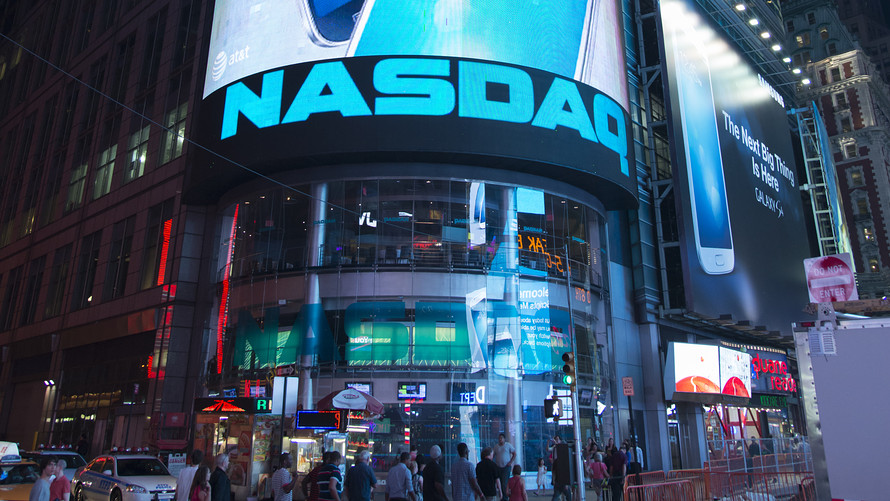
NASDAQ

Nasdaq filed a proposed rule change with the U.S. Securities and Exchange Commission (SEC) to extend trading hours for U.S. equities and exchange-traded products (ETPs) to 23 hours per day, five days a week.

Approximately 16 hours total across pre-market (4:00 a.m. – 9:30 a.m. ET), regular (9:30 a.m. – 4:00 p.m. ET), and post-market (4:00 p.m. – 8:00 p.m. ET). Proposed structure: Shift to two sessions: Day Session: 4:00 a.m. to 8:00 p.m. ET including existing pre-, regular, and post-market. Night Session: 9:00 p.m. to 4:00 a.m. ET with a 1-hour break from 8:00 p.m. to 9:00 p.m. for maintenance, testing, and clearing.

Trades in the Night Session from 9:00 p.m. to midnight would count toward the following calendar day. The trading week would effectively run from Sunday 9:00 p.m. ET to Friday 8:00 p.m. ET.

Expected launch is around second half of 2026, pending SEC approval and necessary infrastructure upgrades to the Securities Information Processor and clearing systems like DTCC.

Reasons Cited by Nasdaq

The move responds to surging global demand for U.S. stocks, especially from international investors in non-overlapping time zones like Asia.

Foreign holdings of U.S. equities reached about $17 trillion last year. It also aims to compete with 24/7 alternative trading systems (ATS) like Blue Ocean and platforms for digital assets/cryptocurrencies, while positioning Nasdaq for future tokenized securities trading.

This follows similar efforts by competitors, such as NYSE’s approved 22-hour plan and proposals from others like 24X National Exchange for 23-hour trading. The filing (SR-NASDAQ-2025-106) is publicly available on Nasdaq’s site and will go through the standard SEC review process, including public comments.

Positive Impacts on Asian Investors

Nasdaq’s proposal to extend trading to 23 hours per day on weekdays with a Night Session from 9:00 p.m. to 4:00 a.m. ET is explicitly designed to benefit international investors, particularly those in Asia, where time zones create significant misalignment with traditional U.S. market hours.

The Night Session (9:00 p.m. ET Sunday to Friday) corresponds to daytime hours in Asia. For example:9:00 p.m. ET is 9:00–10:00 a.m. the next day in Tokyo/Seoul/Hong Kong depending on daylight savings. This allows Asian investors to trade U.S. equities and ETPs during their normal business hours, rather than late at night or early morning.

Nasdaq highlighted surging overnight demand, “particularly among investors located in Asia” whose business hours do not overlap with U.S. regular trading. Asian investors can respond in real-time to macroeconomic headlines, geopolitical developments, earnings releases, or central bank announcements from Asia/Europe without waiting for the U.S. open.

This reduces “gap risk” — sudden price jumps at the U.S. open due to overnight news. Currently, many Asian traders use off-exchange alternative trading systems (ATS) like Blue Ocean for overnight access, which offer lower transparency and potentially worse pricing.

An official exchange session promises better liquidity, tighter spreads, fairer price discovery, and higher trust/regulatory protections. Expected to attract more global order flow, improving overall overnight liquidity.

Analysts from Pepperstone in Australia note it “brings US stocks into our local trading hours,” enabling real-time reactions and boosting participation. Foreign holdings of U.S. equities hit ~$17 trillion, with growing demand from Asia-Pacific regions like Japan, China, Korea, Singapore, India.

Competitors like NYSE (22-hour plan) and others are moving similarly, signaling a shift toward global 24/5 markets, influenced by always-on crypto trading. Overnight sessions historically have lower liquidity and higher volatility, leading to wider spreads and sharper price swings — risks that may persist initially.

Some industry voices express caution about market stability in thin-volume hours, though Nasdaq plans safeguards like circuit breakers. Overall, the proposal is widely viewed as a major win for Asian investors, addressing long-standing barriers and aligning U.S. markets more closely with global trading patterns.

Implementation is targeted for the second half of 2026, pending SEC approval.

PayPal Seeks Regulatory Approval to Launch PayPal Bank, Targeting Small Businesses

0

PayPal, an online payment platform that allows users to send and receive money, has applied for regulatory approval to establish a PayPal bank.

According to the payment giant, this move would enable it offer loans directly to small businesses in the United States.

Speaking on this, PayPal CEO Alex Chriss said,

“Establishing PayPal Bank will strengthen our business and improve our efficiency, enabling us to better support small business growth and economic opportunities across the U.S.,”

The proposed bank will be reviewed by the U.S. Federal Deposit Insurance Corporation (FDIC) in collaboration with Utah’s Department of Financial Institutions. PayPal noted that, if approved, the new entity would also enable the company to offer interest-bearing savings accounts to customers.

PayPal, which owns the popular peer-to-peer payment platform Venmo, already provides credit lines to consumers. The move to form a regulated bank aligns with the company’s broader strategy to expand its suite of banking-like services as it competes with a growing number of fintech firms seeking to capture market share from traditional brick-and-mortar banks.

Since 2013, PayPal has originated over $30 billion in loans and working capital to more than 420,000 businesses globally. However, reliance on third-party banks has limited margins and introduced dependencies. A charter would reduce these costs, enable direct access to payment networks, and potentially fund lending with cheaper customer deposits.

The announcement to launch a bank by PayPal has stirred reactions with netizens arguing that companies like PayPal have been role-playing as revolutionary disruptors leveraging technology for sleek user interfaces and lighter regulation, without fully committing to the core infrastructure of banking.

PayPal becoming a bank isn’t innovation it’s Big Tech finally admitting fintech cosplay has limits”, a user wrote on X.

In their view, pure fintech models hit a wall when scaling advanced services like deposit-taking and low-cost lending. Most noted that to compete at scale, fintechs must eventually adopt the licenses, capital requirements, and oversight of traditional banks effectively becoming the incumbents they once sought to replace.

PayPal’s announcement comes amid a more favorable regulatory environment under the Trump administration, which has seen a surge in bank charter applications from fintech and even crypto firms. Other companies, such as SoFi (which acquired a national bank charter in 2022) and Block (formerly Square, which secured a Utah ILC in 2020), have pursued similar paths to deepen vertical integration.

Notably, the move to launch a bank comes as PayPal recently announced plans to expand its presence in Africa through the launch of a new cross border digital wallet platform, scheduled for 2026.

The initiative forms part of PayPal World, a global payments system designed to enable interoperability between local digital wallets and international merchants. The company is currently in discussions with multiple African fintech firms as it seeks to access this market.

Senior Vice President, Head of Product, Partnerships and Digital Solutions for the CEMEA region, Otto Williams, said the platform would launch in Africa in 2026. “We’re looking to enable as many markets as possible on the continent through partnerships wallet partners on the continent,” he said, adding that the company was in conversations with stakeholders and ecosystem partners and players.

Outlook

If approved, PayPal Bank could mark a pivotal shift in PayPal’s evolution from a payments-focused fintech into a fully integrated financial services provider. Direct access to deposits and lending infrastructure would likely improve margins, reduce reliance on partner banks, and give PayPal greater control over its balance sheet.

Over time, this could allow the company to price loans more competitively for small businesses while expanding recurring revenue streams through savings and other deposit-based products.