
DD
MM
YYYY

PAGES

DD
MM
YYYY

spot_img

PAGES

Home Blog Page 6

Germany’s Industrial Sector Shrinks as Global Competition Intensifies

0

Germany, Europe’s largest economy and one of the world’s manufacturing powerhouses, is facing an industrial crisis that is becoming increasingly difficult to ignore.

According to the head of the Federation of German Industries, the country’s industrial sector is losing around 15,000 jobs every month. The warning highlights mounting pressures on German manufacturers as they grapple with high energy costs, weak global demand, geopolitical uncertainty, and intensifying competition from abroad.

Once regarded as the engine of Europe’s economic growth, Germany’s industrial base is now confronting structural challenges that could reshape its economic future.

For decades, Germany built its prosperity on industries such as automotive manufacturing, machinery, chemicals, engineering, and industrial equipment.

Renowned companies established global reputations for precision, innovation, and quality. These sectors created millions of high-paying jobs while supporting a vast network of suppliers and small businesses across the country.

The competitive advantages that once fueled Germany’s industrial success have steadily eroded over the past several years.

One of the biggest challenges has been soaring energy costs.

Following the disruption of Russian natural gas supplies after the outbreak of the war in Ukraine, German manufacturers have faced significantly higher electricity and fuel prices than many international competitors.

Energy-intensive industries, particularly chemicals and steel production, have struggled to maintain profitability. Many firms have reduced production, delayed investments, or shifted operations to regions where energy is cheaper.

Global demand has also weakened. Slower economic growth in China, one of Germany’s largest export markets, has reduced orders for German machinery, automobiles, and industrial equipment.

Higher interest rates across Europe and North America have dampened investment and consumer spending, further reducing demand for manufactured goods. Export-oriented businesses, which have long been the backbone of Germany’s economy, are feeling the effects.

The automotive industry is undergoing its own transformation. The global transition from internal combustion engines to electric vehicles requires massive investments in new technologies, battery production, and software development.

While German automakers remain global leaders, they face fierce competition from Chinese electric vehicle manufacturers and American technology companies. This shift has forced companies to restructure operations, automate production, and eliminate positions tied to traditional vehicle manufacturing.

Digitalization and automation are also reshaping the industrial workforce. Advanced robotics, artificial intelligence, and smart manufacturing technologies improve productivity but often reduce the need for manual labor.

Although these innovations create new high-skilled positions, they also accelerate job losses among workers whose skills no longer match evolving industrial needs.

Without significant investment in retraining and workforce development, many displaced workers could struggle to find comparable employment. Business leaders argue that Germany must improve its competitiveness through comprehensive reforms.

They are calling for lower energy prices, reduced bureaucracy, faster permitting processes, tax incentives for industrial investment, and stronger support for innovation. Expanding digital infrastructure, strengthening vocational training, and encouraging research into advanced manufacturing technologies could also help modernize the country’s industrial base.

The German government faces the difficult task of balancing climate goals with industrial competitiveness. Ambitious decarbonization policies are essential for long-term sustainability, but businesses warn that excessive regulatory costs could encourage manufacturers to relocate production overseas.

Finding a balance between environmental responsibility and economic resilience will be critical in preserving Germany’s industrial strength.

The reported loss of 15,000 industrial jobs each month is more than just a labor market statistic—it is a warning about deeper structural weaknesses within one of Europe’s most important economies.

If these trends continue, Germany risks losing its position as a global manufacturing leader. However, with targeted reforms, strategic investment, technological innovation, and a renewed commitment to industrial competitiveness, the country still has an opportunity to reverse the decline.

The decisions made today will determine whether Germany can successfully adapt to a rapidly changing global economy while protecting the industries and workers that have long been central to its economic success.
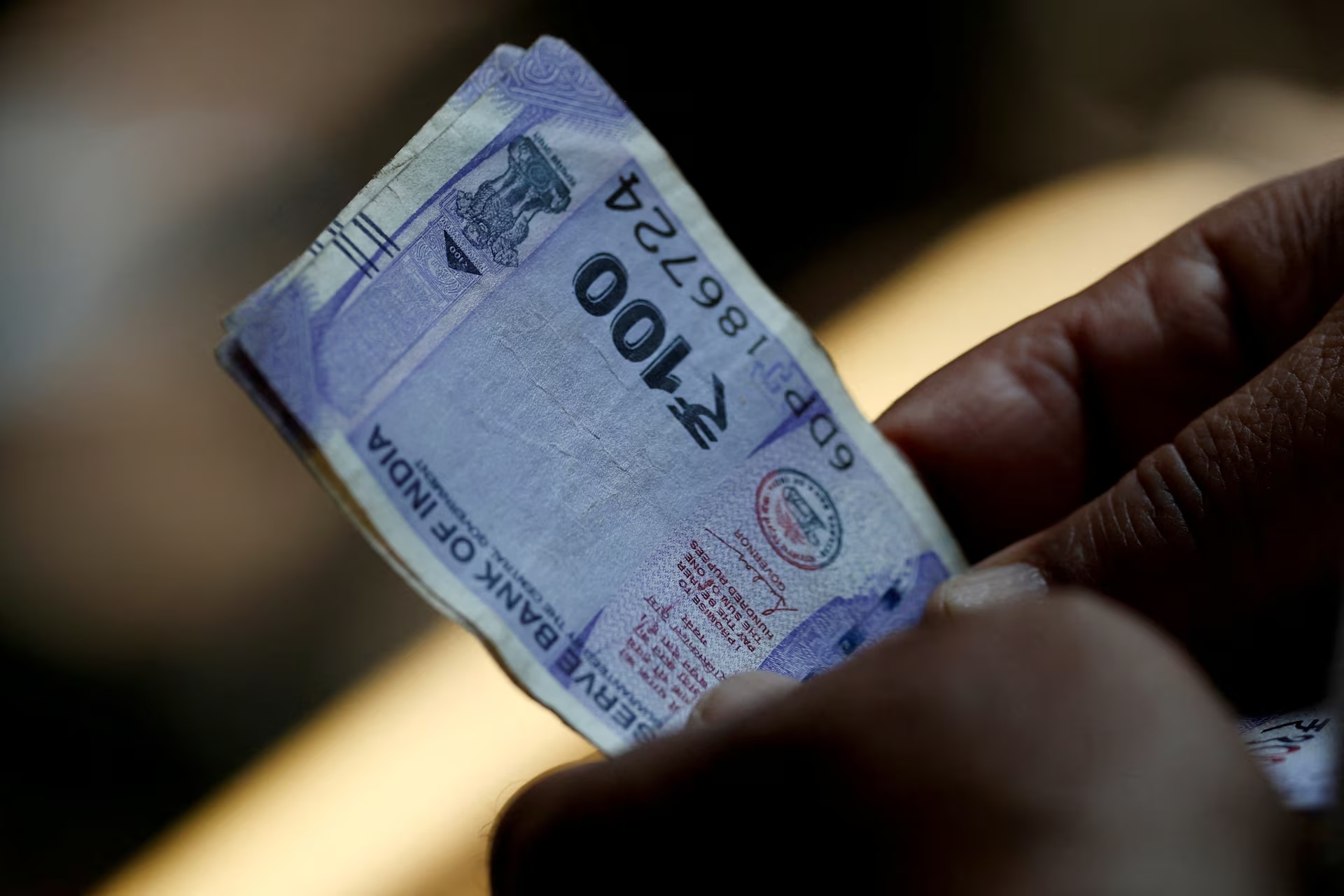

Indian Rupee Climbs to Two-Week High as RBI Intervention, Falling Oil Prices Spark Dollar Selloff

0

The Indian rupee strengthened to a two-week high on Monday after a combination of Reserve Bank of India (RBI) intervention, lower crude oil prices and a wave of stop-loss dollar selling triggered its sharpest rally in weeks, offering temporary relief to a currency that has come under sustained pressure this year.

The rupee rose to 95.7950 against the U.S. dollar after closing at 96.5625 in the previous session, with traders attributing the move to coordinated action by the central bank and improving external conditions following a pause in hostilities between the United States and Iran.

The currency’s advance accelerated after the dollar-rupee pair broke below a key technical support zone around 96.14-96.16, prompting investors to unwind long-dollar positions and triggering automated stop-loss orders that intensified the rally within minutes.

Market participants said the RBI’s intervention amplified the move.

According to traders, the central bank actively sold dollars in the spot market while simultaneously conducting buy-sell swap operations in the forward market, a strategy designed to support the rupee without significantly tightening domestic liquidity.

The intervention also pushed down forward premiums, with the one-year implied interest rate falling about 10 basis points to 2.82%.

Estimates from traders placed the RBI’s intervention on Monday at between $1.5 billion and $3 billion, with the central bank reportedly active in both the domestic spot market and the offshore non-deliverable forward (NDF) market, where foreign investors frequently hedge rupee exposure.

Bankers said the RBI likely employed a similar strategy on Friday when the rupee was approaching a record low, suggesting policymakers have become increasingly proactive in limiting excessive currency volatility rather than defending a specific exchange-rate level.

The intervention underpins the RBI’s preference for using foreign exchange reserves and market operations to smooth fluctuations instead of relying on interest rate increases to support the currency. A weaker rupee raises the cost of imports, particularly crude oil, and can fuel inflation in one of the world’s largest energy-importing economies. However, aggressive rate hikes to defend the currency could slow economic activity at a time when growth is already expected to moderate.

Declining Oil Prices Offered Further Boost

Brent crude fell below $90 a barrel during Asian trading after the United States paused military operations against Iran to allow more time for diplomatic efforts, easing concerns over severe supply disruptions in the Middle East.

The decline in oil prices is particularly beneficial for India, which imports more than 80% of its crude oil requirements. Lower oil prices reduce the country’s import bill, improve the current account balance, and lessen demand for dollars by oil marketing companies, all of which tend to support the rupee.

The combination of central bank intervention and cheaper crude created a favorable environment for the currency, encouraging traders to reverse bearish positions that had accumulated during the rupee’s recent decline.

Sentiment was further bolstered by the RBI’s recent initiatives to attract foreign currency inflows.

Governor Sanjay Malhotra told The Hindu BusinessLine that dollar-mobilization schemes introduced in June have already attracted nearly $32 billion, strengthening the central bank’s capacity to counter depreciation pressures and maintain orderly conditions in the foreign exchange market.

Those measures form part of a broader strategy to increase the availability of foreign currency without relying solely on intervention through India’s foreign exchange reserves.

Despite Monday’s rebound, the rupee remains under pressure over the longer term.

The currency has fallen nearly 7% against the U.S. dollar this year, reflecting a combination of higher global oil prices, persistent dollar strength, geopolitical uncertainty and capital outflows from emerging markets.

That depreciation has increased speculation that the RBI could eventually tighten monetary policy to stabilize the currency.

However, economists overwhelmingly believe the central bank will resist using interest rates as a tool to defend the exchange rate.

A Reuters survey conducted between July 21 and July 27 found that 68 of 72 economists expect the RBI’s Monetary Policy Committee to leave the benchmark repo rate unchanged at 5.25% when it concludes its August 3-5 policy meeting. Only four economists forecast a 25-basis-point increase.

The results mark a notable shift from expectations earlier this year.

In May, many economists anticipated a rate increase in the third quarter as inflation accelerated. Those expectations have since moderated after Governor Malhotra indicated it would be “premature” to discuss higher interest rates given the uncertain economic environment.

The RBI reduced the repo rate by 25 basis points to 5.25% in December and has maintained that level ever since.

While inflation accelerated to 4.38% in June, its first reading above the RBI’s 4% target since January 2025, economists generally believe the increase remains manageable.

The Reuters poll projects average inflation of 4.8% during the current fiscal year, slightly above the 4.7% forecast in May but still below the RBI’s own projection of 5.1%.

That outlook has reinforced expectations that policymakers will prioritize economic growth over exchange-rate stabilization.

India’s economy is expected to expand by 6.6% this fiscal year, slowing from 7.7% in the previous year. Against that backdrop, economists argue that higher borrowing costs could unnecessarily weaken domestic demand while offering only limited support to the currency.

“We have already seen some of the effects of the war trickle down to inflation, but it will be too quick a reaction by the central bank to hike rates now because growth will be affected adversely, and the situation outside is too fickle to react in haste,” said Aditya Vyas, chief economist at STCI Primary Dealer.

Other analysts expressed similar views, noting that several sectors of India’s economy remain under pressure from U.S. tariffs and the economic fallout of the Middle East conflict.

“While overall macro indicators are resilient, the more vulnerable sectors that have been exposed to both tariffs and the Middle East conflict have been hit hard,” said Kanika Pasricha, chief economic adviser at Union Bank of India.

Pasricha added that a sustained period of oil prices above $90 a barrel could eventually prompt the RBI to consider raising interest rates during the second half of the fiscal year if inflationary pressures become more persistent.

For now, however, economists expect the central bank to continue relying primarily on foreign exchange intervention and liquidity management rather than monetary tightening.

“I do not think the RBI will use interest rate tools to target the rupee because it is ineffective… they cannot simply discard the growth objective, and rate hikes are way more costly now at this particular juncture,” said Apoorva Javadekar, chief economist at Muthoot Fincorp.

Javadekar said the RBI would likely consider raising rates only if inflation rose above 6% and appeared likely to remain elevated for an extended period.

European Satellite Operators Secure $6.1bn FCC Windfall as DCC Energy Agrees £5.75bn Private Equity Buyout

0

European companies were at the center of two major corporate developments on Monday, with satellite operators SES and Eutelsat poised to receive billions of dollars from the United States for freeing up valuable wireless spectrum. At the same time, Irish energy distributor DCC Energy agreed to a £5.75 billion takeover by U.S. private equity firms KKR and Energy Capital Partners.

The transactions underscore another episode of governments paying heavily to secure scarce spectrum needed for next-generation wireless networks, while private equity firms continue targeting undervalued European listed companies.

Shares of Luxembourg-based SES rose 6.6%, while France’s Eutelsat gained 5.7% after the U.S. Federal Communications Commission (FCC) finalized an incentive program worth $6.3 billion to compensate satellite operators for relinquishing portions of the upper C-band spectrum for wireless communications.

Under the FCC allocation, SES will receive approximately 89% of the incentive pool, equivalent to about $5.6 billion, while Eutelsat will receive roughly 8%, or about $500 million. Canadian satellite operator Telesat will receive the remaining 3%.

The payments are designed to accelerate the migration of satellite services from portions of the C-band spectrum, allowing the frequencies to be repurposed for advanced mobile broadband networks. The FCC plans to auction 160 megahertz of upper C-band spectrum beginning on April 27, 2027, providing U.S. telecom operators with additional bandwidth to support expanding 5G services and future wireless technologies.

The compensation is tied to strict implementation milestones. Satellite operators must complete the primary spectrum transition by December 2030 to qualify for $4.9 billion in payments. An additional $1.4 billion will become available if the remaining transition work is completed by June 2031.

In addition to the incentive payments, the FCC will reimburse eligible relocation and transition expenses, estimated at between $4 billion and $5 billion.

Although SES is the clear financial winner, analysts caution that its headline payout will be reduced by taxes and obligations inherited from its acquisition of Intelsat.

JPMorgan estimates the net present value of the FCC incentives equates to roughly €6 per SES share, compared with less than €0.50 per Eutelsat share, highlighting the significantly greater impact on SES’s valuation.

However, the bank noted that SES must share part of the proceeds with Intelsat bondholders. Under prior agreements, those creditors are entitled to 42.5% of proceeds generated from the first 100 megahertz of cleared spectrum, amounting to approximately $1.1 billion, before taxes.

Beyond benefiting satellite operators, the FCC decision also signals substantial future spending by U.S. telecommunications companies. JPMorgan estimates wireless operators could spend around $25 billion during spectrum auctions scheduled for 2027 and 2028, potentially limiting their ability to return capital to shareholders through share buyback programs.

The spectrum release comes as mobile operators seek additional capacity to accommodate rapidly growing data consumption driven by artificial intelligence applications, cloud services, video streaming and increasingly connected devices.

DCC Energy Accepts £5.75 Billion Takeover Offer

Separately, Irish energy distributor DCC Energy agreed to be acquired by a consortium comprising U.S. investment firms KKR and Energy Capital Partners in a transaction valued at £5.75 billion ($7.68 billion).

The deal adds to a growing wave of foreign acquisitions targeting UK-listed companies, many of which continue to trade at valuation discounts relative to international peers.

Under the agreed terms, DCC shareholders will receive:

  • £65.25 per share in cash
  • A proposed final dividend of 147.22 pence per share
  • A potential additional payment of up to £1.25 per share if DCC successfully sells its Nexora technology business for at least $800 million

The offer represents more than a 26% premium to DCC’s closing share price on April 28, the day before the consortium submitted its initial proposal.

However, private markets are seeing value where public markets did not.

Chief Executive Donal Murphy said the decision reflected persistent undervaluation of the company despite extensive restructuring efforts.

“We’ve simplified the group, spent a huge amount of time on the investor relations circuit and that really hasn’t translated into the value that private capital is willing to put on our business,” Murphy told Reuters.

Over recent years, DCC has streamlined its operations by exiting healthcare and technology businesses while expanding its core energy distribution operations through acquisitions in Europe’s liquefied petroleum gas (LPG) market.

Murphy acknowledged that some shareholders had initially opposed earlier offers but said one major investor had since substantially reduced its holding at prices below the consortium’s final bid, leaving the board confident that shareholders would approve the transaction.

DCC shares rose 1.3% following the announcement, trading slightly below the offer price, indicating investors largely expect the acquisition to proceed.

Together, the two announcements highlight how strategic assets continue to command significant value across sectors. Scarce radio spectrum is increasingly becoming a monetizable asset for satellite operators, as governments race to expand wireless network capacity.

For listed European companies, continued valuation discounts relative to U.S. peers are attracting private equity firms willing to pay substantial premiums for businesses they believe can generate greater long-term value outside public markets.

Gold Jumps as Weaker Dollar, Oil Slump Lift Demand Before Fed Decision

0

Gold prices climbed more than 1% on Monday as easing tensions in the Middle East sent oil prices sharply lower, weakened the U.S. dollar and prompted investors to scale back expectations for near-term U.S. interest rate increases ahead of this week’s Federal Reserve policy meeting.

The rebound indicates that investor sentiment has rapidly shifted from inflation fears to expectations of a more benign policy environment after Washington and Tehran signaled a pause in hostilities, easing concerns that the conflict would further disrupt global energy supplies.

Spot gold rose 1.3% to $4,103.59 an ounce by 0723 GMT, while U.S. gold futures gained 0.9% to $4,106.00.

“Gold is a clear beneficiary today of the dual price action in oil and the U.S. dollar,” said Tim Waterer, chief market analyst at KCM Trade.

The gains came after Iran said it would halt its attacks as long as the United States did the same, following Washington’s decision to pause its bombing campaign. The de-escalation triggered a broad risk-on move across financial markets, with Brent and U.S. crude prices tumbling more than 6% as fears of supply disruptions through the Strait of Hormuz eased.

But the decline in oil prices carries broader implications for monetary policy. Higher crude prices typically filter through to transportation, manufacturing and consumer costs, raising inflationary pressures that can compel central banks to keep interest rates elevated for longer. Lower energy prices, by contrast, ease those inflation risks and reduce pressure on policymakers to tighten monetary policy.

That shift benefited gold, which has struggled in recent months as rising oil prices fueled expectations that the Federal Reserve would maintain restrictive monetary policy. While gold is widely viewed as a store of value during periods of inflation and geopolitical uncertainty, higher interest rates increase the opportunity cost of holding the non-yielding asset, often limiting its upside.

Another major tailwind came from the currency market.

The U.S. dollar weakened against most major peers after the pause in hostilities improved investor confidence, reducing demand for the safe-haven greenback. The dollar index fell as much as 0.3% during Asian trading, making dollar-denominated bullion less expensive for overseas buyers and increasing its appeal.

Against the Japanese yen, the dollar slipped 0.2% to 163.585, its biggest decline since July 10. The euro advanced 0.3% to $1.1403, while sterling gained 0.2% to $1.3352.

Although the dollar index later steadied around 101.21, analysts said geopolitical developments remain the dominant driver of both currency and commodity markets.

“Markets remain on the edge around the U.S.-Iran conflict and the path of oil prices,” analysts at MUFG wrote in a research note.

“While it is difficult to know for sure how things will pan out, our base case remains for de-escalation over time for several reasons and as such for oil prices to decline.”

Investor attention is now firmly focused on the Federal Reserve’s July 28-29 policy meeting, which is expected to provide fresh guidance on the outlook for U.S. interest rates. The central bank is widely expected to leave its benchmark rate unchanged this week, but markets are closely watching Chair Jerome Powell’s comments for clues on whether policymakers remain concerned about inflation risks or are becoming more confident that price pressures are easing.

Interest-rate expectations moderated slightly following the decline in oil prices.

Fed funds futures now imply a 33.7% probability of a 25-basis-point rate increase at the conclusion of this week’s meeting, down from 37.4% on Friday, according to CME Group’s FedWatch Tool. However, traders continue to price in a roughly 74% chance of another increase at the September meeting, suggesting markets still expect the Fed to retain a tightening bias.

The combination of falling Treasury yield expectations, a softer dollar and geopolitical uncertainty continues to provide a supportive backdrop for bullion, even as investors await greater clarity from the Fed.

Waterer said gold’s near-term direction will remain closely linked to developments in energy markets and geopolitical headlines.

“Longer term, I remain constructively bullish on gold. Gold’s immediate fate is closely tied to where oil prices head from here and the path higher is likely to remain volatile and heavily influenced by geopolitical headlines until a more durable peace takes hold,” he said.

From a technical perspective, Reuters market analyst Wang Tao said spot gold could retest resistance around $4,117 after holding above key support at $4,038 and staging a strong rebound, suggesting bullish momentum remains intact if the support level continues to hold.

The rally extended across the broader precious metals complex.

Spot silver surged 2.7% to $59.74 an ounce, outperforming gold as investors returned to industrial and precious metals. Platinum jumped 3.5% to $1,643.70, while palladium gained 3.4% to $1,285.00, reflecting renewed appetite for cyclical assets following the easing of geopolitical tensions.

Risk appetite also lifted digital assets. Bitcoin rose 1% to $65,286.74, while ether advanced 1.7% to $1,945.22 as investors rotated back into higher-risk investments amid improving global market sentiment.

Currently, investors remain caught between two powerful forces: geopolitical developments that continue to influence safe-haven demand and energy prices, and the Federal Reserve’s policy outlook, which will shape the trajectory of the U.S. dollar, Treasury yields and, ultimately, the next move in gold.

Equity Futures Surge as U.S.-Iran Ceasefire Sends Brent Crude Down 7%

0

Global financial markets rallied after the United States and Iran agreed to halt military strikes, easing fears of a broader conflict that had threatened to destabilize the Middle East and disrupt global energy supplies.

Equity futures climbed sharply as investors welcomed the de-escalation, while Brent crude oil recorded a dramatic 7% decline, reflecting reduced concerns over potential supply disruptions.

The market reaction underscored how closely geopolitical developments influence investor sentiment, commodity prices, and global economic expectations.

For weeks, escalating tensions between Washington and Tehran had fueled uncertainty across financial markets. Traders feared that any prolonged military confrontation could disrupt oil exports from the Persian Gulf.

Particularly through the Strait of Hormuz, one of the world’s most critical energy shipping routes. Nearly one-fifth of global oil supplies pass through this narrow waterway, making it a strategic chokepoint for international energy markets.

As the conflict intensified, oil prices surged, inflation concerns resurfaced, and investors shifted toward traditional safe-haven assets such as gold and U.S. Treasury bonds.

The announcement that both nations had agreed to suspend military operations immediately changed market sentiment. Equity futures in the United States, Europe, and Asia moved higher as investors anticipated a lower geopolitical risk premium.

A reduction in conflict lowers uncertainty for businesses, encourages investment, and improves expectations for corporate earnings. Technology, industrial, travel, and consumer discretionary sectors were among those expected to benefit the most from renewed market optimism.

The energy market responded even more dramatically. Brent crude, the international benchmark for oil prices, dropped approximately 7% as traders reassessed the likelihood of supply interruptions. Oil prices often react swiftly to geopolitical events because even the possibility of disruptions can tighten expected supply.

Once those risks diminish, speculative buying unwinds, leading to rapid price corrections. The decline in Brent crude suggests that investors believe the immediate threat to oil transportation and production has eased significantly.

Lower oil prices also carry important implications for the global economy. Energy is a fundamental input across transportation, manufacturing, agriculture, and logistics. When crude prices decline.

Businesses often experience lower operating costs, while consumers benefit from cheaper gasoline and energy bills. This can help slow inflation, increase disposable income, and improve overall economic growth prospects.

Central banks monitoring inflation may also gain additional flexibility when energy prices stabilize after periods of geopolitical volatility.

Financial markets have repeatedly demonstrated their sensitivity to geopolitical developments.

While military conflicts create uncertainty and encourage defensive positioning, diplomatic breakthroughs often restore confidence rapidly. Investors typically move capital back into equities and higher-risk assets when the probability of prolonged conflict declines.

Many analysts caution that geopolitical risks rarely disappear completely, particularly in regions with longstanding political and military tensions. Despite the positive market reaction, investors remain cautious about whether the ceasefire will hold over the long term.

Any renewed hostilities could quickly reverse recent gains in equities while pushing oil prices higher once again. Market participants will closely monitor diplomatic negotiations, military activity, and official statements from both governments for signs of lasting stability or renewed escalation.

The simultaneous surge in equity futures and sharp decline in Brent crude illustrate how financial markets continuously price geopolitical risk. The halt in strikes between the United States and Iran has provided investors with a temporary sense of relief, reducing fears of supply disruptions and supporting expectations for stronger economic conditions.

Whether this optimism proves durable will depend on continued diplomatic restraint, but for now, global markets have embraced the prospect of stability over conflict.