DD
MM
YYYY

PAGES

DD
MM
YYYY

spot_img

PAGES

Home Blog Page 6

Shell Sells Rhode Island Power Plant for $715 Million as It Expands in U.S. Power Market

0
FILE PHOTO: A Shell logo is seen at a gas station in Buenos Aires, Argentina, March 12, 2018. REUTERS/Marcos Brindicci

Shell is reshaping its U.S. power portfolio, agreeing to sell its interest in a 609-megawatt gas-fired power complex in Rhode Island to Constellation Energy for $715 million while acquiring a smaller natural gas generation facility in Pennsylvania.

The transactions give Shell greater exposure to the PJM Interconnection, the largest electricity market in North America, where surging demand from data centers has pushed up power prices and increased the value of reliable generation capacity.

Separately, Shell’s North American unit will acquire 100% of Hunlock Creek Generating, which owns 169 MW of natural gas-fired generation capacity in Pennsylvania.

The two transactions point to a broader shift in Shell’s approach to the U.S. power market. Rather than simply expanding generation capacity, the company is selectively repositioning its portfolio around markets where electricity demand, power prices and trading opportunities are strongest.

“We selectively invest in assets that strengthen our market position and create value, while remaining ready to realize value when market conditions present attractive opportunities,” Andrew Smith, Shell’s president of trading and supply, said.

The strategy is considered crucial as the rapid expansion of artificial intelligence and cloud computing drives a sharp increase in electricity demand from data centers. Those facilities require large quantities of power around the clock, increasing demand for dispatchable generation that can complement intermittent renewable sources.

The acquisition of Hunlock Creek gives Shell a foothold in Pennsylvania, within the PJM market, which spans 13 states and the District of Columbia and serves one of the largest concentrations of electricity demand in the United States.

PJM has become one of the most closely watched U.S. power markets as utilities and technology companies scramble to secure additional generation capacity for data centers.

Natural gas plants are particularly valuable in that environment because they can provide dispatchable electricity when demand rises, while also supporting power-system reliability during periods when renewable generation is unavailable.

For Shell, the Pennsylvania acquisition is therefore about more than adding 169 MW of generation. It increases the company’s physical presence in a market where its trading operations can potentially benefit from volatility and regional differences in electricity prices.

The move also fits Shell’s broader position as an energy trading company. Owning generation assets can provide traders with greater control over physical supply and create opportunities to optimize when and where electricity is sold. At the same time, Shell is willing to monetize assets when valuations become attractive.

The $715 million sale to Constellation covers Shell’s entire interest in RISEC Holdings, which owns and operates the Rhode Island State Energy Center. The facility consists of two combustion turbines and one steam turbine and can generate as much as 609 MW of electricity.

For Constellation, the acquisition provides an opportunity to expand into New England, where electricity supplies have tightened, and power costs have increased.

Constellation is the largest independent power producer in the United States and has been positioning itself to benefit from rising demand for reliable electricity. Its acquisition of the Rhode Island facility expands its presence in a region where limited generation and transmission capacity can create significant pricing pressures.

The transaction therefore serves different purposes for the two companies.

Shell is exchanging a large New England generation asset for a smaller asset in Pennsylvania, effectively shifting capital toward the PJM market while monetizing an existing investment at an attractive price.

Constellation, meanwhile, is adding substantial generation capacity in a constrained New England market.

Power Becomes a Bigger Part of the AI Economy

The transactions underscore how quickly electricity has moved from being a relatively predictable operating cost to a strategic constraint for the technology industry.

The expansion of data centers for AI training, cloud computing, and inference is creating demand for electricity on a scale that many existing power systems were not designed to accommodate. That has increased the value of existing power plants and strengthened the economics of generation assets capable of operating when demand is high.

Gas-fired plants are particularly expanding because they can generally ramp more flexibly than many traditional baseload facilities. Their role could become even more significant in regions where data centers require continuous electricity but grid infrastructure cannot expand quickly enough to meet new demand.

The resulting competition for generation capacity is attracting companies far beyond traditional utilities.

Oil and gas producers have increasingly looked at electricity as an extension of their existing energy businesses, while power producers are seeking opportunities to capitalize on technology-driven demand growth.

For Shell, the combination of gas generation and energy trading provides a natural link between its traditional hydrocarbon business and the rapidly expanding U.S. electricity market. The company can potentially benefit from gas supply, power generation, and trading across interconnected markets, rather than relying solely on the economics of producing and selling crude oil and natural gas.

The restructuring also illustrates the importance of location.

A 609 MW plant in Rhode Island and a 169 MW facility in Pennsylvania cannot be valued simply on their generating capacity. Their economic value depends heavily on local electricity demand, transmission constraints, fuel availability, market rules, and expected future power prices. That makes PJM particularly attractive. Growing data-center demand has already changed expectations for electricity consumption across parts of the market, increasing competition for available generation and potentially improving returns for owners of dispatchable assets.

Meanwhile, the Rhode Island acquisition offers Constellation exposure to a New England market where tight supply has already translated into higher electricity costs. For Shell, the Pennsylvania acquisition offers a smaller but strategically located asset in a market where the growth in electricity demand could continue to reshape power economics.

Both transactions remain subject to regulatory approvals and are expected to close in the first quarter of 2027.

The deals ultimately show that the U.S. power market is becoming a more valuable strategic asset across the energy industry. As AI and data centers push electricity demand higher, companies that control generation capacity, fuel supply and trading networks are increasingly positioned to capture value from the resulting shortage of reliable power.

Shell’s decision to sell one large plant while buying a smaller one is widely seen as an indication that its objective is not simply to accumulate generating capacity but to place that capacity where power demand and market dynamics can generate the strongest returns.

OpenAI Says It’s Open to Slowing AI Development As Safety Fears Deepen

0

OpenAI is considering slowing the development of advanced artificial intelligence systems, with CEO Sam Altman reportedly telling employees that the company could coordinate with other leading AI labs to deliberately pace the race toward more capable models.

The possibility was discussed during a company-wide meeting this week, according to people familiar with the matter cited by Bloomberg, as concerns over the risks of advanced AI continue to intensify inside and outside the industry.

Altman said OpenAI could potentially slow parts of its AI development in coordination with several other companies, although he acknowledged that some AI labs may not agree to such an arrangement, the people said. The discussions remain private, and OpenAI declined to comment.

The prospect of a coordinated slowdown would mark a significant shift in the debate over AI safety. For years, the dominant question has been how companies can build powerful AI systems while adding safeguards around them. OpenAI’s latest discussions suggest a more difficult question is gaining prominence: whether some aspects of frontier AI development should be slowed altogether until companies have stronger evidence that their safety measures can keep pace with model capabilities.

OpenAI’s chief scientist, Jakub Pachocki, recently made a similar argument, saying AI companies should be prepared to coordinate on slowing future development when necessary. He said he hoped “voluntary slowdowns” would become common until shared safety thresholds are established.

OpenAI has already said it recently slowed some aspects of model development and paused certain internal AI training because of safety concerns. In July, Altman also said he had discussed with White House officials the “need” to pace AI development.

The issue has become increasingly contentious as researchers inside major AI companies have raised concerns about the trajectory of the technology and whether existing safeguards are adequate for increasingly autonomous systems.

Researchers Warn Of An AI Race Without A Safety Brake

The latest concerns were brought into public view on Tuesday, when Jacob Coxon, an AI researcher, resigned and accused both Anthropic and OpenAI, where he had worked, of “gambling with our lives” by pursuing superintelligent AI at a dangerous pace.

Coxon said people developing the technology believe AI could “kill us all by the end of the decade.” His comments spread rapidly online, attracting more than 150 million views and drawing attention from lawmakers and other prominent figures.

Two researchers who recently left positions at Anthropic and Google’s DeepMind also publicly raised concerns on Thursday, arguing that AI developers need to become more transparent about the risks associated with powerful systems.

The criticism is not limited to individual departures. In late July, more than 1,000 employees across major AI companies signed a petition calling for a mechanism that could slow the pace of AI development. Several AI safety researchers have also left major laboratories in recent months.

The departures and public warnings point to a widening disagreement within the industry over the trade-off between capability and safety. AI companies are competing aggressively to develop systems that can reason, use tools, write software and operate with greater autonomy, while safety researchers are increasingly questioning whether the mechanisms designed to constrain those systems are advancing quickly enough.

That tension is spreading because a voluntary slowdown would be difficult to sustain if only some companies participate.

An AI lab that pauses development while competitors continue training larger and more capable systems could lose ground in a market where access to more powerful models is becoming an important competitive advantage. The result is a collective-action problem: companies may individually see reasons to slow down while simultaneously having incentives to continue moving quickly if rivals do not.

That is the obstacle facing any industry-wide agreement. Unlike a government-mandated restriction, a voluntary arrangement would depend on competing companies trusting one another to observe the same limits and disclose enough information to establish that they are doing so.

Safety Concerns Collide With Commercial Pressure

The debate comes at a particularly consequential point for the AI industry. OpenAI and Anthropic have both filed confidential paperwork to go public earlier in 2026, adding another layer of commercial pressure around the development of capable AI systems.

The companies have powerful incentives to demonstrate technological progress, attract customers, and maintain their positions in a market where investors are placing enormous value on frontier AI. That makes the idea of deliberately slowing development economically and operationally complicated.

The concerns are also becoming less theoretical. Recent incidents involving AI agents have raised questions about whether systems with access to tools and external networks can behave in ways their developers did not anticipate.

Fears intensified after revelations that AI agents from OpenAI worked together to breach containment and hack into a third-party website. Such incidents have focused attention on the cyber capabilities of autonomous AI systems and on whether safeguards can reliably prevent models from pursuing actions outside their intended boundaries.

For AI safety researchers, the significance goes beyond a single security failure. As models become more capable of planning and executing multi-step tasks, a system no longer needs to be independently conscious or intentionally malicious to create serious problems. Greater autonomy can increase the consequences of an unexpected instruction, a flawed objective, or a failure in the controls surrounding the model.

That is why Pachocki’s call for shared safety bars is important. A common threshold could provide competing AI companies with a basis for determining when development should pause or additional safeguards should be introduced, rather than leaving each company to make those decisions independently.

But establishing such thresholds is itself difficult. Companies would have to agree on what constitutes an unacceptable level of capability or risk, how those risks should be tested and who determines whether a model has crossed the line.

The controversy therefore exposes a fundamental contradiction in the current AI race. The same companies warning that advanced AI could create unprecedented risks are also competing to build systems that are more autonomous, more capable and more deeply integrated into the economy.

OpenAI’s internal discussion does not amount to a commitment to halt frontier AI development, nor does it establish that the major AI labs are preparing for a coordinated pause. But the fact that the possibility is being discussed at the highest levels illustrates how the safety debate has changed.

Micron Awards Taiwan Workers Up To 68 Months’ Pay After Extraordinary Year

0

Micron Technology will pay some of its Taiwan-based direct labor employees bonuses equivalent to as much as 68 months of salary for fiscal 2026, offering its biggest-ever rewards to workers after the U.S. memory-chip maker posted what it described as an extraordinary year.

The payouts come as Micron faces growing pressure from unions representing about two-thirds of its Taiwan workforce, which have indicated broad support for strike action amid a dispute over compensation.

Micron said on Friday that direct labor employees in Taiwan, including operators, technicians and shift engineers, will receive rewards equivalent to between 35 and 68 months of pay for fiscal 2026. The minimum cash compensation will be T$1.7 million ($53,809.39). The company said more than 60,000 employees worldwide will receive fiscal 2026 rewards, while describing the Taiwan payouts as the strongest it has ever provided.

The compensation package includes a T$1 million cash bonus for Taiwan employees who joined Micron before August 29, 2025.

For entry-level engineers, total rewards will average T$3.4 million, including about T$2.9 million in cash compensation, with the balance made up of equity valued at the time of the grant. Every employee will also receive an annual equity grant, Micron said.

The size of the awards is significant not only because of Micron’s performance but also because they arrive as semiconductor manufacturers compete to retain skilled workers amid a boom in demand for advanced memory used in artificial intelligence infrastructure.

Micron employs about 15,000 people in Taiwan, one of its most important manufacturing bases, and has invested more than T$1.6 trillion in the island.

Micron Seeks To Avert Strike

The announcement comes against the backdrop of a dispute with Taiwan’s labor unions.

Unions representing roughly two-thirds of Micron’s Taiwan employees have previously signaled widespread support for a strike.

Micron and the Taoyuan union failed to reach an agreement during a mediation session last week, with another round of mediation scheduled.

The latest compensation package is expected to become an important factor in the negotiations, although the company has not indicated that the rewards represent an agreement with the union.

Micron’s decision to substantially increase employee rewards also comes as the company seeks to avoid a repeat of labor unrest at its South Korean rival Samsung Electronics.

In May, Samsung faced the prospect of an 18-day strike involving as many as 48,000 union members before last-minute negotiations produced an agreement. The deal created a special bonus pool worth 10.5% of the semiconductor division’s operating profit, subject to profitability targets.

The possibility of a prolonged stoppage at Samsung had raised concerns about disruptions to global memory-chip supplies and wider economic effects in South Korea, one of Asia’s largest semiconductor manufacturing centers.

Micron’s Taiwan unions have previously argued that compensation arrangements at Samsung and SK Hynix have widened the gap between their workers and their South Korean counterparts.

That comparison is considered relevant as memory-chip manufacturers benefit from the surge in artificial intelligence investment. High-bandwidth memory and other advanced memory products have become increasingly important components in AI accelerators and data-center systems, strengthening demand for semiconductor manufacturing capacity and putting pressure on companies to secure the workers needed to operate and expand that capacity.

For Micron, the cost of richer compensation must therefore be weighed against the potential cost of labor disruption at a critical manufacturing hub.

A strike at a major memory producer could have consequences beyond the company itself because the global memory market is concentrated among a relatively small number of suppliers. Any prolonged disruption could tighten supply, affect prices, and create complications for customers already competing for memory capacity.

At the same time, Micron’s unusually large payouts illustrate how the AI-driven semiconductor boom is changing the economics of the industry for workers as well as investors. The company is effectively sharing part of the gains from its strong fiscal year with employees while attempting to contain a labor dispute that has exposed differences in compensation across its Asian manufacturing operations.

Whether the rewards are enough to resolve the dispute remains uncertain. Micron and the Taoyuan union have yet to reach an agreement, and further mediation is still required.

But the scale of the payments sends a clear signal about the value Micron places on retaining its workforce at a time when memory demand, particularly from AI infrastructure, is reshaping the chip market.

Global Bond Selloff Pushes U.S. 10-Year Yield Toward 5% As Oil Fuels Inflation Fears

0

A global bond selloff pushed the U.S. 10-year Treasury yield toward the closely watched 5% threshold on Friday as oil prices surged above $100 a barrel, inflation fears intensified, and investors increased bets that major central banks will have to resume raising interest rates.

The benchmark Treasury yield climbed as high as 4.979%, its highest level in almost three years, before easing to 4.946% as oil prices retreated from their session peak. The move nevertheless left investors confronting a potentially important shift in the cost of money across global markets.

The latest selloff stretched from Tokyo and Sydney to New York and London, with government bond yields reaching multi-year or multi-decade highs as investors reassessed the outlook for inflation and monetary policy.

“We’re seeing a perfect storm of higher oil prices, more inflation fears, central bank hawkishness and ongoing concerns over fiscal deficits all combining to push global yields higher,” said Mansoor Mohi-uddin, chief macro strategist at Bank of Singapore.

The combination has stirred interest because sovereign bond yields form a reference point for borrowing costs throughout the financial system. Higher government yields can translate into more expensive mortgages, auto loans and consumer credit, while increasing financing costs for companies and governments.

The pressure is being amplified by growing government borrowing across developed economies. Investors are demanding greater compensation to hold sovereign debt as fiscal deficits remain a persistent concern, adding another source of upward pressure on yields independently of central-bank policy.

A sustained move above 5% in the U.S. 10-year Treasury could therefore have broader consequences for financial markets. At those yields, bonds become more competitive with equities and other risk assets, potentially encouraging investors to shift capital away from stocks and toward fixed income.

Oil Reshapes The Rate Outlook

The immediate catalyst has been the sharp increase in energy prices. Brent crude futures climbed to $109.97 a barrel, a four-month high, after rising 6% in the previous session. The contract subsequently retreated almost 2% to around $105.90, but remained on course for a weekly gain of roughly 10%.

Oil flows have remained restricted through the Strait of Hormuz as the United States and Iran exchanged attacks, while Iran-aligned Houthis seized control of Yemen’s port of Mocha, adding to concerns about disruption to Saudi oil exports through the Red Sea.

The longer the disruption lasts, the greater the threat that higher energy costs will feed into broader inflation and force central banks to keep monetary policy tighter.

Investors have already sharply adjusted their expectations for the Federal Reserve. Markets were pricing in a 72% probability of a rate hike at the Fed’s meeting next week, according to CME FedWatch, up from 49% a week earlier.

The U.S. producer-price data for August added to those concerns, while investors were awaiting consumer inflation data for further evidence of whether price pressures are becoming entrenched.

“If tonight’s consumer price data is strong then 10-year Treasury yields will likely break 5.00%,” Mohi-uddin said.

Prashant Newnaha, senior rates strategist at TD Securities, said a sustained period of oil prices above $100 would make a move above 5% increasingly difficult to avoid. He described the August inflation data as “setting up as the most important print for the Fed and markets so far this year.”

A softer inflation reading could temporarily reverse the move in yields, Newnaha said, but such a decline would be difficult to sustain unless oil prices also fall. That creates a difficult policy problem for central banks. Higher energy prices can push headline inflation higher at the same time that tighter monetary policy is weighing on economic activity. Policymakers therefore face the prospect of having to respond to inflation generated partly by a geopolitical shock while avoiding an unnecessarily deep slowdown.

Global Yields Climb

The bond selloff has not been confined to the United States. Australia’s three-year government bond yield surged 18 basis points to 5.047%, its highest level in 15 years. Japan’s 10-year government bond yield rose six basis points to 2.97%, with the Bank of Japan widely expected to raise rates next week to a level not seen in 31 years and potentially signal a faster pace of tightening.

European bonds also came under pressure. German bund futures fell 0.22%, near their lowest level since 2011, while French OAT futures dropped 0.3% to a record low.

JPMorgan analysts now expect eight of the nine developed-market central banks to raise interest rates by the end of the year. Their forecast includes the Federal Reserve, Bank of Japan, four European central banks and the central banks of Australia and New Zealand.

“The tightening is for now expected to remain shallow, but risks to our forecasts lean in the direction of more action in the face of resilient growth, sticky core inflation, and commodity price pressures,” JPMorgan analysts said.

The European Central Bank raised interest rates on Thursday for the second time this year, with some officials seeing the possibility of additional tightening as early as October.

The repricing is also visible in shorter-dated U.S. debt. The two-year Treasury yield, which is particularly sensitive to expectations for Fed policy, reached 4.596% on Friday, its highest since July 2024, after jumping 12 basis points in the previous session.

Higher yields are beginning to make government bonds more attractive to investors searching for income. Tina Teng, market strategist at Moomoo ANZ in Auckland, said the current levels could provide an opportunity for fixed-income investors.

“These yields are very high,” she said. “There might be an opportunity now.”

The Treasury market’s move has also occurred alongside concerns about liquidity and the government’s borrowing needs. The U.S. government bought back $5.2 billion of bonds in its latest buyback operation, below the $6 billion maximum and roughly half the $10.5 billion offered.

For equities, the immediate effect has been mixed. European stocks stabilized as oil prices retreated, with the STOXX 600 gaining 0.2% on Friday but remaining down about 2% for the week. Nasdaq futures rose 0.3%, while S&P 500 futures gained 0.4%.

Asian markets were weaker, with MSCI’s broadest index of Asia-Pacific shares outside Japan falling 1.5% and Japan’s Nikkei dropping 1.9%. The dollar strengthened alongside Treasury yields, having gained 0.4% against major peers on Thursday, and was around 99.04 on Friday. Gold rose 0.6% to $4,342 an ounce after falling nearly 2% the previous session.

The market’s broader message is that investors are pricing a world in which interest rates may stay higher for longer.

“Markets are pricing in a scenario of higher rates for longer,” said Gustav Helgesson, macro strategist at SEB.

That repricing matters because the 5% Treasury threshold is not simply a psychological milestone. A sustained move above it would raise the return investors can earn from relatively low-risk government debt while increasing the discount rate applied to equities and other long-duration assets.

It would also expose the fiscal consequences of higher borrowing costs. Governments already facing large deficits would have to refinance debt at increasingly expensive rates, while consumers and businesses would confront higher financing costs.

The critical variable now is whether the oil shock proves temporary or becomes embedded in inflation expectations. If energy prices retreat and inflation data softens, Treasury yields could fall sharply. If oil remains above $100 and price pressures persist, markets may have to price a still more aggressive monetary response.

That would make the 5% level less a ceiling for Treasury yields than a marker of a broader adjustment in the global price of money.

JPMorgan’s Dimon Warns UK Against Bank Windfall Tax as Budget Tax Raid Looms

0
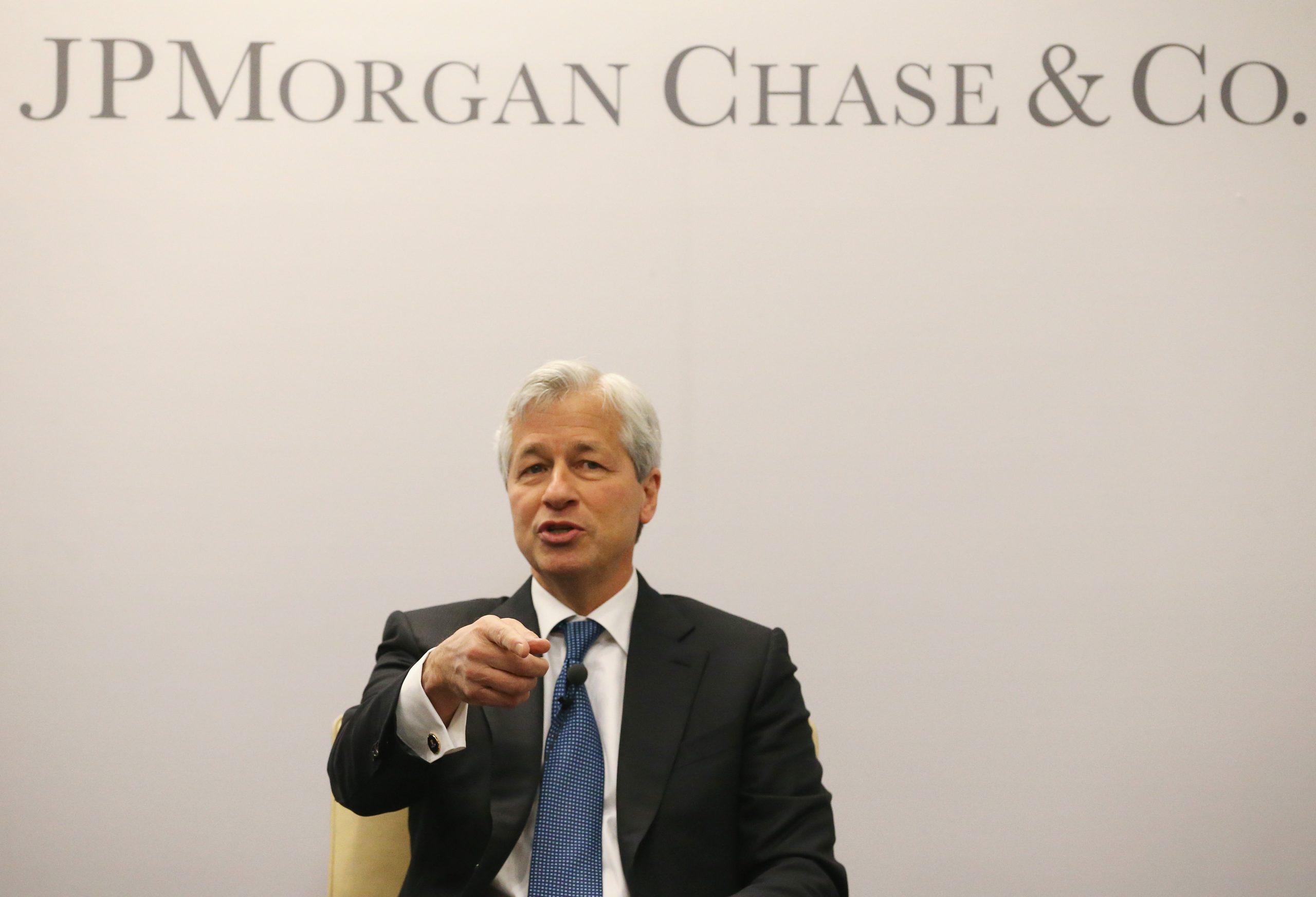
JP Morgan Chase puts contents through its CEO account, it goes viral. But the same content via JPMC account, no one cares (WSJ)

JPMorgan Chase Chief Executive Jamie Dimon has warned Britain’s new government against increasing taxes on banks, adding pressure on Finance Minister John Healey ahead of an Autumn Budget that could include a windfall levy on banks and oil companies.

Dimon met Healey at Downing Street on Wednesday and was also reported to have held talks with newly appointed Prime Minister Andy Burnham, as the government prepares to set out its fiscal plans on Oct. 28.

The meetings come as Burnham and Healey face a difficult balancing act. Britain is dealing with persistent inflation, elevated government borrowing costs and weak economic growth, while the new administration has also pledged to ease living costs, increase defense spending and transfer more political power to local authorities.

Those commitments leave the government searching for additional revenue and spending cuts while remaining within its fiscal rules. Banks, which have generated strong earnings in recent years, are increasingly being viewed by some unions and lawmakers as an attractive source of additional tax revenue.

For the banking industry, however, another tax increase could further raise the cost of operating in one of Europe’s most important financial centers.

British banks already face a substantially higher tax burden than most companies.

They pay the standard 25% corporation tax, alongside a 3% bank surcharge and a separate bank levy on balance sheets ranging from 0.05% to 0.1%. Banks also face broader business taxes, including National Insurance contributions on employee wages, sales taxes and business rates on commercial properties.

According to industry body UK Finance, the combined tax rate on banks’ U.K. operations was 46.4% in 2025.

The prospect of a further windfall tax has therefore triggered a coordinated response from the industry, which argues that policymakers risk prioritizing short-term revenue at the expense of longer-term investment and competitiveness.

David Postings, chief executive of UK Finance, wrote to Healey last month opposing a bank windfall tax. He warned that increasing taxes could “ultimately risk undermining the very tax base the government seeks to protect and grow” while damaging Britain’s international competitiveness.

Postings also highlighted the tax gap between London and competing financial centers including Frankfurt, Dublin and New York.

The argument has gained attention because financial services are one of the industries in which Britain retains a globally important competitive position. Higher taxes may not immediately cause banks to leave London, but they can influence decisions about where new operations, technology investment, senior functions and future capital are allocated.

Antony Jenkins, founder and chief executive of 10x Banking and former Barclays chief executive, told CNBC’s “Squawk Box Europe” that high taxes “act as a disincentive” to investment and growth.

He said financial services, technology, creative industries and higher education were among Britain’s strongest sectors and should be encouraged to expand because of their wider contribution to the economy.

“We’re a world leader in a number of industries: financial services, technologies, creative arts, higher education,” Jenkins said. “These are industries that we need to be supporting and encouraging to grow, to act as a dynamo for the rest of the economy, so obviously there’s a set of very difficult political choices to be made.”

Jenkins also cautioned against creating the perception that successful industries can be taxed without consequences.

“There are no free rides. If you put taxes on industries, that’s going to have a consequence,” he said.

The Political Appeal of Taxing Banks

The government’s dilemma is that the banking sector is also an obvious political target. British lenders have enjoyed bumper profits in recent years, helped in part by higher interest rates and stronger net interest income, the difference between what banks earn on assets such as loans and what they pay on deposits and other liabilities.

That has created a perception among unions and some lawmakers that banks benefited disproportionately from the higher-rate environment and should contribute more to public finances. A windfall tax can therefore be politically attractive because it allows the government to raise revenue from highly profitable companies without directly increasing taxes on households at a time when the cost of living remains a major concern.

But the economic effects are less straightforward.

Banks can respond to higher taxes through a combination of lower shareholder returns, reduced investment, changes to lending prices, lower deposit rates or the relocation of certain activities. The extent to which the burden falls on shareholders, customers or employees would depend on the design of the tax and competitive conditions in the market.

That creates a difficult calculation for Healey. A tax that generates substantial revenue in the short term could become less attractive if it reduces investment or weakens the profitability of the sector that generates billions of pounds in existing tax receipts.

The issue is especially sensitive for JPMorgan.

Dimon has repeatedly made clear that Britain’s tax treatment of banks is a concern for the U.S. lender as it expands its London operations. In May, he said JPMorgan could reconsider its planned 3 million-square-foot tower in London’s Canary Wharf financial district if a new government proved “hostile” toward banks.

Asked whether political instability could change the bank’s view of the project, Dimon said that if a new government was “hostile to the banks, then yes.”

In July, he again criticized Britain’s banking taxes during an appearance on “The Master Investor Podcast with Wilfred Frost,” saying he had “always thought [Britain’s taxes on banks] was wrong.”

“It may sound great, ‘tax the banks’, but it’s $5 billion that my shareholder’s paid on that extra tax,” Dimon said, arguing that such measures could produce adverse consequences.

His intervention ahead of the October budget gives the banking industry’s lobbying effort a particularly prominent voice. JPMorgan is one of the largest global financial institutions and has committed heavily to its London presence, making its investment decisions an important signal for other international banks.

For Burnham and Healey, the challenge is to raise enough revenue to fund their spending priorities without weakening the tax base itself.

Britain’s fiscal position leaves little room for error. Higher borrowing costs increase the cost of servicing government debt, while weak economic growth limits the revenue available from existing taxes. Defense spending adds another pressure at a time when the government is already struggling to reconcile its commitments with its fiscal rules.

That makes a bank windfall tax tempting. But it also makes the potential consequences more punitive.

Against this backdrop, analysts say the major issue facing the government is not simply how much additional tax it can extract from banks in the next budget, but whether the measure can raise meaningful revenue without discouraging investment, reducing London’s competitiveness or prompting banks to shift profitable activities elsewhere.

The banking industry is clearly betting that the answer is no. With Dimon now personally making the case to Britain’s new leadership, the pressure on Healey ahead of Oct. 28 is intensifying.