DD
MM
YYYY

PAGES

DD
MM
YYYY

spot_img

PAGES

Home Blog Page 600

BRC2.0 Upgrade Positions Bitcoin As A Stronger Contender in the Smart Contract Space

0

The BRC-20 token protocol, a standard for issuing fungible tokens on the Bitcoin blockchain via the Ordinals protocol, has upgraded to BRC2.0, integrating Ethereum Virtual Machine (EVM) compatibility at Bitcoin block height 912,690 on September 1, 2025.

This upgrade, developed by Best In Slot in collaboration with BRC-20’s pseudonymous creator Domo and the Layer 1 Foundation, embeds EVM functionality into the BRC-20 indexer, transforming it from a simple “calculator-style” system into a Turing-complete environment capable of executing complex smart contracts.

This enables developers to deploy Ethereum-style smart contracts and decentralized applications (dApps) directly on Bitcoin’s Layer 1, leveraging Bitcoin’s security and decentralization without requiring bridges or wrapped assets. BRC2.0 allows Bitcoin-native tokens, like ORDI and SATS, to become programmable, supporting use cases such as decentralized finance (DeFi), lending, trading, and tokenized real-world assets.

The upgrade also ensures compatibility with Ethereum’s development tools, such as Solidity, facilitating easier migration of existing EVM-based projects. Phase 1, completed in September 2025, introduced 6-character token namespaces for new programmable tokens, while Phase 2, expected around September 17, 2025, at block height 914,888, will make existing BRC-20 tokens programmable via a permissionless deposit process.

Since its 2023 launch, BRC-20 has seen over $3 billion in asset volume, primarily from meme coins, but BRC2.0 aims to shift focus toward robust DeFi ecosystems. UniSat Wallet has already integrated BRC2.0 support, signaling early adoption. However, scalability and security challenges remain, given Bitcoin’s limited transaction throughput, which could impact widespread adoption.

BRC2.0 transforms Bitcoin’s Layer 1 into a platform for complex smart contracts and dApps, moving beyond its traditional role as a store of value. This enables Bitcoin-native DeFi, tokenized assets, and programmable tokens without intermediaries like bridges or wrapped assets, leveraging Bitcoin’s unmatched security and decentralization.

By supporting Ethereum’s development tools (e.g., Solidity), BRC2.0 lowers the barrier for Ethereum developers to build on Bitcoin. This could attract a wave of dApps and developers, fostering innovation and expanding Bitcoin’s utility in Web3 ecosystems.

EVM compatibility allows seamless integration of Ethereum-based projects into Bitcoin’s network, potentially increasing the total value locked (TVL) in Bitcoin DeFi. The $3 billion in BRC-20 asset volume since 2023 could grow significantly as programmable tokens enable sophisticated use cases like lending, trading, and yield farming.

Bitcoin’s limited transaction throughput (7–10 transactions per second) and high fees during network congestion could hinder BRC2.0’s scalability for high-frequency dApps, potentially limiting adoption compared to faster chains like Ethereum or Solana.

Introducing Turing-complete smart contracts on Bitcoin’s Layer 1 could expose the network to new vulnerabilities, such as smart contract bugs, which have historically plagued EVM-based chains. Bitcoin’s conservative design prioritizes security, so community acceptance may hinge on rigorous auditing and testing.

Programmable BRC-20 tokens (e.g., ORDI, SATS) could see increased demand, driving price volatility and trading activity. The shift from meme-driven assets to DeFi-focused applications may attract institutional interest, but speculative fervor could dominate in the short term.

Early support from UniSat Wallet signals ecosystem readiness, but broader adoption depends on exchanges, wallets, and indexers integrating BRC2.0. The phased rollout (Phase 2 expected by September 17, 2025) ensures gradual implementation, minimizing disruption but delaying full ecosystem impact.

BRC2.0’s Layer 1 approach competes with Bitcoin Layer 2 solutions like Lightning Network or Stacks, which also aim to enable smart contracts. Its success will depend on whether developers prioritize Bitcoin’s base-layer security over Layer 2 scalability.

BlockDAG’s Community Engine: Ambassador Program Fuels 25.9B Coins Sold

0

When people talk about crypto, they usually focus on numbers. The money raised, the coin price, or the future returns. BlockDAG (BDAG) has plenty of results to show. It has collected over $396 million, passed 25.9 billion coins sold, delivered a 2900% ROI since Batch 1, and now trades at $0.03 in Batch 30.

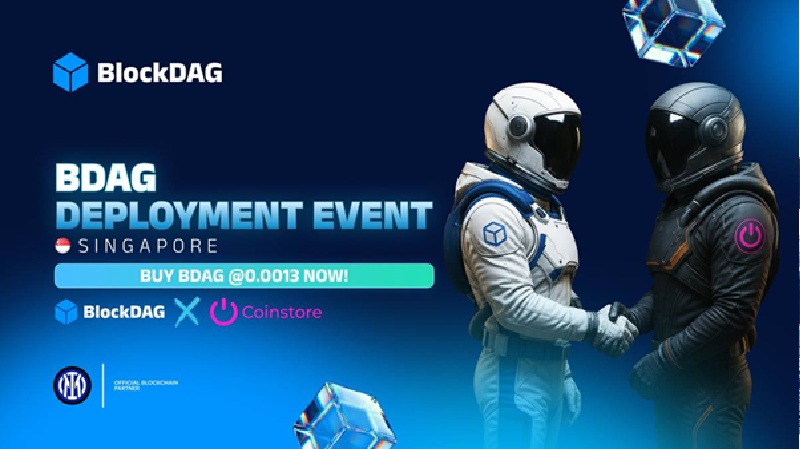
BlockDAG is offering a special presale price of $0.0013 per BDAG for a limited time, marking the last chance to buy before the official launch.

BlockDAG’s Ambassador Program is more than a side project. It powers growth, spreads knowledge, and connects communities worldwide. While charts display coin growth, this people-powered system creates lasting impact.

Turning Vision Into Reality

BlockDAG’s progress is not just about advanced technology or claims of high-speed transactions. While the technical side matters, the bigger story is how that technology becomes useful and understandable to people across the world. Ambassadors are the ones who make the complex easy to grasp. They simplify the mining process, explain features, and give new users confidence to take part.

The program goes beyond simple referrals or promotional posts. Ambassadors create guides, lead conversations, and help answer technical questions from those just starting. They support newcomers with dashboard walkthroughs and show them how to use the X1 mining app. By doing so, they bring clarity to what could otherwise feel overwhelming.

This role is powerful because it is based on shared experience. The people guiding others are also participants themselves. They use the tools, join the events, and learn alongside the community. That makes their voice trusted.

Rewards with Real Impact

The Ambassador Program has been designed with care to support those who contribute actively. Instead of offering just surface-level rewards, the program provides genuine access and recognition. Members receive perks such as exclusive content, merchandise, and early previews of what is coming next. These benefits motivate them, but they are not the whole story.

The real strength comes from the opportunities the program creates. Ambassadors are welcomed into private spaces where they can share ideas, get updates directly from the team, and feel part of the core progress. Some take on regional leadership roles, guiding groups in their own areas and adapting the project’s message to local audiences. Others have been chosen to take part in official events, representing the project with pride and confidence.

This approach creates leaders who spread the message in authentic ways. It also allows the program to grow stronger through the voices of its own members.

Building Before Mainnet

Many projects in crypto only begin to build a community after launch, but BlockDAG has already built one long before. With over $396 million raised in the presale and more than 25.9 billion coins sold, the growth has been nothing short of remarkable. The Ambassador Program plays a central role in keeping energy and excitement alive every day. People use the app, join challenges, and share experiences while waiting for the coin to go live.

This means that adoption is not something far away. It is already happening in real time. Instead of being a passive group waiting for updates, the community is active, learning, and building together. That distinction is important. It sets the stage for long-term growth and creates trust among people who take part.

With support tools like the X1 crypto mining app and features such as daily battles, members stay engaged and connected. This daily involvement ensures that interest remains steady. Even before official trading, the project has a strong ecosystem of real participants.

A Project Powered by People

Agencies or paid influencers do not lead BlockDAG’s growth story. Instead, it is carried forward by people who give their time and effort to guide others. The Ambassador Program equips these members with tools that allow them to step into roles as teachers, mentors, and local leaders. They build bridges between the project and everyday users, making sure the message is clear and easy to understand.

As the presale moves closer to its final stages, this people-driven system grows stronger every day. With the coin priced at $0.03 in Batch 30, a 2900% ROI since the start, and 20 exchange listings already confirmed, the foundation is ready.

But, for a short time, BlockDAG’s presale price of $0.0013 per BDAG is available for a limited time ahead of launch. Yet the real strength lies in the community itself. These ambassadors explain updates, translate content, and assist newcomers. BlockDAG is not just creating a coin. It is shaping a movement, one leader at a time.

Presale: https://purchase.blockdag.network

Website: https://blockdag.network

Telegram: https://t.me/blockDAGnetworkOfficial

Discord: https://discord.gg/Q7BxghMVyu

Population Trends in Eastern and Western Germany Since Reunification

0

The statement “East German population slumps 16% since reunification as West booms” in Germany following the 1990 reunification.

Based on official statistics and analyses, this figure aligns closely with data up to around 2023–2024, reflecting a sustained decline in the population of the former East German states (the “new Länder”: Brandenburg, Mecklenburg-Vorpommern, Saxony, Saxony-Anhalt, Thuringia, and including Berlin) due to net out-migration and low birth rates, contrasted with growth in the former West German states (the “old Länder”).

The population of the former East German territories (excluding Berlin initially, but including it in later aggregates) was approximately 16.4–16.6 million. This includes the five new states plus East Berlin, which merged with West Berlin to form the unified city-state.

The population of these eastern regions stands at about 13.8–14 million, representing a decline of roughly 15–16%. For instance: From 16.4 million in 1989 (pre-reunification peak) to around 13.8 million in recent estimates, that’s a 15.9% drop.

Official data from Germany’s Federal Statistical Office (Destatis) shows the eastern states’ population fell from 16.1 million in 1991 to 12.5 million by 2013 (a 22% drop at that point), but stabilized somewhat with minor inflows; by 2023, it was around 14 million, adjusting for Berlin’s growth.

The former West German population grew from about 62.7 million in 1989 to over 70 million by 2024, a boom of around 12–15%. This expansion was driven by immigration, higher birth rates in some areas, and economic pull factors. Overall, unified Germany’s population reached 84.7 million in 2024, but the east-west divide persists, with the east now comprising only about 16% of the total.

This disparity has led to an aging eastern population: In 2023, over 24% of eastern residents were 65+, compared to 20% in the west, exacerbating labor shortages. The trends stem from economic, social, and structural factors post-reunification.

Since 1990, an estimated 3.7 million people have left the east for the west, compared to 2.5 million moving eastward—a net loss of over 1 million. This “Ostflucht” (flight from the east) continues, with young, skilled workers (especially ages 18–30) seeking better opportunities.

In the early 1990s, unemployment in the east soared to 20% due to the collapse of state-owned industries and privatization, while the west enjoyed a post-Cold War boom. Even today, eastern unemployment averages 6–7%, versus 4–5% in the west.

Recent data shows annual net migration losses of 20,000–50,000 from the east, though cities like Berlin and Leipzig have seen inflows. Eastern fertility rates dropped sharply post-reunification (from 1.6 children per woman in 1989 to below 1.0 in the early 1990s) due to economic uncertainty and the “double burden” on women (job loss plus childcare).

Rates have recovered to about 1.4–1.5 but remain below replacement level (2.1). The west benefited from stable economies and immigration, with fertility around 1.5–1.6. Non-German immigrants (now 19% of the population) have driven much of the western growth, contributing higher birth rates.

Eastern GDP per capita is about 75% of the west’s (€32,000 vs. €43,000 in 2018 figures; similar in 2024). Productivity lags due to fewer headquarters of major companies and ongoing deindustrialization in rural areas. The west’s boom was amplified by EU integration, attracting migrants from Turkey, Eastern Europe, and during the 2015 refugee crisis.

Government efforts like the “Solidarity Surcharge” tax (Soli) transferred €2 trillion from west to east since 1990, funding infrastructure, but haven’t fully reversed migration trends. The Soli was phased out for most taxpayers by 2021.

Cities like Leipzig (fastest-growing in Germany) and Dresden have bucked the trend, gaining population through tech hubs and universities. Berlin’s population hit 3.7 million in 2024, up 10% since 2011, due to its status as a creative and startup capital.

Rural eastern areas face “demographic collapse,” with some regions losing 20–30% of residents since 1990. A 2023 study noted the east’s population has reverted to early 20th-century levels in density. Health impacts persist: Eastern women show higher mental health issues from the 1990s crisis, and life expectancy gaps remain (men: 1 year behind the west).

The divide fuels political tensions, with higher support for the far-right AfD in the east (24% vs. 12% in the west). Surveys show 57% of easterners feel like “second-class citizens,” though 89% view reunification positively overall. With Germany’s total population projected to dip below 84 million due to aging, eastern decline may slow if remote work and green energy investments attract returnees.

However, without addressing wage gaps (eastern incomes at 86% of western levels), the 16% slump could deepen to 20% by 2030. This east-west imbalance is a legacy of 40 years of division, but progress in health (e.g., eastern life expectancy rose 5–6 years post-1990) and infrastructure shows solidarity’s impact.

WLFI: The Token Is The Product

0

Unlike traditional equity, where investors gain ownership or revenue rights, WLFI’s governance token is the primary product being sold, with 75% of the proceeds from token sales going to the Trump family’s DT Marks DEFI LLC. This structure resembles a licensing deal, where the Trump brand is leveraged to market the token, rather than offering financial returns or asset claims to holders.

WLFI: The token is the product refers to the business model of World Liberty Financial (WLFI), a decentralized finance (DeFi) platform backed by the Trump family.

The token, initially non-transferable and used solely for governance (voting on protocol decisions), became tradable on September 1, 2025, after a community vote. Critics argue this setup prioritizes brand monetization over decentralized utility, with the token’s value tied heavily to the Trump family’s political influence and speculative hype rather than intrinsic financial benefits.

The project raised $550 million through token sales, but its governance model and regulatory risks raise concerns about centralization and potential manipulation. The Trump family, through their entity DT Marks DEFI LLC, holds approximately 22.5 billion $WLFI tokens out of a total supply of 100 billion.

When trading began on September 1, 2025, the token price surged to around $0.40 before settling at approximately $0.22-$0.23 per token. This values their holdings at roughly $5-6 billion on paper, significantly boosting their wealth.

This valuation surpasses the worth of the Trump Organization’s traditional real estate assets, making cryptocurrency the family’s largest source of wealth. WLFI’s terms stipulate that 75% of net revenue from token sales goes to DT Marks DEFI LLC, controlled by the Trump family.

With $550 million raised through token sales, the family has likely earned around $412.5 million in direct revenue, assuming minimal deductions. An additional deal with ALT5 Sigma Corporation, a Nasdaq-listed company, raised $1.5 billion, with $750 million used to purchase $WLFI tokens, further channeling funds to the Trump family through the 75% revenue split.

This deal alone could have netted them approximately $562.5 million. The Trump family’s deep involvement in WLFI, coupled with Donald Trump’s role as president and his pro-crypto regulatory stance, raises significant ethical concerns.

Critics, including Democratic lawmakers and ethics experts, argue that the venture creates opportunities for politically motivated investors to gain favor with the administration by purchasing tokens or investing in related entities like ALT5 Sigma.

For example, Justin Sun, a prominent crypto entrepreneur, invested $75 million in $WLFI, raising questions about potential influence, especially after the Trump administration dropped a securities fraud lawsuit against him. The structure, where the Trump family benefits directly from token sales while Trump shapes crypto regulations, is seen as an unprecedented conflict of interest.

The $WLFI token’s value is highly volatile, as evidenced by its drop from $0.40 to $0.22-$0.23 on its trading debut. The Trump family’s $5-6 billion stake is theoretical until their tokens are unlocked for sale, which is subject to a yet-to-be-determined vesting schedule.

The token’s value is heavily tied to the Trump brand and political influence rather than intrinsic utility, as WLFI has yet to launch a fully functional DeFi platform. This speculative nature increases financial risk for investors and could lead to price instability if market sentiment shifts.

The ALT5 Sigma deal, where a publicly traded company was used to buy $WLFI tokens, has been criticized as a mechanism to artificially inflate the token’s market capitalization. By creating a “treasury” to purchase $WLFI, the Trump family could indirectly prop up token prices, benefiting their holdings while drawing in more investors.

The Trump family’s 22.5 billion $WLFI tokens represent 22.5% of the total supply. At $0.23 per token, this stake is worth approximately $5.175 billion. Even at the initial sale price of $0.015-$0.05, early investors saw significant paper gains when trading began, amplifying the perceived value of the Trump family’s holdings.

The 75% revenue split from token sales has been a primary wealth driver. With $550 million raised directly and an additional $750 million through ALT5 Sigma, the family has potentially earned over $975 million in cash revenue. This structure ensures substantial income regardless of the token’s market performance.

Beyond $WLFI, the Trump family’s wealth is augmented by other crypto ventures, including the $TRUMP memecoin (valued at $7.7 billion) and a Bitcoin mining operation. These ventures collectively position cryptocurrency as the family’s dominant wealth source, eclipsing their real estate portfolio.

The Trump family has amassed a fortune through $WLFI token sales via direct revenue, substantial token holdings, and strategic deals like ALT5 Sigma. However, the venture’s ethical, regulatory, and financial risks highlight the precarious nature of this wealth, which remains vulnerable to market volatility and political backlash.

Legal Steps to Take After a Winter Road Accident

0

Winter driving conditions create unique challenges that can lead to accidents even when drivers exercise reasonable care. Snow, ice, and reduced visibility contribute to thousands of collisions each year, leaving victims confused about their legal rights and next steps. Understanding the proper legal procedures following a winter road accident can protect your interests and ensure you receive appropriate compensation for damages.

Immediate Actions at the Scene

Prioritize Safety and Medical Attention

Your first priority after any winter accident should be ensuring everyone’s safety and seeking medical attention for injuries. Winter conditions often make accident scenes more hazardous, with ongoing risks from ice, snow, and limited visibility. Move vehicles out of traffic when possible, but leave them in place if anyone sustained injuries.

Call 911 immediately, even if injuries appear minor. Cold temperatures can mask pain and shock, making it difficult to assess injury severity accurately. Emergency responders can also help secure the accident scene and direct traffic around the collision area.

Document the Scene Thoroughly

Winter accident scenes present unique documentation challenges due to weather conditions and fading daylight. Take photographs of vehicle damage, road conditions, weather circumstances, and any relevant traffic signs or signals. Capture images of ice patches, snow accumulation, and visibility conditions that may have contributed to the accident.

Collect contact information from all drivers, passengers, and witnesses. Weather conditions may cause people to leave quickly, so gather this information promptly. Note the specific weather conditions, temperature, and time of day, as these factors can significantly impact liability determinations.

Understanding Winter Weather and Liability

How Weather Affects Legal Responsibility

Winter weather conditions complicate liability determinations in accident cases. While bad weather doesn’t automatically excuse negligent driving, courts recognize that reasonable driving behavior changes with conditions. Drivers have a duty to adjust their speed, following distance, and driving techniques to match current road conditions.

Failure to adapt driving behavior to winter conditions can constitute negligence. This includes driving too fast for conditions, following too closely on icy roads, or failing to clear snow and ice from vehicle windows and lights. Insurance companies and courts will evaluate whether each driver operated their vehicle reasonably given the specific weather conditions.

Comparative Fault in Winter Accidents

Many winter accidents involve shared responsibility between drivers. One driver might have been speeding on icy roads while another failed to yield the right of way. Understanding how comparative fault applies to your situation helps set realistic expectations for potential recovery.

States handle comparative fault differently, with some allowing recovery even when you’re partially at fault, while others bar recovery if your fault percentage exceeds certain thresholds. This complexity makes professional legal guidance particularly valuable in winter accident cases.

Insurance Considerations and Challenges

Dealing with Weather-Related Claims

Insurance companies often scrutinize winter weather claims more carefully, sometimes attempting to classify accidents as “acts of nature” rather than driver negligence. They may argue that weather conditions were the primary cause, reducing their obligation to pay claims.

Proper documentation becomes crucial in countering these arguments. Evidence showing that one driver failed to exercise reasonable care for conditions can establish liability despite challenging weather. This might include proof of excessive speed, inadequate tire tread, or failure to maintain proper control.

Understanding Coverage Limitations

Review your insurance policy carefully to understand how winter conditions might affect coverage. Some policies have specific provisions regarding weather-related accidents or may require certain safety equipment during winter months. Comprehensive coverage typically handles weather damage to your vehicle, while collision coverage applies to impacts with other vehicles or objects.

When Professional Legal Help Becomes Necessary

Complex Liability Situations

Winter accidents often involve multiple contributing factors that complicate liability determinations. Professional legal assistance becomes valuable when accidents involve commercial vehicles, government road maintenance issues, or disputes about whether conditions were reasonably foreseeable.

A qualified car accident lawyer in Taylorsville or your local area can investigate all potential contributing factors, including whether road maintenance was adequate, warning signs were present, and weather forecasts were available to drivers. These investigations often require resources and expertise beyond what individuals can provide themselves.

Dealing with Serious Injuries

Winter accidents can result in severe injuries due to the unpredictable nature of vehicle movements on ice and snow. Head-on collisions, rollovers, and multi-vehicle pile-ups occur more frequently in winter conditions, often resulting in catastrophic injuries requiring extensive medical treatment.

Serious injury cases require careful documentation of current and future medical expenses, lost earning capacity, and quality of life impacts. Insurance companies may dispute the extent of injuries or argue that pre-existing conditions contributed to current problems.

Protecting Your Legal Interests

Time Limitations and Deadlines

Legal deadlines don’t pause for winter weather, making prompt action essential after any accident. Statutes of limitations vary by state but typically range from one to six years for personal injury claims. However, certain procedural requirements may have much shorter deadlines.

Insurance companies also impose their own deadlines for reporting claims and providing documentation. Missing these deadlines can jeopardize your right to recover compensation, regardless of the accident’s circumstances.

Avoiding Common Mistakes

Many winter accident victims make statements at the scene that later hurt their cases. Avoid admitting fault or speculating about causes, even if you believe weather was primarily responsible. Let investigators and insurance adjusters make these determinations based on evidence rather than preliminary impressions.

Don’t accept quick settlement offers without fully understanding your damages. Winter accidents often result in delayed injury symptoms and may require extensive vehicle repairs due to hidden damage from impacts on ice or snow.

Winter road accidents require careful navigation of both immediate safety concerns and long-term legal implications. Understanding your rights and responsibilities can help ensure you receive appropriate compensation while avoiding costly mistakes in the claims process.