DD
MM
YYYY

PAGES

DD
MM
YYYY

spot_img

PAGES

Home Blog Page 6008

More Than Forty U.S. States Join the ‘Season of Suits’ Against Facebook

0

More than 40 states led by New York have signed up to sue Facebook as early as next week, for antitrust issues. Reuters broke the news citing sources.

This is coming at the heels of the US Justice Department’s decision to file a suit against the social media behemoth over what it describes as “discriminating against US workers”.

The lawsuit filed by the DOJ said “Facebook refused to recruit, consider, or hire qualified and available US workers for over 2,600 positions”, instead, reserved it for temporary visa holders it sponsored for permanent work authorization (green cards) in connection with the permanent labor certification process (PERM).

“The Department of Justice’s lawsuit alleges that Facebook engaged in international and widespread violations of the law, by setting aside position for temporary visa holders instead of considering interested and qualified U.S. workers,” Assistant Attorney General Eric S. Dreiband of the Civil Rights Division said.

Dreiband explained that the lawsuit follows a nearly two-year investigation into Facebook practices and a ‘reasonable cause’ determination by the Justice Department’s Civil Rights Division.

The investigation thus found that beginning from around Jan. 1, 2018 and until Sept. 18, 2019, Facebook employed tactics that discriminated against US workers and routinely preferred temporary visa holders, including H-1HB, for jobs in connection with the PERM process.

Outside the DOJ lawsuit, the coalition of US states is ready for a legal battle that its details are not yet known, though there are suggestions that it is linked to antitrust claims. Both Facebook and the office of New York’s Attorney General declined to comment on the matter, but it is rumored that the move must have come from Facebook’s culmination of antitrust issues dating back to 2019.

The Justice Department and FTC in 2019 began to probe the excesses of the big tech companies in the US – Google, Facebook, Apple, Amazon and Microsoft all were in the probe list of the regulator and Congress Committee.

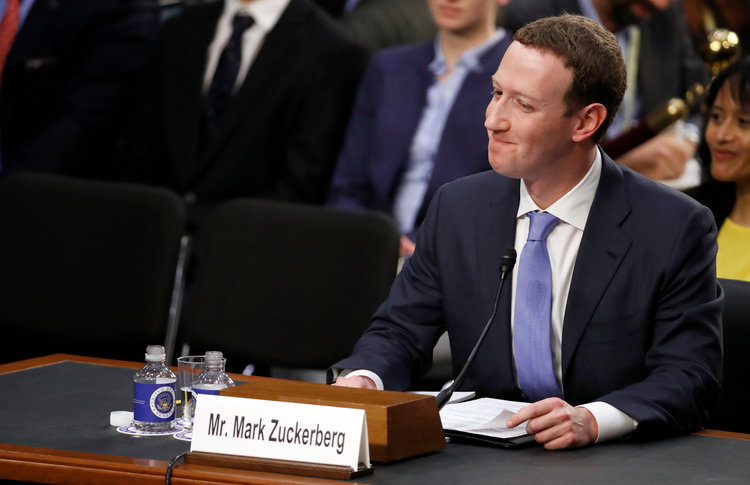
Since then, Facebook’s CEO Mark Zuckerberg, like others, has been a regular guest of antitrust hearings.

In continuation of the inquiry, the US’ tech “big four”, Google, Facebook, Amazon and Apple were grilled by the Congress Committee in July. It was the biggest antitrust inquiry in the United States until this week when the news of the lawsuit against Facebook by more than 40 states broke.

While speculations of unspecified course of action trail the move, Prof. Daniel Crane of University of Michigan Law told Salon that the FTC may file antitrust-related complaints bordering on Facebook’s acquisition of WhatsApp and Instagram, as it is deemed an attempt to muzzle competition.

“The most likely theory would be that the WhatsApp and Instagram acquisitions thwarted the development of nascent competitors to challenge FB’s social network hegemony. Best case scenario is that the court finds those acquisitions not anticompetitive because WhatsApp and Instagram weren’t competitors of FB at the time of acquisitions. Worst case scenario; both companies have to be divested,” he said.

Zuckerberg had repeatedly denied that the intent of the acquisition was to eliminate competition, although there were leaked conversations lending credence to the allegation that he saw WhatsApp and Instagram as competitors. He was quoted in a leaked email to Facebook executives before the acquisition of Instagram, saying that “Instagram will hurt us”, referring to the picture and short-video social media platform as a competitor.

But Gus Hurwitz, an associate professor of law at the University of Nebraska – Lincoln said the big move by the states must have involved something more than the acquisition of WhatsApp and Instagram.

“AS to why the states and DOJ are going after these companies, in part it’s just politics and response to understandable consumer concern. These companies are large and have made some seemingly concerning moves in recent years,” he told Salon.

Zuckerberg denied that his company has done any wrong acquiring WhatsApp and Instagram or making any other move that has been considered monopolistic. However, it didn’t stop the lawsuits from coming Facebook’s way.

The campaign about Facebook’s antitrust concerns has grown proportionately this year. In June, Anti-Defamation League (ADL) led other right groups in #StopHateForProfit protested against what they described as “hate for profit” being promoted by Facebook.

The campaign alleged that the social media company has chosen money over morality by allowing hate speech to be promoted on its platform. Thus they called on advertisers to boycott Facebook.

There’s also concern of disinformation that world leaders are worried would not only influence political elections around the world, but will negatively impact the containment of global crises like COVID-19.

How Facebook uses people’s private data for targeted ads has been top of its antitrust concerns. Since the Cambridge Analytica data breach scandal, a series of other private information misuse complaints had been filed against the social media site, with some ending in settlements.

With Facebook’s population of over 3 billion users, there is growing concern about the enormous power the Silicon Valley giant is wielding. Recently, there has been a growing call to break up the social media platform alongside other big US tech companies to curtail their power, which they’re augmenting by acquiring and muzzling potential competitors.

The reported lawsuit by American states will mark the largest antitrust action against Facebook.
God bless Nigeria – Not Running Yet

1

Good People, thanks for the kind inmails and emails on my “fun” for the office of the President, Federal Republic of Nigeria. Certainly, there are many ways to serve our nation. As I continue to tell people, some of us had the best of Nigeria and we wish others could experience the same. It is painful to see brilliant and hardworking young people not making progress in their lives, after they have done the right things. I was in their positions but I was lucky: Nigeria worked for me.

In FUTO, I finished my final year project on a Friday, and on Monday I began a job. I had a driver, a furnished apartment and a great salary. That job came 9 months before graduation. My HOD Prof SOE Ogbogu had presented four jobs from Schlumberger, Bourdex, etc. I experienced the best in Nigeria – and I remain thankful to our nation and my fellow citizens.

So, I do desire that others could experience a GREAT Nigeria. That passion moved the post. Yet, I am not running for any office yet: do not plan to raise any funds.

God bless Nigeria.

Nigeria’s Ex-President Jonathan Not Ruling Out 2023: “It is too early to talk about that”

Nigeria’s Ex-President Jonathan Not Ruling Out 2023: “It is too early to talk about that”

3

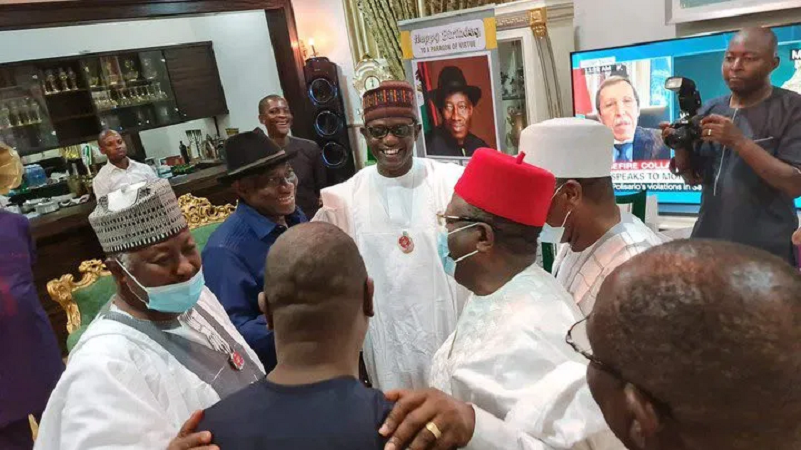
According to The Cable, former President Goodluck Jonathan, after attending an event organized by the Commonwealth Community Choir in Abuja, responded to journalists when asked if he was joining the presidential race in 2023 thus, “It is too early to talk about that.” Yes, as I wrote the other day, something has a good chance of coming to pass: Jonathan running as an APC candidate. He is not ruling out contesting! Jonathan has one thing no other southern politician has: he can run a maximum of one term. Expect political sagacity here from ambitious governors.

As the 2023 general election draws nearer, former President Goodluck Jonathan has declined to rule out the possibility of him seeking election in 2023.

There have been speculations that the All Progressives Congress (APC) was considering fielding Mr Jonathan in the next general election to serve a single term, having served one term as president on the platform of the Peoples Democratic Party (PDP).

But Nigeria, do not be looking to former presidents like Obasanjo, Jonathan and Buhari, for anything different. We need to think for a new future. I mean, we the people can change this nation. 

There needs to be another person. It would be really offensive if they repackage Jonathan on us. Nothing against anyone; I just want a new energy and vision. Why not try village boy Ndubuisi Ekekwe? If I say it, wetin go happen? Lol.

Under my presidency, within 6 months, all farmers will see accelerated credit net worth of at least N3 million because I will put velocity on land title and make it easier to move around it, unlocking wealth which remains latent in rural areas, across Nigeria. If we do that, rural Nigeria will evolve. Then, we will begin the playbooks. 

How will we do it? We will use tech startups and open the mapping of assets and registration of land as business opportunities. If we do that, we will see massive new credit wealth in Nigeria. One ward at a time, and a new nation will emerge.

Property rights will drive this and lawtech will handle that. We do not need special contractors: we will channel the energies of our young people to build a new Nigeria!

All Together

The land velocity playbook alone will double Nigeria’s GDP in 3 years and create 5 million jobs! Imagine a man who owns 500 goats entering the formal balance sheets, magically turning that “poor” man into someone who can walk into a bank with networth in books of N20 million.

Nigeria, give me just a year. I lived in the village & I miss Ovim: Nigeria rocks!

The Possible Goodluck Jonathan’s 2023 APC Presidency in Nigeria!

Login Credentials Sent to Members for Tekedia Advanced Diploma programs

2

Join Tekedia Advanced Diploma programs . If for any reason you paid but yet to receive login, please inmail me here. Welcome to Tekedia Institute and thanks for choosing us for your training needs; we truly appreciate this opportunity to serve you. Upon payment, you have immediate access to start learning.

We have 8 tracks covering Logistics & Supply Chain Management; Business Innovation, Growth & Sustainability; Project Management; Risk Management; Business Administration; and Innovation & Design Thinking. 

You will have access to your track.

Why Second-Hand Clothes Are Taking Up Nigeria Fashion Realm

0

While growing up, second-hand clothes (aka okirika and its short form, O.K.) were actually used by people that couldn’t afford new clothes. Then, people said that second-hand clothes can never be equated to new ones no matter how beautiful and new they are. Parents also bought them for their children to wear around the house and run minor errands. But they never served as outing clothes.

As I entered the university, things began to change. Then, there was a power tussle between wearing O.K. clothes and their new counterparts (aka ready-made) to lectures. Some people believe it’s better to buy many O.K. clothes with little money so you will have much changing clothes during the semester and still have change for other things. Some students insist that it is better to have a few clothes that are ready-made than filling your wardrobe with “rags” (that is, O.K. clothes). Well, those that could afford it went for ready-made while the others continued with their second-hand clothes.

Today, things have changed entirely. Gradually, the eyes of the rich and that of the not-so-rich are turning towards O.K. They are no longer seen as “rags” nor considered as fit for only the poor. Today, O.K. is even getting more expensive than ready-made, at least the “Nigerian ready-made” – or should I be blunt and say “Aba ready-made”? Truth is, you can find Nigerian ready-made gowns that are sold as cheap as two or three thousand naira and O.K. gowns that sell for seven thousand and above. If we come to shoes, especially for boys, O.K. sells at four thousand to six thousand naira while Aba ready-made sells … well, you can even find one thousand five hundred naira shoes for that same boy. But then, many Nigerian women would prefer that O.K. gown that sells at 7k to the Aba one that sells cheaper. This is also the same thing with shoes, where parents proudly show off their children’s shoes they bought from O.K. and disregard the Aba ready-made ones. This makes one wonder why things are going in the wrong direction.

There is something that needs to be pointed out here that might help to make sense of the whole situation. The O.K. clothes and accessories that sell expensively are usually those made with London and US specifications and also worn there. They are not second-hand Nigerian ready-made clothing. Hence, the people that go for O.K. in this context are actually those that have found some differences between Made in Nigeria and Made in London/USA.

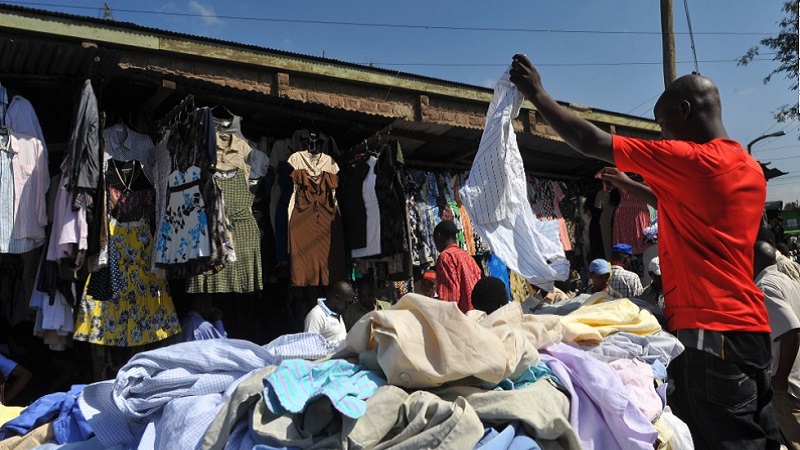
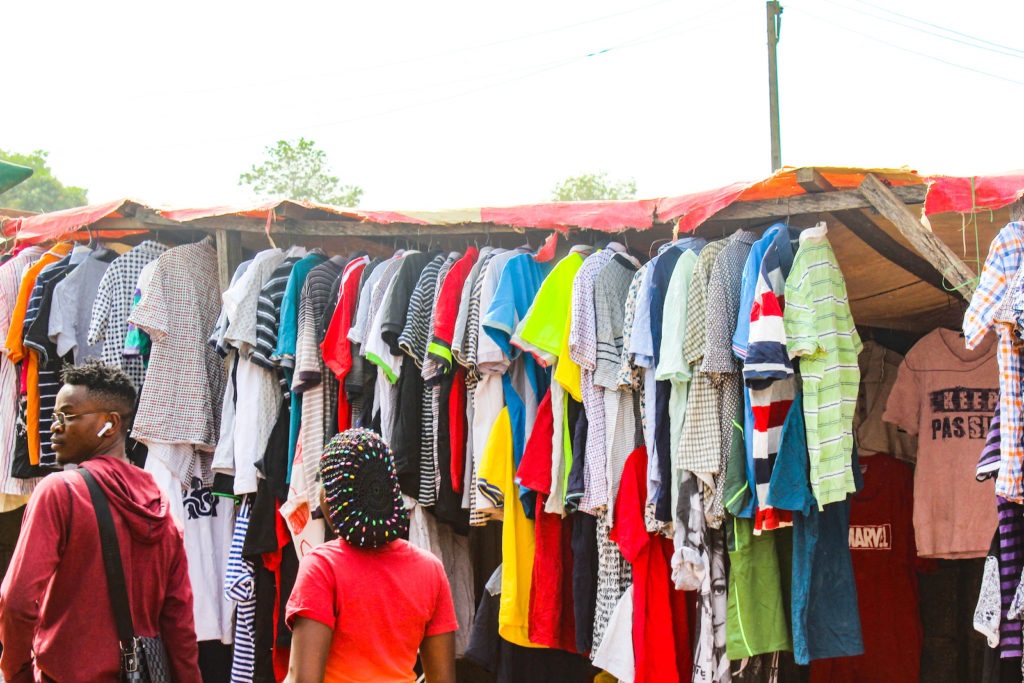
Clothes in market

In order to find out why people would rather opt for expensive fairly used clothes when they have options for cheaper new ones, I conducted a minor survey through WhatsApp. From the responses I received, the reasons for this shift in preference are:

  • Quality

A lot of people pointed out that Nigerian clothes and shoe makers produce their goods with low quality materials. One of my respondents narrated how the sole of her new shoes removed the very first time she wore them. There were also comments about how colours of clothes faded after few washes, how clothes shrank or sagged, how tight clothes ripped from seams or how their zips broke, and many other funny but embarrassing stories like that. The only thing I can see here is that people will rather buy good quality clothes and accessories that have been worn by someone else than opt for new ones that have low quality. If they have to pay extra to get what they want, they see no problem with that.

  • Finishing

There were comments that insisted that Nigerian ready-made clothes have poor finishing. Someone even said their clothes lack class. When I asked further, I found out she meant it doesn’t drape well on people. Someone said Nigerian tailors are not patient enough to run threads straight and smoothly through clothes or to even seal those threads at the hems. Sorry, I don’t have the technical terms to describe what they said but I believe they meant that, even though these tailors intended making beautiful designs, they fail because their finishing is always skewed.

  • Mass Production and Replication

The people that complained here said that Nigerian ready-made clothes are always mass produced to the extent that wearing trending clothes makes it look like there is an aso-ebi. This may not be a problem for people that love trends but to those that want uniqueness, it’s actually a big issue. Another thing here is that most of those mass produced clothes are replicas of designs from good fashion houses. What is more? They don’t only make them cheap but also use low quality materials in making them. As one of my friends said, you might buy a gown for 15k today only to see an akara hawker wearing the exact design tomorrow. For that, she would rather stick to her second-hand clothes than patronise our local fashion designers.

There’s no gainsaying that we have good tailors and cobblers in this country. Even the Aba producers people condemn can make clothes and shoes that will compete with the ones made by foreign producers. For instance, people come from different parts of the country to buy clothes and shoes from Aba because of their good handiwork. I even heard they export their wares to other African countries. But then, a lot of work still needs to be done. Nigerian fashion houses need to capture all the fashion industry. They should find out what they are not doing well and improve on them. They may be capturing the male market, but they are definitely losing their female customers.