CredPal is a credit card solution geared towards providing credit access for businesses and individuals in Nigeria. With their solution, you can buy things on credit and pay later. It is not a loan which means you do not have to pay interest when the card is not in use. A Y Combinator alum, the company just raised $1.5 million.
“We’re building the American Express of Africa, and our goal is to make credit cards mainstream across Africa as is obtainable in the United States and other advanced economies. With this funding, the growing market demand for consumer credit, and our recent product launch to solve these needs, we know that we’re on the right track,”
“With this funding, we’re working on ways to provide more information and education about credit cards, the value of owning one and the benefits that come with it. We are obsessed with the desire to see that working professionals no longer have a thing to worry about as it concerns dealing with their financial needs, a world in which every working person is rewarded with a CredPal card that has their back. A world in which they can embrace life today and live more,” Olaogun said.
It is that raise that caught my interest: it raised part of the money from a digital insurance company called Tangerine Life. Yes, is that not awesome that insurance companies in Nigeria now back startups instead of the typical warehousing of premiums in real estate investments? Of course, treasury bills are no more options with the near zero-rate returns!
We will be waiting for the pension funds to join the party. If that happens, a new generation of well-backed startups in Nigeria will emerge.
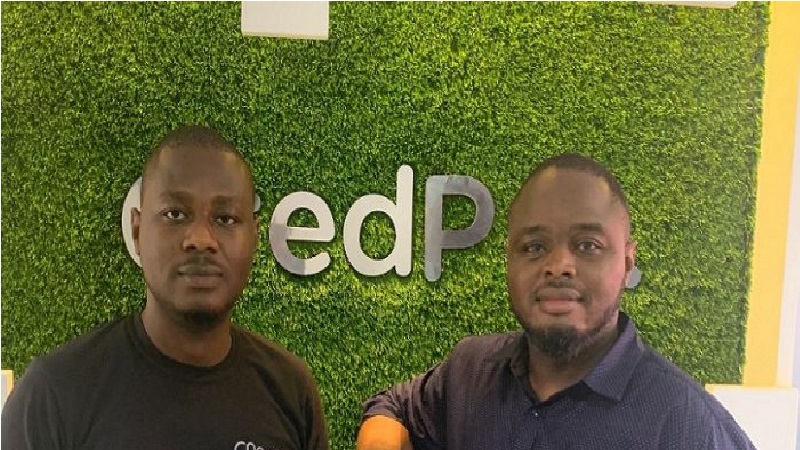
CredPal was started by Fehintolu Olaogun and Olorunfemi Jegede.
Join Tekedia Advanced Diploma programs. We have 8 tracks covering Logistics & Supply Chain Management; Business Innovation, Growth & Sustainability; Project Management; Risk Management; Business Administration; and Innovation & Design Thinking. Self-paced, online and lasts for 8 weeks for $100 or N36,000 naira.
Google is an aggregator which means its core raw materials are not baked and provided by it. In other words, others produce the raw materials which Google feeds on. Every search engine optimization (SEO) engineer is an unpaid Google staff since SEO engineers do one thing: make it easier for Google to find their sites so that Google could make money on them!
Of course, there is a reciprocal benefit: Google helps your tiny space on the web to be discovered. That is critical as in the world of abundant supply, there is a need for order, and that order means someone that can make sense of the whole “noise”, and direct people on where to begin on any discovery process.
Indeed, in a world without Google, Facebook and other aggregators, we will need to visit each and every website to know the one with the most relevant content on something we need to know about. That would be exceedingly unproductive and expensive. So, we agree on one thing: Google offers enormous value on driving efficiency in a knowledge world. It wants to serve more customers and it is very obsessive on that nexus. The “no ad” on the homepage is a good example of a company demonstrating a high level of customer centricity.
That takes me to a course on digital transformation by Tekedia Institute faculty, Jude Ayoka. In his class video, he explained that the obsession with customer experience was the reason Google did not put that ad box on the whole page. Yet, would that box really hurt? Of course, Google is smart: provided there is a search, Google has the next page to show the goods. So, in essence, there is no need for that ad box on the homepage!
So, in essence, there is no need for that ad box on the homepage since there would be boxes on the next page! Do you pay attention at the phase where you capture value, maximizing both customer experience and revenue?
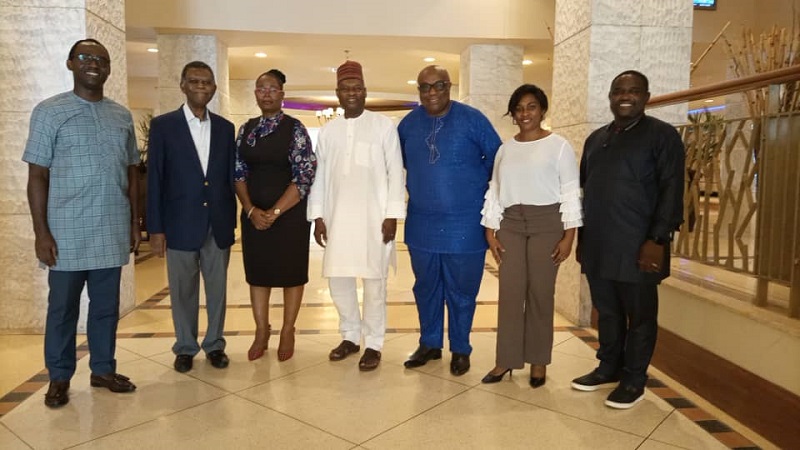
I began today at 6am for a Board meeting. I would have been in person, but for Covid-19, I had to connect virtually. Great 4 hours of business with legendaryChief Goodie Ibru, Chairman Kyari Bukar Abba, Bar. Olufemi Omotoso, Mr. Gbenga Bamiji FCA and CEO Comfort Aruosa-Osemwegi on DealRoom Nigeria. DealRoom works with innovators, providing a critical factor of production, capital.
Ila-Orangun is one of the 9 largest cities in Osun State. Like other Yoruba cities, its history has been documented by a number of researchers and historians in Nigeria and outside the country. We have also seen how some indigenes have equally promoted the city’s peculiarities in terms of culture, traditions and socioeconomic activities. For instance, Chief Bisi Akande, one of the prominent politicians and a former governor in the state, dedicated a page on his official website to the history of the city.
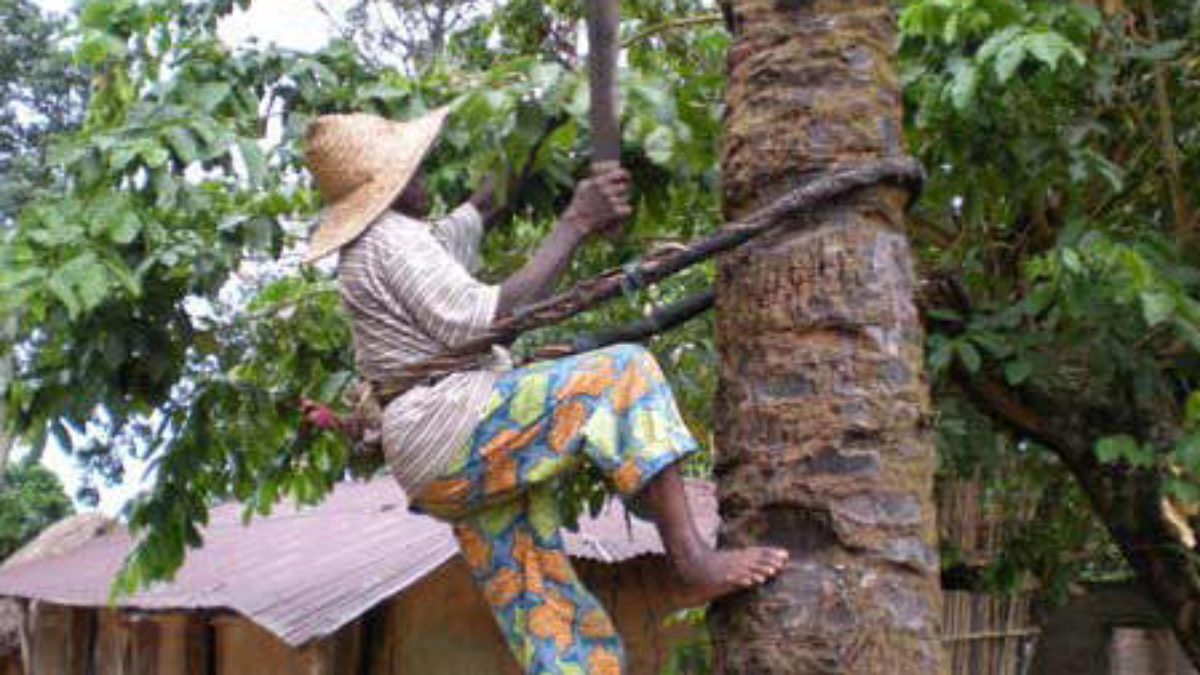
Information has it that more than 80 percent of Ila people are farmers and they grow crops like maize, plantain, cassava, pepper and cash crops like cocoa and kolanut. The people of Ila-Orangun are also skillful and professional palm wine tappers. Before the creation of Osun state from the old Oyo state in 1991, the city witnessed infrastructural and human capacity development. Sons and daughters of the city worked and still working in the private and public sectors in the state and beyond. Governors who governed the state between 1991 and 2018 contributed to the development of the city. A number of reports also indicate that the current governor, Alhaji Gboyega Oyetola, is also playing strategic roles in the uplift of the ancient city in Yorubaland.
Despite this, a visit to the city reveals that government efforts are not enough for sustainable growth. In 2013, the United Nations-Habitat states that the city must be dynamic, resilient and inclusive for everyone with strong social, economic, human and infrastructure base that will significantly sustain it as a regional hub that ensures employment generation, poverty reduction and environmental sustainability.
Exhibit 1: Future Population
Source: NPC, 2006; Infoprations Analysis, 2020
Development Issues in Ila-Orangun and NGOs Roles
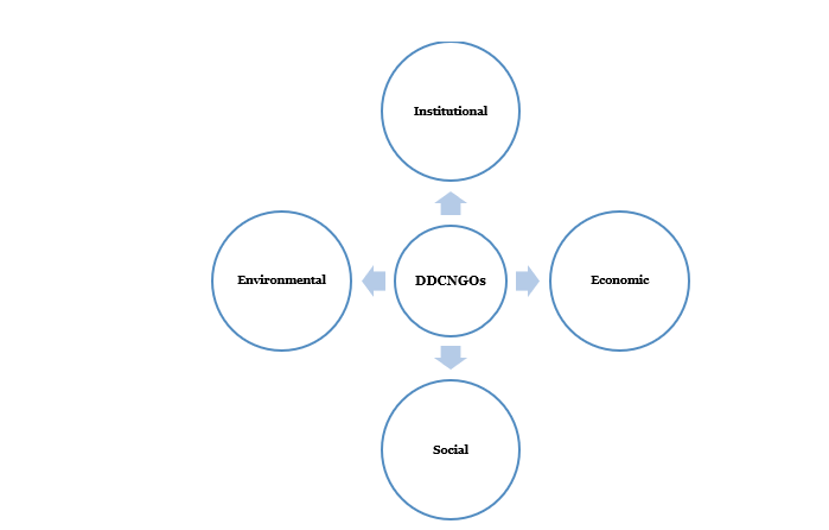
From institutional to economic and social to environmental dimensions, there are many development issues in Ila-Orangun, requiring attention of genuine non-governmental organisations. People’s participation in governance and administration is low. Accessing fund for small business creation and development is difficult. This has largely contributed sudden demise of businesses and youth migration to the state capital and other places in the south west region. Solving participation and accessing fund issues would depend on the extent to which NGOs can sensitise people on the benefits of addressing development issues and enhance the skills and knowledge of the young population.
Exhibit 2: Development Issues in Ila-Orangun
Source: Infoprations Analysis, 2020
Ila-Orangun like other cities in Nigeria is not immune from cultural and religious factors within the gender and health issues. They need strategic attention of NGOs. Apart from promoting sectors such as education, agriculture, services and health to the youths, opportunities in the tourism sector, especially ecotourism segment needs to be explored. Ila-Orangun has a number of heritage sites capable of generating jobs.
The current efforts on disaster management, security issues, climate change, deforestation, pollution, flooding among others need to be stepped up before 2023. Crimes are on the increase. Farmers are having low productivity. Environmental pollution, most importantly smoke from fire food in the remote areas of the city is on the increase.
Essence of Being Data Driven NGOs
These issues cannot be addressed with qualitative information and data alone. NGOs in the city need to embrace data-driven culture. There is a need to be accurate, accessible and actionable. Being a data-driven NGO has a number of benefits. For instance, advocacy campaign to change people’s perception about the city and the development issues requires data and tailored insights.
In our experience, we have realised that changing the ways governments and people act about socioeconomic and political goods requires data. Solving the issues requires substantial fund, which can only come from grant organisations and individual donors. In the next few years, a non-governmental organisation that has a better understanding of research and its application will attract more funds from local and international donors than an establishment with the insipid skills and techniques. Donors would not spend their money on organisations without adequate understanding and application of innovative research designs to socioeconomic and political problems because the world will have a few years to attain the socioeconomic and political issues in the Sustainable Development Goals Agenda 2030.