Tomorrow, I will keynote the Africa Business Conference, a student-led program of Lagos Business School, Pan-Atlantic University. Everyone is invited: it would be a festival of deepening capabilities in the broad domains of business systems in Africa. There is abundance in the future; we have to unlock them, by fixing market frictions, and then usher shared prosperity for all.
Register free – https://bit.ly//LBS-ABC
The Africa Business Conference (ABC) is an annual Student-Led Activity, that targets business leaders, financiers and policy makers across Africa and the rest of the world, as well as entrepreneurs seeking to do business in Africa, with the aim of generating insights and helping them gain mindshare on trends in Africa that affect doing business in Africa and would propel the continent to the forefront of advanced economies in the world.
Date: Saturday, November 28, 2020
Time: 1:00pm – 4:00pm
Theme: Continued Business in Africa: Opportunities in a New World
Topic: Positioning Africa for New Investments
Each track of Tekedia Advanced Diploma programs runs for 8 weeks (2 months). A track has no Live Zoom session, and it is completely self-paced and online. Upon payment, you have immediate access to start learning. The link has the curriculum also. The program includes class notes, flash cases and videos, but no webinar. There are five tracks.
DLSM
Advanced Diploma in Logistics & Supply Chain Management
DBIS
Advanced Diploma in Business Innovation, Growth & Sustainability
DBPM
Advanced Diploma in Project Management
DIRM
Advanced Diploma in Risk Management
DIBA
Advanced Diploma in Business Administration
DIDT
Advanced Diploma in Innovation and Design Thinking
DIAT
Advanced Diploma in Accounting, Auditing, Forensics & Taxation
Cost: Each track costs $100 or N36,000 naira per participant.
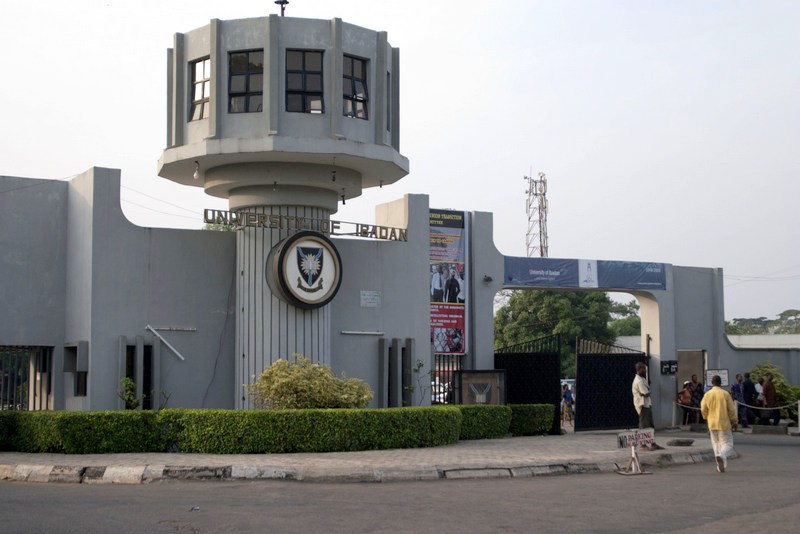
As the tenure of the current Vice Chancellor of the University of Ibadan, Professor Idowu Abel Olayinka ends on November 30, 2020, there are indications that the outgoing VC has concluded necessary arrangements for the take off of new academic departments from old centres and institutes.
Our analyst learnt this from a social media post of Professor Ayobami Ojebode of the Department of Communication and Language Arts. According to the post, the country’s oldest University will reassemble 5 Centres into a new Faculty, the Faculty of Multidisciplinary Studies. This, according to the Professor of Applied Communication, will enable the institution to respond to various needs and challenges in Nigeria. “Peace, development, security, data science and fuel or energy are the issues of today, burning and searing issues,” Professor Ojebode noted. “With this, UI is better positioned to pursue its vision of “meeting societal needs”.
With fund from the NUC, UI will reassemble 5 Centres into a new Faculty, the Faculty of Multi-Disciplinary Studies. The new departments (made from old centres) are: Department of Peace, Security and Humanitarian Studies (former Institute for Peace and Strategic Studies), Department of Sustainability Studies (former Centre for Sustainable Development), Department of Data and Information Science (former Africa Centre for Information Science), Department of Mineral, Petroleum, Energy Economics and Law (former Centre for Petroleum, Energy Economics and Law) and Department of Bioethics and Medical Humanities.
In an earlier report, The Tertiary Education Trust Fund had selected the University as one of the 12 Universities with the mandate of undertaking applied research for the country within 5 years. According to the agency, the University of Ibadan, University of Abuja, University of Benin, University of Maiduguri, Bayero University Kano, Nnamdi Azikiwe University, Akwa, University of Uyo, Micheal Okpara University of Agriculture, Umudike, University of Jos, University of Lagos, Abubakar Tafawa Balewa University and Uthman Danfodio University, Sokoto are expected to bring together the complementary resources needed for technical development and industrial application.
“This includes concentrating multidisciplinary, interdisciplinary, and translational research competence in order to further the development of products, processes, and services, typically by focusing on problems that demand larger efforts than can be provided by smaller projects.
“Bridging the gap between researchers and users, stimulating and strengthening triple-helix relationships. This is in order to enhance scientific research being patronized by industry and in order to make the tertiary educational institutions generally more responsive to industry needs. “In addition is expertise development and training at doctorate level in areas of industry interest, and the development of knowledge management platforms and innovation hubs, “Bogoro, Executive Secretary stated in the terms of reference.
Within the five-year period, the University of Ibadan and the University of Lagos are expected to produce groundbreaking researches in Biodiversity Conservation and Ecosystem Management. In this regard, our analyst expects the University of Ibadan to play strategic roles in terms of technical expertise, which the defunct Centre for Petroleum, Energy Economics and Law was known for.
Nigeria is among the top-leading adopters of cryptocurrency per capita; some have the country as #3. As we expect more weakening of the Naira against major currencies due to expected freeze, out of rising coronavirus, on global economic activities, pushing crude oil price down, more people will seek refuge in cryptos, even if to move money around internationally
The implication is that by late 2021, there would be impacts … (let me not go into details here). But I expect a new regulation in the National Assembly that would be along this line – Know Your Cryptocurrency Client (KYCC) – where financial and banking interface reporting will open some veils in crypto activities and its “opacity” in Nigeria.
Whether you are self-hosting your crypto-wallet or not, you may be required to report more to connect that wallet into the banking infrastructure and network. Ideally, self-hosting wallets could be seen as holding cash under the pillow! Expect the government to ask for changes.
Meanwhile, we have introduced a new course – Blockchain, Cryptocurrency, and Decentralized Finance: Technologies, Trading and Apps Utilities – in Tekedia Mini-MBA from our next edition (register here). The CEO of Bitfxt, Franklin Odoemenam Peters would lead it. We do think that it is time a modern management program has all the elements of modern (evolving) economic systems. We have always had blockchain in our program; now, we are extending to crypto and DeFi.
The meeting came at the heels of the news thatNigerian economy has fallen into recession for the second time in five years, according to data from Nigerian Bureau of Statistics (NBS), which reported that the economy contracted by -3.62% in Q3 2020.
The recession was fueled by the global oil crisis which plummeted Nigeria’s oil-based GDP, and the non-oil sector whose growth was stymied by the COVID-19 lockdowns. The oil sector contracted further by -13.89 per cent in Q3 2020 from -6.63 per cent in the previous quarter, while the non-oil sector contracted by -2.51 percent in Q3 2020, compared with -6.05 per cent in the preceding quarter.
It therefore presented an enormous challenge for the Apex bank, which includes stabilizing Nigeria’s forex to tame the 14.3% inflation and meet the goal of 1.4% GDP growth projected by the International Monetary Fund (IMF) that will enable the country to exit recession early next year.
The MPC reported on many measures it has taken to facilitate growth in many sectors of the economy, and consequently trump the strains of the pandemic and exit recession early enough.
The focus of the Committee were on choices bordering basically on whether: to tighten the stance of policy to address rising price levels recognizing its primary mandate of price stability; to ease support output recovery; or to allow existing policy initiatives to permeate the economy.
Obviously, the existing policy initiatives have been overwhelmed by the current events which have resulted in inflation and recession. Therefore, it beckons a new approach and policy framework to address the fault lines that hinge on poverty, which has limited spending to a degree that cannot spur economic growth; and the rising cost of commodities that has made basic living unaffordable.
Central Bank Governor, Nigeria
Contemplating a way out based on the above mentioned choices, the MPC ignored some approaches that would have otherwise appeared sublime.
The Committee noted that, although the appropriate response to rising inflationary pressure would be to tighten the stance of policy in order to moderate upward pressure on prices, it nevertheless, felt that doing this would exert downward pressure on the recovery of output growth.
The Committee also felt that tightening would negate the Bank’s desire to expand credit to the real sector at affordable terms, not only to boost production, but also to increase consumer spending. To the Committee, tightening was therefore not the appropriate response at this time.
With the economy, whereas MPC felt that government spending and the Bank’s expansionary stance would be desirable to support recovery and guide the economy out of recession, it felt loosening would trigger excess liquidity and worsen the inflationary pressure.
MPC also felt that excess liquidity may impact demand pressure and fuel further depreciation of the naira. With respect to a hold position, the Committee was of the view that this will be beneficial as it will allow current policy measures to permeate the economy while observing the trend of developments.
While these options seem rightly ruled out by the MPC, alternative actions to replace them have become imperatively urgent.
The Committee said that “the heterodox policies of the Bank targeted at various sectors are showing positive results that would further engender growth”. But it is not enough to quell the impact of the disruption in the global supply chain, given that many countries outside Africa, including China, the United States and those in Europe, are still taking restrictive safety measures to curb the COVID-19 pandemic.
The Committee’s final decision hangs on key four steps aimed at retaining existing parameters.
Retain the MPR at 11.5 per cent;
Retain the asymmetric corridor of +100/-700 basis points around the MPR;
III. Retain the CRR at 27.5 per cent; and
Retain the Liquidity Ratio at 30 per cent.
Nevertheless, they seem good enough to upset the economic woes if not that the harbingers are rising on the daily nationally. The insecurity in the north which has almost halted farming activities in the region, keeps adding embers to the burning economy, as food inflation has significantly risen to 17.3% in the Q3 as a result.
On the other hand, infrastructure deficiencies and forex scarcity are posing more challenges to local production. Experts believe the situation could be ameliorated through intra-African trade and practical steps toward the implementation of AfCFTA. But the Nigerian government has shut its land borders for months, putting its over $5 billion ECOWAS-based import/export macroeconomy in jeopardy and stymieing its chances to use macroeconomy as a wedge against the pandemic’s economic shocks.
The World Bank has urged African leaders to develop a framework to resolve border issues, as it is a step towards implementing AfCFTA-based integration.
“The AfCFTA will only succeed if member countries make the regional strategy part of their national policy and proactively address the tensions that arise. Countries should find the sweet spot that reinforces national economic goals and ensures maximum gains from increased integration, looking beyond a static assessment of their priorities,” the World Bank said.
Alas, the Monetary Policy Committee and the federal government of Nigeria are yet to agree with the World Bank on the urgent need to open the borders.