DD
MM
YYYY

PAGES

DD
MM
YYYY

spot_img

PAGES

Home Blog Page 6038

The Gyrations of Jumia In A Promising Quarter

1

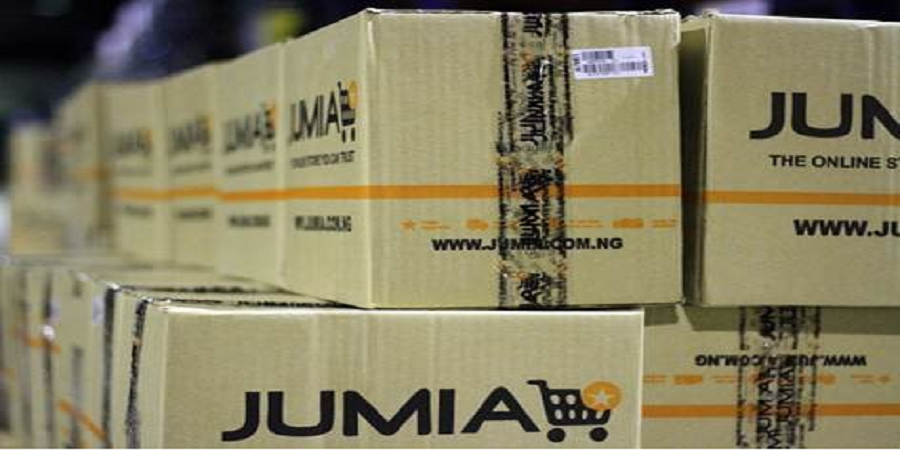
Jumia lost 20% of its value yesterday as the company reported a lower than expected revenue for Q3 2020: “GMV (gross merchandise volume) was €187.3 million, down 28% year-over-year.” The company’s total Q3 revenue fell almost 18% year over year. Over the last few weeks, investors have parked on Jumia, expecting a rocketship-like quarter. That did not happen.  I had captured the sentiment when I wrote that “Jumia has a big appointment: Nov 10”.

  • Gross profit increased by 22% year-over-year
  • Operating loss decreased by 49% year-over-year
  • JumiaPay Total Payment Volume increased by 50% year-over-year

Yet, things are not necessarily bad when you look deep into the data. Jumia has evolved beyond first-party products (products which Jumia sells directly to end customers) and that means expecting it to ramp up revenue is wrong. Jumia is moving into becoming a hub where third-parties come and do business. That explains why it opened its logistics arm to 3rd-party ecommerce companies. The implication is this: 3rd party players typically record lower revenue unlike first-party players. However, they typically have better margins: Jumia’s Q3 gross profit increased by 22% year-over-year. If Jumia sustains this model, its revenue may drop but its profit may improve when benchmarked on assets. Jumia is doing everything to find profitability. The data reported is consistent with my expectation in that space.

I hope it delivers because Jumia has added a GREAT mission on its double play strategy: open the logistics infrastructure to 3rd party players: “Put together, Jumia’s logistics arm has been exclusively available to vendors on its marketplace—until now. The company is opening up its logistics services to third party users across 11 countries in Africa”. The implication is huge: Jumia wants to carry other ecommerce companies on its back, for profit, of course. Do not take that playbook for granted because if the friction of logistics is eliminated, for some small ecommerce operators, they will scale.

The most important thing for Jumia is winning demand, and the company is doing that by launching gaming to ensure that users come and stay. As I have noted, modern digital empires can only win by controlling demand and not just supply; Jumia is executing on that. With all those elements, it pushed annual active customers up by 23% year over year, to 6.7 million customers.

And the biggest one: JumiaPay was up by 50% from the third quarter of 2019.

  • JumiaPay TPV was €48.0 million, a year-over-year increase of 50%, more than doubling on-platform TPV penetration from 12.2% of GMV in the third quarter of 2019 to 25.6% of GMV in the third quarter of 2020.

Yet, Jumia’s biggest problem is not strategy. I think it has come home with a solid double play strategy. The problem is that its customer base needs to grow wealthier to begin to value its services. Only that transition will move many from the open market to the ecommerce market. 

Jumia did not have a bad Q3 party but with Covid-19 lockdown over, the next quarter becomes even more important to avoid another gyration in Wall Street. Many are asking for patience, including its previous arch-enemy who is now a believer. Typically, the problem is not whether ecommerce will work in the future; the issue is this – how long would you be funding losses before it works in Africa! That is NOT a same day delivery problem!

https://twitter.com/CitronResearch/status/1326169846443200515?ref_src=twsrc%5Etfw%7Ctwcamp%5Etweetembed%7Ctwterm%5E1326169846443200515%7Ctwgr%5Eshare_3&ref_url=https%3A%2F%2Fwww.benzinga.com%2Fnews%2Fearnings%2F20%2F11%2F18299795%2Fjumia-falls-20-on-q3-earnings-makes-progress-on-path-to-profitability

Comment on LinkedIn Feed

Comment: Prof, do you think the third party playing strategy on the logistics arm of the business will really have a significant growth effect on Jumia’s earnings?

The reason why I asked is because, this particular third party play isn’t really like others, where there’s little to no cost required, both to manage or to scale; this is logistics, and I think opening up the logistics arm won’t really take care the usual operational costs that the arm incur.

In fact, I think the Opex along that line might even increase, since there might be more financing that will need to go into delivery trucks maintenance, more frequent gasoline refilling, and possibly, purchase of more trucks and recruitment of more delivery truck drivers – all thanks to the new workload. What do you think?

My Response: The biggest friction in ecommerce today in Africa is LOGISTICS. It is based on that that I noted that ecommerce in Africa is a physical business since the marginal cost is mainly offline. Marginal cost is distribution & transaction cost with the distribution cost mainly the logistics. If Jumia solves that at scale, it becomes the post office of Nigeria’s ecommerce. And if does that, it can bring everyone into its ecosystem and imposes its tax. Logistics has more opportunities than ecommerce in Nigeria right now since most of the cost is distribution related.

So, there is nothing that stops Jumia solving that problem. Expect most FMCGs bundling into Jumia if they see an efficient logistics. Of course, as you noted, I do not think Jumia has the resources to do it. I had expected Amazon which can come and drop $4 billion and become the “national” platform. Of course, some will say why Amazon when there are many people in my village which can do it!

The Need for Africa to Resume Her Former Position

0
AU

Mansa Kankan Musa, one of the most famous and powerful people on Earth, was an emperor of the Mali Empire. His reign lasted from 1312 – 1337, a period of twenty-five years. His period of emperorship was known for its good governance, peace, political stability, national development and prosperity. He was a Malian. He was a black man.

Till date, he is the wealthiest person in world history. His pilgrimage to Mecca, the hajj, from 1324 – 1325, led to the development of the Mali Empire. During his journey from Mali to Mecca, he and his royal entourage spent so much gold that the value of gold in Cairo crashed (and took ten years to recover) and the economy of Mecca went into depression. His entourage comprised of 60, 000 royalties, 1000 servants that marched before him and his senior wife (each holding a golden staff that weighed about four pounds), 12,000 servants that attended to him and his royal entourage, several thousand subjects that carried provisions for the journey, and 100 camels that carried gold of three hundred pounds each. History has it that the Mansa spent and gave out about one ton of gold in Cairo alone.

Like I stated earlier, the Mansa’s hajj attracted development to the Mali Empire. His heavy spending and display of wealth attracted people to Mali. All of a sudden the world came to know about them. People started visiting the empire from different parts of the world. The Europeans also joined the bandwagon and that was when the Italian, Spanish and German cartographers saw the empire as important enough to be included in the map of the world. As a matter of fact, the empire was featured in the world map that was released by a Spanish cartographer in 1339. Not only that, the empire established libraries and universities and students came from all over the world to study there. When Mansa Musa died in 1337, Mali Empire had one of the leading Islamic cities (Timbuktu) in the world; and this was when Islamic cities were the hubs of commercial and intellectual activities.

Of course the Mali Empire, like many other empires, crumbled later. I can’t really say why but I am suspecting the invasion of strangers, who brought in alien leadership ideologies to the then rulers. From what history stated, bad leadership, civil wars and lack of proper management led to the fall of the empire in 1645, but you and I know quite well that there is more to it than meets the eye. But that is not the essence of this essay anyway.

I stumbled on the history of Mansa Musa and the Mali Empire some days ago and couldn’t help being so proud of Africa. When I searched farther and saw how his predecessor, Mansa Abu Bakr II, left in 1311 for an expedition into the Atlantic Ocean with 2000 ships filled with men, and the suspicion that they didn’t return because they discovered the Americas, my heart and head swelled. I told myself, “We Africans actually had it all before the ‘colonialists’ came. So what happened to us after then?”

If you are an African and you trace the history of many African kingdoms, your heart will feel proud of this continent. If you consider what you had before we were thrown into mental slavery, you will wish for who you were. But of course, the first way to subdue us was to make slaves out of us. Since physical slavery is a crime today, mental one is the key.

This essay is not political, neither is it speculative; it is about what is happening to us, the Africans, especially Nigerians.

Somehow, we have accepted the low position the world placed us in. Somehow we have accepted that we are not good enough. Somehow we have come to believe that we are inferior. Many of us think that way. And many of us believe that.

Each time I read up histories of the ancient world, I see Africa as not just the cradle of life but also the creator of civilisation. But when I say it out people tell me I am being dramatic or that I read too much or that I just don’t want to accept the reality. But what then is the reality? That we are inferior? And so I should, hence, take the least position; the position of the loser?

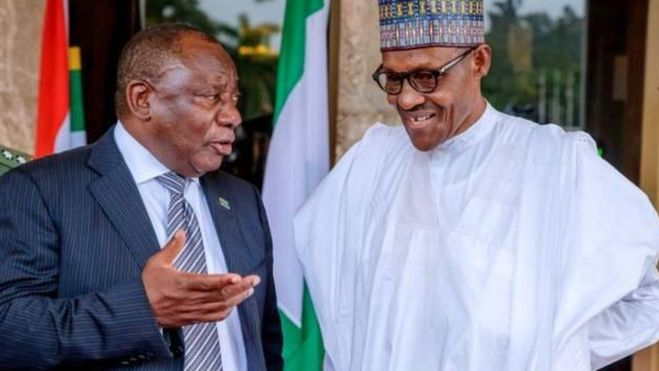
Nigeria and South Africa leaders

Mbanu, I don’t see myself in that light.

We had our systems running smoothly before they were invaded and corrupted. Our communities knew the system of government that worked for them and adopted them. There was no corruption or what have you today. But as alien systems came in and were forced on Africa, things began to fall apart.

But that is not the issue right now. What we need to do now is to break out of the chain of mental slavery. We should accept that we were not ‘saved’ by the colonialists. We should accept that other continents are not better than Africa. We should look deep down and see our strengths and focus on building them. We should start seeing ourselves as worthy enough to compete and work with people from different parts of the world. We should start assuming our former position – the cradle of life.

Don’t let anyone tell you, you’re less intelligent, or less innovative, or less beautiful, or less important, or less anything because you’re African. Always remember that we were doing well before they came. They didn’t make us better; rather they jeopardised our system. It’s time to take back and own what is ours.

China Goes 6G Even As The World Is Debating 5G

2

China – the upcoming ruler of the new world order. Yes, “the world’s first 6G satellite” record belongs to China.

China has successfully launched what has been described as “the world’s first 6G satellite” into space to test the technology.

It went into orbit along with 12 other satellites from the Taiyuan Satellite Launch Center in the Shanxi Province.

The telecoms industry is still several years away from agreeing on 6G’s specifications, so it is not yet certain the tech being trialled will make it into the final standard.

It involves use of high-frequency terahertz waves to achieve data-transmission speeds many times faster than 5G is likely to be capable of.

The satellite also carries technology which will be used for crop disaster monitoring and forest fire prevention.

Why Did He Lose? AND Why Did He Win?

0

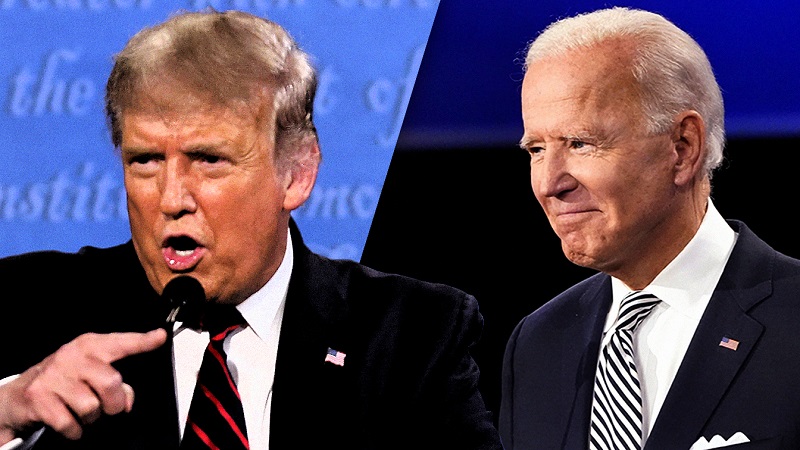
Why Did Trump Lose? And Why Did Biden Win? I have maintained thus: Trump lost because above all things, there was a credible Libertarian  candidate in the race. Libertarians are more conservative than Conservatives (i.e. Republicans) which means that the probability of any person who voted for a Libertarian voting for Biden, over Trump, is close to 0. In other words, any vote to a Libertarian is a vote Trump lost.

Jo Jorgensen, the Libertarian candidate in the race, might have cost Trump the election. Here is my thesis:

  • Arizona: Biden is winning Trump by 0.44% (about 15,000 votes); Jo received 1.5% (about 50,000 votes) of the votes. 
  • Pennsylvania: Biden is ahead by 0.67% (about  45,000 votes). Jo got about 78,000 votes or 1.2%.
  • Wisconsin:  Biden is ahead by 0.62% (about 20,000 votes). Jo received about 39,000 votes of 1.2%.
  • Georgia: Biden up by 0.25% (12,000 votes) with Jo getting 62,000 votes for 1.24% of the votes.

Without Jo, Trump might have picked enough votes to sway Arizona, Pennsylvania, Georgia and Wisconsin and won the U.S. Presidency. Indeed, from all indications, that would have been the outcomes. 

I expect Trump to contest again in 2024.

The Lagos State’s $3 Billion 2021 Budget

1

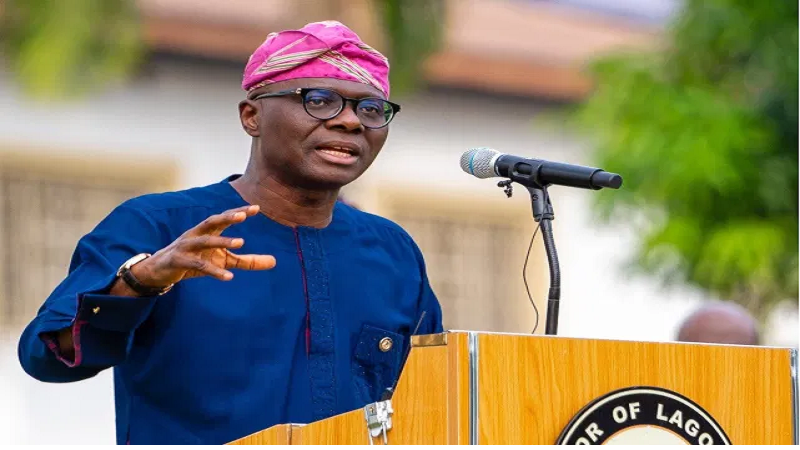
Lagos budgets $3 billion (N1.2 trillion) for its close to 25 million inhabitants.  That is actually an improvement from the sub-N900 billion of 2019 except that the exchange rate will depress many things. But on pure purchasing power parity, it is a marginal improvement. 

Unfortunately, Lagos may not really see a better fortune even if the Lagos startups begin to exit, as most are only operational in Nigeria but are legally non-Nigerian companies since most of their holding companies are incorporated outside Nigeria. Dealing with that anomaly is what the government has to work on this decade. If not, nothing will change in the state and the nation.

Just as Jumia taught us, it was a Nigerian company to grow but when it mattered in New York, it became a German company. Most startups (including some I am associated with) are of the view that Nigeria is not winning that race of making itself attractive to incorporate holding companies, and the implication is that Lagos state (and indeed Nigeria) budgets will remain stunted.

Lagos needs to make it a challenge: if Harvard University has annual operating expenses of $5.4 billion, we need to work hard to match that by 2025, at most.