DD
MM
YYYY

PAGES

DD
MM
YYYY

spot_img

PAGES

Home Blog Page 6040

GTB Posts N167.4bn Profit Before Tax in Q3 Report

0

Guaranty Trust Bank plc has released its unaudited financial results for the period ended September 30, 2020 to the Nigerian and London Stock Exchanges.

The 3rd Quarter result shows improved performance across key financial metrics, reaffirming the Bank’s capability to navigate the current economic challenges occasioned by impact of COVID 19 on World economies. The performance reflects its position as one of the leading and best managed financial institutions in Africa.

The Group reported Profit before tax of N167.4billion, representing a decrease of 1.9% over N170.7billion recorded in the corresponding period of September 2019 and an improvement on the 5.2% dip posted in H1-2020 relative to H1-2019.

Loan and Deposit book however grew by 4.5% and 25.1% from N1.502trillion and N2.640trillion recorded as at December 2019 to N1.569trillion and N3.303trillion in September 2020 respectively.

Guaranty Trust Bank’s Balance sheet remained well structured, diversified and resilient with Total assets and Shareholders’ Funds closing at N4.574trillion and N755.5billion respectively. Full Impact Capital Adequacy Ratio (CAR) remained very strong, closing at 23.9%, while Asset quality was sustained as NPL ratio and Cost of Risk (COR) closed at 6.5% and 0.6% in September 2020 from 6.5% and 0.3% in December 2019 respectively.

Commenting on the financial results, the Managing Director/CEO of Guaranty Trust Bank plc, Mr. Segun Agbaje, said; “Our 3rd Quarter result is a reflection of how we have appropriately positioned our balance sheet to cope with current economic realities and the challenging business environment.
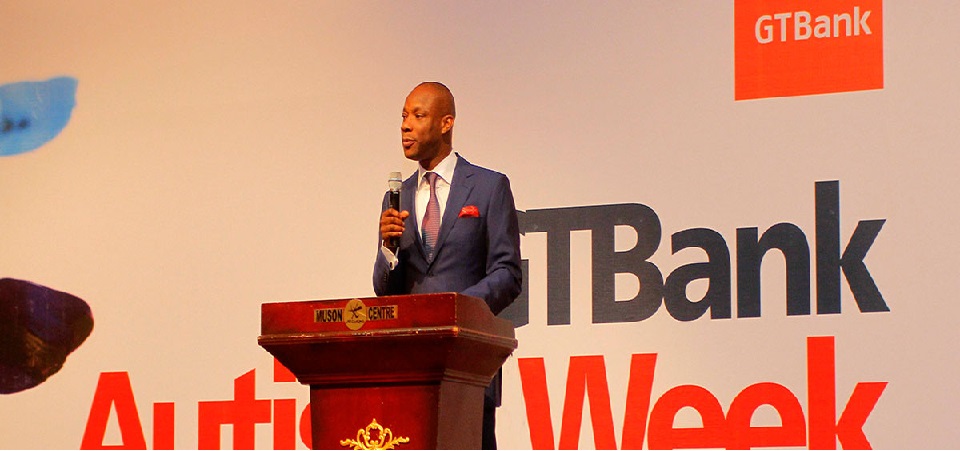
The CEO of GTBank

“It is also testament to the enduring loyalty of our customers, the hard work and dedication of our staff and the unwavering support we continue to enjoy from all our stakeholders in our drive to deliver best-in-class financial services and superior and sustainable returns.”

He further stated that; “As an organization, we will continue to build on our commitment to enriching lives by leveraging our digital-first customer-centric strategy to improve customer experience and maintain a high standard in service delivery, and going beyond banking to create and drive innovative financial solutions that add value to our customers in all aspects of their lives.”

Overall, Guaranty Trust Bank plc continues to be best in the Nigerian banking industry in terms of all financial ratios i.e. Post-Tax Return on Equity (ROAE) of 26.3%, Post-Tax Return on Assets (ROAA) of 4.6%, and Cost to Income ratio of 40.2%.

Renowned for its forward-thinking approach to financial services and customer engagement, GTBank was recently ranked Africa’s Most Admired Finance Brand in the 10th-anniversary rankings of Brand Africa 100: Africa’s Best Brands, the pre-eminent survey and ranking of the Top 100 admired brands in Africa.

GTB was also awarded the Best Bank in Nigeria by Euromoney Magazine for a record-extending tenth time and the Euromoney Excellence in Leadership Africa Award for its swift reaction in responding to the Covid-19 crisis and for addressing the impact of the pandemic on its customers and communities.

The Bank has been proactive in innovation and diversification, investing in a range of industries, from insurance to asset management, until 2010, when the Central Bank of Nigeria (CBN) stopped banks from running non-banking subsidiaries. Early in the year, GTB announced its intention to restructure as a holding company to enable it to delve into fintech.

 

GTBank Continues The Magic of Value Creation – PBT of N167 billion by Q3 2020

1

Guaranty Trust Bank Plc (GTBank) has returned the unaudited numbers for Q3 2020: they look really good. Profit before tax is N167.4 billion. Yes, GTBank made  more than the 2020 budget of Abia state in 9 months as profit; in 2020, Abia State has planned to spend N137. 419 billion but of course the actual expenditure would be off by billions due to revenue issues. Update: the state revised the budget to N102 billion. 

What is the point? GTBank made as profit everything Abia state would spend in a year and will still have more than N65 billion to spare, before taxes! Interestingly, Abia state is not even one of the least yoyo states; it has Aba which has a fair solid economic activity. Go down the state table, and you will be shocked: the power is in the hands of these Lagos bankers, well ahead of the Excellencys. Practically, by the time you remove debt servicing and public sector emoluments, the governor of Abia state may not have more than N10 billion to spend! Simply, until we understand the power of markets in Nigeria, many things will not align. 

A Nigeria that supports markets and companies will advance the wellbeing of the citizens because markets will remain the key path to liberate many economically.  Great private companies have typically preceded the strengthening of public institutions. Why? Governments use the taxes and fees on companies to build public institutions! In other words, you cannot expect good roads, great schools, etc if there are no companies with capacities to pay taxes to make such possible. Nigeria Will Have GREAT Private Companies Before Good Public Institutions.

For GTbank, Covid-19 paralysis impacted one metric: cost to income ratio. That gold standard in banking dropped for GTBank; from 36.9% in Q3 2019 to 40.2% Q3 2020. Even at that, that ratio is enviable for a business operating in the hardest terrain of markets.

Congrats GTBank Team; now, the stock has to respond as the paradox has been extensive.

Nigeria Will Have GREAT Private Companies Before Good Public Institutions

The full press below… 

Lagos Nigeria – November 19, 2020 – Guaranty Trust Bank Plc (“GTBank”), (Bloomberg: GUARANTY:NL/Reuters: GUARANT.LG), provider of diversified financial services, announces its unaudited Financial Results for the period ended 30 September 2020 and declares a PBT of N167.4bn.

Commenting on the financial results, the Managing Director/CEO of Guaranty Trust Bank plc, Mr. Segun Agbaje, said; “Our 3rd Quarter result is a reflection of how we have appropriately positioned our balance sheet to cope with current economic realities and the challenging business environment. It is also testament to the enduring loyalty of our customers, the hard work and dedication of our staff and the unwavering support we continue to enjoy from all our stakeholders in our drive to deliver best-in-class financial services and superior and sustainable returns.” 

He further stated that; “As an organization, we will continue to build on our commitment to enriching lives by leveraging our digital-first customer-centric strategy to improve customer experience and maintain a high standard in service delivery, and going beyond banking to create and drive innovative financial solutions that add value to our customers in all aspects of their lives.” 

Financial Highlights 

·      Sustained Earnings

–  Profit before tax of N167.4bn; representing a decrease of 1.9% over N170.7bn recorded in 30 September 2019 and an improvement on the 5.2% dip posted in H1-2020 relative to H1-2019.

–  Profit after tax decreased by 3.2% to N142.3bn from N147.0bn of 30 September 2019.

–  Earnings per share of 502kobo compared to 519kobo per share of 30 September 2019.


·      Improved Revenue

–  Interest Income of N228.2bn (30 September 2019: N224.2bn) up 1.8% as a result of 2.0% growth in interest income on loans and advances and 7.3% increase in interest income on fixed income securities.


–  Non-Interest Income of N101.7bn (30 September 2019: N101.8bn) down 0.1% largely as a result of 22.7% dip in fee and commission income, partly offset by N3.8bn increase in net trading income at Parent level and 3.5% growth in Other Income line.


–  Net interest margin remained strong at 9.5% (30 September 2019: 9.4%).


·      Balance Sheet

–  Total assets of N4.574trn (31 December 2019: N3.759trn) up 21.7%

–  Net loans and advances of N1.569trn (31 December 2019: N1.502trn) up 4.5%.

–  Deposits from customers of N3.191trn (31 December 2019: N2.533trn) up 26.0%.

–  Restricted deposits and other assets which comprise largely of restricted deposits with central banks increased by 102.8% to N1.171trn in September 2020 from N577.4bn in December 2019.  


·      Credit Quality

–  Non-performing loans to total loans at 6.5% (31 December 2019: 6.5%).

–  Coverage for Lifetime Credit Impaired Loans at 123.3% (31 December 2019: 126.6%)

–  Cost of Risk at 0.6% (31 December 2019: 0.3%).


·      Continued focus on efficiency

–  Cost to income of 40.2% (30 September 2019: 36.9%). Increase influenced by rise in inflation rate.


·      Subsidiaries

–  Contribution to PBT from subsidiaries increased to 16.3% from 15.1% in September 2019.


September 2020 Financial Analysis and Ratios 

Key Financials (N’ billion)

Q3-2020

Q3-2019

?%

Interest Income

228.2

224.2

1.8%

Net Interest Income

189.7

172.9

9.7%

Operating Income

279.8

270.3

3.5%

Operating expenses

112.4

99.6

12.9%

Profit before tax

167.4

170.7

-1.9%

Profit After Tax

142.3

147.0

-3.2%

Earnings per share (in Naira)

5.0

5.2

-3.3%

Q3-2020

FY-2019

?%

Total Assets

4,573.7

3,758.9

21.7%

Net Loans

1,569.1

1,502.1

4.5%

Customer Deposits

3,191.2

2,532.5

26.0%


Key Ratios

Q3-2020

Q3-2019

ROAE(post-tax)

26.3%

32.3%

ROAA(post-tax)

4.6%

5.8%

ROAE (pre-tax)

30.9%

37.5%

ROAA (pre-tax)

5.4%

6.7%

Net interest margin

9.5%

9.4%

Cost-to-income ratio

40.2%

36.9%

Q3-2020

FY-2019

Net Loans to deposits

47.5%

56.9%

Liquidity ratio

38.8%

49.3%

Capital adequacy ratio

23.9%

22.5%

NPL/Total Loans

6.5%

6.5%

Cost of risk

0.6%

0.3%

Coverage (with Reg. Risk Reserves)

123.3%

126.6%


19 November 2020


Consumer Marketing in the FMCGs Industry at Tekedia Institute

0

It looks really exciting: an opportunity to understand how the FMCGs marketing directors architect their playbooks. At the Tekedia Institute, we are happy to introduce a course on Consumer Marketing in the FMCGs industry. An industry veteran, a former Marketing Manager (Guinness), ex-Portfolio Manager (Heineken), and currently the Group Marketing Director of Jotna (the LaCasera Company) will lead the class.

Emmanuel Agu. FNIMN, FIMC, FIPMA, MSC, MBA, Ashridge Alumnus, I earnestly desire, will explain the secret of the LaCasera marketing genius! Sure, he is not going to throw it for us. Lol. The “drink for the moving people”; it would be amazing.

Visit school.tekedia.com and register for any of our courses.

Which Deal Is The Best Option Here?

1

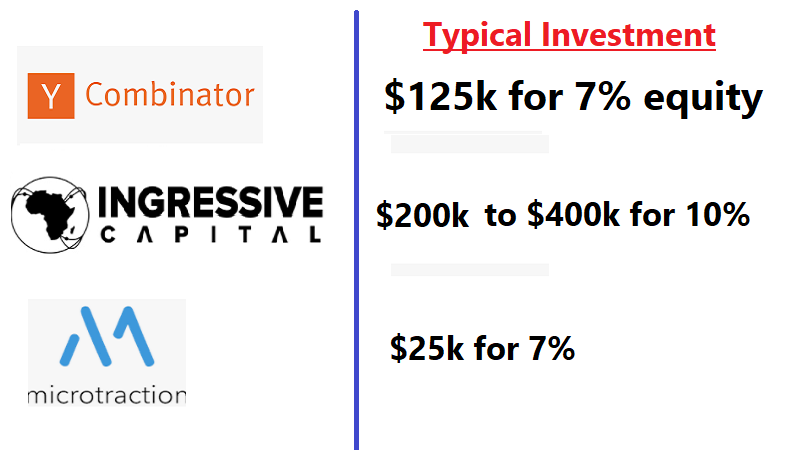
These three companies – Y Combinator (YC), Ingressive Capital and Microtraction – are venture capital firms, they invest in startups. The numbers at the right are their typical investment structures. Certainly, Microtraction could be seen as the least option; so, we can freeze it for this exercise.

Assume Ingressive is offering $300k for a 10% stake. Also, note that YC is the world’s most premier accelerator which has a peerless reputation of creating category-king startups which have gone to raise tons of money. Yet,  Ingressive is offering good numbers here; it has its own reputation as a good picker; its strike rates are solid.

Now, between Ingressive ($300k for 10%) and YC as noted, which one would you go for as a founder or owner? Share your reasons.

(A Tekedia Mini-MBA Lab)

Update: Good People, if you can comment on this post, it would be appreciated. We are developing a Decision Making Matrix at the Tekedia Institute for a course which we are teaching on how to Pick The Best Investors. This course is really important for the Institute as many of our Members are always asking questions on this. So, we want to have something like a methodology to provide a direction. This post is part of my research; LinkedIn remains my lab.

Reasons It Is Becoming More Difficult To Make Ends Meet in Nigeria

0

A Twitter user with the profile, @tundeleye, wrote:

For most of us in our 30s and 40s, our parents held more assets and were taking care of a lot more people (larger nuclear families plus extended family members) on one hustle. Today, we’re on multiple hustles, hold fewer assets and still struggle to take care of smaller families.

Somehow this tweet threw me back to the “good old days”, when we were less afraid of anything. It’s not as if things were so wonderful then, but it wasn’t as scary as it is now. Then we could go to neighbours’ houses to play and eat without fear; except for the flogging that awaited us at home for eating in people’s houses to show that we “don’t eat at home”. But now, neighbours won’t even offer children food because they don’t want their parents to say they “poisoned their stars” or “transferred their stars” or even “initiated them into marine kingdom”. That’s how bad we have gone today; thanks to the people brainwashing us.

Anyway, like the Twitter writer observed, things seem to be getting harder and harder these days. I don’t know about you but I know that even though things are difficult today, it was not easy then. That our parents took care of multiple people does not mean they were so rich; it could mean they were willing to sacrifice their comforts and dreams to make that of their children and relatives come to pass. Apart from that, some lifestyles we have today do not exist in those days. For instance, then we ate more natural food and we didn’t take food to school. But today, we go for processed foods (some of which are expensive and unnecessary), eat multiple times a day (and even take food to school) and buy all our foods from the market (before, everyone had a farm).

But let’s compare our parent’s expenditure style and that of the present day young parents. I know I was too young to understand if things were too difficult for them or not (you actually understand how it is when you start sponsoring people’s expenditure), but I can tell some things I do today as a parent that my parents forwent.

  • Education

I am a product of public schools – from primary to university. I went to school when there were only public schools and a few missionary schools for grooming priests and the religious. Then, it was easy for our parents to pay the school fees of multiple people – including that of extended family members – because the money was almost nothing. From what I learnt, education was at its cheapest during our time; my mother used to recount how her widowed mother had to struggle to pay her school fees and that of her siblings but it wasn’t like that in our time. We were that lucky. But now, we know what is going on. Even the members of extended family want you to send their children to private schools. Paying school fees today is denying a lot of us good night rest. So, let’s not blame the economy yet; it’s possible we are just entering another phase of development.

In case you want to accuse the government of killing the public school system, you need to understand that the public schools of those days that had good facilities were the ones owned by missionaries before they were taken over by the government. Today, those schools have been returned to their owners and the ones built by communities and some political office holders are the eyesores we’re seeing today.

  • Agriculture

As I mentioned earlier, in my days, we ate more natural healthy foods, most of which were produced from our farms. Then, it was expected of every man to own a farm (at least in Igbo land). Even when you stay in the city and can’t manage your farm, you sublet it to someone that will cultivate it and then share the produce at a certain ratio with you. Then, staple foods like garri were rarely bought in the market. But today, many people, me inclusive, don’t want to do anything with farms again; we buy ALL our foods from the market. Even the farmlands have been turned into residential houses or factories. Some of us have even sold off the lands our parents left for us to farm so we can use the proceeds to buy garri in the market. What an irony. So, as we calculate how much our parents spent, let’s remember they produced most of their foods. In fact, then, the higher the number of dependents in the family, the more the number of free farm workers.

Spices in markets
  • Desire for Ostentatious Goods and Luxurious Lifestyle

Our cost of living may actually be increasing because we desire to live in luxury and possess items that display wealth. Today, many of us own phones, which was luxury in those days. But that is not the issue; the problem right now is that the more expensive a phone is, the more we long to have it. Then, our parents buy jewellery as assets but we buy them today to show off. We want to put on the most expensive clothing, drive exotic cars, live in the most expensive parts of the city, go for holidays in Dubai, buy pizza and shawarma everyday (lol) and still live like our parents did. Not going to happen. We paved our own path; we have to pass through it.

The summary is, it wasn’t that easy for our parents to provide for us either. Yes, some changes have been made in the system, especially in the education sector, but that is the only path we didn’t create by ourselves. Any other challenges we are facing today is from our own volition. But then, we shouldn’t see them as struggle, but rather as a stage we have to pass to the next level.