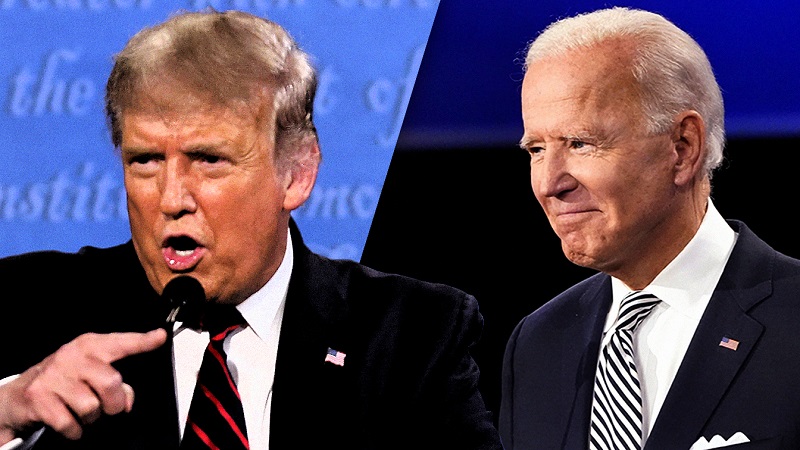
Why Did Trump Lose? And Why Did Biden Win? I have maintained thus: Trump lost because above all things, there was a credible Libertarian candidate in the race. Libertarians are more conservative than Conservatives (i.e. Republicans) which means that the probability of any person who voted for a Libertarian voting for Biden, over Trump, is close to 0. In other words, any vote to a Libertarian is a vote Trump lost.
Jo Jorgensen, the Libertarian candidate in the race, might have cost Trump the election. Here is my thesis:
Arizona: Biden is winning Trump by 0.44% (about 15,000 votes); Jo received 1.5% (about 50,000 votes) of the votes.
Pennsylvania: Biden is ahead by 0.67% (about 45,000 votes). Jo got about 78,000 votes or 1.2%.
Wisconsin: Biden is ahead by 0.62% (about 20,000 votes). Jo received about 39,000 votes of 1.2%.
Georgia: Biden up by 0.25% (12,000 votes) with Jo getting 62,000 votes for 1.24% of the votes.
Without Jo, Trump might have picked enough votes to sway Arizona, Pennsylvania, Georgia and Wisconsin and won the U.S. Presidency. Indeed, from all indications, that would have been the outcomes.
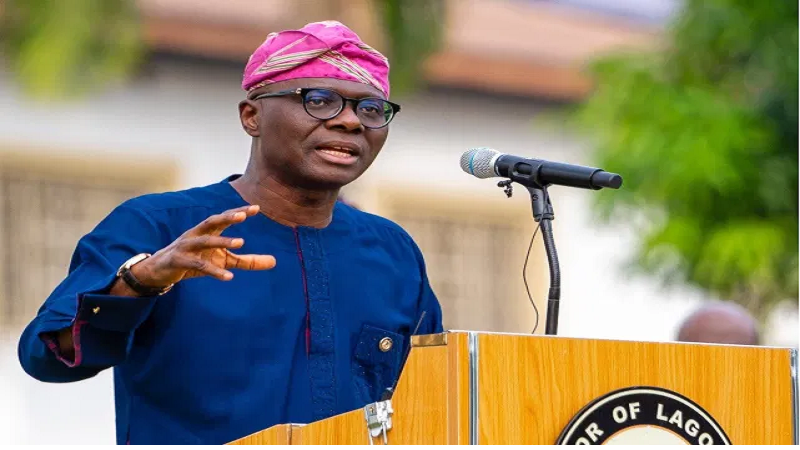
Lagos budgets $3 billion (N1.2 trillion) for its close to 25 million inhabitants. That is actually an improvement from the sub-N900 billion of 2019 except that the exchange rate will depress many things. But on pure purchasing power parity, it is a marginal improvement.
Unfortunately, Lagos may not really see a better fortune even if the Lagos startups begin to exit, as most are only operational in Nigeria but are legally non-Nigerian companies since most of their holding companies are incorporated outside Nigeria. Dealing with that anomaly is what the government has to work on this decade. If not, nothing will change in the state and the nation.
FLASH: Lagos State Governor @jidesanwoolu presents N1.155 Trillion Naira budget for year 2021 to the Lagos State House of Assembly tagged: BUDGET OF REKINDLED HOPE.
Just as Jumia taught us, it was a Nigerian company to grow but when it mattered in New York, it became a German company. Most startups (including some I am associated with) are of the view that Nigeria is not winning that race of making itself attractive to incorporate holding companies, and the implication is that Lagos state (and indeed Nigeria) budgets will remain stunted.
Lagos needs to make it a challenge: if Harvard University has annual operating expenses of $5.4 billion, we need to work hard to match that by 2025, at most.
For the completeness of my update here where I noted that the Nigerian government gave Dangote Cement special waivers to export cement via land borders, when other legitimate businesses in Nigeria were blocked, I have to update that BUA Cement received some favours also. We are yet to read from Lafarge and Ibeto Cement if the goodies were extended to them. If I get any note, I will update the community.
. Like I mentioned earlier, we were given a one-off thing for a limited quantity which we
exhausted in June. But we are optimistic it’s going to continue during Q3 through the land
border of Illela from Sokoto State into the Niger Republic. Mr Chike can you respond on
the prices.
IMPORTANT: BUA Cement does not have any blanket approval to export and the Nigerian borders remain closed. BUA Cement was granted a limited approval to export some cement to Niger Republic (which is 100kms from our plant), and this was disclosed in our half year results and…1/2
According to Nairametrics, the waiver has been running for months. It seems the whole land border closure thing was designed to distort market equilibrium for some big men to become bigger. As I have noted here, there is no fundamental economic theory that supports the government’s restriction of EXPORT from Nigeria to its neighbors, since some of these countries are indeed open to import from Nigeria, even if we block their exports. In other words, nothing has stopped the government to allow exports from Nigeria even when blocking imports. You may argue reciprocity principle but that is not the case, as some of these countries have made the same requests: allow us to buy from Nigeria, at least. With an asymmetric impact, looking at the size of Nigeria’s economy to its neighbors, we simply decided to economically disarm regionally. Of course, countries like Morocco have stepped up to fill the void.
The Customs letter signed by a Zonal Coordinator read in part:
” I am directed to forward herewith a letter from the office of the National Security Adviser …dated 17th, June 2020 on the above subject matter. The trucks will exit and return through Illela Border Station in Sokoto State. You are to monitor the movement towards ensuring that they are loaded only with Cement to Niger Republic and return back to Nigeria”
What has happened here is simple: Nigeria does not win on market forces, and expecting global investors to come and invest without those political connections will keep getting harder. And as we do those things, we will keep losing the nation, economically.
I like this summary from Nairametrics: “The government should, however, issue a policy guideline, rather than approve exports on a piecemeal basis which will not favour smaller exporters with little or no government connections.” I think it should not be hard for Mr. President and his team to do – treat all Nigerian companies the same.
Despite the notion that businesses must be prepared for unexpected forces that are likely to impact their operational activities and bottom-line, many businesses were subsumed by Covid-19, a disease that struck from a Chinese city and spread throughout the world. The impacts were enormous at the first and second quarter of 2020 to the extent that political leaders made policies that restricted movement of people and non-essential goods. Like other African countries that had a share of the disease, Nigeria is not exonerated from the first pandemic of the beginning of a new decade. From the south to the west and east to the north, businesses were shutdown with the intent of controlling the spread of the disease.
As if the impacts of the disease were not enough, a few days after the country celebrated its 60th year anniversary, the youth started #ENDSars protests across the country. For more than 10 days, business operations were disrupted in towns and cities despite the peacefulness of the protests. On October 21, 2020, the peaceful protests turned violent, when it was hijacked by hoodlums in retaliation to the killing of some protesters at the Lekki Tollgate in Lagos. The outcomes were looting of warehouses, shops and other business premises, including burning of properties.
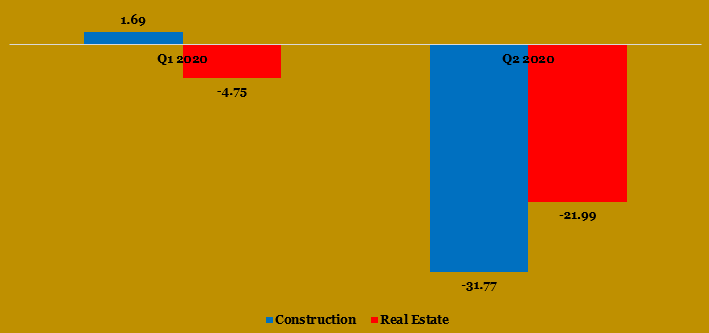
When Covid-19 took over the country, according to analysts, the already contracted real estate industry in terms of nominal real GDP and percentage share contribution to the GDP was further forced to be on a steep decline [see Exhibit 1]. Before the protests there were indications that the industry would pick when the country returns to normal life. In our experience, we discovered that a number of businesses have developed post Covid-19 impact navigation strategies in Africa’s largest economy before the youths staged the protests, especially in Lagos, the industrial hub. As the industry battling impacts of the first waves of the protests, analysts have equally noted that there would be negative growth in the economy. This would not exempt the real estate industry.
Exhibit 1: Nominal and Real GDP Growth Rate Q1 and Q2, 2020
Source: NBS, 2020; Infoprations Analysis, 2020
Our analyst notes that the views of the analysts are likely to come to pass as the performance of the industry in the Stock Exchange market was not encouraging between October 19 to November 6, 2020. During these periods, the financial services, conglomerates and consumer goods industries performed better than real estate industry. From October 8 to November 9, 2020, our analysis indicates that public interest in buying homes, renting apartments and maintaining houses reduced by 33.9%, 33.5% and 21.0% respectively. However, our analysis further establishes that the interest in renting apartments resonated with the intent of maintaining apartments by 12.3%, while the intention of buying houses reduced the consideration of investing in the real estate industry by 14.2%.
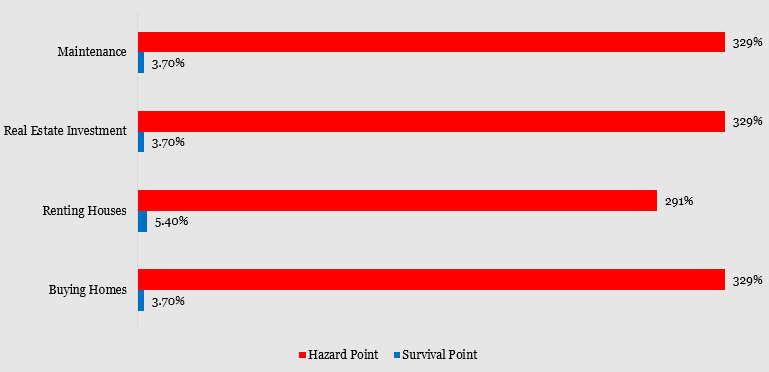
These results have several implications. It is clear that like what Covid-19 brought to the industry, the protests also contributed to the decisions made by prospective home buyers, investors and apartment users, most importantly in Lagos, Rivers, Kano and Abuja, the Federal Capital Territory. It is also obvious that public engaged players for maintenance services during the first waves of the protests. Our analyst further questioned and analysed the data. The results show that when the public intent in maintenance was over 60%, it was beneficial to the industry by 3.70%. The same percentage was found for investing in the industry and purchasing houses. With the same percentage of interest, the usefulness was 5.40% [see Exhibit 2]. As the industry bleeds, it has emerged that there are prospects for it in the future if the country does not experience second waves of the protests.
Exhibit 2: Impact of #ENDSars on Clients’ Key Indicators of Interest
Source: Infoprations Analysis, 2020
Looting: A Case of Mixed Benefits
A number of facilities, houses and business premises were looted and destroyed during the protests. From government and business leaders, to rebuild destroyed facilities and restock looted items or goods, between N700 billion and over N3 trillion are needed. Businesses and governments of states with the highest impacts have called for support. When this comes, the industry is expected to be changed and leave its decline stage at the end of Q1 2021, our analyst notes.
“Some of the discouraging factors in the real estate sector has been bad governance and the system, policy but as the system is beginning to fix itself, you will see a new Nigeria rising,” Stephen Akintayo, CEO of Gtext Homes said in an interview with a local newspaper. “Sometimes, people think that protest like this leads to the bleeding of businesses, temporarily it does, but in the long term it, it leads to confidence. Foreign investors and Nigerians in the diaspora will be able to come in and invest because they know we now have a government that is accountable to the people,” Akintayo said.
Since the protests were not only focusing on police reforms, experts believe the federal government is likely to look into some policies and initiatives that are crippling the growth of the industry. For instance, they expect significant amendment of the Land Use Act of 1978, which places all land in “trust” of the Government and specifies that future transfers or sale of land must be confirmed by a government official, in writing, irrespective of the value of the transaction is one of the reasons for the country’s lack of a functioning mortgage system.
What is at Stake?
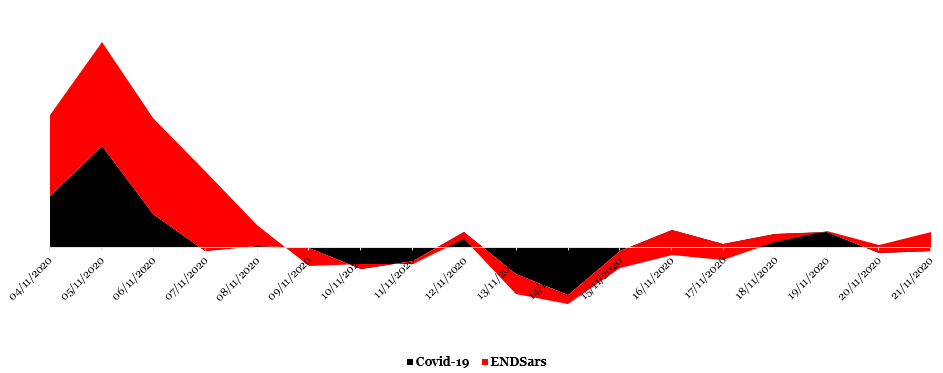
From November 3 to November 9, 2020, the interest in the industry picked by 14%, indicating a 8% increase from the previous period. During this period [November 3 to November 9, 2020], interest in which segment of the industry is appropriate to invest in was huge. If the second waves of Covid-19 and ENDSARS protests are not averted, our analyst notes that the industry is likely to be hit harder in the next few days [see Exhibit 3].
Exhibit 3: Future of the Industry in the Next 11 Days
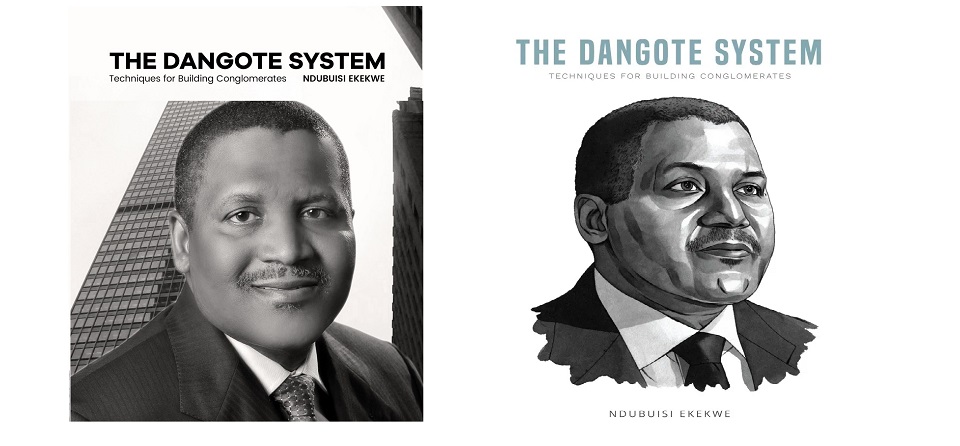
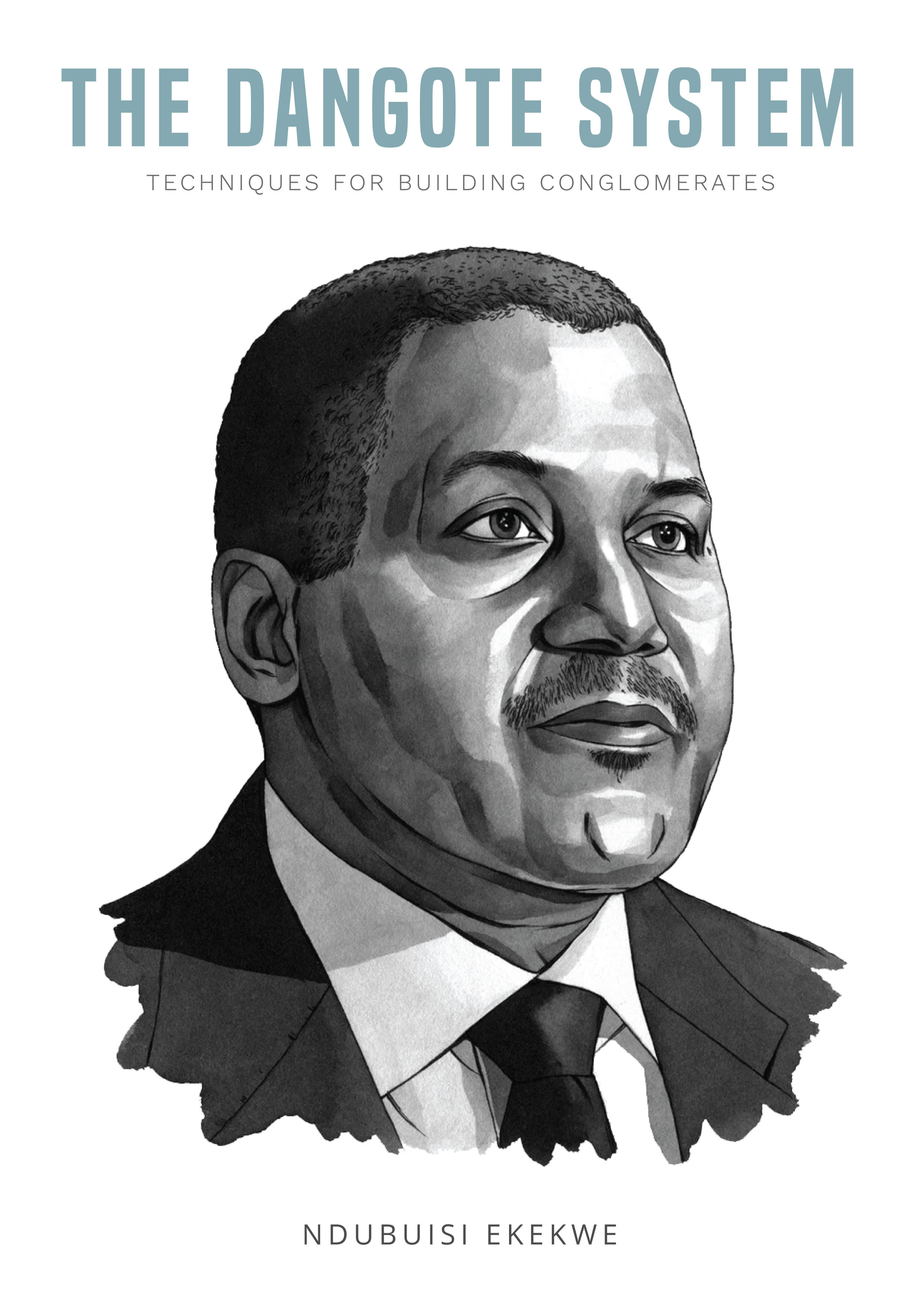
As Nigeria ridicules itself with special waivers for Dangote Cement, I invite you to read my book. In it, I tried to provide a Framework on what is happening in Nigeria when it comes to these immoral favoritisms. It is a huge irony that the more you talk about it, the more it happens: Conglomerate Tax.