DD
MM
YYYY

PAGES

DD
MM
YYYY

spot_img

PAGES

Home Blog Page 6048

Swedish Court Gives Huawei a Lifeline As Brazil Operators Resist US pressure to Axe the Chinese Company

0

Huawei has got a lifeline in Sweden after a court on Monday suspended parts of the decision that had excluded it from participating in the 5G spectrum auction. The decision has forced Sweden’s telecoms regulator PTS to halt the auction.

The Chinese telecom company has been at the center of discussion of every 5G network roll-out, a situation instigated by the United States’ security concern. The US has been wary that the Chinese government would access information from Huawei, compromising its national security as well as those of its allies.

Against this backdrop, the United Kingdom had in July, severed ties with Huawei. As the pressure from the US mounts, many countries have succumbed to it by kicking Huawei out.

PTS had announced earlier it booted Huawei out of its 5G spectrum due to security concerns. But the telecom had appealed the decision.

The Stockholm administrative court said in the decision that certain parts of PTS’ decision prior to the upcoming 5G auctions will not apply until further notice. That means, Huawei will be allowed to participate in the impending 5G spectrum auction.

Kenneth Fredriksen, Huawei’s executive vice president, Central East Europe and Nordic Region, told Reuters that the company has no further intention of legal action against the Swedish authorities, and at this point, they are waiting to have constructive dialogue.
Most parts of the world have been pushing to cage Huwaei

“We are willing to cooperate fully in terms of any future requirements they may put as a supplier of 5G equipment that will enable us to be a certified vendor,” he said.

The bans on Huawei have placed Finish Nokia and Swedish Ericsson in a lucrative position as their participation in the 5G roll out has increased significantly in the past few months. They were expected to fill in the gap created by Huawei’s ouster.

The PTS approved the participation of Sweden’s Hi3G Access, Net4Mobility, Telia Sverige and Teracom in the planned spectrum auction of 3.5 GHZ and 2.3 GHz, key bands crucial for the roll out of 5G.

Tele2 and Telenor will participate together as Net4Mobility to secure spectrum for a joint nationwide 5G network.

The auctions were expected to start from Tuesday. PTS said it has informed the operators about the halt and would review the possibility of starting the process as soon as possible.

“This is not a victory for Huawei and it is not a loss for the Swedish government,” said industry consultant John Strand. “The uncertainty related to the condition for the auction is the reason PTS is halting the auction process.”

Senior Judge John Johan Lundmark said in a court statement that “the decision granting a stay means that the terms concerning, among other things, the use of products from Huawei until further notice do not apply during the Administrative Court’s continued deliberation of the case.”

However, the ruling could set a precedent that will impact governments’ actions toward Huawei in other countries.

Last week, top four telecom companies in Brazil had shunned the invitation of US official, Ambassador Todd Chapman. He had invited them to the US embassy in Sao Paulo, to meet visiting under secretary of state for economic growth, energy and the environment Keith Krach.

The carriers had turned down the invitation because he had advocated excluding Huawei from the Brazilian 5G equipment market, according to people familiar with the matter.
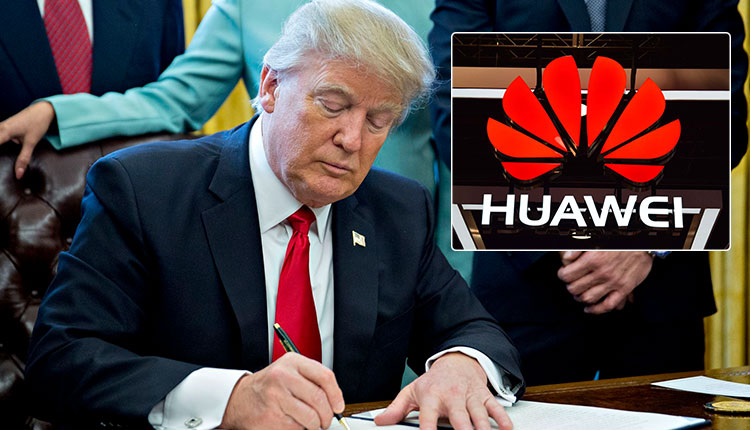
US has also pushed against Huawei

“This invitation is not compatible with free market choices that we are used to. We should be able to freely make best financial decisions,” they said.

Telecom companies in Brazil, such as Telefonica Brazil, TIM  participaçôes, controlled by Telecom Italia SpA and Claro, owned by Mexico’s America Movil, each control between 19% and 29% of Brazil’s wireless market, according to Reuters.

They already use Huawei equipment in preparation for the auctioning of spectrum concessions next year in Brazil and do not entertain the idea of Huawei ban being pushed by the US.

Brazil is among few countries trying to resist the diplomatic pressure from the US to throw off Huawei.

In Europe, following the UK’s decision to oust the Chinese telecom, other countries are already taking the same step or contemplating to do so.

But the Swedish court’s decision seems to have amplified Huawei’s chances to be part of 5G auctions through legal contests.
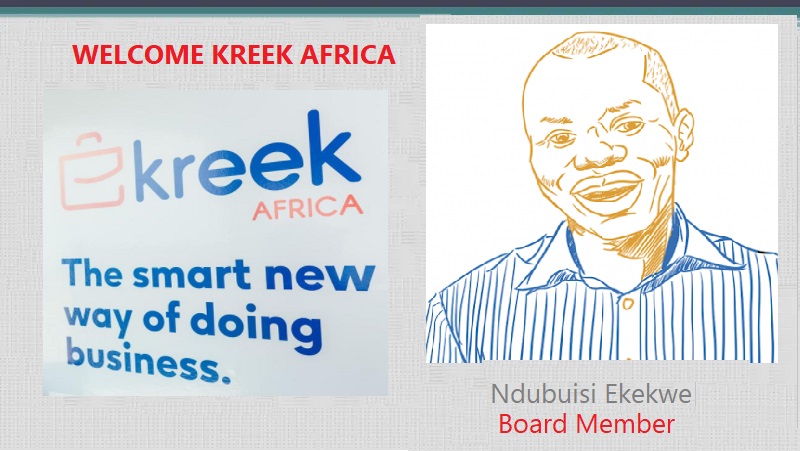

Ndubuisi Ekekwe Invests in KreekAfrica To Deepen Value In Tekedia Mini-MBA

0

As we conclude another edition of Tekedia Mini-MBA, we have two questions we are working to solve: how can we provide services to help our alumni who are looking for jobs? And as we do that, how do we make it possible for small companies in our program to hire the professionals they need to grow?

To solve those challenges, I have taken equity in KreekAfrica.com. It is an online community with the mission to connect professionals from across Africa, and the rest of the world, to clients, and businesses, globally. In other words, it makes it possible for those looking for work, and those looking for people with capabilities to hire, temporarily and permanently, to come into an equilibrium. 

We will offer payroll loans to small companies to hire workers and we will provide training to professionals to have the right skills to be employable. The companies that benefit from our payroll will pay as they grow. 

I am very excited to join KreekAfrica Team for the promise of the future. And I am very confident that prospective Tekedia Mini-MBA members will see more reasons to attend our program.


Uber Unveils New Feature in Expectation of Market Rebound

0

About a week after Uber won the prop. 22, to keep drivers classified as independent contractors in California, the California-based ridesharing company has rolled a new feature in an attempt to win more market share.

The feature will enable riders to reserve rides up to 30 days in advance and pick their favorite driver for the trip. The new option, called Uber Reserve, will begin to show up on the cab company’s app next week. Uber said it is designed for riders who want to book rides from two hours in advance.

Uber said its current “schedule a ride” option will be kept open for those trips that fall under that two hours in advance timeline.

“While saving you time lays at the heart of our service, we wanted to take this idea to the next level by building mobility features that more flexibly fit around your life,” said Holley Beasley, operations lead at Uber.

Part of the Reserve feature is showing the fare upfront and being matched to a driver ahead of the trip. There is also a “favorite driver” option designed to allow riders select drivers they prefer. They can now add favorite drivers to their app, and once they select the Reserve features, riders will have the choice to select one of their “favorite drivers.” Uber said the favorite drivers will be presented to riders first when they request a ride, and the drivers will not be penalized if they declined the request.

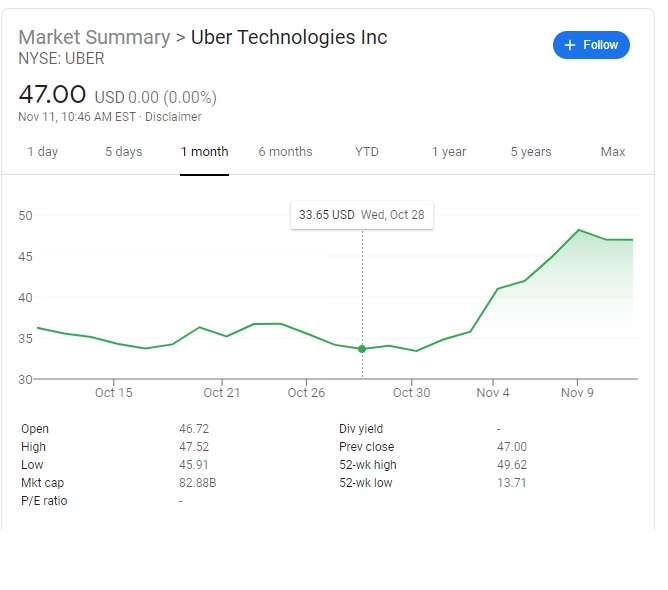
Uber stock has been rising

Uber Reserve will launch first in 20 US cities and will start with premium Uber Black and Black SUV rides. The company said it will make the feature available to other ride options such as Uber X, “comfort” and XL by the end of the year. The new feature will initially launch in Atlanta, Austin, Charlotte, Charleston, Chicago, Dallas, Denver, D.C. Fort-Myers/Naples, Houston, Las Vegas, Miami, Milwaukee, Nashville, New Jersey, New York City, New Orleans, Orlando, Philadelphia, Phoenix and Seattle.

Uber also introduced an additional 15-minute grace period if the rider is running late and an on-time guarantee that will give users $50 in Uber Cash if their driver is even a minute late to the ride they have scheduled. The company told TechCrunch that the Uber Cash will come directly from Uber, not the driver’s earnings.

The ridesharing company said it has added additional protection for the drivers as well. If a Reserve ride is cancelled within an hour of the trip, the driver will be compensated with the full fare.

Uber seems to be readying for a market rebound after the turmoil of COVID-19 pandemic. The news of Pfizer vaccine that is 90% effective in preventing the spread of the virus impacted Uber’s stock positively. Its shares rose 7.38% to close at $48.18 following the news of the vaccine.

Techcrunch reported that the stock rise is the highest close for Uber since its public market debut in May 2019. It is also the first time since June 2019 that shares close above its $45 IPO price.

Uber trialed Uber Boat in Lagos

Following the outbreak of the pandemic, Uber’s business has been hardly hit as the lockdown and other safety measures restrict movement. To stem the tide, Uber has focused on food delivery. Its Q3 report showed a significant drop in revenue even though the food delivery segment of its business was expanded.

Uber reported gross bookings of $14.7 billion in the period, recording a decline of 10% compared to the same quarter last year. The bookings generated $3.1 billion revenue for the company, 18% decline compared to the same period a year ago.

Analysts had expected the company to earn $3.2 billion. But it partially made up for the loss with an earnings-per-share beat. Uber lost $0.62 per share in the quarter, falling short of $0.65 expectation.

Uber’s third quarter loss was $1.1 billion, a slight difference from the $1.2 billion loss last year.

The company said it will apply the prop.22 approach in fight with state laws in other cities.

The Gyrations of Jumia In A Promising Quarter

1

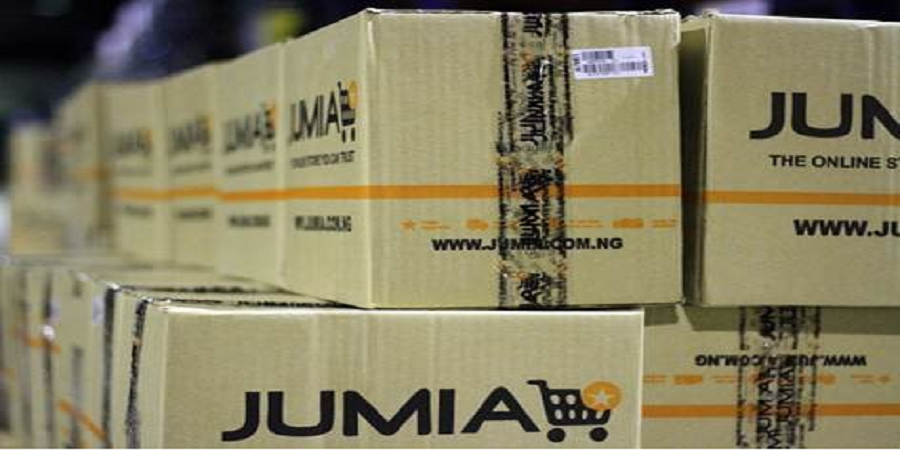
Jumia lost 20% of its value yesterday as the company reported a lower than expected revenue for Q3 2020: “GMV (gross merchandise volume) was €187.3 million, down 28% year-over-year.” The company’s total Q3 revenue fell almost 18% year over year. Over the last few weeks, investors have parked on Jumia, expecting a rocketship-like quarter. That did not happen.  I had captured the sentiment when I wrote that “Jumia has a big appointment: Nov 10”.

  • Gross profit increased by 22% year-over-year
  • Operating loss decreased by 49% year-over-year
  • JumiaPay Total Payment Volume increased by 50% year-over-year

Yet, things are not necessarily bad when you look deep into the data. Jumia has evolved beyond first-party products (products which Jumia sells directly to end customers) and that means expecting it to ramp up revenue is wrong. Jumia is moving into becoming a hub where third-parties come and do business. That explains why it opened its logistics arm to 3rd-party ecommerce companies. The implication is this: 3rd party players typically record lower revenue unlike first-party players. However, they typically have better margins: Jumia’s Q3 gross profit increased by 22% year-over-year. If Jumia sustains this model, its revenue may drop but its profit may improve when benchmarked on assets. Jumia is doing everything to find profitability. The data reported is consistent with my expectation in that space.

I hope it delivers because Jumia has added a GREAT mission on its double play strategy: open the logistics infrastructure to 3rd party players: “Put together, Jumia’s logistics arm has been exclusively available to vendors on its marketplace—until now. The company is opening up its logistics services to third party users across 11 countries in Africa”. The implication is huge: Jumia wants to carry other ecommerce companies on its back, for profit, of course. Do not take that playbook for granted because if the friction of logistics is eliminated, for some small ecommerce operators, they will scale.

The most important thing for Jumia is winning demand, and the company is doing that by launching gaming to ensure that users come and stay. As I have noted, modern digital empires can only win by controlling demand and not just supply; Jumia is executing on that. With all those elements, it pushed annual active customers up by 23% year over year, to 6.7 million customers.

And the biggest one: JumiaPay was up by 50% from the third quarter of 2019.

  • JumiaPay TPV was €48.0 million, a year-over-year increase of 50%, more than doubling on-platform TPV penetration from 12.2% of GMV in the third quarter of 2019 to 25.6% of GMV in the third quarter of 2020.

Yet, Jumia’s biggest problem is not strategy. I think it has come home with a solid double play strategy. The problem is that its customer base needs to grow wealthier to begin to value its services. Only that transition will move many from the open market to the ecommerce market. 

Jumia did not have a bad Q3 party but with Covid-19 lockdown over, the next quarter becomes even more important to avoid another gyration in Wall Street. Many are asking for patience, including its previous arch-enemy who is now a believer. Typically, the problem is not whether ecommerce will work in the future; the issue is this – how long would you be funding losses before it works in Africa! That is NOT a same day delivery problem!

https://twitter.com/CitronResearch/status/1326169846443200515?ref_src=twsrc%5Etfw%7Ctwcamp%5Etweetembed%7Ctwterm%5E1326169846443200515%7Ctwgr%5Eshare_3&ref_url=https%3A%2F%2Fwww.benzinga.com%2Fnews%2Fearnings%2F20%2F11%2F18299795%2Fjumia-falls-20-on-q3-earnings-makes-progress-on-path-to-profitability

Comment on LinkedIn Feed

Comment: Prof, do you think the third party playing strategy on the logistics arm of the business will really have a significant growth effect on Jumia’s earnings?

The reason why I asked is because, this particular third party play isn’t really like others, where there’s little to no cost required, both to manage or to scale; this is logistics, and I think opening up the logistics arm won’t really take care the usual operational costs that the arm incur.

In fact, I think the Opex along that line might even increase, since there might be more financing that will need to go into delivery trucks maintenance, more frequent gasoline refilling, and possibly, purchase of more trucks and recruitment of more delivery truck drivers – all thanks to the new workload. What do you think?

My Response: The biggest friction in ecommerce today in Africa is LOGISTICS. It is based on that that I noted that ecommerce in Africa is a physical business since the marginal cost is mainly offline. Marginal cost is distribution & transaction cost with the distribution cost mainly the logistics. If Jumia solves that at scale, it becomes the post office of Nigeria’s ecommerce. And if does that, it can bring everyone into its ecosystem and imposes its tax. Logistics has more opportunities than ecommerce in Nigeria right now since most of the cost is distribution related.

So, there is nothing that stops Jumia solving that problem. Expect most FMCGs bundling into Jumia if they see an efficient logistics. Of course, as you noted, I do not think Jumia has the resources to do it. I had expected Amazon which can come and drop $4 billion and become the “national” platform. Of course, some will say why Amazon when there are many people in my village which can do it!

The Need for Africa to Resume Her Former Position

0
AU

Mansa Kankan Musa, one of the most famous and powerful people on Earth, was an emperor of the Mali Empire. His reign lasted from 1312 – 1337, a period of twenty-five years. His period of emperorship was known for its good governance, peace, political stability, national development and prosperity. He was a Malian. He was a black man.

Till date, he is the wealthiest person in world history. His pilgrimage to Mecca, the hajj, from 1324 – 1325, led to the development of the Mali Empire. During his journey from Mali to Mecca, he and his royal entourage spent so much gold that the value of gold in Cairo crashed (and took ten years to recover) and the economy of Mecca went into depression. His entourage comprised of 60, 000 royalties, 1000 servants that marched before him and his senior wife (each holding a golden staff that weighed about four pounds), 12,000 servants that attended to him and his royal entourage, several thousand subjects that carried provisions for the journey, and 100 camels that carried gold of three hundred pounds each. History has it that the Mansa spent and gave out about one ton of gold in Cairo alone.

Like I stated earlier, the Mansa’s hajj attracted development to the Mali Empire. His heavy spending and display of wealth attracted people to Mali. All of a sudden the world came to know about them. People started visiting the empire from different parts of the world. The Europeans also joined the bandwagon and that was when the Italian, Spanish and German cartographers saw the empire as important enough to be included in the map of the world. As a matter of fact, the empire was featured in the world map that was released by a Spanish cartographer in 1339. Not only that, the empire established libraries and universities and students came from all over the world to study there. When Mansa Musa died in 1337, Mali Empire had one of the leading Islamic cities (Timbuktu) in the world; and this was when Islamic cities were the hubs of commercial and intellectual activities.

Of course the Mali Empire, like many other empires, crumbled later. I can’t really say why but I am suspecting the invasion of strangers, who brought in alien leadership ideologies to the then rulers. From what history stated, bad leadership, civil wars and lack of proper management led to the fall of the empire in 1645, but you and I know quite well that there is more to it than meets the eye. But that is not the essence of this essay anyway.

I stumbled on the history of Mansa Musa and the Mali Empire some days ago and couldn’t help being so proud of Africa. When I searched farther and saw how his predecessor, Mansa Abu Bakr II, left in 1311 for an expedition into the Atlantic Ocean with 2000 ships filled with men, and the suspicion that they didn’t return because they discovered the Americas, my heart and head swelled. I told myself, “We Africans actually had it all before the ‘colonialists’ came. So what happened to us after then?”

If you are an African and you trace the history of many African kingdoms, your heart will feel proud of this continent. If you consider what you had before we were thrown into mental slavery, you will wish for who you were. But of course, the first way to subdue us was to make slaves out of us. Since physical slavery is a crime today, mental one is the key.

This essay is not political, neither is it speculative; it is about what is happening to us, the Africans, especially Nigerians.

Somehow, we have accepted the low position the world placed us in. Somehow we have accepted that we are not good enough. Somehow we have come to believe that we are inferior. Many of us think that way. And many of us believe that.

Each time I read up histories of the ancient world, I see Africa as not just the cradle of life but also the creator of civilisation. But when I say it out people tell me I am being dramatic or that I read too much or that I just don’t want to accept the reality. But what then is the reality? That we are inferior? And so I should, hence, take the least position; the position of the loser?

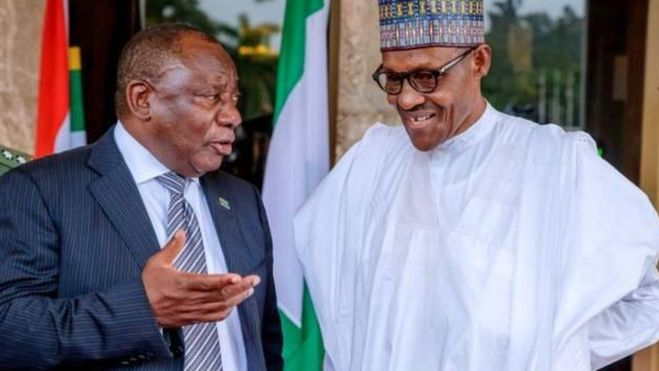
Nigeria and South Africa leaders

Mbanu, I don’t see myself in that light.

We had our systems running smoothly before they were invaded and corrupted. Our communities knew the system of government that worked for them and adopted them. There was no corruption or what have you today. But as alien systems came in and were forced on Africa, things began to fall apart.

But that is not the issue right now. What we need to do now is to break out of the chain of mental slavery. We should accept that we were not ‘saved’ by the colonialists. We should accept that other continents are not better than Africa. We should look deep down and see our strengths and focus on building them. We should start seeing ourselves as worthy enough to compete and work with people from different parts of the world. We should start assuming our former position – the cradle of life.

Don’t let anyone tell you, you’re less intelligent, or less innovative, or less beautiful, or less important, or less anything because you’re African. Always remember that we were doing well before they came. They didn’t make us better; rather they jeopardised our system. It’s time to take back and own what is ours.