DD
MM
YYYY

PAGES

DD
MM
YYYY

spot_img

PAGES

Home Blog Page 6058

Register for Tekedia Mini-MBA And Get These Books & Cybersecurity Training [Videos]

0

Join this academic excursion to business knowledge. If you beat early bird deadline, we will get you in and offer the following.

  • – Africa’s Sankofa Innovation (free)
  • – The Dangote System: Techniques for Building Conglomerates (free)
  • – Serving our Singularity Future (discount coupon)
  • – Facyber.com cybersecurity courses (free)

Tekedia offers an innovation management 12-week program, optimized for business execution and growth, with digital operational overlay. It runs 100% online. The theme is Innovation, Growth & Digital Execution – Techniques for Building Category-King Companies. All contents are self-paced, recorded and archived which means participants do not have to be at any scheduled time to consume contents.

Register for Tekedia Mini-MBA here.

If you do, we will offer a discount for our new book.


Notes From My Jumia Case Study

2

So, I’ve spent the past couple of weeks working on case studies of various Nigerian/African Unicorns, answering questions like what they did? How they did it? And what you can learn from the strategies they’ve employed.

Last weeks case study was on Jumia group, the first (supposedly) African unicorn to list on the New York Stock Exchange.

These are my notes from that case study.

Note: If you’re a big fan of Jumia, and you’re very sensitive, you probably shouldn’t read this.

Understand your Market

I usually start my notes with something about markets, and there’s a reason for that. The Nigerian, and by extension African market is a very complex market, and the better you understand and grasp it, the less your chances of bleeding investors (or your) money to nowhere. Jumia is the perfect reason why you should never enter the Nigerian market without understanding it.

I’ve always said that copying and pasting without reasonable modifications doesn’t work in Africa, some agree, some do not, however Jumia is the reason you definitely shouldn’t do so.

Jumia’s original investors Rocket Internet have a reputation for copying and pasting, they did this with Billpay, Alando, and Studivz (PayPal, Ebay and Facebook clones respectively), went scott free and apparently walked away with hundreds of millions of dollars before landing in Africa and learning the hard way that jumping out of an airliner with a parachute without finding out how it works (understanding the market) is not being proactive, and learning on the go.

Jumia’s strategy was to quickly take the eCommerce space in Africa and solidify their lead, and because everyone keeps saying Africa is the next billion, they forgot to ask enough questions and find out if this was a market ripe for eCommerce, if they had asked enough questions, they would have realized that eCommerce is a niche business here, a good number of Nigerians can’t afford eCommerce, most transactions still tend towards cash and majority of their target market prefer offline to online retail. But they didn’t, they just drove into the market head on without brakes, seat belts, or even an airbag. They probably didn’t have a drivers license. Makes me wonder what they had on the pitch decks they were showing investors, they must have had WeWork’s sweet talking Adam Neumann on their team, but I digress.

When I was in Boarding School, and my house (purple house) needed someone to represent them in a race, someone who could sprint large distances in the shortest possible time, I was definitely not the guy to call. If they needed a rapper, I was the guy (don’t ask me why) but running was definitely not my thing.

I thank God that Stripe bought Paystack, and at least it got into International venture capital news, if not, the fact that the business that represents the innovative and entrepreneurial drive of a continent of 1.2 billion people in the largest stock market on the planet is an unprofitable eCommerce business founded by two Frenchmen, that has so far lost more than a US$1 billion, is still on track to losing more and has no clear path to profitability is disturbing. Jumia is the perfect idea of what a bad example looks like.

Jumia is the reason I was never allowed to play football on a competitive basis when I was in boarding school (don’t ask me why).

Calling Jumia the Amazon of Africa is extremely misleading, calling Jumia the Amazon of Africa is like calling Innoson motors the Toyota of Nigeria. Innoson motors is more of a Lockheed Martin (Government Contractor) than a Toyota.

In my opinion, Jumia is the black WeWork that mysteriously found its way to the NYSE (New York Stock Exchange), after burning billions of dollars in venture capital and investors money.

Jumia is the reason your mum always wanted you to wear nice clothes when you went to church on Sunday, so you could represent her well.

To create some context, Jumia and its subsidiaries are active in 11 African countries representing a total market size north of 600 million people, out of which it only has 6 million active users around 1% of its market size (I wonder what their definition of an active user is, Boomplay has 44 million active users; they define an active user as anyone who has logged into their platform more than once, I have never bought anything on Boomplay in my life, yet Boomplay defines me as an active user.), whereas Amazon’s American market which is around 300 million people, out of which 59% of its American users (95 million people) are signed up to Amazon prime.

With a market size twice that of Amazon USA, Jumia has a GMV (Gross Merchandizing Volume) of US$1.1 billion whereas Amazon USA has a GMV north of US$100 billion, a 100x multiple. I personally think that calling Jumia the Amazon of Africa is an unfair description of both Amazon and Africa.

Because there’s a need in a market isn’t a requisite for you to innovate for that market, there needs to be enough people in that market that can pay you for your solution. What you run is a business, not a charity.

Creating value is just one part of the puzzle, you also need to think about how to extract value.

If you think I’m being too harsh, you’re right, but after exiting their complete 11% holdings at Jumia, I have strong reasons to believe that Rocket Internet shares my sentiments too.


Start with Infrastructure

Every tech business falls into one of three categories; businesses that build Infrastructure (Flutterwave, Paystack, Interswitch, Intel, Qualcomm), businesses that build a product on top of existing infrastructure (Uber – Google maps, Tecno – Mediatek chipsets, HP – Intel, your eCommerce store – Paystack), and businesses that build both infrastructure and a product at the same time (Apple-IOS-A11 Bionic chip, Samsung – Exynos, Google Pixel – Android), however once in a while, some business high on venture capital comes out of nowhere to do the unthinkable. Once in a while, a business comes out of nowhere to build a product where there is no infrastructure. The VC smoking tech startup of our generation is Jumia group.

Looking at Jumia’s financial reports, you’ll notice that a good part of Jumia’s expenses comes from fulfillment costs. Nigeria doesn’t have the appropriate logistical infrastructure for eCommerce, and you’re either faced with building your own infrastructure (which is another problem to solve entirely), or using venture capital funds to subsidize the cost of fulfillment.

Amazon has the US postal service to rely on, Jumia has the Nigerian postal service to rely on. This is why Jumia is still unprofitable.

Identity

Is Jumia an African business? Short answer: no.

Long answer: A business that has it’s headquarters in Germany, product team in Portugal, and senior management in Dubai cannot walk up to me and tell me it’s an African business because it innovates for the African market.

Transsion Holdings makes 75% of its sales in Africa, and they don’t call themselves an African business.

Transsion has probably made more profit this year in Africa than Jumia has made since incorporation. Why? Because Jumia hasn’t made a profit.

The Bright Side

It’s not all gloom and doom, there’s also a bright side; Jumia has raised more venture capital money than any African Startup I know of. To put this into context, from 2010 – 2019, West African startups have raised US$1.8 billion, Jumia alone has raised about 40% of that amount at US$823 million, there’s definitely a thing or two you can learn from Jumia on fundraising.

On its path to profitability, Jumia has chosen to spin off Jumia Pay and Jumia Logistics. Jumia Pay is presently enjoying good adoption, growing at double digit speeds, and has a huge marketplace it can take advantage of, so there’s a lot of potential there.

I personally don’t see a concrete future in eCommerce as a mass market service in Nigeria any time soon. eCommerce scales massively as a niche product, think about all the people selling clothes on your WhatsApp and Instagram feeds, and the fact that there are more dispatch riders parked in Computer Village Ikeja, than there are human beings moving there (this is obviously a joke, but you get the point), but as a mass market product that you want the average Nigerian, and by extension African to use on a regular day to day basis? I really can’t tell.

Jumia has plans to go into groceries/FCMG deliveries soon, a large volume, small margin business segment. Would you prefer to order toothpaste on Jumia and wait for an hour or more to get it delivered to you, go out yourself to buy it, or find someone at home that isn’t doing anything and plead with them to get it for you? Your call.


Inspired by the Holy Spirit


P.S if you work at Jumia, invest in Jumia, or have a personal relationship with Jumia beyond just using their site, and you find this post offensive, I apologize for my humor, that’s just the way I write.

P.S 2: I’m presently working on an eBook where I go deeper into market segments, business verticals, and a couple of other stuff required to build billion dollar businesses here in Nigeria. If this is something you’re interested in, you could click here to my landing page and signup to get notified when it launches, get early access, and a 30% discount when it finally goes live. (https://mailchi.mp/bf9bc6f5788c/ebook)


Disclaimer: These are my views, and do not represent the views of Tekedia or Prof Ndubuisi Ekekwe


Human-Platform Banking Is Growing in Nigeria

2
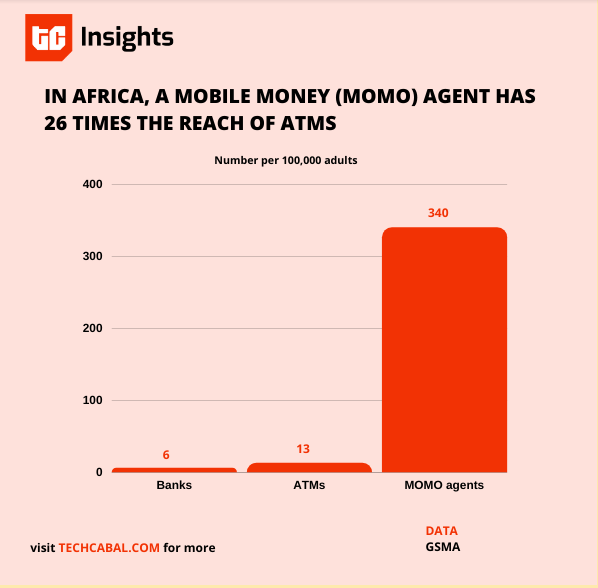
Momo agent, ATM, Bank in Africa,

It looks simple: mobile money agents have scaled faster than banks and ATMs in Africa. Yet, focusing on the MOMO agents, you will miss the real deal here. Yes, the real deal is what powers the MOMO agent. Largely, the telcos power them or they congregate around the infrastructure provided by telcos. The presence of airtime resellers and momo agents are well correlated. The implication is that, over time, expect a displacement where human-platform banking will continue to win more territories via telco networks.

Fast-forward, the bank is at a new game: human-platform banking. People call this agency banking. That is fair, but for me, it goes beyond agents if you read one of the key components of the CLOSA account (the bolded section below).

“Part of our activities in this space include the development of products such as the BETA and CLOSA accounts. BETA targets market traders and also supports small and medium enterprises (SMEs). The BETA account employs agents (called BETA friends) who go to the areas of comfort of these market traders and offer them all the financial services they need without impacting on their way of life, whilst the CLOSA account was created for those without Banks in their areas. People of influence in the community were selected to act as agents of the bank to ensure trust and those in the community were assured that the Bank would assume responsibility for their money once it was deposited with the agents.” Diamond Bank

There is no single reason to bet against the leading telcos like MTN and Airtel because they are well positioned to capture the most value in financial services including the latent credit services. It comes down to marginal cost efficiency which airtime reselling business model has perfected, and which telcos are well positioned to run.

Agents are the fastest way to convert cash to digital value and vice versa. About $124 billion in digital value pass through mobile money services and agents every year. There are 481 million registered mobile money accounts in Sub-Saharan Africa, 50 million of them were registered in 2019. Everything from remittances, airtime top-up to savings, mobile money has become an integral part of how money moves on the continent. (Source: TC Insights via newsletter)

Banks are late in this party and would need lots of adjustment to capture value.

Overcoming The #ENDNigeria Protests

1
Nigeria leaders

The Petroleum and Natural Gas Senior Staff Association of Nigeria (PENGASSAN) said on Monday that it has asked its members to start cutting their services over its “lingering disagreement with the federal government over the directive on the registration of some of its members on the Integrated Payroll and Personnel Information System (IPPIS).” Recall that most universities are on strike partly because of IPPIS. PENGASSAN plans to join ASUU, the association of university teachers.

The workers’ association said the strike action was pursuant to the demands concerning their members working in federal government agencies, whose salaries were withheld since May, over alleged non-compliance with the federal government’s directive to all its agencies to enroll on the IPPIS payment platform.

On June 8, PENGASSAN wrote to the Minister of Finance, Budget and National Planning, Zainab Ahmed, to protest the decision by the government to not pay the workers allegedly at the instance of the finance ministry.

In the letter, the association identified the affected agencies to include the Department of Petroleum Resources, Petroleum Products Pricing Regulatory Agency, Petroleum Equalization Fund, Petroleum Trust Development Fund, the Nigerian Content Development Monitoring Board, Nigerian Nuclear Regulatory Agency and Petroleum Training Institute.

Sure – Nigerians are special breeds: we want the government to weed out corruption but we cannot allow simple things to go through. There is no process in this world that delivers all positives. While the government can slow the operations of universities with IPPIS along with any illusive “autonomy”, Nigeria will benefit on average.

Yet, the problem is not the ASUU or PENGASSAN but the fact that Nigeria does not have an identity management system at scale. If every university professor uses a national identification number and is paid salaries by, say, the federal government, during tax, that number could be used to reconcile many things. But because we do not have such a working system, the government is left to stop all problems at the source since it cannot catch anything down the drain. This paralysis should not close our schools for more than a year! Nigerians need to show a new heart.

My call remains: you do not do everything in life just because it helps you. You can do things to help the system. A few years ago, I came into Nigeria, and went for the NIMC number. I got the number. That number has absolutely no value for me: I did it to ensure we can have a working Nigeria. It was in the same spirit that boxing legend, Anthony Joshua, went home, and went to get his NIMC number. Joshua has no need for that number. He lives in the UK and understands how communities band together to make society function.

We are having many confrontations in Nigeria and I think it is time we end them. To end them, the government needs to understand that it needs to re-calibrate. Yes, pausing bank accounts of those involved in peaceful protests may not help in the long-run. With that mindset, it is the government that is protesting for #ENDNigeria which is more dangerous than #ENDSARS or variants.

The Nigerian government is currently deploying different strategies to punish those who played key roles in the nationwide protests against police brutality and poor governance in the country.

The new development, which involves freezing of bank accounts, confiscation of travel documents, and gestapo-like arrests, has been likened by many Nigerians to what happened when the current president, Muhammadu Buhari, was the military head of state between 1984 and 1985.

Simply: If government begins to ban, pause, harass, and victimize peaceful protesters, it could trigger a new problem that would bring Nigeria down. The vendetta could cause a problem it cannot handle. It needs to stop for Nigeria to exist!

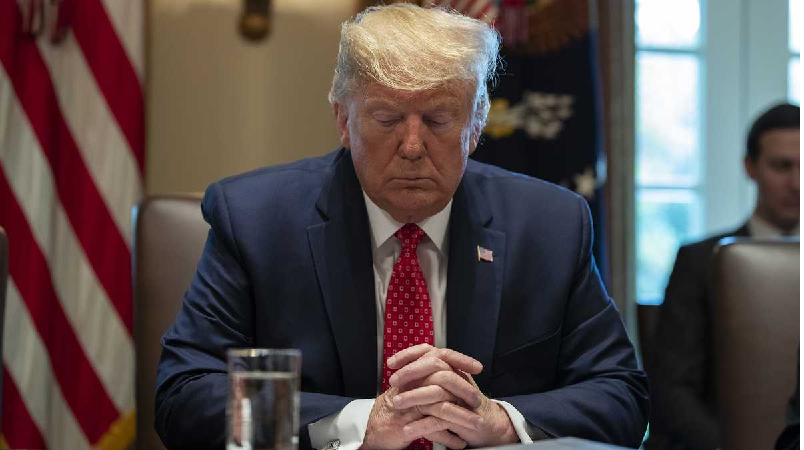
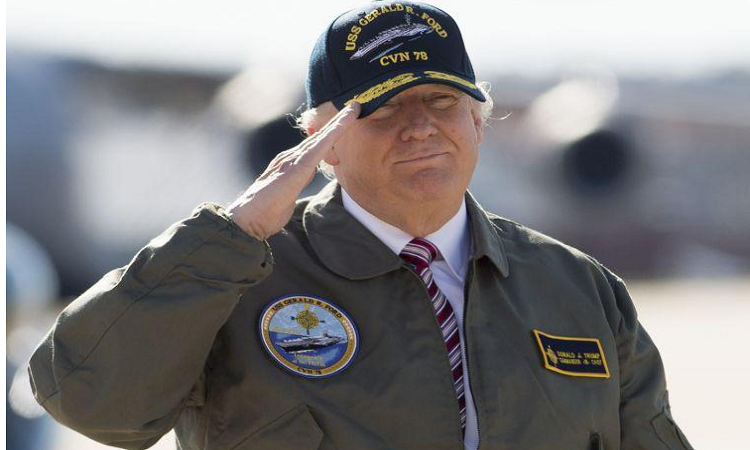
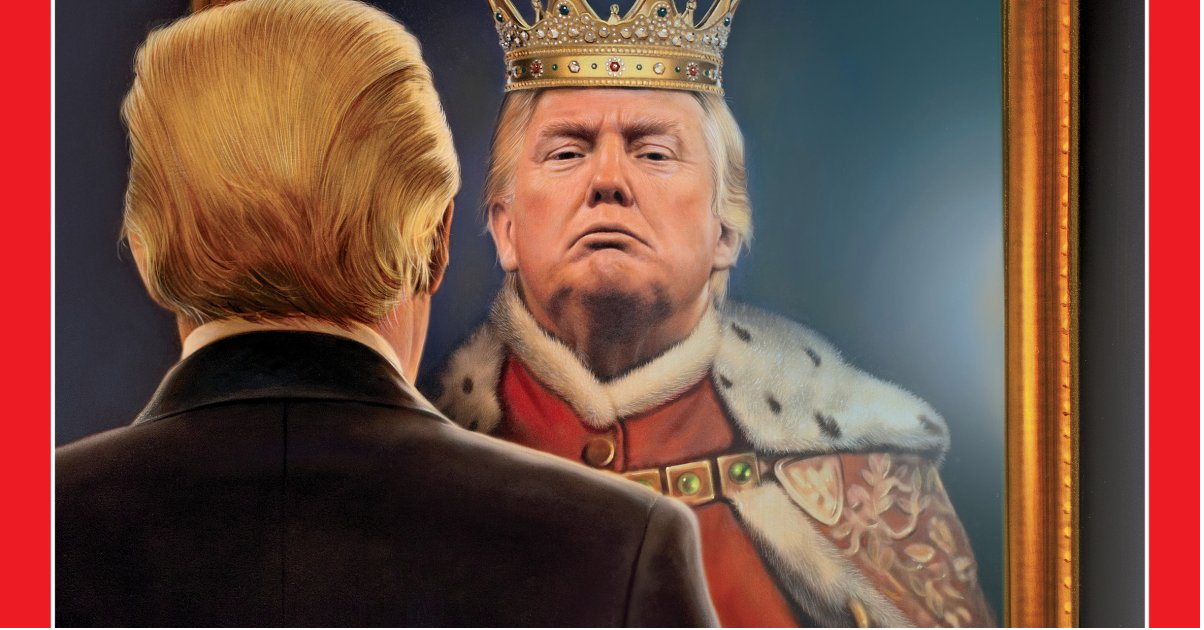
Donald Trump: A Serial Winner Who Doesn’t Know How to Lose

0

In December 2014, the US president Donald Trump tweeted: “What separates the winners from the losers is how a person reacts to each twist of fate.”

His tweet is a true statement, and it has come to hunt him six years after.

As the mail-in ballots got counted in favor of Democratic Candidate Joe Biden in the US presidential election, Trump was notably acting far from his tweet of six years ago. But it wasn’t an attitude he developed just in the weeks of the presidential election, it dated back to years before he delved into politics.

During his time as a TV reality show personality, there was a period when he didn’t get an Emmy for his TV program three years in a row, and he started tweeting that the Emmys were rigged against him.

As the hotly contested election between Democrat nominee Hilary Clinton and Republican Trump swept across US states in 2016, the big question Trump found hard to answer was if he would accept the result of the election if he loses.

He on many occasions failed to make the verbal commitment that he will accept the election result, stoking the suspense that had trailed the campaigns over what would be if Hilary wins. At a rally in Delaware, Ohio, Trump was asked once again if he would accept the result of the election if he loses, and he answered.

“I will totally accept the results of this great and historic presidential election,” he paused and amidst cheers added, “if I win.”

It was a development that defied what Trump believed in or so people thought when he made the 2014 tweet.

Therefore to many, his stand on the Nov. 3 election is hypocritical, but to others; it’s not surprising at all. It has been nothing short of Trump, a man who must have his way or he will cry foul and allege fraud.

“You know, every time Donald thinks things are not going in his direction he claims whatever it is rigged against him. The FBI conducted a yearlong investigation into my emails, they concluded there was no case. He said the FBI was rigged,” Hilary Clinton said on a debate night with Trump in 2016.

“He lost the Iowa caucus. He lost the Wisconsin primary. He said the Republican primary was rigged against him. Then Trump university gets sued for fraud and racketeering: he claims the court system and the federal judges is rigged against him,” she added.

At the wake of the Nov. 3 election result collation, Trump who has been critical of mail-in ballots was at the mercy of his own nervousness. His celebration of the early votes count was short-lived by the collation of mail-in ballots, especially in swing states. His diminishing lead was a development the president was not ready to see, so he went off with the fraud rhetoric.

“We should look at the votes. We’re just beginning the tabulation stage. We should look at these allegations. We’re seeing a number of affidavits that there has been voter fraud. We have a history in this country of election problems,” said Trump as he poured out threads of tweets alleging fraud in the election.

Compared to other Republican presidential candidates in the past, Trump’s attitude toward losing is bewildering.

In 2009, when late Senator John McCain lost to Barack Obama, his concession was seen as that of a leader who knew how to win and how to lose, who respects American institutions and decisions, and most of all, who put American interest above his political ambition.

In 2012, when Republican Senator Mitt Romney lost to Obama, his concession speech was regarded as more than acceptance of defeat; it was described by many as full of patriotism.

“I have just called president Obama to congratulate him on his victory. His supporters and his campaign also deserve congratulations; I wish all of them well, particularly the president, the first lady and their daughters. This is a time of great challenge in America, and I pray our president will be successful in guiding our nation,” he said.

This was a trajectory that Clinton didn’t find hard to follow even though the 2016 election was filled with allegations of foreign interference that favored Trump. She conceded defeat and congratulated Trump.

As Americans celebrate Biden’s win and the end of Trump’s presidency that has been characterized by controversies, the president would not guarantee a peaceful transition of power.

In several occasions prior to the election, Trump had said the election will be decided by the Supreme Court. It was for this reason many believe he hastily appointed a conservative replacement for the deceased Supreme Court Justice Ruth Bader Ginsburg.

There were many other moves by the president seen as attempts to obstruct the electoral system, and to turn the results to his favor. Trump tweeted on July 30 that the election should be delayed “until people can properly, securely and safely vote,” after alleging that mail-in ballots will lead to fraud. The idea was fiercely opposed even by members of the Republican party.

As the tabulation was going on, Trump, who has managed to influence many leaders of the GOP, was running from one court to the other seeking injunctions to stop the count and cancel the results, even though there has been no evidence of fraud so far in the election.

Trump has won and lost on many fronts, an experience believed to prepare one for better for worse events like the presidential election. But as Bill Gates said years ago; “success is a lousy teacher. It seduces smart people into thinking they can’t lose.”

Trump’s constant foul cries are therefore seen as paranoia emanating from the premonition of losing, and desperation to cling to a prominent position. Consequently, many are afraid that as more people jump his bandwagon, his unwillingness to accept defeat will set a precedent that will undermine American democracy.