DD
MM
YYYY

PAGES

DD
MM
YYYY

spot_img

PAGES

Home Blog Page 6058

WTO Postpones Nov 9 Meeting in a Possible Wait for the Outcome of US Presidential Election

0

The World Trade Organization (WTO) has postponed a General Council special meeting on the appointment of the next Director General. The organization announced on Friday that the meeting, previously slated for Nov. 9, has been postponed until further notice due to “health situation and current events.”

“It has come to my attention that for reasons including the health situation and current events, delegations will not be in a position to take a formal decision on Nov. 9,” David Walker, General Council Chair of New Zealand said in a written statement to all members.

“I am therefore postponing this meeting until further notice, during which period I will continue to undertake consultations with delegations,” he added.

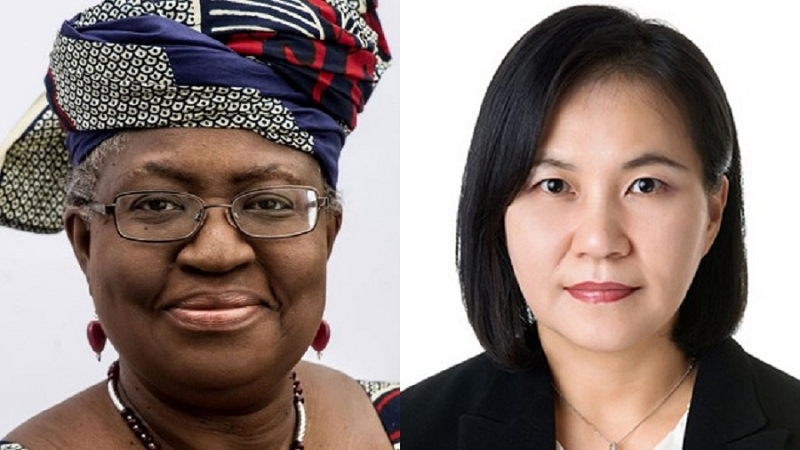
United States’ opposition to the appointment of Ngozi Okonjo-Iweala as the DG of WTO created an urgent need for meeting for the trade organization’s delegations. The US had vetoed her appointment on the ground that she lacks expertise in trade, preferring South Korea’s Yoo Myung-hee.
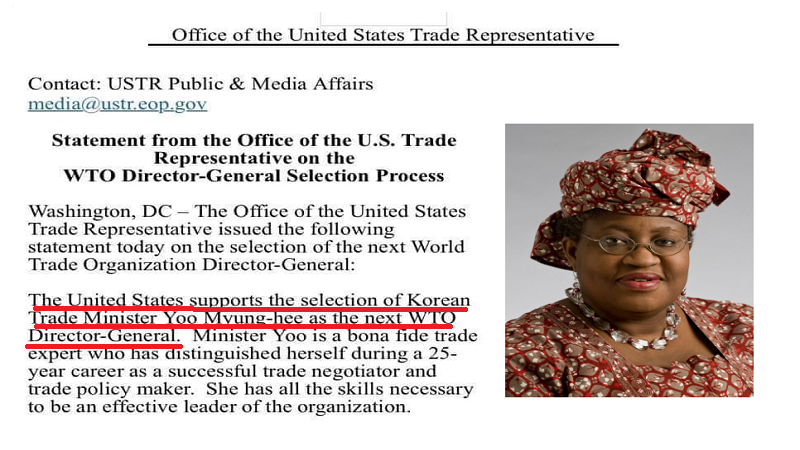
A statement from the US Trade Representative, which advises President Donald Trump on trade policy said Yoo had “distinguished herself as a trade expert and has all the skills necessary to be an effective leader of the organization.”

Okonjo-Iweala has the support of 164 members of the WTO, except the United States who has vowed to support its preferred candidate Yoo.

Nevertheless, on October 28, Walker told WTO members at a Heads-of-Delegation meeting that based on their consultations with all delegations, the candidate best poised to attain consensus and become the new Director-General was Ngozi Okonjo-Iweala of Nigeria.

“She clearly carried the largest support by members in the final round and she clearly enjoyed broad support from members from all levels of development and all geographic regions and has done so throughout the process,” Walker said.

In view of the US’ objection, the organization had scheduled Nov. 9 to set matters right in accordance with its constitution which requires that its 164 members appoint a Director-General by reaching a consensus.

Rockwell told reporters earlier that there would likely be “frenzied” activity to secure a consensus for Okonjo-Iweala’s appointment. She has the support of European Union.

Thus, the postponement of the Nov. 9 meeting till further notice suggests a strategy to beat the US hurdle. The World Trade Organization appears to be waiting for the outcome of the US election, hoping Biden’s presidency, who has made promises to support international organizations, would support the decision of other members of the organization.

The US President Donald Trump has been very critical of the WTO, describing it as “horrible” and accusing it of bias toward China.

As the votes count in favor of Biden in the US election, the World Trade Organization seems to be playing a waiting card and would likely reconvene next year, after Biden might have been sworn in.

Okonjo-Iweala who has responded to US’ objection to her appointment by referencing her works in trade and reiterating her readiness to lead the organization to great heights, expressed her gratitude for the WTO’s decision to postpone the meeting.

“Thank you WTO for today’s (Friday) step in the formal recording of my leading position as Most likely to Attract Consensus for WTO DG. Every step is important. Look forward to further progress at the appropriate time,” she said.

Environmental Innovation: The New Goldmine in Africa

0

When you hear about Tesla, what comes to mind?  Electric cars I believe. A green vehicle that runs with electricity, has falcon wing doors, smooth and quiet. An example of a modern day environmental innovation.

Environmental innovation is the creation of products and processes that will ensure sustainability.  It entails producing and transforming technology applications to adhere to terms of environmental sustainability.  In summary–innovation is an idea transformed into practicality.

In recent times, there seem to be a shift in inventions and innovations. Green products  and technologies  are the inventions and innovations that have been on the rise and in-demand in recent times. Data on Tesla vehicles, according to Statista, indicated that Tesla’s vehicle deliveries reached between 367,000 and 368,000 units in 2019. The Smog free project, Zéphyr Solar and The Green Building Initiative (GBI) are initiatives highly regarded all over the world. We also have B-Droid, an initiative aimed to create robotic bees that can pollinate crops– a technology poised to change the agricultural world. All these are highly appreciated due to increasing risks and undesirable consequence of manufacturing firms on the environment. Although many eco-sensitive firms and initiatives are springing up, it seems Africa is being left behind.

In Africa and Nigeria in particular, fintechs and agric-techs are  flourishing (in 2019, Interswitch was valued at $1 billion, while Paystack was recently acquired by Stripes for $200 million dollars), while eco-tech companies are struggling to woo the kind of crowd the aforementioned startups have. In terms of investment, venture capitalists most times, doubt the future of such businesses. Potential investors believe that a business must show signs of scalability.  And yes! Every successful business needs a scalable business model, and eco-tech companies cannot be an exception. However, many potential investors feel that such businesses and their business models might be unscalable. An untrue assumption.

Environmentally conscious and eco-tech companies, I believe, seem to be the best/ most suitable business for scalability. If such companies are given the financial backing and conducive environment, they could bring more ROI (return on investment) compared to other tech companies. Not just that, if well planned, eco-tech companies could be the solution to the environmental challenges e.g. waste menace that has beset Africa. Examples could be taken from brands that modified their business models to a more sustainable one.

Many top giants in the apparel & accessories industry e.g Adidas and Nike have remodeled their business models to sustainable business models. They also created effective business strategies to ensure it works.  Adidas for example brought out a “three loop strategy” focused on ending plastic waste, ensuring a circular economy (an economy that focuses on reducing, reusing and recycling raw materials), and production of sustainable clothing mainstream. With this, Adidas has postulated that by 2024, they will eliminate virgin polyester in their products and go 100% recycled (Sina Port, 2020). Nike on its own has ensured their business model revolved around minimizing environmental footprint. This has led them to recycle approximately 30 million pairs of shoes since 2010 (Nike, 2010).

The sustainable business model built by Adidas  has seen the demands for its sustainable products rise  considerably, contributing in part to the company’s 10% increase in revenue to $6.4 billion in the last quarter of 2019. Meanwhile Nike posted a a revenue of $10.6 billion in the first quarter of 2020. A $1.49 billion difference to the $9.11 billion estimated by business analysts (Kim Bhasin, 2020).  And it is estimated that the global sustainable footwear market size which was valued at USD 7.5 billion in 2019– is expected to grow at a compound annual growth rate (CAGR) of 5.8% from 2020 to 2027. Not a bad financial return you will agree. And, when it comes to raising seed capitals, many emerging eco-tech companies in some regions of the world are not doing badly either.

Some eco-tech startups in regions such as Europe and other developed nations are getting access to funds through investors, and patronage from customers due to the increased consciousness of environmental sustainability. Companies such Solarkiosk, Artic Sands, Freight Farms are typical examples. Freight Farms for an example, has raised about $12 million from venture capitalists and have sold in excess of 250 shipping-container farms in more than 15 countries.  All these within its 10 years of existence.

The above illustrations should indicate that eco-tech companies are poised to flourish as time goes on, and it will thrive more in Africa.

Existing companies in Africa should tweak their business model to a sustainable business model, making it a disruptive business model– a Fosbury flop approach. It is the new technique.

As a potential entrepreneur or or an existing business owner, using an environmental innovation as part of a “double play strategy” would not be a bad idea. It is certain that it will be a recipe for success. Adidas did it, Nike followed and others are tweaking their models to follow suit. Tesla is also a huge success.

If it can work in other regions of the world, why not Africa? Environmental innovation is the new goldmine in every corner of the globe, including Africa.

“It is no more Innovation of Nations–It is now Environmental Innovations of Nations”


Call Him Mr. Cement: Michel Puchercos’ Magic Has Started in Dangote Cement

6

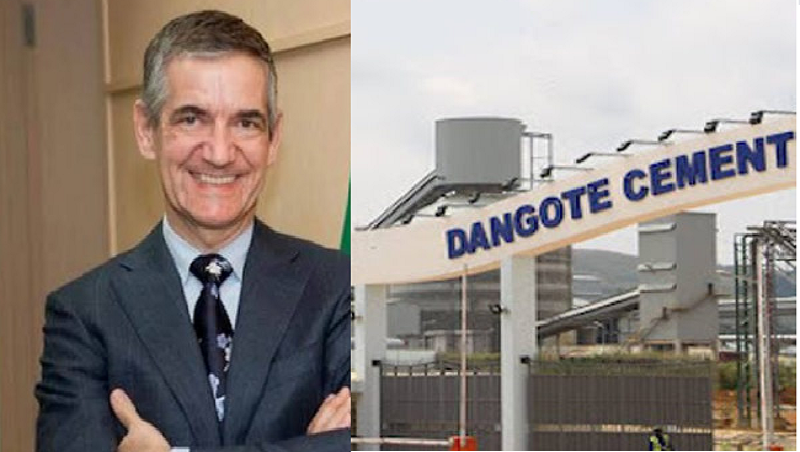
Dangote hired Michel Puchercos from Larfarge to keep in-house a man who seems to be the best talent in the cement industry in Nigeria. Michel had performed wonders in Lafarge, transforming the company in many ways, and positioning it to battle Dangote Cement.

“The Board of Lafarge Africa Plc hereby notifies The Nigerian Stock Exchange and the investing public of the resignation of Mr. Micheal Puchercos from the Company as the Group Managing Director/Chief Executive Officer with effect from the 17th of January 2020.

“Mr. Puchercos served the company as an Executive Director on the Board since the 1st of April 2016. During his tenure as the GMD/CEO, he implemented a successful turnaround plan for the business addressing the legal, financial and management structure of the company, Health & Safety improvements and the implementation of new operating processes.

“We wish him the best in his future endeavors.”

Market data reported to the Nigerian Stock Exchange seems to show that he is going to continue the streak, albeit in a new company: Dangote Cement grew 40% during one of the most challenging periods in the construction  sector when lockdowns froze the sector.

“I am delighted to report that Dangote Cement experienced its strongest quarter in terms of EBITDA and strongest third quarter in term of volumes. Despite a challenging environment, Group volumes for the nine months were up 6.6% and Group EBITDA was up 17.1%, at a 46.6% margin.”

“This quarter has really shown the ability of Dangote Cement to meet the strong recovery of the cement market in Nigeria and Pan-Africa after a challenging Q2. In Nigeria, we have witnessed a strong appetite for real estate investment and the recovery of infrastructure spending – including more concrete roads.

“Sales volumes in Nigeria were up 40% in the quarter and Pan-Africa reached a record high EBITDA margin of 24% in the quarter. In the quarter, our Group net profit was up 135.1%,” he said.

Find ways to build the best team: nothing else matters than having the right person to manage all your factors of production. This man is a real Mr. Cement and he is rocking it in Nigeria. Yes, in the Forum a few months ago, I noted how he grew profits 1,284% in Lafarge while reducing CEO compensation by 10%!

2020 Career Week Day 6

1

Notes: only the first 100 will be on Zoom. Others will connect via YouTube Live here. You can leave comments below and the moderator will still pick them. Links for Live Sessions Sat| 12noon -1pm  WAT| Nurturing Innovators & Career Planning – Capt. Ola Olubowale– Tekedia Live | Zoom link Sat | 7pm – 8pm WAT […]

To access this post, you must purchase Tekedia Mini-MBA (Feb 9 – May 2, 2026) | $170 or N120,000.

India Anoints WhatsApp Pay and Zuckerberg Receives The Throne

4
Facebook founder and properties

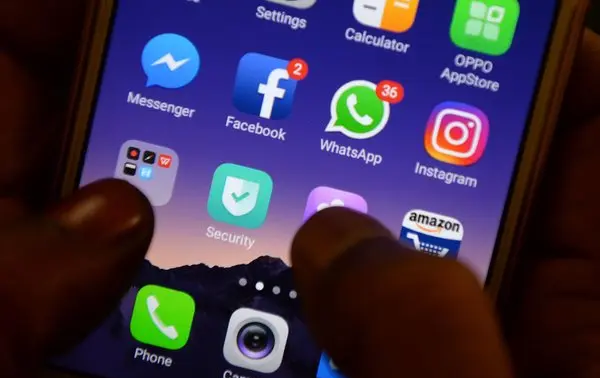
A new payment era begins and a new order out of the beautiful America. Yes, the Indian government has approved WhatsApp Pay, a secure payment system used in making money transfers on the WhatsApp platform, the company announced.

The Indian government has approved WhatsApp Pay, a secure payment system used in making money transfers on the WhatsApp platform, the company announced.

“Starting today, people across India will be able to send money through WhatsApp. This secure payments experience makes transferring money just as easy as sending a message,” WhatsApp said in a blog post. “People can safely send money to a family member or share the cost of good from a distance without having to exchange cash in person or going to a local bank.”

The payment feature was designed in partnership with the National Payments Corporation of India (NPCI) using the Unified Payment Interface (UPI), an India-first, real-time payment system that enables transactions with over 160 supported banks, according to a statement from WhatsApp.

The instant message app explained that it is necessary to have a bank account and debit card in India to use the WhatsApp Pay feature, which can be downloaded in the Google and Apple stores.

This an asymmetric perturbation in emerging market payment systems. Expect the valuation of most paytech startups to drop in India. Simply, if you belong to a planet, you cannot compete against that planet. Facebook’s WhatsApp is a planet and most payment startups in India will struggle.

With Brazil done, India done, I expect Nigeria next in the next coming months. It is a convergence: pick the main countries in each of these continents and then, out of them, unify the ecosystems. Hail the king social, hail a new feather – payment. Mark Zuckerberg begins a new ascension with what he has always wanted: moving money in emerging markets. He is largely close to become the modern operating system.

Mark Zuckerberg is now sitting on the throne: he has the moat with scale, and has taken the castle. It is going as predicted in 2018.

Google Tez will likely lead the person-to-merchant segment while WhatsApp would take the person-to-person. Each would continue to find how to enter each other’s territories.

The challenge for Nigerian banks would emerge if people begin to warehouse their funds within the WhatsApp and Tez wallets to avoid moving them into their bank accounts. This is important as Nigerians pay fees when they withdraw their funds in their bank accounts [remember the stamp duty on digital transfers]. So, reducing that bank exposure would be strategic for many merchants. If WhatsApp and Google Tez provide the platforms to do banking with the big fees charged by banks, many would go for them.

India Approves WhatsApp Pay