DD
MM
YYYY

PAGES

DD
MM
YYYY

spot_img

PAGES

Home Blog Page 6061

Register for Tekedia Mini-MBA Annual Package [Video]

0

Tekedia offers an innovation management 12-week program, optimized for business execution and growth, with digital operational overlay. It runs 100% online. The theme is Innovation, Growth & Digital Execution – Techniques for Building Category-King Companies. All contents are self-paced, recorded and archived which means participants do not have to be at any scheduled time to consume contents.

It is a sector- and firm-agnostic management program comprising videos, flash cases, challenge assignments, labs, written materials, webinars, etc by a global faculty coordinated by Prof Ndubuisi Ekekwe.

Code Program
MINI Tekedia Mini-MBA costs US$140 (N50,000 naira) per person.
MINR Add extra (optional) $30 or N10,000 if you want us to review and provide feedback on your labs.
MINF Annual Package (includes 3 editions of MINI and optional 2 certificate courses) – $280 or N100,000.

Good People, if you register by Nov 30 for our next edition which begins Feb 8, you will get a bonus of 2 ebooks (Africa’s Sankofa Innovation, and Dangote System) and a free cybersecurity course at Facyber. Register here.

The Importance of Reading

0

The Igbos will say that “onye njem ka onye isi awo mma”, meaning that a traveller is wiser than an old man. This is used to show that the experiences a person gathers from travelling exposes him and gives him more wisdom. It also shows that experience is the best teacher. The reason here is that the more a person moves from place to place, the better his chances of meeting with people of different cultures, ideologies and values. The person will also have knowledge of what is obtainable in another place. But above all, he will learn from his mistakes and that of others.

When the ancestors of the Igbo tribe came up with that proverb, there was a limit to what a person could learn. In those days, people lived in smaller communities and only related with members of their communities. Occasionally, they engaged in social relations with their neighbours, who were also small clusters of people with ideologies similar to theirs. In essence, most cultures, religious practices and values were the same among each and every one of these communities.

But then, time came when people began to risk moving farther away from their hamlets. They began to venture beyond the “forbidden” boundaries and areas, seeking for knowledge or just to satisfy their curiosity. These brave adventurers returned to their villages wiser and richer, or, occasionally, damaged. But in the end, they were not stagnant.

Today, people find it easier to travel. It is easier to leave your abode and move into the next one. It is very easy for people to journey through the Atlantic Ocean in search of knowledge and wealth on the other side of the world. As days go by, boundaries between towns become thinner and thinner. Cultures have been merged. Religions no longer belong to any particular people. Values have been dispersed. And above all, experiences have been shared.

Bit by bit, the universe is becoming one big village. The continental drift that happened eons ago is being glued together. Continents are gradually coming together because you can find people from different continents in a place. All these owe their gratitude to the first adventurers that stepped out of their comfort zones to explore their neighbourhood.

But all these did not only happen because people started moving out of their abodes in search of knowledge and wealth. We should also thank the grand masters that discovered writing, which they used to store information. Because of writing, people store knowledge from their experience or that of someone else. Through writing, people reveal their mistakes and that of others. Through writing, people immortalise their strategies. Writing actually became the mind map of the sojourners. It became the companion of the philosophers. The intellectuals use it to reveal their discoveries. Historians use it to store events. And it is used by all to communicate to people far and near.

To decipher the knowledge hidden in written works, a person needs to read; there is no other way of doing that. Thanks to the discovery of the printing press, we can read materials written by people from different parts of the world and from different ages. We gather the truths hidden in those printed symbols and allow them to direct or to redirect our decisions and actions. Through reading, we meet with these writers, irrespective of who they are, where they are writing from and when they wrote. The good thing here is that we do not have to cross seven seas and seven forests before picking up these knowledge.

Now, the importance of reading has always been emphasised. We always hear that “readers are leaders” but we may not really know why it is so. Some people might think those words were actually put together because they almost rhymed. But a deeper look into the two keywords will tell you that for you to be able to have control over yourself and be able to influence others, you must have knowledge. Now, I ask, where do you think that knowledge comes from?

I believe you will agree with me that nobody is born with knowledge of what is obtainable in this world, unless the person is “ogbanje”, an “abiku”, who was said to have come into this world several times. Everybody in this world got information from people around him, including the mass media. Imagine if this person does not read; imagine if he only has his immediate environment to learn from; imagine that he became brainwashed because of his limited access to information. This is the bane of a person who does not read – information underload.

If you look at what is happening in the world today, you will understand why only a few people control the whole world. This time, I am not talking about Nigeria alone. Have you realised that people are fed with selected “information”, which keeps them busy while their leaders keep them in check? Have you noticed that the easiest way to rule people is by playing on their emotions and turning them against one another? Has it come to your notice that a great number of people do not think critically or analyse issues decisively before they act? There is only one reason for this – people only assimilate what was fed them by their “slavers”.

Now, reading frees people from shackles of mental slavery. But it can also lure people into bondage that is worse than mental slavery. This then comes to play when deciding what you read and your reason for reading in the first place. If you read to justify your action – you are wrong. If you read only materials that support one cause – you will get shackled. If you read only what you were advised to read by your “leader” – you will be misled and destroyed. If you read to find fault or to castigate – you will miss the message. So, why do you read?

Read to get knowledge. Read to understand. Read to learn. Read to free your mind. Read objectively. Read without bias. Don’t let people shackle your mind and soul; that is the worst kind of slavery. Own your life; find the tricks of the leaders; find the road to success; read for adventure; and read to travel. Today, time and geographical travel can be done on the pages of books; don’t miss that opportunity.

The Most Important Job for Ngozi Okonjo-Iweala

1

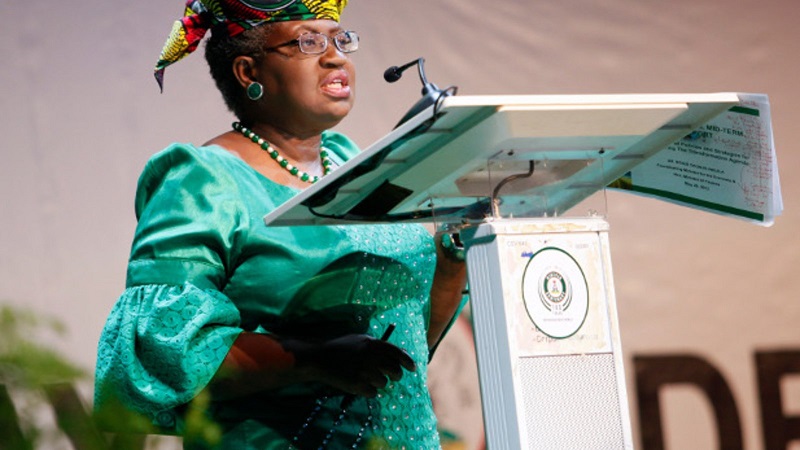
Most of our community members have made good points here: the director general position in the World Trade Organization may not be the right job for Ngozi Okonjo-Iweala. They posited that the DG job is an individual accomplishment that has only marginal value for Nigeria. Except trading global oil subsidies, I am not sure we have antenna systems that capture global trade, to benefit from her ascension.

It is one of those unfortunate things in the world: those who hired a cosmetic diva and a real estate flipper as trade advisers and negotiators are asking a Harvard graduate and MIT PhD to prove that she is qualified for a job. Reading Ngozi Okonjo-Iweala’s response to the United States on the World Trade Organization blockage is painful. But that is the world we live: you must be twice good to be half-celebrated. What can I say that her main competitor has not come out to endorse her. I mean how would the second in class, Ms  Yoo Myung-hee, feel if she actually gets this job? You lost the match but went home with the gold medal. Tufiakwa!

So, most are asking: can Dr. Okonjo-Iweala run for president in Nigeria, in 2023? Ideally, that one would benefit Nigeria more, if she succeeds!

Yet, I still think she will get the WTO job because her opponent will not be effective having come second in the process; U.S. made up its mind very late, unlike during Obama time when they made it clear very early whom they wanted to coronate.

Follow the conversation here at LinkedIn

Comment #1: She will be among the best if not the best for 2023. Unfortunately, the voters in conservative northern Nigeria will NEVER buy into her candidacy in 2023. Not because she’s NOI, but she’s female and a Christian.

My Response to Comment #1: The Christian point, not sure as GEJ won big in the north. But woman one? They do have female House members from north. With the protests, I think people are getting smarter: who can make my life better?. Every politician will have to make that case to win votes in 2023. In politics, besides competence, one has to have other skills – “white lies”. NOI will need to learn those skills if she wants to make progress.

Another commentNdubuisi Ekekwe i like your reply Prof. To add, OBJ also won big in the north. As for the female part, I believe it’s a nationwide issue not particular to the north, else we’d have seen female Governors in several southern states. In her case, her extraordinary competence will speak for itself, she’s among the best the country has to offer, no one can deny this.

Notes from my Transsion Holdings Case Study

0

So, I spent this week writing a case study on Transsion Holdings, how they became a billion dollar business, and how they’ve been able to extract monetary value from a region that is extremely price sensitive, cares more about essential products (60% of household income is spent on food), and has taken more businesses under than the Titanic.

This note is a short snippet of what I learned from that project.

Let’s begin.

Innovate around your Market

There are two big fallacies about investing, or doing business in the Nigerian and by extension the African market:

One is that Africa is the next one billion. This is partly true, and partly false. Partly true in the sense that yes there is a market opportunity here (not for every product though), and partly false in the sense that if you do not understand and innovate around this market, it could quickly turn from the next 1billion, to the next 1billion lost.

If you’re trying to invest or build a business in Nigeria, and you come in here with the “this model worked in San Francisco, Berlin, Beijing, and even Johannesburg” gait, the results you will command will so surprise you, you’ll think the guys that did your market research were deliberately trying to sabotage you.

If you want to succeed in this market, you need to design a new playbook that’s built around understanding and innovating around this market. What you did in Silicon Valley will not work here. I repeat what you did in Silicon Valley will not work here.

Transsion’s glocalization strategy built around creating products that are meaningful to local markets has paid off extremely well, US$11 billion well as at the time of writing this article.

The second fallacy about doing business in Nigeria is that there are 200 million people in Nigeria, and that’s a huge market opportunity.

I’ll be frank with you, regardless of what you sell, your total addressable market is nowhere near 200million, and depending on what you sell, your total addressable market may not even be up to 100,000 users. There are a good number of trendy startups in Lagos whose total addressable market is nowhere close to 100,000 users, because although they have a meaningful solution, the number of people who both find value in their product, and can afford it are not as many as you think.

Get in at the right time, and ride the waves

Africa is behind. This isn’t supposed to be an insult, it’s a strategy. What is already normal and common place in the West is still likely nascent here. What too many people try to do is try and copy what worked there and try to blindly replicate it here.

As much as copying and pasting (with some modifications) can work, pasting at the right time is extremely key.

Interswitch got into the market at the right time, has built a solid moat (Nigeria practically runs on Interswitch), and started the push for a cash less society.

Transsion got into the market at the right time, has built a solid moat (that 40.6% market share in the African smartphone space isn’t child’s play), and has instigated the smartphone push in Nigeria.

There are opportunities in this market, but you need to know the right time to get in, and explore the market. A time will come when electric cars will be mainstream in Nigeria, but if you try to start that now (a market where even buying brand-new cars is an extremely niche market), you will sell your trouser. Literally.

Guard your Brand with all Diligence

When Transsion started in Nigeria with Tecno feature phones, we called them “Chinko” phones. If you’re into brand strategy, Transsion is a very good example of how a business can transform its brand from being known as a “Chinko” phone, and every other negative thing associated with being a Chinese brand to become the go-to mobile phone purchase for more than 40% of the people in an extremely price sensitive market.

Focus on the Essentials

Focus on what’s important. Leave your Silicon Valley playbook at the door. I repeat leave your Silicon Valley playbook at the door. From the onset, Transsion’s design challenge has been simple; how do we create products that are valuable to our users at the cheapest price as possible.

This is why Transsion products always carry specs they know are important to their users, and leave the remaining buzzword specs at the door. Don’t expect wireless charging, a 120Hz refresh rate screen, and any other advanced and really unnecessary smartphone spec in any of their products anytime soon. Those kinds of specs are nice to haves, expensive to execute, and buzzy. Definitely not Transsion’s style.

That’s what innovation really is. Making things simple. In this market, innovation isn’t about high tech buzzwords like AI, VR, and IoT, it’s about creating products that are meaningful to a good number of people, and that are either affordable to your users, or designed in such a way they pay for them without even knowing. Any other thing is wasting your time.

Become Omnipresent.

If you live in Lagos, Abuja, or Port Harcourt, and you haven’t seen a Tecno, Infinix or Itel banner or advert, I can guess your house address.

You probably live in a remote cave in some faraway place where there is no internet connectivity, no banking system, and maybe even the Gospel of Jesus Christ hasn’t gotten to. Unless you operate primarily in the B2B vertical, if you want to scale a business in Nigeria, people need to see you.

Nigeria has an audio money culture; what we don’t see doesn’t exist.

In my 23 years of being a Nigerian, I have never seen an Innoson Motors advert. A good number of Nigerians do not know that someone somewhere in the east is manufacturing made in Nigerian cars. I don’t blame them, Innoson Motors operates primarily in the B2B sector, and based on the present spending power of the majority of Nigerians, I do not see that changing anytime soon.

If you operate in the B2C sector, the more people see you, the better it is for your business, and the better it is for your brand. And you should definitely not play with your brand.

Conclusion

Transsion Holdings is the perfect model for foreign businesses trying to invest and do business in the Nigerian and by extension African market.

Transsion’s strategy is built and designed around understanding their market, and building products that are valuable and affordable enough for the majority of people in their market segment.

That strategy of taking what you used in the West and trying to paste it here without any serious modifications will not work. I repeat it will not work.

The Nigerian market is a price sensitive market, innovation isn’t AI, VR or IoT here, it has a totally different meaning. You’ve got to learn to think outside the box and create products that a majority of users can both find meaning in, and that they consider to be affordable. Any other thing is not advisable.

A Medical Doctor To Speak In Tekedia Career Week

0

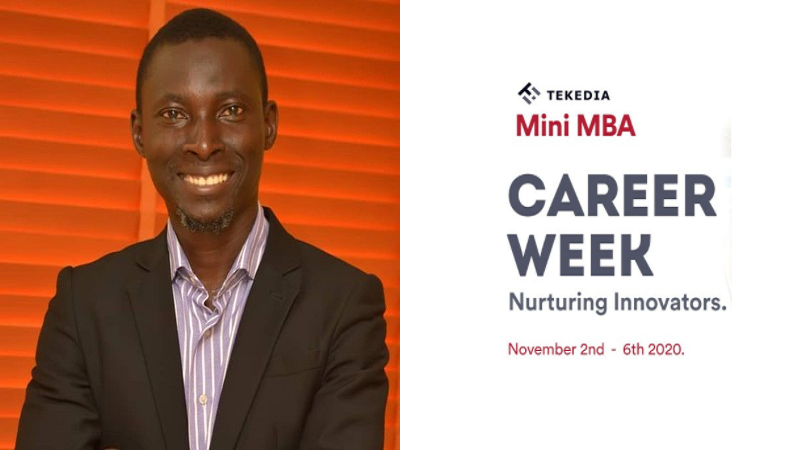
He trained as a medical doctor, the most noble of professions. He works to improve organizational productivity and staff performance through his practice.  As a  performance specialist, he optimizes career velocity ratio, helping people to accelerate  their ascension into leadership. Dr. Fatai Olajobi, a Tekedia Institute Faculty, will be teaching during Tekedia Career Week which begins on Monday.

This career week is not designed for finding jobs. Rather, it is structured to transform workers, professionals, founders and entrepreneurs into business leaders and champions of innovation in their companies. Join Dr. Olajobi from Monday.

Tekedia offers an innovation management 12-week program, optimized for business execution and growth, with digital operational overlay. It runs 100% online. The theme is Innovation, Growth & Digital Execution – Techniques for Building Category-King Companies. All contents are self-paced, recorded and archived which means participants do not have to be at any scheduled time to consume contents.

It is a sector- and firm-agnostic management program comprising videos, flash cases, challenge assignments, labs, written materials, webinars, etc by a global faculty coordinated by Prof Ndubuisi Ekekwe. Join here.

Digital Board for 2020 Tekedia Career Week