

Notes: only the first 100 will be on Zoom. Others will connect via YouTube Live here. You can leave comments below and the moderator will still pick them. Links for Live Sessions Tue | 12 noon – 1pm WAT| Nurturing Innovators & Career Planning – Nnenna Jacob-Ogogo – Tekedia Live | Zoom link Tue | 7pm – 8pm […]
Meaning of “Freedom of Speech” to an Average Nigerian

In Nigeria, freedom of speech means different things to different people. But the most accepted meaning of the concept is, “allow me to say whatever it is that I have to say.” This does not imply that what the person is about to say is the truth or that it is healthy. It does not imply that the person’s speech will not destroy another person, or even a state. It does not imply that his message will not mislead others. All he cared about is that he should be free to express himself.
That aside, I noticed many unfavourable things about the way Nigerians exercise their freedom of speech. The first one is the “shut-up-let-me-say-something” approach. Don’t be too fast to say that the leaders are the ones that do this. Many of us, if not all, are guilty of this. We find people like this in all walks of life. Some people believe they have the sole authority to talk and hence, nobody else should do that. To this group of people, everybody else should be their listeners while they exercise the right to free expression.
The next approach is the “believe-what-I-say-or-you-face-the-mob” attitude. Just like the first approach, the people here see themselves as the authority and so every other person must swallow whatever is thrown their way. To them, their words are authority in themselves and so must never be challenged or questioned. These ones are easily found on social media and among some activists. Ndi Igbo kwenu! If you know, you know.
The third approach is the “you-must-not-speak-against-the-crowd” behaviour. I tested this hypothesis during the #ENDSARS protest and the ensuing violence and marvelled at how strong this approach is. Mark you, there is freedom of speech, but this approach and its adopters insist that your freedom of speech must be submitted to them. Hence, if you won’t join the crowd, then keep quiet so that you don’t get hurt. It is quite pathetic, anyway. A lot of people have lost their voices because they got swallowed up in the mob. This approach is the best for the manipulators of “herd-mentality”.

Then, there is the approach used by those who do not really know the limit of “freedom of speech”. In this group, there are several sub-categories, which might not be discussed here. But I believe that those of us that practice them will locate ourselves and work on them. Now, among the sub-categories here, we have the “I-have-the-right-to-insult-you”, “I-am-free-to-slander”, and “I-can-spread-false-information” sub-approaches. These subgroups cut across different ages, genders, educational qualifications, races and what have you. The only group that is not captured here is the emotionally intelligent.
Honestly, this last major approach is the main message of this essay. The thing is becoming unbearable. People come out to spread lies against individuals and organisations and expect that nothing should be done about that. When the victim raises his voice to debunk the lies, he is told that “there is no smoke without fire”. If he takes it up legally, he would be told that he is being “too dramatic”. For reasons unknown, Nigerians derive joy in seeing others weep.
What about those that spread false information? Does freedom of speech includes spreading unverifiable information? Many people, including me, are victims of false information. A lot of people have been attacked and killed because of this. People have lost their jobs and sources of livelihood to this. And guess what, nobody is saying anything about it because it is considered normal in Nigeria.
The one of insulting people is already a norm in Naija. I mean, insult seems to be the current palm oil with which we eat words. When a person has a different view from yours, instead of tabling his argument, he will start and end with terms such as “oponu”, “imbecile”, “fool”, “dummy”, “idiot”, “werey”…please, fill in the rest. But you know what, a lot of people expect you to accept it. I mean, people think it is normal to call people names during arguments. I don’t know who to blame here because we, the English teachers, always made sure students understand how to be logical in their arguments without insulting their opponents. So where do these people learn how to throw insults without making senses?
I once said that Nigerians are not ready for freedom of speech and people reacted in ways that supported the claim. No one is trying to gag you, but you need to talk to yourself. There is no way you should expect everyone to see things your way because your views will definitely be limited to your own experiences. If the next person has something different to say, kindly listen and learn from it. But if your aim is to influence, then look for facts that will support your argument. Unknown to many people, being “oppressive” in exercising freedom of speech shows them in the negative. No one with valid points loses his cool.
But all in all, freedom of speech is not what many Nigerians think it is. It is time for us to go back to the drawing board and relearn how to express ourselves in the public. If your idea is not constructive, please keep it to yourself. And please remember, everyone has the right to contribute towards the betterment of the society.
Transsion Holdings (Tecno, Infinix, itel) Makes Part of Tekedia Mini-MBA Case Study Handbook
I invite you to plan to send your team members to Tekedia Mini-MBA. We will begin a new edition on Feb 8, 2021. Early registration has since started. Our goal is to nurture innovators and project champions. We are adding empirical learning in our program with case studies. Transsion Holdings, the makers of Tecno, Itel and Infinix, makes part of our case study handbook; the case is ready.
Innovators are learning at Tekedia Institute Institute. Register today and join.
| Code | Program |
| MINI | Tekedia Mini-MBA costs US$140 (N50,000 naira) per person. |
| MINR | Add extra (optional) $30 or N10,000 if you want us to review and provide feedback on your labs. |
| MINF | Annual Package (includes 3 editions of MINI and optional 2 certificate courses) – $280 or N100,000. |
Zoom, Skype, And The Nigerian Stock Exchange
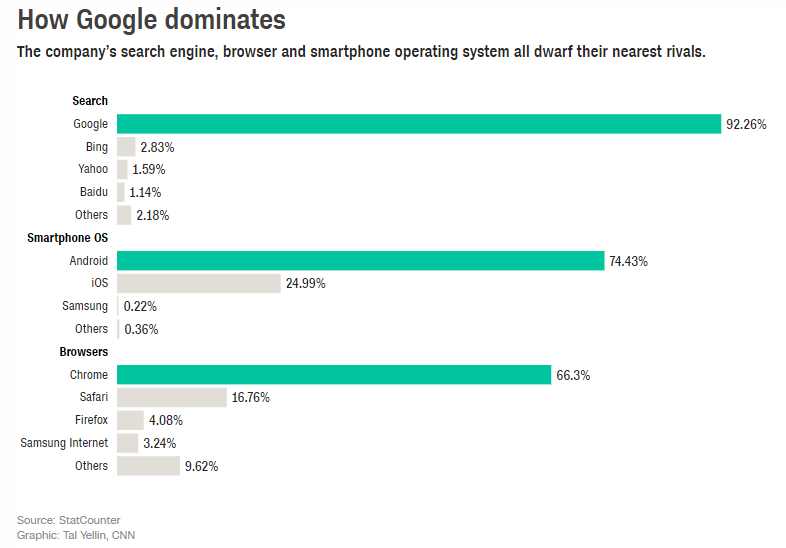
Google’s parent company, Alphabet, remains dominant, hitting a 14% revenue increase year-on-year despite the high voltage searchlight the United States antitrust suit has beamed on its activities. The company is ramping growth and taking market share across most of its core operating sectors.
The tech giant’s parent company, Alphabet, reported revenue of $46.17 billion for the three months ending in September — a 14% increase from the same period last year — highlighting its continued dominance even while facing numerous obstacles. The company also reported net income for the third quarter of $11.2 billion, blowing past analyst estimates. Alphabet (GOOGL) stock rose more than 8% in after-hours trading on Thursday.
“We had a strong quarter, consistent with the broader online environment,” Sundar Pichai, CEO of Alphabet and Google, said in a statement. “It’s also a testament to the deep investments we’ve made in AI and other technologies.”
But while Google logged great numbers, Apple made it clear that the post-hardware business era has indeed arrived. The iPhone sales slumped 20% but services came to the rescue.
“Apple capped off a fiscal year defined by innovation in the face of adversity with a September quarter record, led by all-time records for Mac and Services,” said Tim Cook, Apple’s CEO.
“Despite the ongoing impacts of COVID-19, Apple is in the midst of our most prolific product introduction period ever, and the early response to all our new products, led by our first 5G-enabled iPhone lineup, has been tremendously positive.
“From remote learning to the home office, Apple products have been a window to the world for users as the pandemic continues, and our teams have met the needs of this moment with creativity, passion, and the kinds of big ideas that only Apple can deliver.”
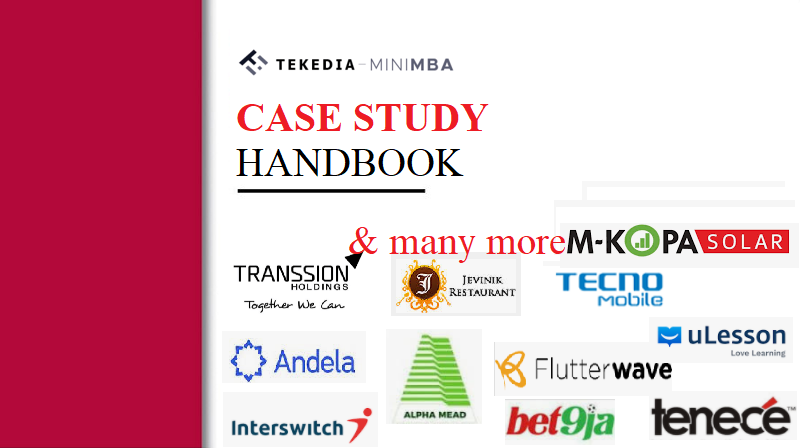
From Google, we go to Zoom which has also done very well, becoming a bigger company than ExxonMobil: “Zoom, like many other tech companies, has seen an increase in earnings during the pandemic that has pushed its valuation to $139 billion, more than Exxon Mobil’s $138.9 billion. The teleconferencing app witnessed unprecedented surge following COVID-19 induced lockdowns that confined people at home, forcing a shift to virtual life.” That success of Zoom has seen it eclipsed the whole of the Nigerian Stock Exchange (NSE) by a factor of 3! Yes, Zoom is three times more than the whole value of the Nigerian publicly traded companies, including our banks, insurers and everything. Zoom joins Naspers of South Africa, whose combined direct & indirect value is more than 3x the value of NSE.
At the time of drafting this report, Zoom sported a market valuation of $131 billion, compared to the Nigerian Stock market with a value presently standing at $42.1 billion (N16 trillion), using the official exchange rate of N380 to $1.
But while Zoom has captured a lot of value, Skype which began many years before Zoom, has struggled. Indeed, Skype was great in destroying values for the telecommunication sector but was unable to capture any for itself. If you are to make a call from Lagos to London via MTN which could cost you say $10, and you decide to use Skype, there is a possibility that only a $2 data would be expensed for the Skype call. So, technically, Skype has destroyed $8 in the telecoms sector since itself did not capture the $8 which was denied MTN. Of course, you saved your $8 and could use it to buy amala and enjoy zobo drink.
That inability to capture value is the reason why Skype has not fully added value. Skype is currently a business under Microsoft; it bought it $8.5 billion in 2011. Today, no one expects Skype within Microsoft to be close to anything Zoom is logging in the market. Nigeria needs winners and pioneering entrepreneurs as we are severely underperforming as a nation!
In this video, I challenge us to use the One Oasis Strategy and Double Play Strategy to build business models that will ensure that we capture enterprise value even as we create for customers. Skype creates great value for customers but it has struggled to capture most value; so, Skype remains a sojourner, constantly being passed around by buyers and sellers. Do not be like Skype.
Markets are shifting and it is time you ensure that you are in the right domain, and that you are using the right business model in your business operation.
2020 Career Week Day 1
Notes: only the first 100 will be on Zoom. Others will connect via YouTube Live here. You can leave comments below and the moderator will still pick them. Links for Live Sessions Mon | 12 noon – 1pm WAT | Nurturing Innovators & Career Planning – Precious Ajoonu – Tekedia Live | Zoom link Mon | […]