DD
MM
YYYY

PAGES

DD
MM
YYYY

spot_img

PAGES

Home Blog Page 6066

Apple, Huawei Slump, as Samsung Reclaims First Spot in Q3 Smartphone Vendor Top 5 Table

1

After months of reeling, Samsung has picked up pace once again to reclaim its position as the world’s largest smartphone vendor. The South Korean phone maker took the first position ahead of Huawei, who has recently been struggling due to US sanctions that have limited its access to smartphone chips.

Q3 reports from research firms, International Data Corporation (IDC) and Canalys shows Samsung having 23 percent share of the smartphone market, while Huawei falls back to 2nd place on 22 percent year-on-year drop in product shipment across international markets and its home country China.

Though worldwide smartphone shipment declined 1.3% year over year due to coronavirus pandemic, the third quarter 2020 saw an increase in demand of smartphones.

A total of 353.6 million smartphones were shipped during Q3, due to the reopening of economies as COVID-19 restrictions were eased around the world. The supply is seen as a positive sign of recovery for the smartphone industry.

“While some of the topline numbers may not seem pretty, we are seeing a lot of improvement in the smartphone market both in terms of supply chains and consumer demands,” said Ryan Reith, program vice president with IDC’s Worldwide Mobile Device Trackers.

Samsung took back top position, claiming 22.7% of the market share with shipment of 80.4 million smartphones.

There was significant decline in developed markets, especially in North America, Western Europe and China. But emerging markets, such as Brazil, Indonesia, and Russia, which rank fourth, fifth, and sixth in the world experienced strong growth, according to IDC’s report.

However, Samsung’s rebound came from its major strongholds, the US and India markets. The South Korean vendor raked in 15% of the total sale from India, its largest market; while in the US, its second largest market, sales, especially from Note 20 and Note 20 Ultra, accounted for 20% of Q3 total volume.

The increase in sales in India despite fierce competition from Chinese competitors, Xiaomi and Oppo is as a result of anti-China sentiment and the recent price cut strategy adopted by Samsung.

“Samsung suffered in Q2 due to its dependence on offline retail, but Q3 saw a major recovery. Its momentum was fueled by three key factors.

Firstly, in many regions it saw pent-up demand from Q2 spill over into Q3. Secondly, it regained second place in India, as its Korean brand was shielded from anti-Chinese sentiment. Thirdly, Samsung ramped up its launches of low-to-mid-range devices, and introduced other incentives, such as discounts and free online deliveries, to stimulate demand,” said Canalys analyst Shengtao Jin.
US sanctions are affecting it

Nabila Popal, research director with IDC’s Worldwide Mobile Device Trackers also remarked that distance learning in India, actually boosted the demand for low-end smartphones as they are a more affordable option compared to tablets.

Samsung came from Q2, where Huawei was at top spot due to the pandemic induced depressing smartphone demand, to stage a comeback due to these strategies it adopted in India and also US sanctions on Huawei.

Huawei lost the top spot and settled into the second position with 51.9 million smartphones shipped and 14.7% share. This followed over 15% decline in China and continued decline in its international market share, all resulting in a large drop of 22% year over year.

Xiaomi came third with 46.5 million device shipment, beating Apple for the first time with 13.1% share and 42.0% growth. Despite fierce competition and anti-China sentiment in India, the Chinese vendor has managed to secure 53% growth in the Q3 2020.

IDC attributed Xiaomi’s growth to its production capacity recovered to nearly 85% of its pre-pandemic level, which helped to cater for strong demands. Other factors that helped its growth include Xiaomi’s low-end portfolio, particularly the Redmi 9 Series, that recorded sales boom in both India and China; and the launch of mid-range Redmi K30 Ultra and high-end MI 10 Ultra which were also successful.

Apple’s Q3 report came with disappointing figures that placed the US smartphone maker in fourth position. The California-based vendor shipped a total of 41.6 million iPhones for the quarter, recording 10.6 decline year over year.

The report attributed the drop to the delay in the launch of the new iPhone 12 series, which usually happens in the third quarter. But the Q2 result showed growth from devices such as the iPhone SE.

“Regardless, the iPhone 11 series did exceptionally well, contributing the majority of Apple’s volume, followed by the SE device,” the IDC report said.

Vivo returned to top five with 31.5 million units shipped for 4.2% year over year growth and 8.9% market share. The report attributed its comeback to share increase in India and China markets. Vivo’s under $200 low-end models delivered 30% year over year growth in India.
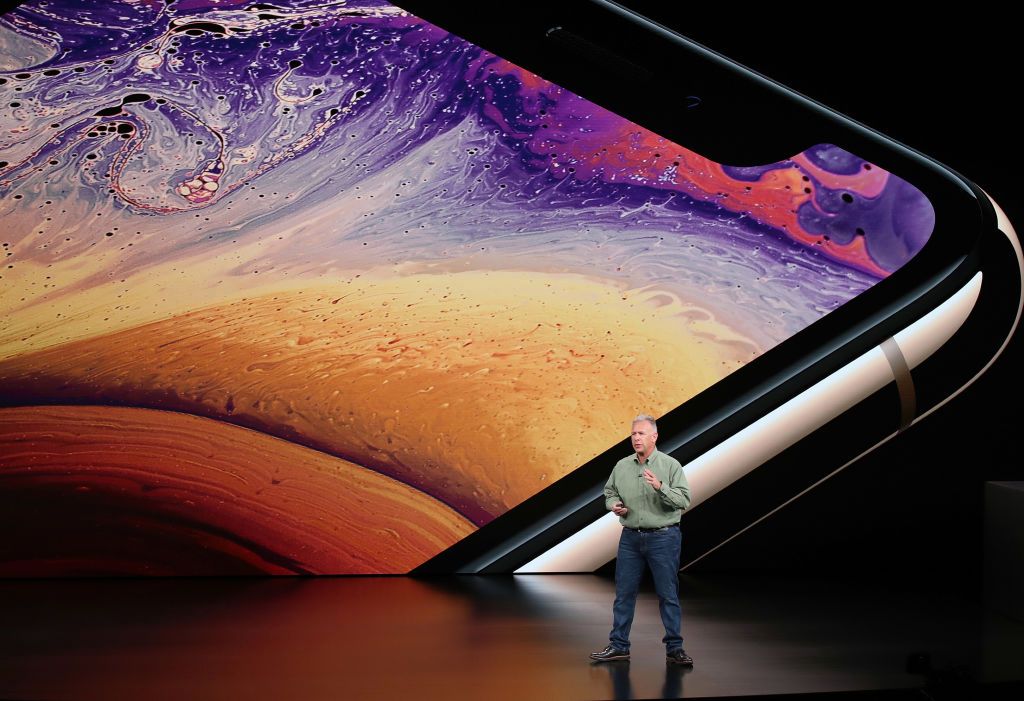
CUPERTINO, CALIFORNIA – SEPTEMBER 12: Phil Schiller, senior vice president of worldwide marketing at Apple Inc., speaks at an Apple event at the Steve Jobs Theater at Apple Park on September 12, 2018 in Cupertino, California. Apple is expected to announce new iPhones with larger screens as well as other product upgrades. (Photo by Justin Sullivan/Getty Images)

In China, the brand enhanced the market positions of its S, iQOO, and X series phones that helped continue its strong presence there, the IDC report said.

There is hope that the fourth quarter of the year will give brands like Apple a chance for rebound, with its 5G enabled iPhone 12 paired with robust trade-in offers across major carriers.

However, the second wave of COVID-19 that is forcing another phase of shutdown across Europe is posing a threat to the sustainability of Q3 growth. The second wave will likely force the governments to roll out fresh stimulus, and companies to lay off workers. The widespread bankruptcy that will result from these developments would kill the gains of Q3.
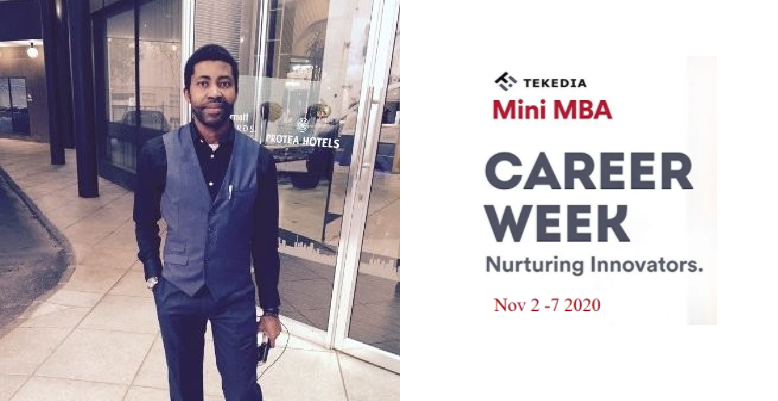
A Global Education Expert To Speak On Monday During Tekedia Career Week

0

He has been an Adviser to the British Government on developing international education policies under the National Student Forum, On-call Education Partnership Consultant for British Council, and Business Development Consultant for the Grow Creative Scheme under the European Regional Development Fund (ERDF). He is a business consultant with deep experiences on education, manpower development.

Dr. Akanimo Odon, a Tekedia Mini-MBA Faculty, will speak on Monday during Tekedia Career Week which comes Nov 2-7, 2020. With a sub-theme Nurturing Innovators, Dr Odon will examine how we can plan our careers and build resilience during this age of disruption. Yes, as technology changes the rules of markets and post-covid-19 becoming the new normal, we need insights on how to run that personal career playbook. The Week is not about helping our members to find jobs. Rather, we hope the insights would help them have great careers.

Make sure to join Dr. and other 12 global thought leaders as Tekedia Career Week opens tomorrow (Monday). Join here.

Can Interswitch Go for MoneyGram To Boost Verve?

1

MoneyGram has been severely wounded by Transferwise and WorldRemit as the architecture of the remittance sector continues to evolve. Things are so bad that Ripple is injecting $50 million for a 15% stake.  That money will help MoneyGram modernize by running digital token XRP.

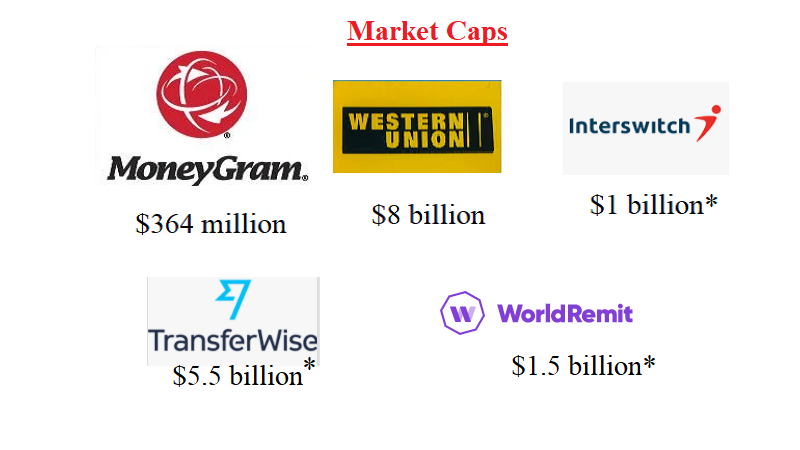
Yet, I do not see how that would help in the long-run. If not for antitrust issues, Western Union can just buy MoneyGram since the U.S. government blocked Alibaba’s Ant Group from buying it. The Chinese wanted to pay $1.2 billion but it was blocked; today, MoneyGram is worth about $364 million.

WorldRemit is worth about $1.5 billion while Transferwise goes for $5.5 billion as Nigeria’s Interswitch remains rumored at $1 billion. Now, from all indications, this game is changing and I do think MoneyGram will not be here for long. The question is this: does Interswitch have a playbook to use MoneyGram to make Verve a popular brand like Amex, Visa and Mastercard around the world?

How would it sound that Interswitch has bought MoneyGram, and integrates its remittance services into Verve? Yes, MoneyGram becomes a distribution channel for Verve.

*privately held companies

The Cowrywise Lesson On What To Build

0

Awareness and observation are antennas into the minds of customers, sharper than any formal education when it comes to starting and building companies. Some entrepreneurs have used both to make out of chewing stick an organic toothbrush. Yes, Walmart sells your grandpa and grandma chewing sticks as premium organic toothbrushes!

To be a successful businessperson, you do not need to be as mathematical as Chike Obi or grammatical as Wole Soyinka. All you need is awareness and observation on market frictions, and finding solutions to them. If you do them, glory awaits.

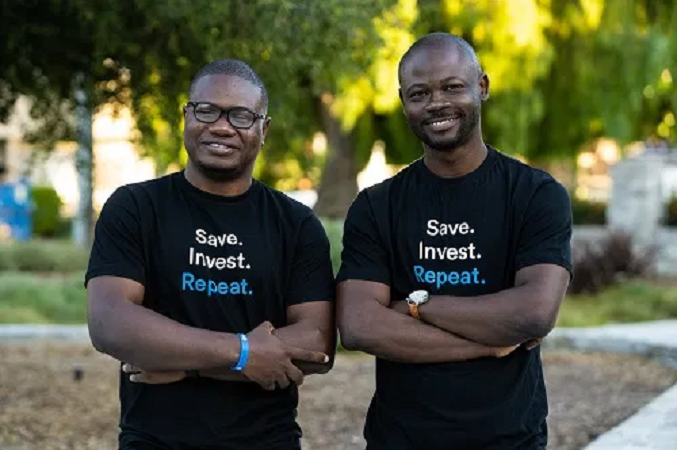
That takes me to the story of Razaq Ahmed, the CEO of CowryWise on how his company began. He had the awareness, and took action, after the clear observation. Today, we have CowryWise, a digital saving and investment fintech.

“The idea of Cowrywise came in when we had a lot of people come asking ‘how do I invest 1000 naira and small amounts like 50,000 naira. After much deliberations, we decided that the best way to scale was to open it up to the public and that was what gave birth to Cowrywise.”

Razaq Ahmed,CEO of CowryWise

People, it takes observation, awareness and taking action to make things happen.

Loss and the Empathetic Bridge: A Case Analysis of President Buhari’s #EndSARS Speech

0

Diagnosis

On the evening of March 31, 2019, Kolade Johnson, a professional footballer was watching an English Premier League football match when a stray bullet hit him. He died on the spot. Some police officers attached to the anti-cultism unit of the Lagos State Command had stormed Olu Aboderin street after getting a hint that a group of cultists were in the area[1]. To disperse the boys, they shot sporadically into the air and killed Kolade, the only son of his mother.

Kolade is one of many hundreds of young Nigerians that have been killed extra judicially by men of the Special Anti-Robbery Squad, otherwise known as SARS, a specialized unit of the Nigerian Police Force, founded in 1992 as a response to increase in crime rate. The unit has been accused of several cases of killings, assaults and harassments of innocent citizens.

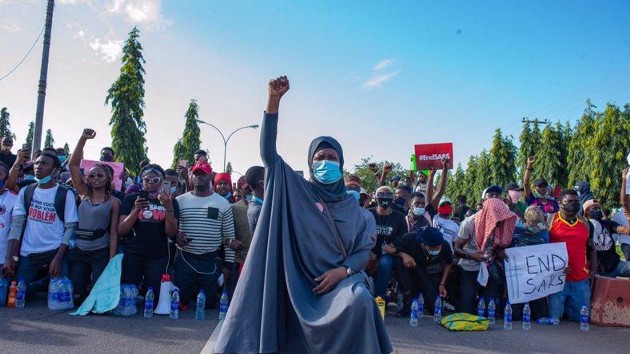
In October 2020, thousands of Nigerian youths embarked on a nationwide protest to demand an end to police brutality, calling for the complete eradication of SARS using the hashtag #EndSARS. What started as a social media advocacy turned into a wide scale social movement. By the second day, the hashtag had become the most trending topic in the world, generating up to 28 million tweets. Nigerians shared stories, pictures and videos of different atrocities of SARS officers on social media. Within 2 days, peaceful protests were organized in several cities across Nigeria and in the diaspora including United States, Canada and United Kingdom. Many international celebrities and world leaders also added their voices, including Kanye West, John Boyega and Hillary Clinton.

The Nigerian government’s response

After weeks of peaceful protests across the world, the Nigerian Police Chief promised to disband SARS but in reality, only created a new unit called SWAT (Special Weapons and Tactics). Nigerian youths rejected this and continued protesting. According to them, government has made such promises in the past with little or no commitmentOn October 20, the protest took a sad turn — the Nigerian military opened fire on peaceful protesters at the Lekki Toll Gate, killing at least 12 people[2]. This led to a global outrage from Nigerians and non-Nigerians across the world. The Nigerian government denied the killings despite a live video footage by Nigerian Disc Jockey, DJ Switch[3].

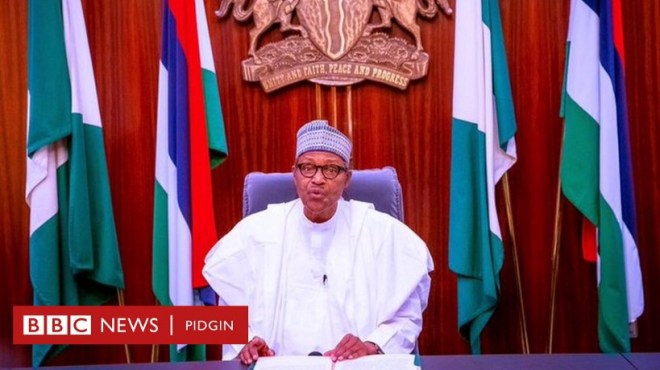
After weeks of protest, President Buhari finally addressed Nigerians. Many described the pre-recorded speech which was made to look like a live broadcast as ‘tone-deaf and ‘utterly insensitive’. The speech lacked emotion and empathy and refused to directly address the shooting of unarmed protesters at the Lekki Toll gate. Many were disappointed. The question on the lips of everyone was ‘who gave the order for the massacre of innocent protesters at the Lekki Tollgate?’ on the 20th of October 2020.

Analysis of Case — The President’s speech

Excerpts:

“On approving the termination of SARS, I already made it clear that it was in line with our commitment to the implementation of extensive Police reforms. Sadly, the promptness with which we have acted seemed to have been misconstrued as a sign of weakness and twisted by some for their selfish unpatriotic interests”.

“The spreading of deliberate falsehood and misinformation through the social media in particular, that this government is oblivious of the pains and plights of its citizens, is a ploy to mislead the unwary within and outside Nigeria into unfair judgement and disruptive behaviour”

“To our neighbours in particular, and members of the international community, many of whom have expressed concern about the ongoing development in Nigeria, we thank you and urge you all to seek to know all the facts available before taking a position or rushing to judgement and making hasty pronouncements”.

“In the circumstances, I would like to appeal to protesters to note and take advantage of the various well-thought-out initiatives of this administration designed to make their lives better and more meaningful, and resist the temptation of being used by some subversive elements to cause chaos with the aim of truncating our nascent democracy”.

“For you to do otherwise will amount to undermining national security and the law and order situation. Under no circumstances will this be tolerated”.

Read the full text of the speech here.

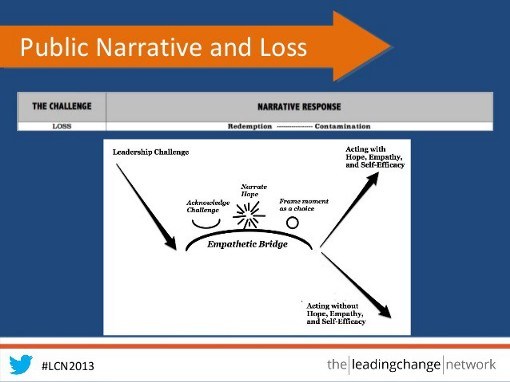
Using the conceptual framework of the empathetic bridge (Acknowledge challenge, Express Empathy, Narrate Hope, Create a Choice), the President’s speech shows an absence of thoughtful and empathetic leadership. The President refused to acknowledge the problem (in this case the shooting of innocent protesters by the military). He also refused to empathize with grieving families which shows a lack of empathetic availability. The President could have used the speech to create an empathetic bridge which could have further calmed down tensions and unify the country.

The speech could have started like this:

“Fellow Nigerians, it is with a deep sense of grief that I address you today. The terrible incidence that happened on Tuesday, 20th of October has no place in our history. I condole with the family of those we lost and as the Commander-In-Chief, I take full responsibility and will ensure that perpetrators of this heinous crime are brought to book. I have ordered for an immediate investigation and directed that daily briefings be submitted to me until Justice is served”.

A speech of this nature could have given a narrative of hope and created an agency. The president’s speech instead of giving hope and agency issued threats both to Nigerians and to the International Community. For instance, the statements “Sadly, the promptness with which we have acted seemed to have been misconstrued as a sign of weakness and twisted by some for their selfish unpatriotic interests” and “For you to do otherwise will amount to undermining national security and the law and order situation. Under no circumstances will this be tolerated” sounded like threats. The speech could have amplified government’s response to the demands of thousands of Nigerians including permanently disbanding SARS and implementing an overarching police service reform. This would have been a source of hope to many Nigerians. Also, in narrating hope, the president should have announced a monetary support to the families of those who lost their lives (civilians and police) and those injured. It would have assured Nigerians that the government is indeed serious with pursuing justice for the victims.

Leadership lessons

1. Taking responsibility- Leadership involves first understanding the problem and taking full responsibility to fix it. President Buhari could have admitted the government’s culpability in the root problem (SARS), immediately accept the demands of the youths and proffer a quick solution.

2. Building trust: There is a huge trust deficit between the government and citizens of Nigeria. The speech could have been an opportunity to rebuild that trust. As Stephen Covey argues in his books The Speed of Trust and Smart Trust, trust is not a soft, social virtue — it’s truly a hard, economic driver for every organization.

3. Empathy: Without empathy, it is difficult to build a team more less a country of over 200 million people. A leader should always be aware of the feelings and needs of others.

4. Respond vs react: Bad leaders react to a situation, while good leaders respond. A good leader is one who gives a careful thought to a situation and gives a measured response. A bad leader is the opposite.

Questions I am struggling with

1. A leader should have trusted advisors who advises him/her in taking right decisions. Could the President’s advisors be giving him wrong advices?

2. Could a leader struggle with giving hope in particular aggravating situations?

Let me know your thoughts.


Dayo Ibitoye — Harvard Kennedy School 

Reflection Paper #5 — Loss Case — Applying Public Narrative as a Leadership Practice

31st October 2020