DD
MM
YYYY

PAGES

DD
MM
YYYY

spot_img

PAGES

Home Blog Page 6077

The Airtel Africa’s 11th Consecutive Quarter of Double-digit Revenue Growth

1

How time flies – this was a company which was rumoured to be leaving Africa. Of course, Airtel had no other option than Africa as its home nation of India was under a redesign, with Jio changing the industry with market-shaping products and services. Across all metrics, Airtel had no chance in India! Having no alternative, Airtel retooled its business model, and became a quasi-financial institution which offers telecommunication services. Yes, Airtel outsourced some infrastructure components of its business, improving its CAPEX and by doing that, have money to invest on its customers. The result has been superb: Airtel has logged its 11th consecutive quarter of double-digit revenue growth, HI 2020 data shows.

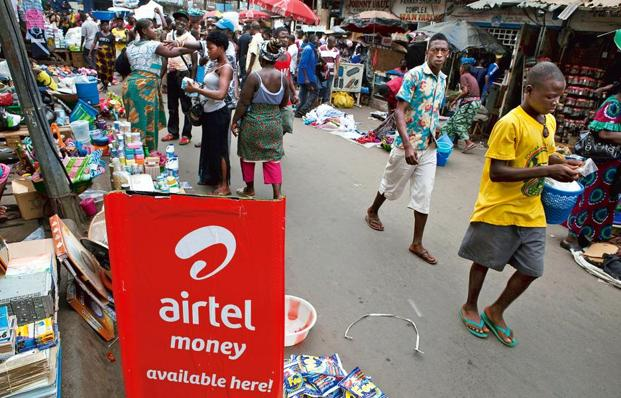
Airtel Africa has logged its 11th consecutive quarter of double-digit revenue growth. In its H1 2020 financial report, Airtel Africa noted a 16.4% increase in revenue in the first half of its current financial year, and a 19.6% increase in Q2. The operator said mobile revenues increased 15.3% in H1 due to growth in voice and data, while its mobile money operation Airtel Money saw revenue growth of 30.4%.

Growth was recorded across all regions, with Nigeria up 20.2%, East Africa up 21.9% and Francophone Africa up 4.4%. Noting a growth of 12% across its customer base, Airtel Africa now counts 116.4 million customers across 14 markets, which span Eastern Africa, Francophone Africa and Nigeria.

In May 2018, I explained why Airtel Nigeria would continue to grow: asset-light business model where outsourced partners do the core infrastructure works while Airtel stays ahead running the customer experiences. Doing that means it can grow faster because it can deploy dozens of partners (who get paid only when they deliver services) working across Nigeria at the same time. It is a very risky business model as the weakest link is now the weakest delivery partner. But the company has managed any risk very well.

Many quarters ago, Airtel was seen as a company that would abandon Nigeria. In the depth of the recession, the company struggled: it had so many underperforming assets. As the nation exited recession, Airtel upgraded its business model. Today, Airtel is leaving the infrastructure business, outsourcing all to partners across Nigeria. Typically, such enables companies to conserve cash. The impact is now visible in the subscriber numbers. Provided Airtel continues to find partners, it would continue to grow at a faster rate than its peers.

Telecom equipment leasing and outsourcing of critical infrastructure pose risks – your quality is determined by the capabilities of the partners. Most people like to be in charge of their destinies. But today, it is working for Airtel since the services are largely matured with very competent players who can deliver them.

The future of rural telephone and broadband services will move faster for Airtel in Nigeria since doing such will just require signing contracts with partners. The gestation period between investment and revenue is largely out because it does not have to worry about community negotiations, fees and other issues which make simple things hard in Nigeria. Airtel partners would have to deal with many of those issues.

The Airtel Africa transformation is a great case study of the power of business model: you must invest to get a working one. Most times, the problem is not the market but your business model. Blaming customers will not grow the business. Hello, Nigerian insurance companies!
Nigeria Lacks Political Leaders with Social Reforms Mindset: A Conversation with Seyi Odetola, UK based Nigerian

1
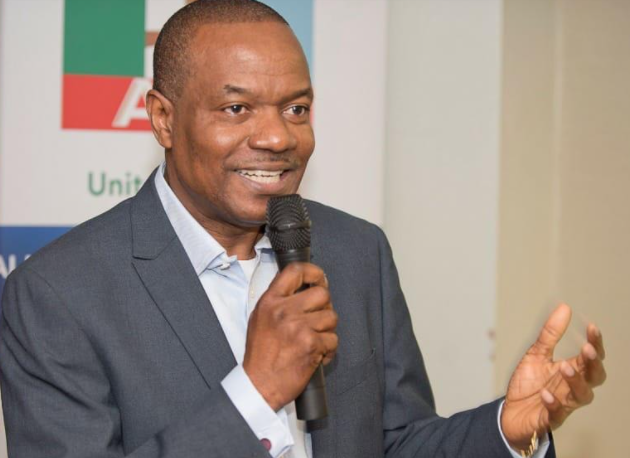
Seyi Odetola

Editor’s Note

On October 1, 2020, Nigeria celebrated its 60th year of gaining independence from the United Kingdom. For the 6 decades, a number of achievements were made in socioeconomic and political areas. The country also experienced challenges within its socioeconomic and political systems. In spite of its achievements, Seyi Odetola, a Nigerian in the United Kingdom, speaks with our analyst on progressivism and inclusive social reforms. He believes that political leaders with progressive and social reforms mindset remain elusive in the country.

Excerpt

Tekedia: How would you describe the present political situation in Nigeria in terms of party politics, especially internal democracy among the political parties?

Odetola: The present political situation is gory and the instability is what we are witnessing in the last few days across the country. There is no internal party democracy, hence to expect free and fair democratic elections in the country will be a tall order.

Tekedia: Everyone is claiming he is a progressive like previous leaders such as Chief Obafemi Awolowo, how would you describe a politician as progressive in the Nigerian politics?

Odetola: If chief Obafemi Awolowo, in the 1950s, 60s, ’70s and ’80s was a progressive politician with evidence of his socio-political and economic contributions, we may thus ask this question: Who is a progressive politician?

In order to understand who a progressive politician is, we must ask what progressivism is all about: Progressivism is a political philosophy in support of social reform. In the 21st century, a movement that identifies as progressive is “a social or political movement that aims to represent the interests of ordinary people through political change and the support of government actions.”

We see the above definition played out in Awolowo narrative, but today’s politicians are symbols of oppression, insensitivity, corruption and public treasury looting in the broad.

Tekedia: Who are the progressives in terms of leadership quality and good governance in the current Nigeria democratic project?

Odetola: I do not see any progressive politicians today, except the Governor of Borno State whom I have been following at a distance.

Tekedia: Can we actually use project implementation as a yardstick for describing someone or a political party as progressive?

Odetola: Using project implementation isn’t a yardstick for measuring progressivism if the projects are not focused on social integration and cohesion!

Tekedia: How would you x-ray the performances of the ruling parties in South-Western states of Osun, Oyo, Ogun, Ekiti, Ondo and Lagos?

Odetola: The South West governors have failed woefully to integrate the social classes or we can say they failed to reduce the social gaps which is evident in the mantra we are seeing over the last days: Them v Us…demand for the generational shift in socio-political landscape is a function of seemingly degradation faced by the dislocated class which today we will call the youth though the evidence isn’t pointing the old-young dichotomies.

Tekedia: Would you say they are progressives in terms of executing projects that benefited citizenry positively?

Odetola: The South West governors are not progressive in thought and actions neither are they driven by any policies. They are just men without vision!

Tekedia: It has become a tradition among the government at all levels to execute projects without carrying the citizenry along in their planning and eventual implementation. Would you say we are actually practicing democracy as it is supposed to be done?

Odetola: The present service delivery is affected based on the likely pecuniary benefits to the occupier of offices rather than the citizenry. For instance, we have had looting of government warehouse in the recent days.

The question arises: why should we have locked up food items whilst the people were suffering? The answer is simple: the occupiers of government are waiting for the best politically advantageous times for the maximum good public relation to them and not the people.

Sad

Airtel Africa Continues To Grow

0

Airtel Africa has logged its 11th consecutive quarter of double-digit revenue growth. In its H1 2020 financial report, Airtel Africa noted a 16.4% increase in revenue in the first half of its current financial year, and a 19.6% increase in Q2. The operator said mobile revenues increased 15.3% in H1 due to growth in voice and data, while its mobile money operation Airtel Money saw revenue growth of 30.4%.

Growth was recorded across all regions, with Nigeria up 20.2%, East Africa up 21.9% and Francophone Africa up 4.4%. Noting a growth of 12% across its customer base, Airtel Africa now counts 116.4 million customers across 14 markets, which span Eastern Africa, Francophone Africa and Nigeria.

CEO Raghunath Mandava (pictured) said: “The first half of our fiscal year included the peak impact of the Covid-19 pandemic in the countries where we operate. In these unprecedented times, the telecoms industry has emerged as a key and essential service for these economies, allowing customers to work remotely, reduce their travels, keep them connected and allow access to affordable entertainment.

“In these exceptional circumstances, in the first half, we delivered a strong set of results and as lockdown restrictions eased during Q2 our performance continued to improve with constant currency revenue growth of 19.6%, up 6.6% from the prior quarter,” he added.

Operating profit increased by 19.5% to $472 million, an increase of 28.3% in constant currency, while free cash flow was $319 million compared to $210 million in the same period last year.

Mandava added: “The fundamentals of our business remain strong and revenue growth further benefitted from the execution of our strategy with a specific focus on expanding distribution in the rural areas, investing in our network and increasing 4G coverage, as well as benefitting from the fact we provide an essential service to consumers.

“We remain alert to the potential for further disruptions from a second wave of Covid-19 across Africa, and the associated actions of governments to minimise contagion. Nevertheless, we are in a strong financial position to capture the opportunities in a fast-growing region that is vastly underpenetrated in terms of mobile and banking services. We remain confident of delivering long term sustained growth for our shareholders.”

Facebook Delves into Cloud Games Amid Face-off with Apple

0

Facebook is following the steps of Microsoft and Google in developing cloud games. This is coming following the deteriorating faceoff between the social media giant and iPhone maker, Apple.

The games services will be launched on web and Android, but not on Apple store, as Facebook says the usability restriction on Apple’s store policy pose a challenge to the game services.

TechCrunch reported that Facebook is not building a console gaming competitor to compete with Stadia or xCloud, instead the focus is wholly on mobile games. The system is designed to offer gamers alternative to streaming games, as long their device is capable of running it locally.

Facebook is aiming to get users into games more quickly and put less friction between a user seeing an advertisement for a game and actually playing it themselves. This means, users can quickly tap into the title without downloading anything, and if they opt to download it from a mobile app store, they’ll be able to pick up from where they stopped.

Apple has been in all-out war with Facebook and other companies regarding their terms and conditions, which were labeled oppressive. Epic Games, who sued Apple in the summer, and Facebook are at the forefront of the squabble as their games on the iOS were heavily affected by Apple’s new policies.

Following the launch of iOS 14 last month, Facebook is required to ask for users’ permission before it could be allowed to harvest personal data for targeted ads. Alternative to this procedure will require setting up a completely new advertising account to run campaigns for iOS users.

This development has limited Facebook’s ability to collect users’ data on Apple smartphones, and will have a serious impact on its campaigns.

Facebook founder

Apple has had a gaming app (Instant Games) Facebook launched earlier in August blocked because the game app was offering alternative stores with content that it cannot vet. Facebook launched the app without gameplay functionality, and it can be used to watch streams of other people playing games.

Apple kicked video game Fortnite out of its store, following Epic’s, the game’s creator, adding a feature that allows players to buy virtual currency using an alternative means, which denies Apple the opportunity to take its 30% cut.

In another case, Apple refused to waive fees for Facebook on its paid Online Events feature. The Online Event feature is designed to allow small businesses and individuals to organize paid digital events that Facebook users can sign up for and sell tickets.

Facebook had asked Apple to waive the 30 percent fee it charges from the in-app purchases for Online Events or allow Facebook process events payments using Facebook Pay. Apple turned the request down saying that it goes against its policy and App Store guidelines.

Following these incidents, Zuckerberg said Apple is becoming monopolistic and anti-competitive, and its practices are becoming harmful to customers.

“Apple has this unique stranglehold as a gatekeeper on what gets on phones. Zuckerberg told more than its 50,000 employees during a Q&A session. He added that California-based company’s app store “Cupertino blocks innovation, blocks competition and allows Apple to charge monopoly rents.”

Although Apple said in a conversation with TechCrunch, that they have continued to engage with Facebook on bringing its gaming efforts under its guidelines and that platforms can reach iOS by either submitting each individual game to App Store for review or operating their service on Safari, the social media giant seems to have had enough.

Apple had recently updated its policy to allow the game apps to exist, but it’s in a more convoluted capacity than the platform makers had hoped. The policy forces them to first send users to the App Store before being able to cloud stream a gaming title on their platform.

Facebook gaming executive, Jason Rubin says they are a non-starter for what Facebook’s platforms envisions – a way to start playing mobile games immediately without downloading anything.

Rubin said in terms of building the new platform onto the mobile web, without being able to point users of their iOS app to browser-based experiences, as current rules forbid, Facebook doesn’t see pushing its billions of users to accessing the service primarily from a browser as a reasonable alternative.

The steps taken by Apple to calm the storm generated by its policies, including the decision to withhold its cut through the end of the year for ticket sales of small businesses hosting online events, failed.

Facebook’s move for cloud games could cost the iPhone maker a fortune. Tech Crunch noted that Apple’s reticence to allow major gaming platforms a path toward independently serving up games to consumers underscores the significant portion of App Store revenues that could be eliminated by a consumer shift toward these cloud platforms.

Apple earned around $50 billion from the App Store last year, and according to CNBC’s estimate, gaming has been their most profitable vertical.

Facebook will be launching the cloud game services conservatively this week, starting with free services across a few states in the United States.

Tekedia 2020 Career Week Is Set For Next Week

9

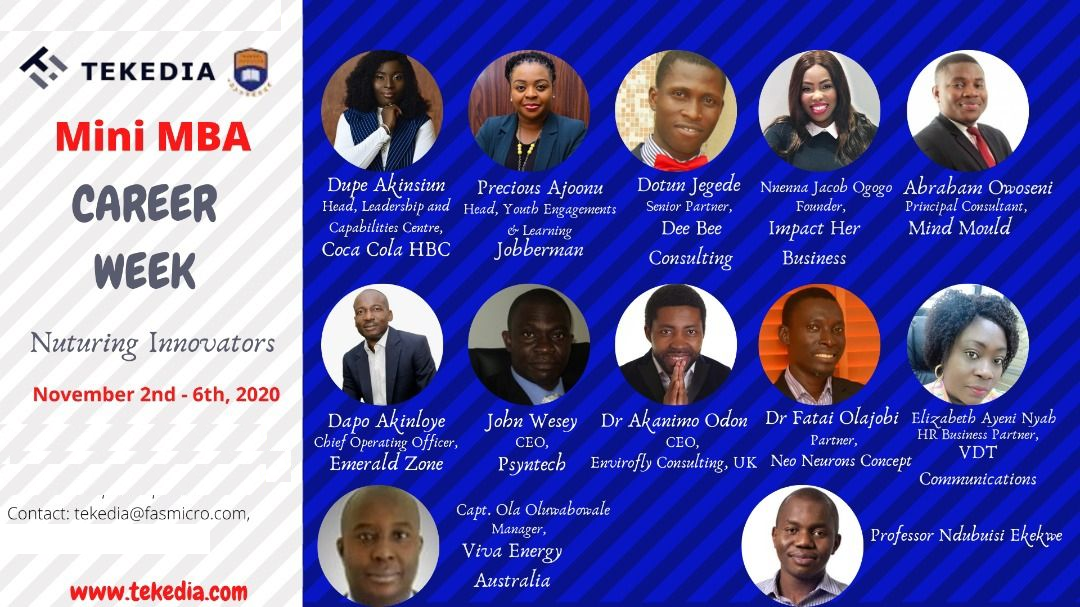
Tekedia Mini-MBA Career Week has been scheduled for Nov 2-7 2020. This career week is not designed for finding jobs. Rather, it is structured to TRANSFORM workers, founders & entrepreneurs into business leaders and champions of innovation in their companies. Yet, if you have no job, by the time you are done with the series, you will have a path to one! The sub-theme is Nurturing Innovators. It is packaged under the Tekedia Mini-MBA theme of Innovation, Execution & Growth.

Our knowledge experts for the Week include human resources experts and leaders from MNCs and startups, across industries and global regions; 13 of them. They would share insights on how innovators, professionals, students, etc can build their careers. They have already produced course materials and some would be speaking live.

All past and current Tekedia Mini-MBA members, including those who have registered for Edition 4 (Feb 8 – May 3, 2021) attend free. We have 13 courses, videos, cases, etc on how we can plan our careers during this time of disruption. 

Please go here for the links to the days.

Date Morning (12 noon – 1pm) Evening (7pm – 8pm) For the links, go here
Monday Precious Ajoonu  – Manager, Jobberman Dr Akanimo Odon – CEO,  Envirofly Consulting UK
Tuesday Nnenna Jacob-Ogogo – ex-Head, Alpher, Union Bank; Founder, Impactherbusiness Dupe Akinsiun – Head, Leadership & Capabilities Center, Coca Cola HBC
Wednesday Dr Dotun Jegede, Senior Partner, Dee Bee Consulting Dapo Akinloye – COO, Emerald Zone, ex-HR Head, Lafarge CBG
Thursday Ndubuisi Ekekwe – Tekedia Institute Abraham Owoseni – Principal Consultant, MindMould
Friday Elizabeth (Ayeni) Nyah, Human Resources Business Partner, VDT Communications Dr. Fatai Olajobi – Partner, Neo-Neurons Concept
Saturday Capt. Ola Olubowale – Manager, Viva Energy Australia John Wesey – CEO, Psyntech

*all time West Africa Time (WAT)

For non members of Tekedia Mini-MBA who want to attend, please email tekedia@fasmicro.com