DD
MM
YYYY

PAGES

DD
MM
YYYY

spot_img

PAGES

Home Blog Page 6083

Facebook Goes After NextDoor with Neighborhoods

1

Facebook is already working to clone NextDoor before the company becomes super popular and successful: “Facebook Inc. is building a feature for users of its social network to connect with their neighbors, a push toward more intimate interactions that treads on the idea behind rival Nextdoor Inc., which is considering a public offering.” That is a pattern in the operations of ICT utilities like Facebook and Google. When they see what works, they quickly find a way to put such into their ecosystems in order to prevent users from leaving their platforms.

Call it building a moat to protect the castle. As I noted in a Harvard Business Review piece, you must be strategic if you plan to initiate a frontal confrontation with ICT utilities. But I will suggest you forget frontal attack; a flank existence may be better. With the cloud of Neighborhoods on NextDoor, investors may be cold as NextDoor goes to the public markets. If that happens, Facebook has done the damage, chipping out some needed resources which the company needs to thrive.

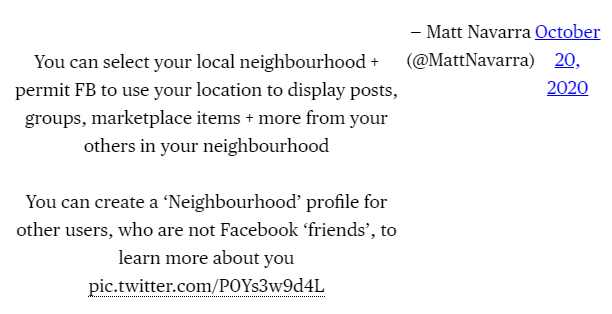
Facebook is developing a new feature called Neighborhoods that will provide users a private space to connect with their neighbors. Sound familiar? That’s probably because NextDoor, which is considering filing for an initial public offering, already does that. Facebook told Bloomberg it’s testing the feature in Calgary, Canada. True to form, the social media giant aims to recreate the success of a soon-to-be rival on its own service (Fortune newsletter).

Nextdoor is the neighborhood hub for trusted connections and the exchange of helpful information, goods, and service. According to Bloomberg, “Facebook also has a history of mimicking rival products, and has been accused of copying many over the years, including the popular Stories feature created by Snapchat. … The screenshots posted to suggest Facebook’s Neighborhoods product will work in a similar way to Nextdoor”.

We all like neighborhoods but I do not think NextDoor will like Neighborhoods!
26th Nigerian Economic Summit Postponed

0

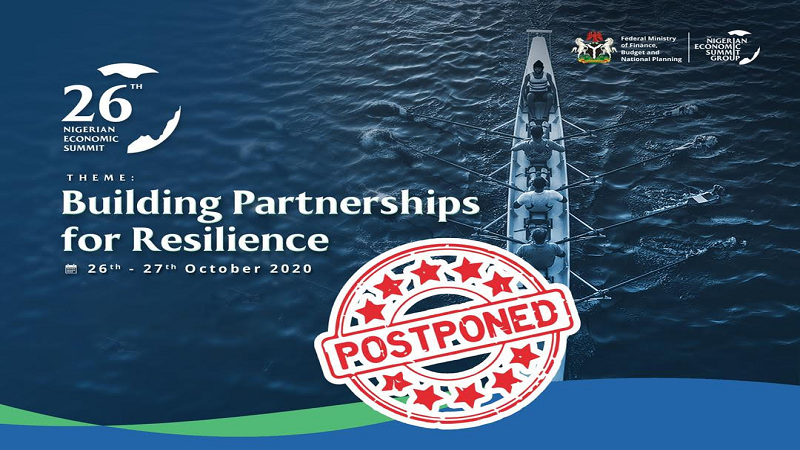
The CEO of The Nigerian Economic Summit Group just sent an email, informing the Design Workshop leaders of the postponement of the 26th Nigerian Economic Summit. The Summit would have started on Monday. To the Discussion Leaders and the invitation-only participants I had nominated, please take note. Largely, there was no other option. 

The Nigerian Economic Summit Group regrets to notify you that due to current state of affairs in Nigeria, the 26th Nigerian Economic Summit scheduled to hold from Monday 26th to Tuesday 27th October 2020, has been postponed till further notice.

A new date will be communicated in the nearest time possible.

Please bear with us as we regret any inconvenience this might cause you.

We thank you for your understanding.

‘Laoye Jaiyeola


LinkedIn News Showcases Tekedia Article On Quibi and TikTok

0

I wrote here that Quibi is a bad business model. Today, we are learning that the company is shutting down. LinkedIn has included my perspective as one of the Editors’ picks. This is coming after Quibi raised $1.75 billion in funding.

Streaming service Quibi is shutting down. In a statement to employees and investors, founders Jeffrey Katzenberg and Meg Whitman said, “We are winding down the business and looking to sell its content and technology assets.” The service, which featured 5- to 10-minute video narratives meant to be consumed on a smartphone, had attracted $1.7 billion in funding in the run-up to its launch less than a year ago. Its employees will be laid off and paid a severance, anonymous sources told The Wall Street Journal.

The Verge expands the reason behind the shutting down.

Quibi, the struggling short-form mobile video startup led by founder Jeffrey Katzenberg and CEO Meg Whitman, is shutting down just six months post-launch after the company failed to find a buyer, according to a new report.

According to a Wall Street Journal report, Katzenberg called investors Wednesday to tell them Quibi was folding. That came after a restructuring firm hired by Quibi — which raised $1.75 billion in funding, including from major media companies including Disney, NBCUniversal, and WarnerMedia — provided a list of options to the company’s board of directors this week. One of the proposals: for Quibi to cut its losses and shutter the company.

Meanwhile, TikTok is fighting to ensure hate is out of its network.

The social media network that became popular for its teen dance challenges is now dealing with a problem familiar to some of its more mature competitors: hateful content. On Wednesday TikTok announced that it’s expanding its hate speech policies that already prohibit neo-Nazism and white supremacy to include “neighboring ideologies” like white nationalism and genocide theory. The service also said it will crack down on coded language and symbols TikTokers may use to spread hate speech (Fortune newsletter)

Which is a Better Business Model – Quibi vs Tiktok?

The “Call to Execution (Summary)” Rescheduled Next Week for Edition 2

0

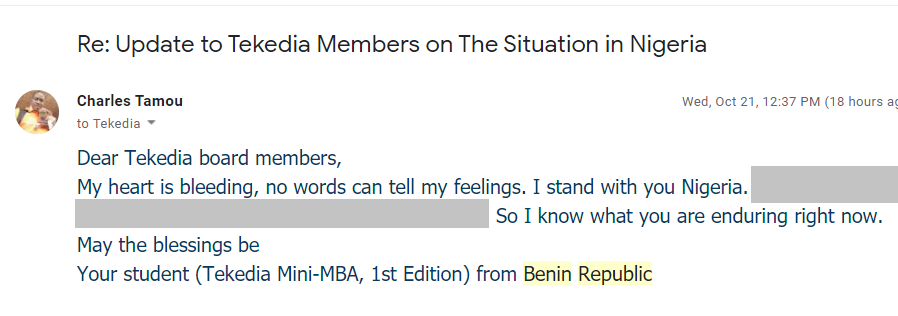
To our Nigerian members, I want to let you know that our Tekedia Community has been sending words of strength and encouragement from around the world. From Canada to Singapore to Benin Republic, the message is clear: peace and blessing.

Our immediate concern was how to pause a global product. But it seems our non-Nigerian members understand. I still apologize to all members who are not in Nigeria; a global product ideally should move on. But the challenge was that most of our staff team members are in Nigeria and with the situation there, we think it is best we give them time to “heal” psychologically. 

For Tekedia Mini-MBA Edition 2, “The Call to Execution (Summary)” is a big part of our program because it closes an edition. We will update in the Notes in the Board when that would hold next week. Our Board remains fully open but Live and Labs are paused.

Everyone should stay safe and please safety first.

Tekedia Team

CASE STUDY HANDBOOK:Benefits of Having Your Brand Analysed for Tekedia’s African mini-MBA Students, Network of Stakeholders

0

From the classrooms to the fields, stakeholders have always been interested in understanding issues and needs of users of products and services through case analysis. Over the years, the students of business administration and management courses have had the cause of analysing businesses with the specific focus to their downs and ups with the intent of revealing varied learning curves for the managers and employees.

Some days ago, Professor Ndubuisi Ekekwe announced the readiness of his Tekedia Institute to make 200 business cases available to scholars of the Institute. After the announcement, I sent an email message, communicating my interest in developing a number of case studies for the Institute’s Case Study Handbook.

However, communicating the readiness on my LinkedIn page with the inclusion of two of the expected brands has generated positive and negative reactions. These reactions were communicated to me via LinkedIn’s message section and calls. This piece aims at clarifying some of the reactions, especially those communicated by the employees [who questioned the reason for taking interest in their brands without formal communication].

It is imperative to understand that case study is “an up-close and detailed examination of something your business did. It includes a beginning, an explanation of what happened next, and a resolution that explains how the company solved or improved on something.”

Based on this definition and others, many businesses have made themselves available for external analysis that explores the case study approach because of the inherent value that would accrue to them directly or indirectly.

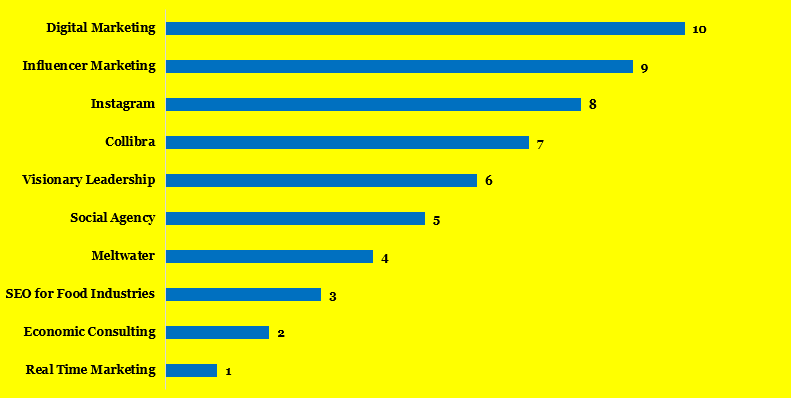
In our experience, we have realised that people across the world developed a significant interest in knowing brands within case studies [see Exhibit 1 and Exhibit 2]. We found a 34% stronger connection in global interest in discerning case studies within industries, and education sector. On average, people interest in case studies within industries has been 34%, while it remains 60% as at the time of writing this insight. From marketing to leadership strategies, public want to learn from successful and unsuccessful businesses [see Exhibit 2].

Exhibit 1: Global Public Interest in Case Studies within Education and, Business and Industrial (2015-2020)

Source: Google Trends, 2020; Infoprations Analysis, 2020

Exhibit 2: Top Focus Areas (2015-2020)

Source: Google Trends, 2020; Infoprations Analysis, 2020

From the insights, it is clear that having your brand in the forthcoming Case Study Handbook remains one of the best things that should happen to your business. The Institute’s mini-MBA is an accelerated one that considers students’ specific needs. Apart from this, it is industry-centric. It is a programme that has captains of industries as faculty members. It is a programme that leverages online community for the dissemination of tacit knowledge. Already, a number of previous and current participants are giving testimonies regarding what they have accomplished personally and for their brands.

As global investors and customers continue expanding their interest in Africa, is it not going to be a huge plus to your brand? With the Case Study Handbook, you have the opportunity of turning your brand into a compelling story and use as an effective content tool. As a matter of fact, Case Analysts should be seen as your Brand Evangelists, who have the intention of increasing your recognition and business-to-business influence.