DD
MM
YYYY

PAGES

DD
MM
YYYY

spot_img

PAGES

Home Blog Page 6100

Tekedia Mini-MBA for Governments Signs A Major Client

0
The coat of arm of Nigeria

This morning, I spoke with a governor. Tekedia Mini-MBA for Governments gets its first major client. Our proposal to state is simple: we will help you transform from being inventive to becoming innovative. 

Tekedia Mini-MBA Corporate is a customized version of the general Tekedia Mini-MBA. It is  designed for private and public institutions. It focuses on the same theme of innovation, growth and digital execution. But unlike the 12-week general Mini-MBA, the Corporate vision goes for 4, 6, 8,10 or 12 weeks.

Through Tekedia Mini-MBA for Governments, a flavour of Tekedia Mini-MBA for Corporates, but structured for the public sector, we work with governments across many dimensions which include training of workers, training of constituencies (like youth), acceleration of innovation initiatives, and more. Email for our brochure.

Ending SARS In A Complex System In Nigeria

0

The first law of ecology says that everything is connected to everything. This law is the first of the four ecological laws as outlined by Barry Commoner in his 1971 book The Closing Circle.

Ecology is described by Farnam Street as the study of relationships and processes linking living things to the physical and chemical environment.

It can also be seen, simply, as the relation of the different elements that make up a complex system.

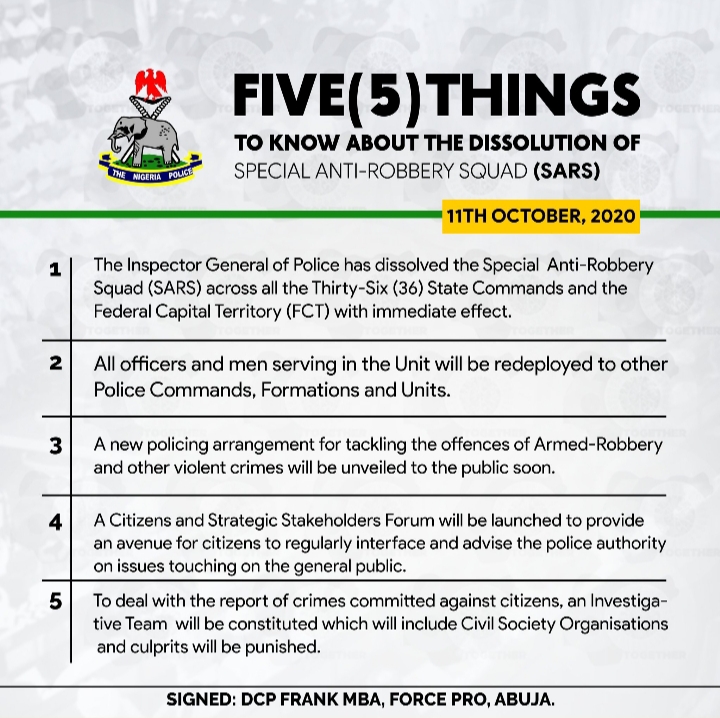
In view of the recent dissolution of the Special Anti Robbery Squad by the IG of police, the first law of ecology tells us that in a complex system, like the Nigeria society, the dissolution is connected to other things.

Yes, the disbandment will help curb police brutality, but that won’t be all, as there is also a likelihood of it resulting in an increase in insecurity, which may in the long run cancel out the calm, peace, and needless loss of lives we are going to get as an effect now.

A friend, upon hearing that SARS has been disbanded reluctantly told me that the government should better come up with another security outfit, because it is SARS that terrifies these bad boys.

True to that, we can all agree that SARS wasn’t created to kill innocent Nigerians, rather it was created as a special outfit of the Nigeria Police Force, which is currently wallowing in a state of utter ineffectiveness, to better combat crime and criminality.

SARS has since its creation become reputable for tactical assaults against criminal elements, creating a kind of fear of criminals which the NPF, due to its numerous inefficiencies, has been unable to create. Only, in this process, we see the emergence of an evil we never envisaged —a SARS which in the process of doing its job went too far, and became a threat to, in addition to criminals, the lives of innocent citizens.

Note, the emergence of a brutal SARS is a second-order outcome of the creation of a police unit whose first-order effect is to fight crime well enough; and this goes to show that too often we are more likely to not consider the second-order effect of our actions. In a complex system where everything is connected to everything, our actions will have immediate consequences, but things won’t stop there, as the immediate consequences will escalate into other, second-order, consequences which are not always visible to us from the point of our actions.

By disbanding SARS, we shouldn’t forget that there is likely going to be a second-order consequence which, as I have stated earlier, is the likelihood of increased insecurity, which may in the long run cancel out the positive, present effect we got from disbandment.
Another critical thing we can take away from the first law of ecology is that, as a result of the interconnection of things, a single action may not always be enough to fix a problem in a complex system; and to this end I’ll like to say that just disbanding SARS is not enough.

Yes, the IGP had on Sunday outlined further steps the force will be taking following the disbandment. Among the things outlined is that all SARS employees are to be redeployed immediately; that is, fix them into other sections of the NPF.

The disbandment is an important first move, but redeploying these guys, I’m not sure. It begs the question of what the real problem is, is it SARS officers, or is it the system.

If the officers are the problem, there is no guarantee they won’t go rogue even as they work in other wings of the NPF. Redeploying them shows we don’t think they’re the problem, so we are left with if the system is the problem.

If the system is the problem, we still have to be fearful of the creation of another police unit to combat crime and criminality, a move included among the next moves of the police after the disbandment.

We have to make sure we don’t disband SARS and still create another SARS.

It is a faulty system that created a faulty police unit like SARS, but if we don’t fix the system, there is a likelihood it will continue creating a faulty police unit.

Consequently, other moves should follow disbanding SARS. The first is to ensure crime doesn’t increase; and the second, if we are going to create another police unit, we should do it in such a way that we don’t create, from a faulty system, a faulty police unit.

At the end, a total reform of the NPF (the system) is what will ensure we effectively deal with police brutality, and still be able to fight insecurity.

The Need for Immediate Intervention on the Ongoing #ENDSARS Protest

1

Sometimes, it is hard to place the needs of protesters. When you try to solve the problem they raised, they will demand for another one or accuse you of ignoring their major demand. If you try to listen and address them, they will tell you they don’t want your contribution because they want the whole world to know what you have done to them. They will shut you down and deny you the chance to address the issues they raised. Honestly, the best way to stop a protest is by preventing it.

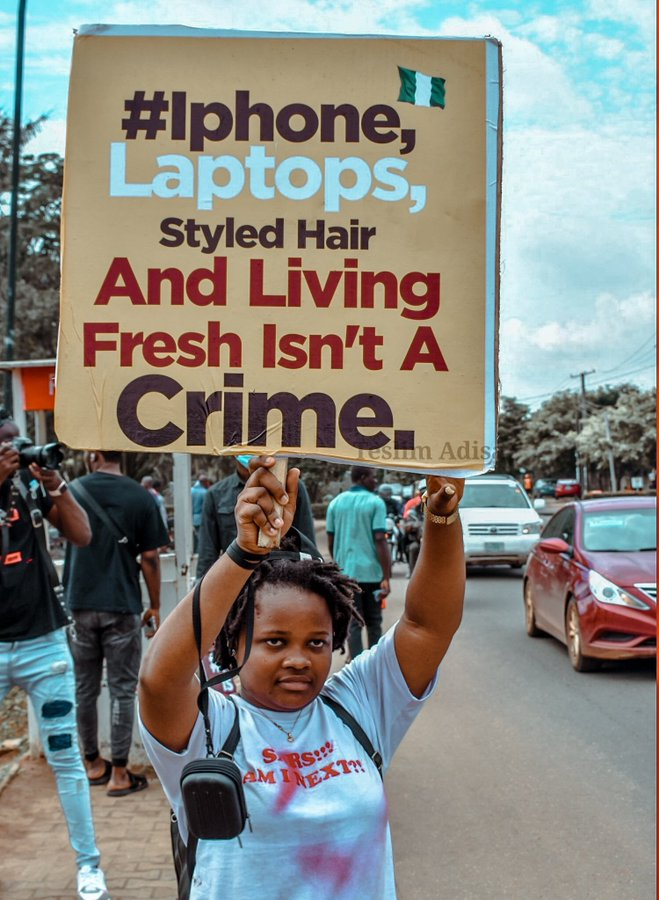
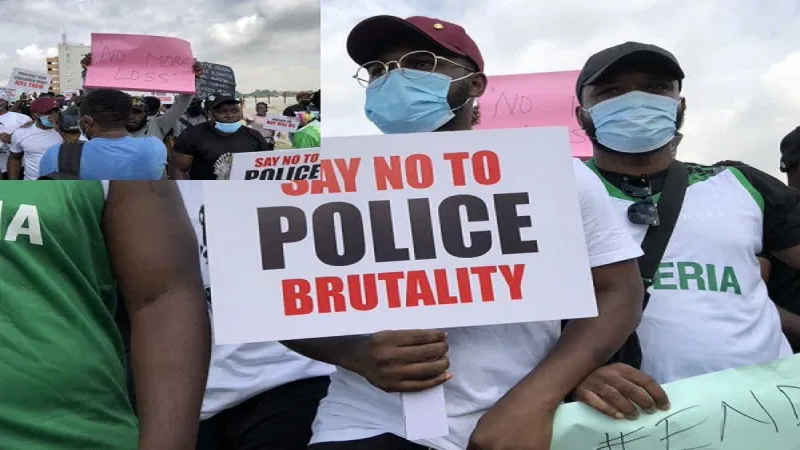
The ongoing #EndSARS protest is a good example of the scenario described above. When the protest started, the protesters stated categorically that they don’t want SARS to be reformed but to be totally disbanded. Fortunately, on Sunday, 11 October, 2020, the Inspector General of Police, Mohammed Adamu, announced that SARS has been disbanded. However, the protesters did not take him by his words because they do not trust him. Apart from that, the fact that the men of SARS will be redeployed to other units of the Nigerian Police Force seemed not to go down well with them. No one actually knows what the true grievance is today, but the fact remains that the protest continued after Adamu’s press conference. And it is getting violent and bloody.

To be honest, I have tried to follow the rationale behind the continued protest, and the call for more demonstrators, but I am actually at lost. From all I can see, their demands have been met, so why is the protest still heating up? Permit me to ask, what exactly do the current protesters want? Of course it can’t be about SARS because it has been dissolved. So, why are they still demanding for ENDSARS?

Well, from the comments I see on Twitter handles of most of these protesters, I think I can point out some of the things they want – most of which are unrealistic.

  • Dismissal of SARS Officials

As unfortunate as this might sound, most of us in this country don’t really know how things work. It is unfortunate that people went on the ENDSARS campaign and hoped that the SARS officials would be sacked and released into society (despite their expertise with weapons). Hence, when they heard that these officials will be redeployed, they raised hell. Someone even told me that it is wrong to send SARS officials to other police units because they will “corrupt” the officials they meet there. Well, I think it is high time somebody educated the protesters on this issue.

  • Persecution of SARS Officials

I know that some SARS officials are brutal but I still know that there are good ones among them. I made out time to talk to some adults here in Enugu and they said that the youths don’t know how SARS made it safe for them. Yes, a lot of them made life unbearable for the youths. But then, it is wrong to assume that they should all be prosecuted, especially when there is no evidence against them.

  • Abolishment of Every Special Police Force

There is no need spending much time on this. Many of these protesters do not want a special police force that will oversee armed robbery and other violent crimes. Somehow, they believed that ordinary black and black olopa can keep their community safe. Well, good luck to them.

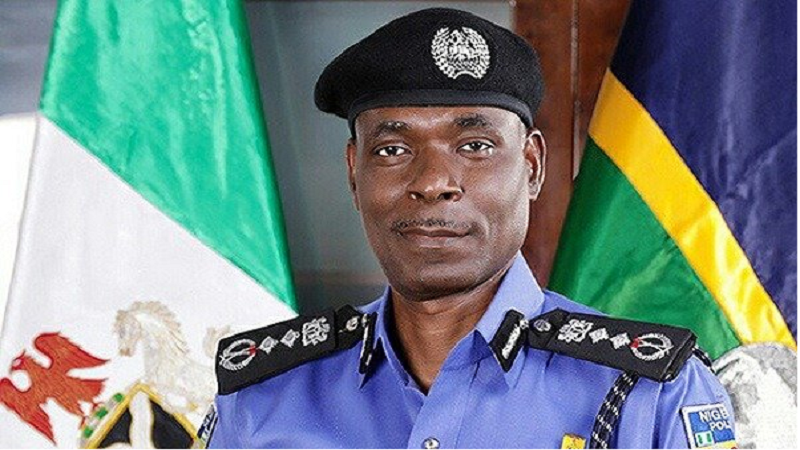
Inspector General of Police Nigeria

I don’t know who should go out there and call the youths back home so that things can be worked out under a sane clime. Sorry to say this, but it is true that their protest is becoming more of a noise than a message. The IGP has given his order, what we need now is how to follow it up to ensure that it is well carried out. From what I learnt, the Anambra State government is already working with the state police command to disband SARS, even without a single protest happening there. This comes to show that the order given by the IGP is authentic and it is for the state governments to oversee its implementation. For this, any further protest has no good cause.

But then, here we are, our youths are being incited into endangering their lives by people that never stepped out of their homes or offices to join the protest. If I may say, parents need to talk to their youths now more than ever.

A Covenant University Educator Will Teach During Tekedia Career Week

0

He holds a First Class Honours degree from Covenant University and PhD from the same university. He is also an educator in the leading private university in Nigeria. He leads MindMould, a capacity building and human development agency which helps individuals and organizations to multiply productivity, impacts & results. Abraham Owoseni, PhD, a Tekedia Faculty, will teach during Tekedia Mini-MBA Career Week.

This career week is not designed for finding jobs. Rather, it is structured to TRANSFORM workers, professionals, founders & entrepreneurs into business leaders and champions of innovation in their companies.

All past and current Tekedia Mini-MBA members, including those who have registered for Edition 4 (Feb 8 – May 3, 2021) attend free. We have 13 courses, videos, cases, etc on how we can plan our careers during this time of disruption.

Join Dr. Owoseni and our other Faculty.

Tekedia Academic Programs

Once Again, Nigerian Government Subsidizes Electricity

0
electricity companies nigeria

On September 28, the Federal Government of Nigeria averted proposed nationwide strike by Organized Labour, over the increment of petrol pump price and electricity tariff, by promising to, within two weeks, implement effective measures that will cushion the effects of the price hike.

As part of the agreement, the Federal Government was given two weeks by a committee made up of stakeholders and representatives from both the government and Organized Labour, to set the ball rolling.

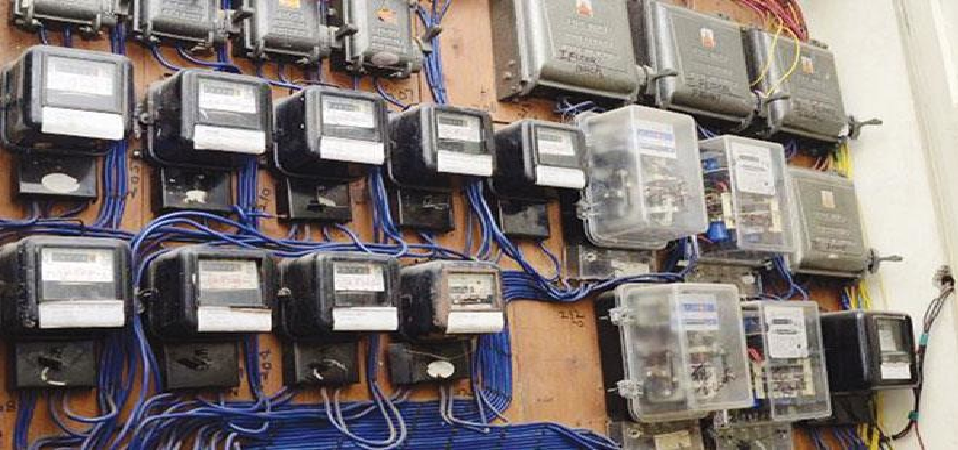
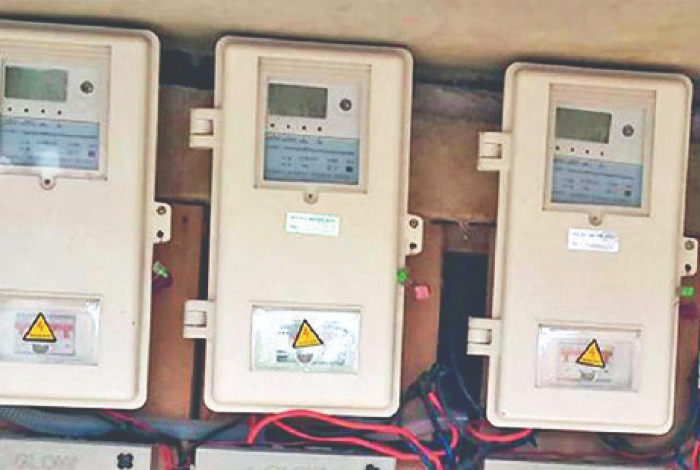
On Monday, the Federal Government announced that, as part of its efforts to implement measures that will ease the strains of the price hike, it will work out modalities to ensure that customers overcharged by the eleven electricity Distribution Companies (DisCos), as a result of the electricity tariff hike will be fully refunded.

Earlier in September, the Nigerian Electricity Regulatory Commission (NERC), increased electricity tariff from N30.23 per kilowatt-hour to N62.33 per kwh. As a result of the tariff increment, five distinctive bands (A-E) were created to reflect the various service levels and minimum hours of power supply.

Customers were to be allotted electricity supply according to the hours of electricity they consume in their respective Bands. Customers in [Band A] are to enjoy a daily minimum supply of 20 hours, those in [Band B] minimum of 16 hours, [Band C] will have minimum of 12 hours, [Band E] minimum of 8 hours, and those in [Band D], a minimum of 4 hours daily electricity supply.

According to NERC, the increased tariff will only apply to customers in Bands A, B and C, while D and E remain frozen until they are allotted more hours.

And as part of efforts to improve service delivery in the power sector, the Special Adviser to the president on Infrastructure, Ahmed Rufai Zakaria, said about six million Nigerian households will be metered. He added that the tariff relief plan will be implemented this week to uphold the agreement between Organized Labour and the Federal Government.

“The implementation of the above tariff reliefs will be executed within this week as the suspension of the Service-Based Tariff is removed; the distribution of six million free meters to Nigerians and refunds for any customer overcharged by the DisCos will be implemented.

“We completed our work with Labour on electricity tariffs. The federal government will use Value Added Tax, VAT proceeds from the Nigerian Electricity Supply Industry (NESI), to reduce the September increases by 10 percent to 31 percent for bands A to C, Band D and will remain frozen,” he said.

However, the tariff subsidy is expected to last for three months, which leaves gaps in the agreement between Labour and the Federal Government, and some unanswered questions.

The agreement entails that the Federal government, among other things, will roll out measures, including tax waiver on the minimum wage and intervention fund to reduce the burden of the petroleum pump price and electricity tariff hike.

“A specific amount is to be unveiled by the Federal Government in two weeks’ time, which will be isolated from the Economic Sustainability Programme Intervention Fund that can be accessed by Nigerian Workers with subsequent provision for 240,000 under the auspices of NLC and TUC,” said the Minister of Labour and Employment.

While the move offers reprieve to Nigerians on electricity, fuel price hike remains unaddressed as it involves multifaceted mechanisms that the government is struggling to develop.