DD
MM
YYYY

PAGES

DD
MM
YYYY

spot_img

PAGES

Home Blog Page 6102

Three Ills that Are Gradually Infiltrating our Nigerian Society

1

Saturday 10th October, 2020, was this year’s World Mental Health Day. But most of us in Nigeria didn’t know about it because the #ENDSARS protest has been overshadowing a lot of important news and information for some time now. Hence, some lectures and talks given by psychologists that we would have enjoyed on that day got swallowed up in the turbulence. It would have been good if we had participated in the mental health awareness campaign because a lot of people, including Nigerians, are passing through a lot right now. From what I’ve learnt, the number of traumatised and depressed persons is on the increase and the worst thing is that many of them don’t even know they have those problems.

Well, I was fortunate to have a one-on-one chat with a friend, who is an advocate of mental health. He is not a psychologist but he has experienced depression and hence believes everyone should know his status. While interacting with him, he pointed out that the major cause of suicide these days is depression. He said that it is possible that people have been depressed in Nigeria during the time of great grandfathers but because of the communal life they lived then, it was easy to manage depression. But right now that people “mind their business” and don’t bother checking on others, depression is becoming more and more devastating. Hence, there is a need to revisit our past and bring back some of our good traditions.

I have always known that African culture and tradition encourage communal life. I have known Africans to be their brothers’ keepers. I have known that in Africa, “Igwebike” is the watchword. But all these are changing. People are dropping the cultures that gave us life and are picking up alien ones. Some people called it “wokeness”. Others called it “pursuit of happiness”. But I see it as the road to destruction.

One of these ills that are eating deep into our system is the “cut-them-off” ideology. You usually see this among people that believe they have started making headway in life. Hence, when they feel that someone that is lower than them is opposing or disturbing them, they “cut off” the person. Note that they are ready to even “cut off” their mothers if it comes to that. This ideology discourages tolerance among people. But without that virtue, a lot of people will live in isolation.

The second problem that needs to be mentioned here is the “think-of-yourself-only” attitude. I know it is advisable to think of your interest before that of anybody else, but I also know that if everyone does that, a lot of us will not find helpers. I am not saying that people should be selfless to the point losing themselves, but if all of us start thinking only of what will benefit us without thinking of its effect on others, I believe a lot of things will go wrong. So as we pursue happiness, and place ourselves first, let us also think of others. Some people made sacrifices for us to be where we are today; we should also be ready to make sacrifices in return.

The last thing that is worth mentioning here is the “you-don’t-owe-anybody-anything” mentality. This attitude, unknown to many, encourages ingratitude; a vice that easily pulls people down. I was actually appalled when I saw a number of young Nigerian graduates, who just started earning their income, saying they don’t owe their parents anything. Some went as far as saying that their parents only did their duties by sending them to school. I don’t know if these people were trying to emulate Western culture but I think they need to find out more about college loans before they tell their parents anything that will break their hearts.

I know people do certain things in the name of civilisation but I don’t think they really know the impact those practices will have in their lives and in that of those around them. People are losing it everyday because there is nobody to notice changes in their moods. As we can see, the cases of suicide are on the increase in this country and it owes a lot to the adoption of alien cultures. No one is trying to discourage you from being civilised but if what you are practising doesn’t advocate togetherness, gratitude and tolerance, trust me, it is destructive.

Paystack Is The Most Successful Nigerian Tech Startup on Large Value Creation for Investors

1
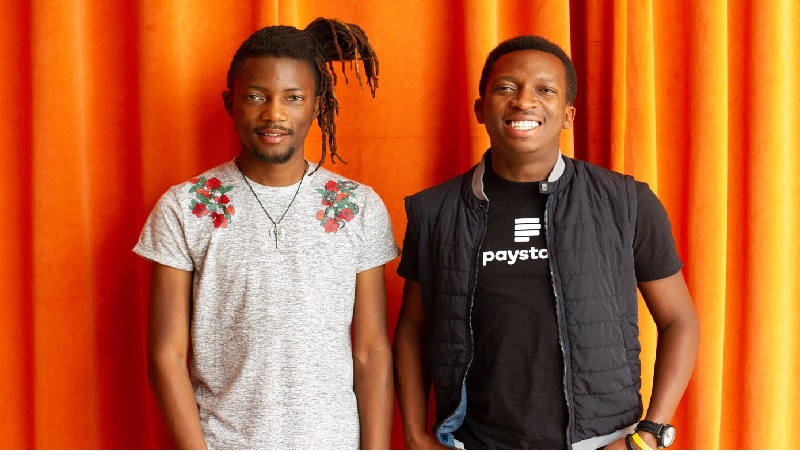
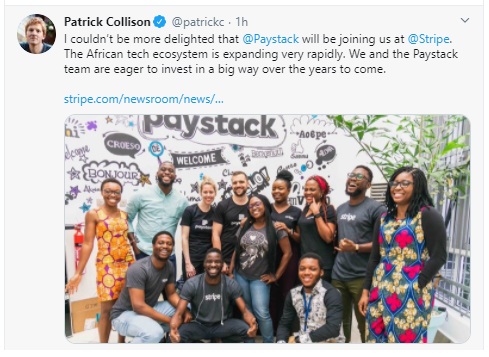
Paystack founders

Paystack raised a total of $11.7 million and exited at more than $200 million to Stripe. This could be one of the most successful startups in Nigerian history by merely looking at the efficiency in the utilization of factors of production. Yes, the founders would be controlling a huge part of this company which means the bulk of that $200 million would go to them. From left to right, village to town, and across all domains, what the Paystack boys have done is uncommon in Africa, and most especially Nigeria.

Stripe acquires Nigeria’s Paystack for more than $200 Million. When Stripe invested in Paystack a few years ago, many noted that it was certainly a way to understand the market. I did speak and exchanged emails with the co-founder of Stripe, John Collison, during that time. Now, Stripe has understood well enough, and now wants to buy-out the whole company, creating multi-millionaires in Nigeria overnight.

If you want to run a small comparison, Flutterwave has raised $64.5 million. If you want to keep the same multiples, Flutterwave should be worth at least $1 billion. Certainly, Flutterwave is not yet a unicorn.

Yes, I am speechless. I mean, I have never seen this type before in Nigeria. Their multiples are better than anything in the HISTORY OF NIGERIA including Interswitch, Andela, Jumia, etc by looking at the time it took them . Yes, from Andela to Jumia, etc you are talking of truckloads of cash which have been pumped in. But these two boys used largely nothing to create this type of value, in just five years! The Paystack financial velocity ratio is amazing. Yes, with only 60,000 customers, not millions!

CEO of Stripe

“A lot of companies have been, let’s say, heavily influenced by Stripe,” Collison said, raising his eyebrows a little. “But with Paystack, clearly they’ve put a lot of original thinking into how to do things better. There are some details of Stripe that we consider mistakes, but we can see that Paystack ‘gets it,’ it’s clear from the site and from the product sensibilities, and that has nothing to do with them being in Africa or African.”

I am waiting for the invitation. My car plate number for easy access to the venue is “ Ndubuisi Car Stops at All Good Parties in Lagos”. Hope Paystack will buy enough zobo, nkwobi and amala tonight because it is party time in Nigeria. We are on our way.

By looking at the multiples and the short time they created this value, Paystack is possibly the most successful Nigerian startup on value creation for investors for deals above $50 million. 

Press release

  • Nigerian payments company Paystack has agreed to be acquired by global payments leader Stripe to make online and offline payments easier for African businesses, and enable more global companies to enter the fast-growing region

  • Paystack powers payments for thousands of companies of all sizes – including FedEx, UPS and MTN – and processes over 50% of all online payments in Nigeria, Africa’s largest market

  • Stripe is a technology company that builds economic infrastructure for the internet. Millions of businesses in 42 countries are using Stripe to process hundreds of billions of dollars across the globe

The African internet economy is growing quickly, with online commerce in the region growing 21% year-over-year, 75% faster than the global average. In order to help grow Africa’s online GDP, Stripe has entered into an agreement to acquire Paystack, a technology company based in Lagos that makes it easy for organizations of all sizes to collect payments from around the world.

Today, more than 60,000 businesses in Nigeria and Ghana use Paystack to securely collect online and offline payments, launch new business models, and deepen customer relationships. Incredibly, Paystack already processes more than half of all online transactions in Nigeria. Paystack has ambitious plans to expand across the continent and recently started a pilot with businesses in South Africa.

Stripe and Paystack have been working closely together for some time. In 2018, Stripe led Paystack’s Series A financing round and has provided ongoing guidance as the company rapidly scaled.

“In just five years, Paystack has done what many companies could not achieve in decades. Their tech-first approach, values, and ambition greatly align with our own. This acquisition will give Paystack resources to develop new products, support more businesses and consolidate the hyper-fragmented African payments market,” said Matt Henderson, Stripe’s business lead in EMEA. “We can’t wait to see what they will build next and how their growth can turbocharge the African tech ecosystem.”

Paystack will continue to operate independently, growing their operations in Africa and adding more international payment methods. Over time, Paystack’s capabilities will be embedded in Stripe’s Global Payments and Treasury Network (GPTN), a programmable platform for global money movement that currently spans 42 countries.

“Paystack is a growth engine for modern businesses in Africa, and we couldn’t be more excited to join forces with Stripe, whose mission and values are so aligned with ours, to nurture transformative businesses on the continent,” said Shola Akinlade, CEO and co-founder of Paystack. “We believe deeply that with the right tools, African creators, developers, and entrepreneurs can do incredible things. Leveraging Stripe’s resources and deep expertise, we’re excited to accelerate our geographic expansion and introduce more payment channels, more value-added services, and deeper integrations with global platforms.”

The acquisition is subject to standard closing conditions, including regulatory approvals.

About Paystack

Paystack is a technology company powering growth for incredible businesses in Africa. Paystack helps businesses in Africa get paid by anyone, anywhere in the world. Paystack processes over 50% of all web payments in Nigeria, powering payments for over 60,000 organizations, including FedEx, UPS, MTN, and many others.

Businesses use Paystack to accept both online and offline payments through payment channels such as ATM cards, mobile money, USSD, QR code, and more. Businesses also rely on Paystack’s powerful APIs for everything from transfers to automated user verification. Founded in 2015 and launched in January 2016 by Shola Akinlade (CEO) and Ezra Olubi (CTO), Paystack was the first Nigerian company to be accepted into Y Combinator. The company is headquartered in Lagos, Nigeria and has raised over $10 million from both international and local investors including Stripe, Visa, Tencent, Y Combinator, Comcast Ventures Catalyst Fund, Blue Haven Ventures, and Ventures Platform.

Stripe Acquires Nigeria’s Paystack for More than $200 Million

Getaround Raises $140m in Series E As Short-distance Travels Rebound

0

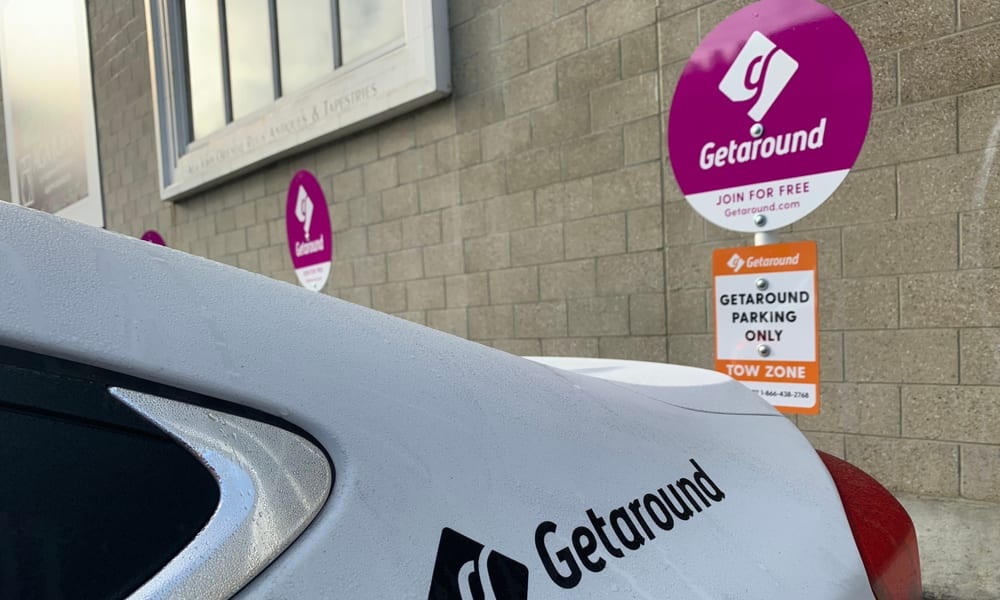
As state economies open, allowing more short-distance travels, Getaround has a plan to catch up with the demand. The Silicon Valley car rental startup announced it has raised $140 million in a Series E deal, to bring its total venture funding to $600 million.

The funding was led by PeopleFund, followed by new investors including Reid Hoffman and Mark Pincus’ Reinvent Capital, AmRest founder Henry McGovern, pennant Investors and VectolQ partners Steve Girsky, Mary Chan and Jualia Steyn also deploying capital. Old investors backing the deal are SoftBank Vision Fund, Menlo Ventures etc.

Getaround is a car rental company that allows customers to instantly rent cars through its app. The startup is available in more than 100 cities and is rapidly expanding.

The new fund is a sign of rebound after the company was hardly hit by COVID-19 pandemic, which forced it to downsize and lay off 150 employees.

But while the pandemic which hampered other rental businesses was mainly to blame, Getaround CEO Sam Zaid said the company’s troubles were compounded by struggles within SoftBank, which did a $300 million Series D round in the company in mid-2018.

Zaid told TechCrunch that although SoftBank was having its own troubles, the Japanese conglomerate has been quite helpful.

“SoftBank has been an extremely supportive partner to Getaround at every critical stage of our journey this year including in January and through COVID,” he said.

A shift in the story came following the lifting of lockdowns that allows people to embark on inter-state trips. Many chose car rentals over flights for fear of contracting the virus. Getaround saw an opportunity to turn around its business as demand for car rentals grew.

The company’s services are offered based on contactless access to passenger cars, an appealing strategy that drew many commuters to the company. There was a rapid increase in demand for Getaround cars as local joints open and people looking for a way out of the lockdowns’ boredom jump on it.

Zaid said that by July 1, Getaround rehired all of its furloughed workers. He said Getaround has witnessed worldwide revenue more than double from its pre-COVID baseline, and gross margins continue to improve.

The company explained that the fund raised in the summer will be used to help the business invest in car technology, bring on new partners and reach global profitability.

Getaround now has more than six million customers worldwide and hopes to add to the numbers as coronavirus continues to spike in Europe.

The company also announced four new executives following the new deal. There are: Dan Kim, head of North American business. He formerly was the head of Airbnb plus and head of global sales and delivery at Tesla; Laura Onopchenko, CFO. She is the former CFO of NerdWallet. Vice president of people and culture, Tia Gordon who worked as the director of people at Google; and vice president of customer experience, Ruth Yankoupe, who held the same position at OYO.

Getaround’s revamp came surprising to many, given that, at the same period the company was working its way out of the strains of COVID-19, Hertz, a giant in the car rental business was declaring bankruptcy.

On May 22, Hertz filed for bankruptcy protection, following the combination of nearly $19 billion of debt and some 700,000 idle rental cars brought by the pandemic that forced its business to shut down.

Hertz’ ordeal was a spotlight on the woes of the travel industry in the wake of the pandemic. Airline companies were not spared as many of them took the same route to declare bankruptcy even after governments’ bailouts. Ridesharing companies like Uber, Lyft and DoorDash are still struggling to record revenues even after the lockdowns were lifted, because many riders are still scared of making person-to-person contact with drivers.

With its rental strategy void of person-to-person contact, Getaround fixed the fear friction and grew an alarming customer-base that attracted more investors amidst the health chaos.

Stripe Acquires Nigeria’s Paystack for More than $200 Million

3

Stripe acquires Nigeria’s Paystack for more than $200 Million. When Stripe invested in Paystack a few years ago, many noted that it was certainly a way to understand the market. I did speak and exchanged emails with the co-founder of Stripe, John Collison, during that time. Now, Stripe has understood well enough, and now wants to buy-out the whole company, creating multi-millionaires in Nigeria overnight.

Nigeria, this is a good news because across the nation, a new club has just been formed: those with extra money to support emerging companies. To Paystack boys, well done. Both have served Nigeria and Africa in great ways.

Now, Flutterwave needs to step up its game as Stripe has just landed in Lagos!

Stripe is acquiring Paystack, a startup out of Lagos, Nigeria that, like Stripe, provides a quick way to integrate payments services into an online or offline transaction by way of an API. (We and others have referred to it in the past as “the Stripe of Africa.”)

Paystack currently has around 60,000 customers, including small businesses, larger corporates, fintechs, educational institutions, and online betting companies, and the plan will be for it to continue operating independently, the companies said.

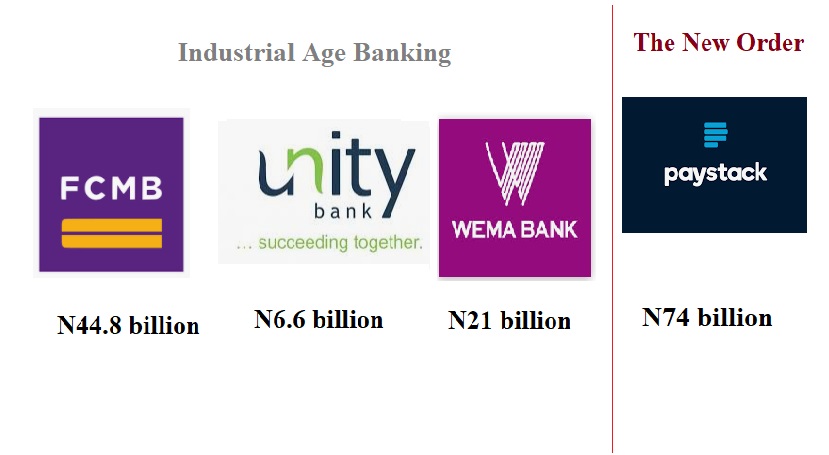
Just like that, Paystack is worth more than Unity Bank, FCMB Group Plc and Wema Bank combined. Wema Bank began life in the 1940s. Just looking at its market cap, it is evident that ALAT, its digital bank, has struggled as it has not delivered multiples which are evident. FCMB Group Plc has many entities besides the bank, FCMB Bank.

But via an API, Paystack has created more value than all of them combined. That is the power of operating at the edges of the smiling curve, instead of the center. Paystack operates at the edges and has unlocked multiples.


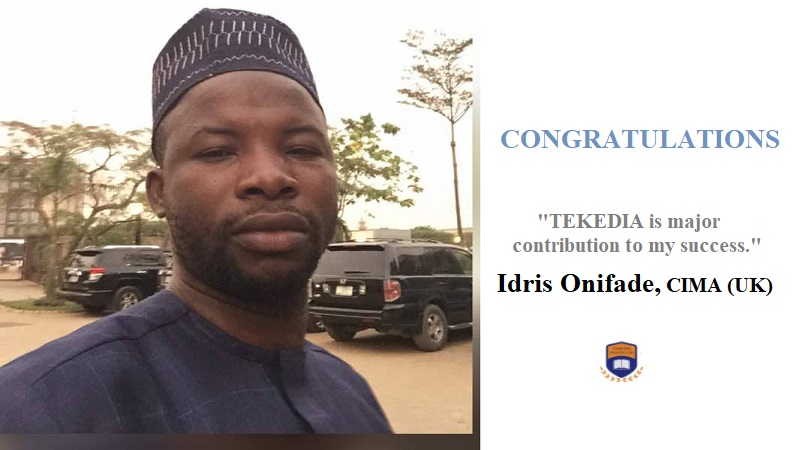
Congratulations Idris Onifade Who Just Passed His CIMA (UK)

0

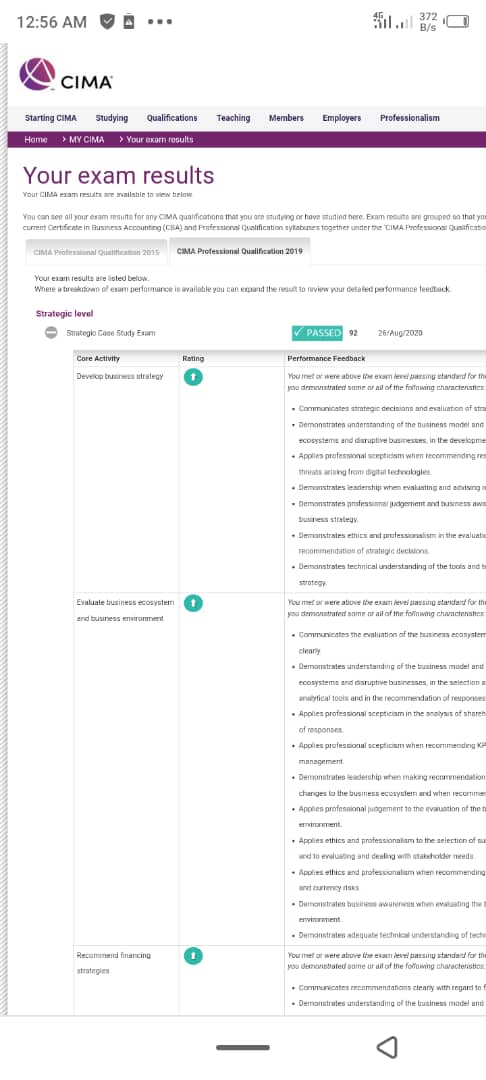
He failed the exam twice (62%, 78%) and just passed on the third attempt with 92% by relying solely on Tekedia Mini-MBA. The Chartered Institute of Management Accountants (CIMA) is a UK based professional body offering training and qualification in management accountancy and related subjects.  Idris Onifade credits attending Tekedia Mini-MBA as the deal: “I enrolled for Tekedia mini-MBA, and I continued studying on my own. Our lectures on Change management, cyber security, block chain were very useful. Fortunately for me, my question was on cybercrime, internal control and block chain as God will help me. I also listen to the lectures on the same topics overnight for the exam.” 

I just passed my CIMA (UK) final paper after 3 attempt. I wrote this exam in my first attempt I failed with 62 marks while the pass mark is 80, I knew I understand the theories and model very well because I received lectures from a Dubai based Australian tutor, I decided to attempt it second time without a lecture but got good reading materials from a friend in Ghana, guess what, I failed again with 78 marks. Then I knew my major problem is application of the theories and my next attempt would be new syllabus. I enrolled for Tekedia mini-MBA, and I continued studying on my own. Our lectures on Change management, cyber security, block chain was very useful, fortunately for me my question was on cybercrime, internal control and block chain as God will help me I also listen to the lectures on the same topics overnight to the exam.

In a nutshell TEKEDIA is major contribution to my success.

Thank Prof Ekekwe

I passed with 92 marks

Honestly it worth celebrating, the exam that I should have spend 400k but I ended up spending over 750k

Tekedia 50k made it possible

– Idris Onifade

Tekedia has 48 Faculty, from Shell to MTN, Flutterwave to Coca Cola, Infoprive to Queen’s University, and beyond. There is no professional exam, our lectures cannot help you. Idris joins many who have used Tekedia Mini-MBA to ace exams.

Largely, our practical focus on management training made it possible for them to pass these exams. Congratulation Idris Onifade & our members.