I signed a letter last week. A U.S. non-profit had written for us to confirm that three of our Learners attended Tekedia Mini-MBA. The Learners had written to the U.S. non-profit for a grant to research the impact of Boko Haram on the GDP of Northern Nigeria (2020 to 2025) under our Tekedia Capstone program. Just now, we are learning that a grant of $12,500 has been approved for the Learners. We congratulate them.
Tekedia capstone is a research paper or a case study exploring a topic, market, sector or a company. It is the most intense part of our program where Learners are pushed to do research as part of the learning process.
To submit this grant, the Learners used a concept note they developed as part of Tekedia Mini-MBA lab. More wins for young people. Learn more about Tekedia programs.
In an unprecedented decision, International Business Machines (IBM) is splitting itself into two public companies. The computing company announced on Thursday it’s spinning off some of its low-margin lines of business into a new company which will be named later. The move is part of its attempt to focus on the more lucrative cloud computing.
“We divested networking back in the ‘90s, we divested PCs back in the 2000s, we divested semiconductors about five years ago because all of them didn’t necessarily play into the integrated value proposition,” IBM’s CEO Arvind Krishna said during an investor call.
Now the firm is taking another shot at it in a way that will create two industry-leading companies, each with strategic focus and flexibility to drive clients and shareholder value.
IBM said it will accelerate its hybrid cloud strategy to drive digital transformations for its clients, and additionally, separate its Managed Infrastructure Services unit of its Global Technology Services division into a new public company.
The separation is expected to be achieved as a tax-free spin-off to IBM shareholders, and completed by the end of 2021.
“IBM is laser-focused on the $1 trillion hybrid cloud opportunity. Client buying needs for application and infrastructure services are diverging, while adoption of our hybrid cloud platform is accelerating. Now is the right time to create two market-leading companies focused on what they do best. IBM will focus on its open hybrid cloud platform and AI capabilities.
This Feb. 27, 2018, photo shows a quantum computer, encased in a refrigerator that keeps the temperature close to zero kelvin in the quantum computing lab at the IBM Thomas J. Watson Research Center in Yorktown Heights, N.Y. Describing the inner workings of a quantum computer isn’t easy, even for top scholars. That’s because the machines process information at the scale of elementary particles such as electrons and photons, where different laws of physics apply. (AP Photo/Seth Wenig)
“NewCo will have greater agility to design, run and modernize the infrastructure of the world’s most important organizations. Both companies will be on an improved growth trajectory with greater ability to partner and capture new opportunities – creating value for clients and shareholders,” said Krishna.
Ginni Rometty, IBM Executive Chairman said the two companies will capitalize on their respective strengths to accelerate digital transformation and infrastructure modernization.
“We have positioned IBM for the new era of hybrid cloud. Our multi-year transformation created the foundation for the open hybrid cloud platform, which we then accelerated with the acquisition of Red Hat. At the same time, our managed infrastructure services business has established itself as the industry leader, with unrivaled expertise in complex and mission-critical infrastructure work.
“As two independent companies, IBM and NewCo will capitalize on their respective strengths. IBM will accelerate clients’ digital transformation journeys, and NewCo will accelerate clients’ infrastructure modernization efforts. This focus will result in greater value, increased innovation, and faster execution for our clients,” he said.
The company issued a statement explaining how the separation will take effect and how each company will work to accelerate growth in their respective field.
IBM, a Leading Hybrid Cloud and AI Company will focus on its open hybrid cloud platform, which represents a $1 trillion market opportunity. Building on IBM’s hybrid cloud foundation, the company acquired Red Hat to unlock the full value of the cloud for clients, further accelerating adoption of the platform.
This platform facilitates the deployment of powerful AI capabilities to enable the power of data, application modernization services, and systems. These are all underpinned by the security, unmatched expertise in industry verticals, and deep commitment to open source innovation that clients expect from IBM.
With tighter integration and focus on its open hybrid cloud and AI solutions, IBM will move from a company with more than half of its revenues in services to one with a majority in high-value cloud software and solutions. IBM will also have more than 50% of its portfolio in recurring revenues.
IBM’s open hybrid cloud platform architecture, based on RedHat OpenShift, works with the entire range of clients’ existing IT infrastructures, regardless of vendor. This platform allows clients to “write-once/run-anywhere,” and enables a hybrid cloud approach that drives up to 2.5 times more value for clients than a public cloud-only solution.
IBM’s unique full-stack capabilities and large ecosystem of partners and ISV’s deliver innovation and enable clients to unlock the full value of the hybrid cloud and their data.
IBM’s software portfolio, focused on data and AI, automation, and security, enables the widest access to innovation through open source. IBM’s business, strategy and technology consultants help clients transform by modernizing their existing applications, and by building new AI-infused data analysis capabilities on the leading open hybrid cloud platform.
IBM’s secure, mission-critical public cloud is designed to provide all required regulatory controls, and offers clients a foundation of open source software, security leadership, and enterprise-grade infrastructure.
IBM’s Systems business, integrated with the hybrid cloud platform, allows cloud-native developers to capitalize on the unique capabilities of IBM’s hardware. Leveraging its long-term relationships with clients, IBM will continue to drive the innovation in hardware that enterprises rely on for their most mission-critical computing needs.
As part of this strategic acceleration, IBM is taking action to simplify and optimize its operating model for speed and growth. This includes streamlining its geographic model and transforming its go-to-market structure to better engage with and support clients. IBM is also continuing to consolidate its shared services.
This simplified and focused operating model will support accelerated innovation for the hybrid cloud, and provide more flexibility to increase investment in growth areas. The result will be an enhanced financial profile with a clear trajectory for improved revenue and profit growth.
The new company (to be named at a subsequent date) will immediately be the world’s leading managed infrastructure services provider. It has relationships with more than 4,600 technology-intensive, highly regulated clients in 115 countries, including more than 75% of the Fortune 100, a backlog of $60 billion, and more than twice the scale of its nearest competitor.
The new company will be entirely focused on managing and modernizing client-owned infrastructures, a $500 billion market opportunity. It will leverage its unrivaled expertise to offer hosting and network services, services management, infrastructure modernization, and migrating and managing multi-cloud environments. These are critical services that are core to client operations.
With a streamlined business model, NewCo will create value by helping enterprises optimize their performance through AI and automation. NewCo’s services will enable enterprises to build agility and efficiency into their infrastructure and datacenters. NewCo will be able to better modernize infrastructures for an unparalleled roster of clients in all industries, with relationships that have been built over decades.
NewCo will extend its leadership through increased investment in the next generation of transformational managed infrastructure services, with more opportunity for margin expansion, profit growth and cash generation.
NewCo will also be able to partner fully across all cloud vendors, opening new avenues for growth, while maintaining a strong strategic partnership with IBM and continuing to serve existing and new clients.
The proposed separation is expected to be effected through a pro-rata spin-off to IBM shareowners that will be tax-free for U.S. federal income tax purposes. The transaction is subject to customary closing conditions, including Form 10 registration with the U.S. Securities and Exchange Commission, receipt of a tax opinion from counsel, and final approval by IBM’s Board of Directors.
The company said it expects third-quarter revenue of $17.6 billion and an adjusted profit per share of $2.58.
IBM Chief Financial Officer told Reuters the company will have 90,000 employees and its leadership structure will be decided in a few months.
The computing firm sees cloud as a viable option of diversification, although Microsoft and Amazon are currently leading in that area.
Spectrum is a scarce finite resource, which refers to radio frequencies, needed by telecommunication operators (otherwise referred to as telcos) to transmit and receive radio waves, which enables us to communicate and connect with one another.
First, at the international level, various countries, major players and companies (including regulators, telcos, equipment vendors, smart phone makers etc.), meet at international events like the world radio congress to agree on spectrum usage and its harmonisation in other to deal with issues around cross border interference, international roaming agreements, inter-operability etc.
Then, at the national level, it is regulated by regulators like NCC, who auction the spectrum and provide the licensing conditions as well as roll out obligations for those who obtain such spectrum for use within the country.
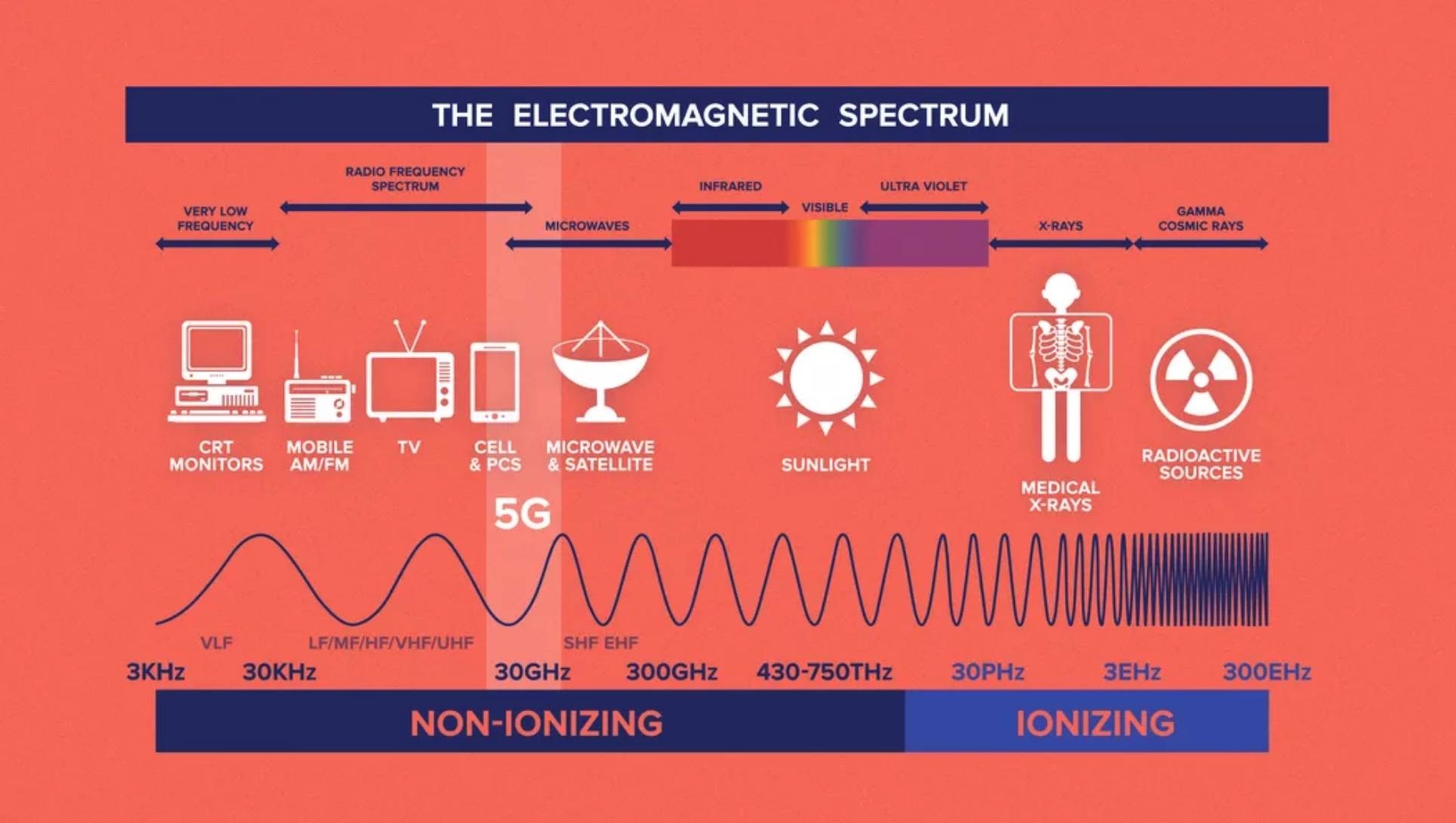
5G seems to be the innovation force which would ultimately lead to the digital transformation of various countries. It will be an evolutionary step, with a revolutionary impact, transforming and automating industries like agriculture, mining, transportation, e-commerce, health care, utilities, homes, education, oil and gas, manufacturing, financial services, logistics, etc, as well as hyper and immensely connecting humans to machines, ultimately triggering the birth of the fourth industrial revolution.
For these reasons, and more, the 5G networks have been designed to provide exponential and intelligent connectivity, ultra high bandwidth, faster speeds, low latencies, massive smart connections over large geographic areas etc. For all of these things to happen, 5G networks have been designed to work with three key bands, which will be discussed below. They are the low, mid and high band respectively.
Figure: Software Defined Networking within a 5G system [29]Low band: This refers to the lower frequencies in the sub-1GHz e.g. 700MHz. at lower frequencies, signal propagation is excellent and can travel over long distances. The radio signals, at these frequencies, can also pass through dense objects. These frequencies are typically used for coverage and for rural areas. E.g. think of your gsm (2G) signals with good coverage. Frequencies in this band have been pre-assigned for other applications such as TV broadcasting; hence operators cannot obtain ample capacity in this band. This band is for coverage, not capacity.
Mid band: This refers to frequencies within 1-6GHz. These frequencies are typically used for coverage and capacity, suited for urban areas (with huge capacity demand). The higher frequencies enable the operator to transmit a large amount of data. This band is for both coverage and capacity.
High band: This refers to frequencies within and above 6GHz. They are termed the mm wave frequencies. They would enable the operator to transmit a very large amount of data but are very limited in terms of propagation distances. This is the band that holds the 5G’s promise of delivering higher speeds. The radio signal by these frequencies can be easily absorbed or blocked by objects within the communication path. This is suited for use in hot spots (with huge capacity demands). This band is for capacity, not coverage.
Hence, it is important that the spectrum in all three bands are combined in an intelligent way to fulfil the promises of 5G networks by providing for coverage (connectivity over large geographic areas), where needed and/or capacity (faster speeds, exponential and intelligent connectivity, ultra high bandwidth etc.), where equally desirable.
Definition of terms used
Coverage: refers to the geographic area over which radio communication (in this case) can occur, without any interruption to such communication services.
Capacity: is the amount of traffic (data, voice, sms etc.) a network can handle at a given period.
Guardian Newspapers Nigeria has opened a film production subsidiary. One of its productions, Eyimofe “This is my desire” is set to premiere in the United Kingdom, at the BFI London Film Festival. The film, which had its world premiere at the 70th Berlin International Film Festival in February, is also billed to celebrate its U.S premiere at the AFI Fest. According to a statement to Tekedia, Eyimofe is the 2020 official selection for Vancouver International Film Festival, an annual film festival held in Vancouver, British Columbia. Call this updating your playbook after a massivedislocation from news aggregators like Facebook and Google. Well done, Guardian,
A GDN Studios production (www.GDNStudios.ng), the 114 minutes film directed by twin brothers Arie and Chuko Esiri, features Jude Akuwudike, Temi Ami-Williams, Cynthia Ebijie, Sadiq Daba, Tomiwa Edun, Jacobs Alexander, Tomiwa Edun, Chioma ‘Chigul’ Omeruah and others.
Funded entirely in Nigeria and shot in 16mm and filmed across 48 locations in Lagos, the two chapter drama follows the stories of Mofe (Jude Akuwudike), a factory technician, and Rosa (Temi Ami-Williams), a hairdresser, on their quest for what they believe will be a better life on foreign shores.
A passport, photos and a visa form recurring elements. The characters’ misfortunes are part of their everyday life and they are sketching out the need to leave Nigeria at the same time. At the bottom of the socio-economic ladder, status, money, gender, skin colour and family structures are inextricably connected. The longing for another life is but one thread in this complex mesh, a promise that floats above things at once near and far away.
It would be recalled that Eyimofe is the 2020 official selection for Vancouver International Film Festival, an annual film festival held in Vancouver, British Columbia.
As that happens, Mondia, a company which specializes in the marketing and distribution of digital content is partnering with Jumia, the Africa’s e-commerce platform, to create Jumia Games. Jumia Games will live inside the JumiaPay App. Yes, that is it: if you do not have money to buy things, you can play games by spending small money. Jumia just wants you to stay on the platform. This makes sense because winning thecontrol of demand is important in the digital economy domain. Possibly, those games would result to buying or owning virtual Aso Rock palace, Second Nigeria Bridge toll gate, Ikoyi mansions, Banana Island biggies, etc.
People, update your playbook because the world is changing. Yes, you must meet or stimulate a new dimension of customers needs to thrive.
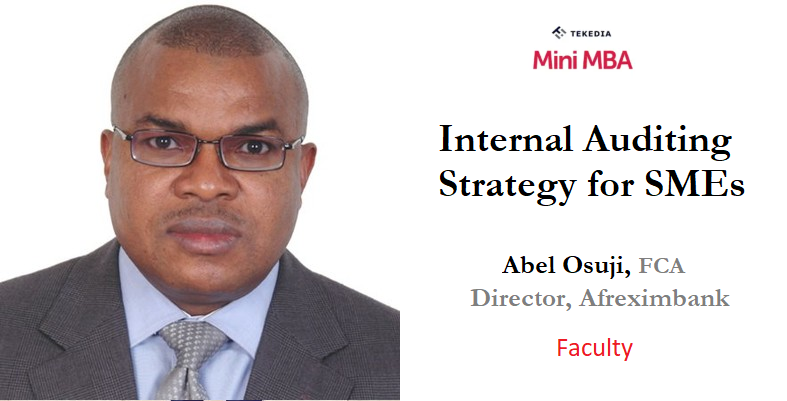
He is a Fellow of the Institute of Chartered Accountants of Nigeria (ICAN), the zenith of the accounting profession in Nigeria. He is an experienced director of internal audit & risk control with a demonstrated history of working in the financial services industry. He is skilled in enterprise risk management, internal audit, banking, accounting, and internal controls. He has worked with SMEs and understands all domains of audits for growing businesses.
A Certified Risk Analyst (CRA) with BSc in Accounting, MBA from University of Lagos, and MSc Economics from ESUTH Enugu. He worked in EY, and today he is the Director Of Internal Audit & Risk Control at African Export-Import Bank (Afreximbank).
Abel Osuji, a Tekedia Institute Faculty, will lead a Tekedia Live session on Internal Auditing Strategy for SMEs in Tekedia Mini-MBA. For Tekedia Mini-MBA which begins Feb 8, 2021, he has also developed a course on the same topic.
Fri | 7pm-8pm | Internal Auditing Strategy for SMEs – Abel Osuji, Afreximbank | Zoom Link