DD
MM
YYYY

PAGES

DD
MM
YYYY

spot_img

PAGES

Home Blog Page 6112

Once Again, Nigerian Government Subsidizes Electricity

0
electricity companies nigeria

On September 28, the Federal Government of Nigeria averted proposed nationwide strike by Organized Labour, over the increment of petrol pump price and electricity tariff, by promising to, within two weeks, implement effective measures that will cushion the effects of the price hike.

As part of the agreement, the Federal Government was given two weeks by a committee made up of stakeholders and representatives from both the government and Organized Labour, to set the ball rolling.

On Monday, the Federal Government announced that, as part of its efforts to implement measures that will ease the strains of the price hike, it will work out modalities to ensure that customers overcharged by the eleven electricity Distribution Companies (DisCos), as a result of the electricity tariff hike will be fully refunded.

Earlier in September, the Nigerian Electricity Regulatory Commission (NERC), increased electricity tariff from N30.23 per kilowatt-hour to N62.33 per kwh. As a result of the tariff increment, five distinctive bands (A-E) were created to reflect the various service levels and minimum hours of power supply.

Customers were to be allotted electricity supply according to the hours of electricity they consume in their respective Bands. Customers in [Band A] are to enjoy a daily minimum supply of 20 hours, those in [Band B] minimum of 16 hours, [Band C] will have minimum of 12 hours, [Band E] minimum of 8 hours, and those in [Band D], a minimum of 4 hours daily electricity supply.

According to NERC, the increased tariff will only apply to customers in Bands A, B and C, while D and E remain frozen until they are allotted more hours.

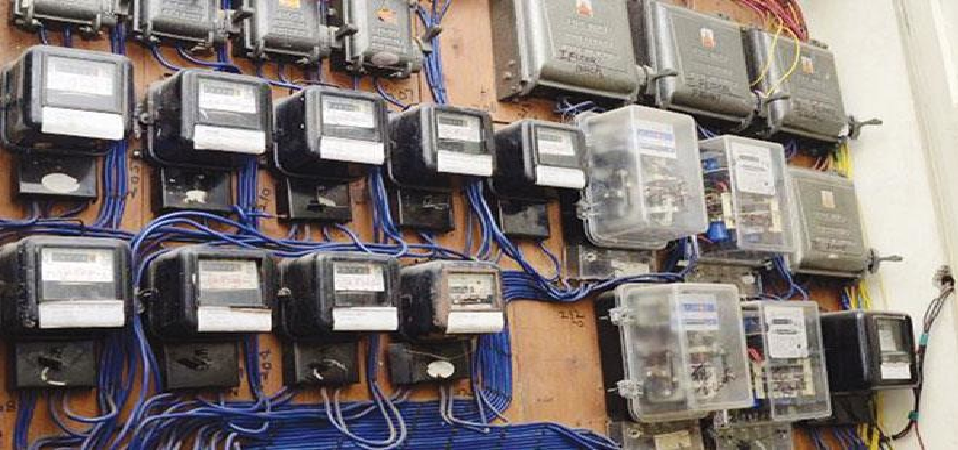
And as part of efforts to improve service delivery in the power sector, the Special Adviser to the president on Infrastructure, Ahmed Rufai Zakaria, said about six million Nigerian households will be metered. He added that the tariff relief plan will be implemented this week to uphold the agreement between Organized Labour and the Federal Government.

“The implementation of the above tariff reliefs will be executed within this week as the suspension of the Service-Based Tariff is removed; the distribution of six million free meters to Nigerians and refunds for any customer overcharged by the DisCos will be implemented.

“We completed our work with Labour on electricity tariffs. The federal government will use Value Added Tax, VAT proceeds from the Nigerian Electricity Supply Industry (NESI), to reduce the September increases by 10 percent to 31 percent for bands A to C, Band D and will remain frozen,” he said.

However, the tariff subsidy is expected to last for three months, which leaves gaps in the agreement between Labour and the Federal Government, and some unanswered questions.

The agreement entails that the Federal government, among other things, will roll out measures, including tax waiver on the minimum wage and intervention fund to reduce the burden of the petroleum pump price and electricity tariff hike.

“A specific amount is to be unveiled by the Federal Government in two weeks’ time, which will be isolated from the Economic Sustainability Programme Intervention Fund that can be accessed by Nigerian Workers with subsequent provision for 240,000 under the auspices of NLC and TUC,” said the Minister of Labour and Employment.

While the move offers reprieve to Nigerians on electricity, fuel price hike remains unaddressed as it involves multifaceted mechanisms that the government is struggling to develop.

The MultiChoice (DStv, GOtv) Impossibility Claim on Pay As You Go

6

The CEO of MultiChoice, John Ugbe, has spoken: MultiChoice, the owner of DStv and GOtv brands, does not have the technology to deliver Pay As You Go (PAYG) in Nigeria. Yes, PAYG is neither technically possible nor commercially feasible. And because those cannot happen, MultiChoice will not offer PAYG as it is impossible at the moment. He made that claim under oath before elected leaders in the House of Representatives Nigeria who are tasked with finding why satellite TV providers have been unable to offer Nigerians PAYG.

He said the Pay- As-You- Go can only be feasible if there is a total and global remodelling of the satellite broadcasting technical and billing architecture, adding the result will be that consumers will have to much higher tariffs to access the service.

“The economies of scale model employed by broadcasters mean that subscribers pay less.

“We are yet to see a pay TV business anywhere in the world that does PAYG in the sense intended here. We do not believe the model is technically or commercially feasible,” Ugbe declared.

He maintained that Pay-Per-View, is however different from PAYG and more expensive, as it entails a broadcaster transmitting a single event at the same time to its subscribers who have paid to watch the event.

“A subscriber who wants to watch an event on PPV is required to pay an additional fee besides his subscription.

“A typical example would be the Mayweather and Pacquiao, and Wilder and Fury II boxing bouts which were retailed on PPV in the United States for $100 and $79.99 respectively.

Mr Ugbe has a tough job to explain to Nigerians that if you have to use Pay Per View or broadly Pay As You Go, the economics changes. If a monthly service plan costs N10,000 for the average of 720 hours in a month, a provider will not accept N30 for your two-hour English Premiership game under Pay Per View. Simply, the cost of that two-hour game could rise to N2,000.

It is the same thing which happens in airline tickets. If you buy a ticket which you are not guaranteed a refund, it is typically cheaper. But if you want one with a guaranteed refund, it costs more since the airline has to actually “preserve” that seat for you no matter what happens.

More so, if you do not allow airtime credits to expire, it will cost more for everyone, since everyone would then be able to spend airtimes,  no matter the time, costing the telcos resources. But if the airtime could expire, telcos use probability of usage to reduce the airtime cost for everyone knowing that say 20% of the purchased airtime will not be used. The discount cost on airtime calibrates out the unused airtime.

Pay As You Go or Pay As You View is easy to implement technically. But the problem is when people start complaining that they are asked to pay N2,000 for a two-hour game. So, Mr. Ugbe has to improve his communication on that.

Star Times has unveiled PAYG for Nigerians. So, the technical element is possible, But that does not mean that it is a good business for MultiChoice. If you launch that, possibly, many would just pay for European football and that would do it for them.

At the end, it comes down to having a credible competitor to MultiChoice. Remember the MTN “impossible” per second billing and the pivot when Glo offered it. That is what Nigeria needs – find an alternative, and MultiChoice will adjust. Every other thing is siddon-look.

Which is a Better Business Model – Quibi vs Tiktok?

2

Which is a better business model?

A: Have 10 great movie producers to produce 200 short videos for your digital platform over two years (Quibi like).

Quibi is a media company that develops media content designed for smartphones

B: Allow tens of thousands of amateur creators, and use an AI to select the best videos daily and distribute them massively in your platform (Tiktok like).

TikTok is a short-video sharing app and social network platform that develops a lip-syncing video application to create videos.

In 2000, Option A would have been a good business because the computing resources to run AI and crunch the numbers were not (commonly) available for Option B. But with cloud computing and the age of AI here, Option B wins. The probability of getting a hit video compounds in Option B while A is limited by the insights of just 10 people; virality is key for short movies. That is why Tiktok will remain a better business than Quibi which is looking for a buyer despite being under the guidance of legendary Jeffrey Katzenberg. People, as I have noted in the Grand Playbook of Business, your business model is more important than your ability to execute.

Quibi can’t catch a break, even after becoming a two-time Emmy-winner. Less than six months after Jeffrey Katzenberg and Meg Whitman launched their short-form video streaming startup, the company’s drama “#FreeRayshawn” nabbed acting trophies for stars Laurence Fishburne and Jasmine Cephas Jones.

The accolades from the Television Academy apparently didn’t impress Emmys host Jimmy Kimmel. The ABC late-night comic quipped during the Sunday night broadcast that the newcomer had “10 Emmy nominations this year, including outstanding short form comedy or drama and dumbest thing to ever cost a billion dollars.”

Yes, in ancestral Igbo, a dream of fetching water is full of vitality because the road to the stream is never covered by weeds. But dreaming of fetching a firewood is bad as after the woods are gone, the weeds take over the road. So, you want to be fetching water over fetching firewood as it means there is a future.

Improve your business model.

What is Your China Strategy?

3

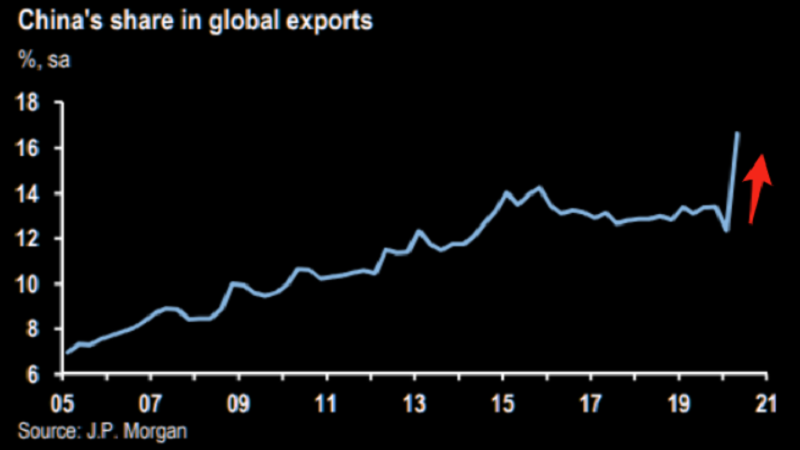
China powers the world and is eating the global export lunch. Call it a massive dislocation because there is no comparison. The US is sub-8% even as most expect China to hit 25% as a result of the covid-19 black swan. This is not changing anytime soon as China is ramping up more trade surpluses against the U.S. because everyone likes good deals. Yes, despite the trade deals from President Trump, the trade imbalance has exacerbated under his watch. 

Visit a mall and see those stores with “Proudly Made in America” merchandise. Admire the flags, move around, and then make way towards Walmart to buy Made in China version. There is a reason that is happening: pricing. Yes, at Walmart, you can spend just 30% of the amount for something fairly good enough, and that product was stocked from China. Saving money is not a political agenda – that is why you have Walmart in Blue and Red states. Everyone likes to save, and China makes that possible using the construct of Minimum Viable Quality (MVQ).

Without the cost context you can think that the cheap one was a poor job. It is indeed not a great quality product but that was by design. That is what the market for toys wants because the kids rarely use them for days before they are discarded. It is a mass market product which has to be affordable to make sense. That does not mean that you cannot make very expensive toys only few can afford. But what is the purpose? Put a $260 XL in a toy which would be dumped within days?

The deal is this: the construct of quality has no meaning until the price of the product is put into considerations. I always ask entrepreneurs to build for the Minimum Viable Quality (MVQ) bounded by the product target price which market will respond. You can build rockets to fly around the world: that is an engineering possibility. But does that make a business sense if no one can afford it? Ask the makers of Concorde for answers.

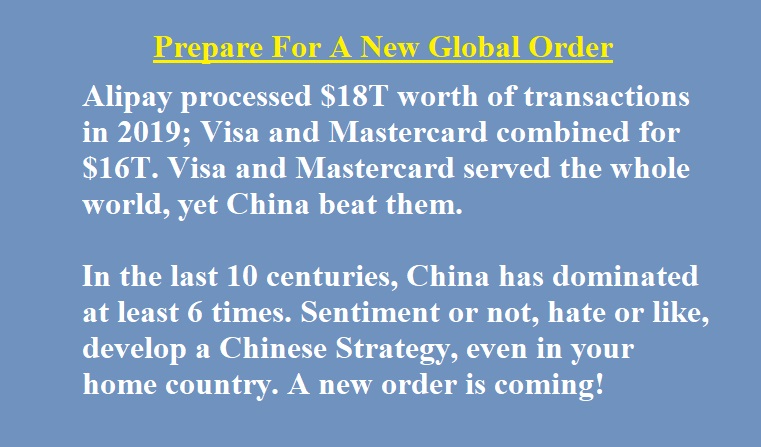
China is China. Alipay processed $18T worth of transactions in 2019; Visa and Mastercard combined for $16T. Visa and Mastercard served the whole world, yet China beat them. In the last 10 centuries, China has dominated at least 6 times. Sentiment or not, hate or like, I want to ask you one thing: What is Your China Strategy?

Prepare Your Chinese Strategy Even In Your Home Nation

Nigeria Customs and Nigeria’s Growth Tragedy

0

In our honest quest to comprehend the foundation of Nigeria’s growth tragedy in the five years of Buhari’s Presidency, for clarity and more nuanced understanding of the problems, we need to beam our searchlight on all facets of our National life. Amongst the legion of factors that could be fanning the embers of our sluggish growth situation even before Covid-19 induced economic downturn, it could be hypothesized that the over aggressive revenue drive of Nigerian Customs service might be contributing in no small measure to our growth tragedy. The economic rout of Covid-19 and the obliteration of the economic gains accrued after the global recession, and its devastating consequences for these economies is a testament to the all-powerful importance of growth. 

If Growth matters so much in a developed economy, then it matters much-more in a developing economy with an alarming population growth like ours. Even For non-experts like my humble self, the markers of growth and the economic prosperity it engenders are not difficult to discern. Growth or its tragic opposite when they happen, at the microeconomic level, can be seen and felt in; business expenditures and revenues, individual expenditures and income, the abundance of Job opportunities etc.

In a pre-industrial economy that relies heavily on importation of inputs like ours, the role of the state’s Ports and Customs authority cannot be over emphasized. Customs and Border agencies all over the world have evolved a tripartite responsibility for taxation, security and trade facilitation. Primordially, Customs are considered to be fiscal subjects that administer duties and tariffs on import and export within a nation state. However, this classical understanding and appreciation of Customs agency as a fiscal authority has given way for a broader comprehension and appreciation of their role and functions as an apparatus of civil administration. The globalization trade and Pan-National terrorism are the twin historical forces that has led to reconceptualization of the roles and function of customs and border protection.

It was in response to these historical forces that Nation states reorganized their customs to take on additional roles in National security, supply chain security and trade facilitation. Institutions like The International Convention on the Harmonized Commodity Description and Coding System, the World customs organization, were created. The HS system was adopted in 1983 and came into force in 1988. The HS multipurpose goods nomenclature is used as the basis for customs tariffs and for the compilation of international trade statistics. It comprises about 5,000 commodity groups, each identified by a six-digit code arranged in a legal and logical structure with well-defined rules to achieve uniform classification. 
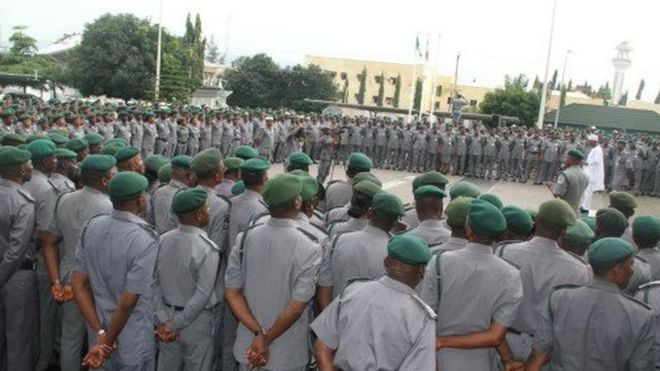
The HS is also used for many other purposes involving trade policy, rules of origin, monitoring of controlled goods, internal taxes, freight tariffs, transport statistics, quota controls, price monitoring, compilation of national accounts, and economic research and analysis. The world customs organization was instituted as a global center of customs expertise and plays a leading role in the discussion, development, promotion and implementation of modern customs systems and procedures. Thence forward, Customs all over the world are seen beyond the narrow prism of duty and tariff collection. Nations began to see them as key players in National security and crucial trade facilitation.

The devastating effect of the collapse in oil price on the revenue of Nigerian government led her to pursue a revenue drive in untapped facets of National life. VAT was increased, new taxes were levied on alcoholic beverages and Customs was tasked with a new mandate to improve on her revenue generation potentials. To his credit, Col Alli led customs pursued the custom revenue drive with crusading zeal and religious passion, resorting to crude and primitive tactics in the process, at the detriment of trade felicitation functions that could help the economy get out of recession. The honest and spirited effort of individuals and entrepreneurs to improve their financial position in a badly dented economy is at times sabotaged by the crude drive for revenue generation on the part of state officials.

Often, honest Entrepreneurs who want to import legitimate finished products, government approved raw materials and intermediate, locally unavailable packaging materials, electronics, etc find themselves dealing with deliberate inefficiency plus whimsical and capricious administration of duties and tariffs. These official acts of business sabotage manifest in various guises and coloration; it could be; delayed approval of Form M, delayed approval of Pre-Arrival Assessment Report. 

At times, it is capricious increase in freight value and the deliberate frustration of the mediation process all in a bid to increase the duty payable per shipment. These entrepreneurs grudgingly cough out this money to keep their business going, with a dampen entrepreneurial morale and confounding disillusionment. Those who can not bear such cost shift the burden to customers who have to pay more for the same unit of the item. Some consumers who find the new prices unaffordable may withdraw their patronage altogether, feeding a vicious circle.

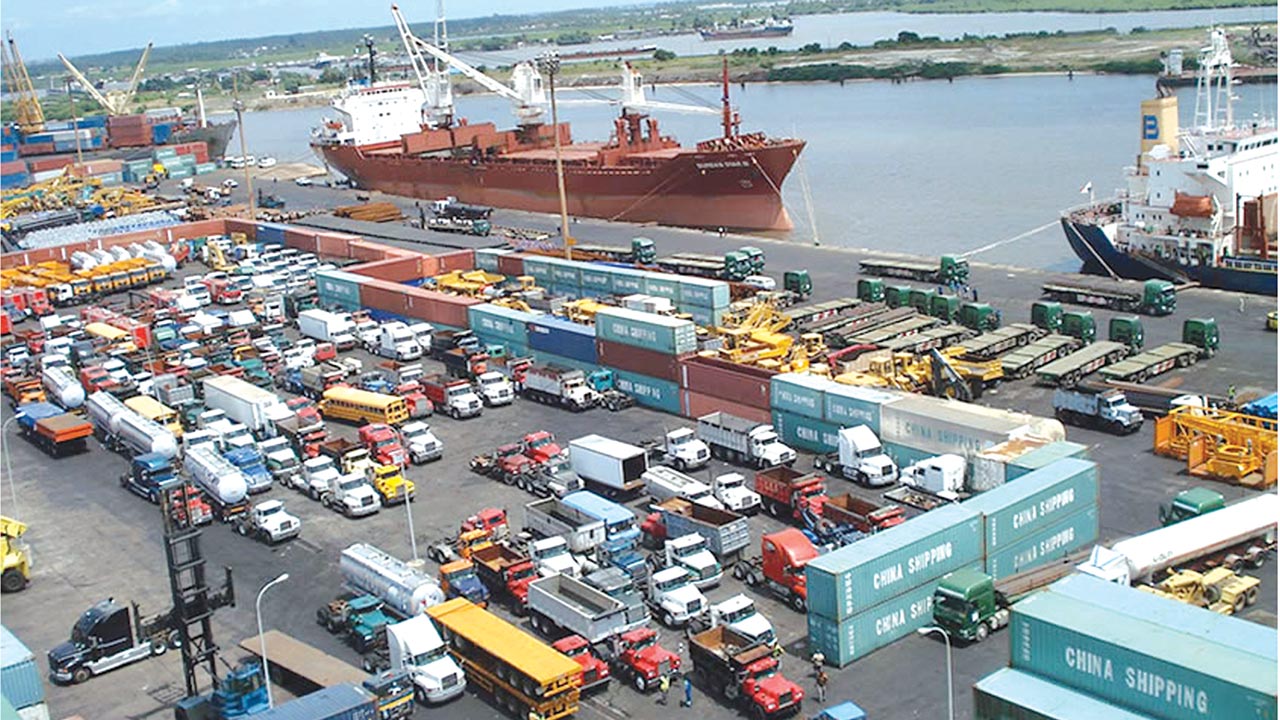
The over-bureaucratization and overregulation of international trade processes is a chilling impediment to growth. Entrepreneurs incur needless charges at the various nodes of their interaction with Nigeria Customs. Pre-Arrival Assessment report office, Valuation units, Examination, Releasing, unblocking, DC Report, Stamping unit, Exit-gate, enforcement. The evidence is enormous that the Record revenue generation attained by the customs across these nodes is at the expense of much needed trade facilitation. It is such a Pyrrhic victory.
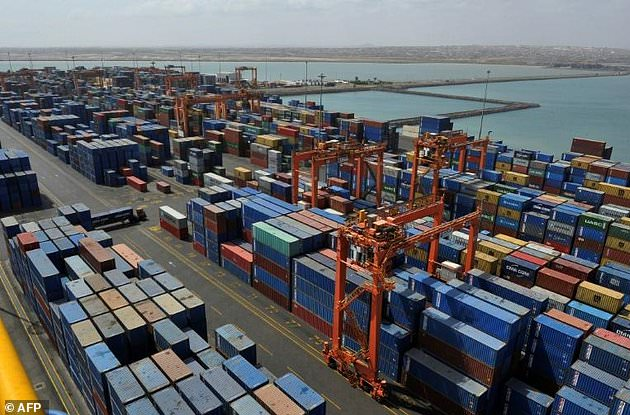
This same custom that has fulfilled her revenue generation mandate with Religious devotion and crusading zeal is utterly wanting in her national security function. The Nigerian customs has not been able to check the inflow of contraband and prohibited goods and merchandise, thereby distorting the economy. Despite this zeal and crusade, the Nigerian customs has been woefully inadequate in checking the illicit inflow of arms and ammunition into the hands of violent criminals.

For the sake of economic growth and National security, The Nigerian customs need to take her Trade facilitation and National security obligations as serious as it takes her revenue mobilization drive. The federal Government cannot continue to pursue the former at the expense of the later if she is serious and honest about her economic growth and National security goals. The triumphalist zeal with which the customs announce the realization of Revenue target should be channeled to a more economically profitable venture. It is a gross misconception of role for state officials to conflate law enforcement with revenue generation. The conflation of this disparate role through deliberate policy does not only incentivize corruption, it also saps the tax and entrepreneurial morale of the citizen. The actualization of a Nigeria where entrepreneurs and individuals see payment of duty and taxes as a contribution to National wellbeing and not as burden and financial loss is a goal for which must strive.