DD
MM
YYYY

PAGES

DD
MM
YYYY

spot_img

PAGES

Home Blog Page 6117

Sustainable Development Goals: 10 Facts to Change the World in the Next 10 Years of Action

0

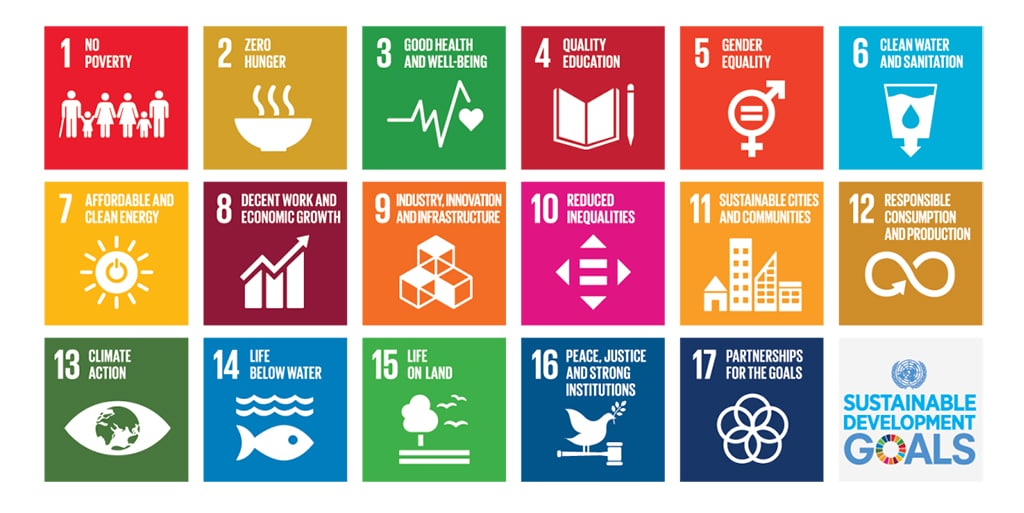
The global celebration of the 5th year of the introduction of the Sustainable Development Goals has come and gone. A number of activities were done to mark the day across the world. Perhaps, because of the impact of Coronavirus, the virtual space seemed to have dominated in terms of efforts to highlight the change the world needs as it faces a decade to bring about global development that leaves no one behind. With the theme Factivism, which translates to activism based on truthful information, different organisations put in creative efforts to ensure the significance of the day and the theme was not lost on the people. The theme was drawn from the experience of the world in the handling of the Coronavirus pandemic which not only hit the world with a deadly and contagious virus but also came with an attack on truth and truthful information. Thus, as the world battled the virus, it also combated the infodemic that accompanied it.

In highlighting the theme of Factivism, an organisation has highlighted ten critical areas which global leaders and SDGs advocates all over the world must pay attention to if the battle to put the globe on sustainable development  footing is to be achieved. Premised on the fact that making a change in the world requires accurate and up-to-date information, these 10 facts are germane in the next decade of action.

Fact 1  : The Planet is getting hotter

This a climate action fact. According to research. 615 million across the world suffer from water stress while 22 million people were displaced across the globe by extreme weather. The world needs to reduce its heavy use of water and reduce carbon footprint to address this problem plaguing the world.

Fact 2: Women are still underrepresented in governments globally

These facts speak to Goal 5. Facts have shown that men still constitute 75% of the members of the parliament globally. This statistics has shown that the world is still leaving women behind in political decision making around the world. The citizens of the world needs to show more sensitivity to women by voting gender equality champions, advocate equal pay, call out gender discrimination and demand for increased gender representation.

Fact 3: An insignificant number of the world holds the largest of the global wealth

This is a Goal 1 focus. It identifies rising inequality as nearly half of the world’s wealth is in the hands of 1% of its population. Chances of people to advance in life are continuously being determined by who they are or where they live. The world needs to support more vulnerable people in all ramifications.

Fact 4: 1 Million important plants and animal species are being lost in seconds

Available statistics show that the world loses one football pitch of tropical primary rainforest while one million plant and animal species remain at risk of extinction. This is a threat to life on land, the goal 15.  Global citizens have to eat more sustainably, plant a tree and reduce intake of meat and use of paper.

Fact 5: The population of homeless and displaced people population is rising

The aim of Goal 16 which focuses on peace, justice and strong institutions is threatened as thousands of people flee their homes on a daily basis with impact on the education of children and livelihoods of families. Statistics indicate that 80 million people were forcibly displaced  in 2019 by war, conflict, persecution and violence.

Fact 6:  COVID 19 has exacerbated existing global learning crisis

No one who witnessed the Coronavirus pandemic could deny the devastating effect of the health crisis. Put that in number, statistics has stated that not less than 1 billion of the world’s students have had their education disrupted across the world magnifying the existing inequalities and worsening the earth’s learning crisis. This affects Goal 4 of quality and affordable education.

Fact 7:  Almost two third of the world’s population is breathing polluted air

The Goal 11 of sustainable cities and communities is threatened as almost 2/3 of the world’s population breathes polluted air. The world needs to go more green and reduce carbon footprints to ensure the air it breathes is safe

Fact 8: 84 Million people in Sub-Saharan Africa cannot access essential healthcare

Healthcare access is another victim of the pandemic. It has disrupted health services. As at now, 84 million people in Sub-Saharan Africa cannot access essential healthcare. This has put lives at risk. The world needs to demand more medical care, vaccinations and individuals must keep themselves safe.

Fact 9: Close to 1 billion people do not have enough to eat

Close to a triple of the population of the United States does not have enough to eat across the globe. Almost 1 billion of the world’s population is starving! Individuals must support the World Food Programme and help fight hunger. To attain the Goal 2 of the SDGs, efforts must be coordinated to fight hunger.

Fact 10: Almost half of the world’s population has no access to the internet

Fewer than 1 in 5 people in the least developed countries are connected to the internet. This greatly impacts on the Goal 9 of industry, innovation and infrastructure. Individual citizens must be an advocate of technology for all.


The Generator Boy – Inventors of Nigeria

0

That is Genco (for generating electricity), transco (for transmission of electricity) and disco (for distributing electricity).  The young man built the power plant, created the transmission lines and opened it for people to come and charge their phones, etc. Like I tell people, there is nothing new in Nigeria. The news now is that in the Southeast Nigeria, people are creating alternate frequencies (yes, illegal) and government in the 2021 budget will spend close to N654 million to track those frequencies.

The Nigerian government has approved over N650 million (N653,886,584) for the purchase of hi-tech equipment to monitor frequencies in the country, especially in the Southeastern part.

This was disclosed by the communication minister, Isa Pantami, at the end of Wednesday’s Federal Executive Council meeting presided by President Muhammadu Buhari.

“The Ministry of Communications and Digital Economy, sort the approval of council for deploying hybrid spectrum monitoring system, most importantly to focus on the south eastern zone of the country,” he said.

“From January to August 2020, within the period of eight months, we discovered 320 frequencies being used all over the country and of this 320, one hundred and six were illegal.”

I am looking for a leader who can help harness the immense talent of young people in Nigeria. I tasted this many years ago in FUTO when my Vice Chancellor summoned me that the campus radio station we had designed to serve the university community had been banned by Sani Abacha, and that it must be stopped. We complied!

Look at this video…and tell me why General Electric (GE) would not wish this boy was born in America! Solomon Ukoha is the inventor. He is from Abia state


Congratulations for the Grant – Tekedia Mini-MBA Capstone

0

I signed a letter last week. A U.S. non-profit had written for us to confirm that three of our Learners attended Tekedia Mini-MBA. The Learners had written to the U.S. non-profit for a grant to research the impact of Boko Haram on the GDP of Northern Nigeria (2020 to 2025) under our Tekedia Capstone program.  Just now, we are learning that a grant of  $12,500 has been approved for the Learners. We congratulate them.

Tekedia capstone is a research paper or a case study exploring a topic, market, sector or a company. It is the most intense part of our program where Learners are pushed to do research as part of the learning process.

To submit this grant, the Learners used a concept note they developed as part of Tekedia Mini-MBA lab. More wins for young people. Learn more about Tekedia programs.

IBM Will Split Into Two Companies in 2021

0

In an unprecedented decision, International Business Machines (IBM) is splitting itself into two public companies. The computing company announced on Thursday it’s spinning off some of its low-margin lines of business into a new company which will be named later. The move is part of its attempt to focus on the more lucrative cloud computing.

“We divested networking back in the ‘90s, we divested PCs back in the 2000s, we divested semiconductors about five years ago because all of them didn’t necessarily play into the integrated value proposition,” IBM’s CEO Arvind Krishna said during an investor call.

Now the firm is taking another shot at it in a way that will create two industry-leading companies, each with strategic focus and flexibility to drive clients and shareholder value.

IBM said it will accelerate its hybrid cloud strategy to drive digital transformations for its clients, and additionally, separate its Managed Infrastructure Services unit of its Global Technology Services division into a new public company.

The separation is expected to be achieved as a tax-free spin-off to IBM shareholders, and completed by the end of 2021.

“IBM is laser-focused on the $1 trillion hybrid cloud opportunity. Client buying needs for application and infrastructure services are diverging, while adoption of our hybrid cloud platform is accelerating. Now is the right time to create two market-leading companies focused on what they do best. IBM will focus on its open hybrid cloud platform and AI capabilities.

This Feb. 27, 2018, photo shows a quantum computer, encased in a refrigerator that keeps the temperature close to zero kelvin in the quantum computing lab at the IBM Thomas J. Watson Research Center in Yorktown Heights, N.Y. Describing the inner workings of a quantum computer isn’t easy, even for top scholars. That’s because the machines process information at the scale of elementary particles such as electrons and photons, where different laws of physics apply. (AP Photo/Seth Wenig)

“NewCo will have greater agility to design, run and modernize the infrastructure of the world’s most important organizations. Both companies will be on an improved growth trajectory with greater ability to partner and capture new opportunities – creating value for clients and shareholders,” said Krishna.

Ginni Rometty, IBM Executive Chairman said the two companies will capitalize on their respective strengths to accelerate digital transformation and infrastructure modernization.

“We have positioned IBM for the new era of hybrid cloud. Our multi-year transformation created the foundation for the open hybrid cloud platform, which we then accelerated with the acquisition of Red Hat. At the same time, our managed infrastructure services business has established itself as the industry leader, with unrivaled expertise in complex and mission-critical infrastructure work.

“As two independent companies, IBM and NewCo will capitalize on their respective strengths. IBM will accelerate clients’ digital transformation journeys, and NewCo will accelerate clients’ infrastructure modernization efforts. This focus will result in greater value, increased innovation, and faster execution for our clients,” he said.

The company issued a statement explaining how the separation will take effect and how each company will work to accelerate growth in their respective field.

IBM, a Leading Hybrid Cloud and AI Company will focus on its open hybrid cloud platform, which represents a $1 trillion market opportunity. Building on IBM’s hybrid cloud foundation, the company acquired Red Hat to unlock the full value of the cloud for clients, further accelerating adoption of the platform.

This platform facilitates the deployment of powerful AI capabilities to enable the power of data, application modernization services, and systems. These are all underpinned by the security, unmatched expertise in industry verticals, and deep commitment to open source innovation that clients expect from IBM.

With tighter integration and focus on its open hybrid cloud and AI solutions, IBM will move from a company with more than half of its revenues in services to one with a majority in high-value cloud software and solutions. IBM will also have more than 50% of its portfolio in recurring revenues.

IBM’s open hybrid cloud platform architecture, based on RedHat OpenShift, works with the entire range of clients’ existing IT infrastructures, regardless of vendor. This platform allows clients to “write-once/run-anywhere,” and enables a hybrid cloud approach that drives up to 2.5 times more value for clients than a public cloud-only solution.

IBM’s unique full-stack capabilities and large ecosystem of partners and ISV’s deliver innovation and enable clients to unlock the full value of the hybrid cloud and their data.

IBM’s software portfolio, focused on data and AI, automation, and security, enables the widest access to innovation through open source. IBM’s business, strategy and technology consultants help clients transform by modernizing their existing applications, and by building new AI-infused data analysis capabilities on the leading open hybrid cloud platform.

IBM’s secure, mission-critical public cloud is designed to provide all required regulatory controls, and offers clients a foundation of open source software, security leadership, and enterprise-grade infrastructure.

IBM’s Systems business, integrated with the hybrid cloud platform, allows cloud-native developers to capitalize on the unique capabilities of IBM’s hardware. Leveraging its long-term relationships with clients, IBM will continue to drive the innovation in hardware that enterprises rely on for their most mission-critical computing needs.

As part of this strategic acceleration, IBM is taking action to simplify and optimize its operating model for speed and growth. This includes streamlining its geographic model and transforming its go-to-market structure to better engage with and support clients. IBM is also continuing to consolidate its shared services.

This simplified and focused operating model will support accelerated innovation for the hybrid cloud, and provide more flexibility to increase investment in growth areas. The result will be an enhanced financial profile with a clear trajectory for improved revenue and profit growth.

The new company (to be named at a subsequent date) will immediately be the world’s leading managed infrastructure services provider. It has relationships with more than 4,600 technology-intensive, highly regulated clients in 115 countries, including more than 75% of the Fortune 100, a backlog of $60 billion, and more than twice the scale of its nearest competitor.

The new company will be entirely focused on managing and modernizing client-owned infrastructures, a $500 billion market opportunity. It will leverage its unrivaled expertise to offer hosting and network services, services management, infrastructure modernization, and migrating and managing multi-cloud environments. These are critical services that are core to client operations.

With a streamlined business model, NewCo will create value by helping enterprises optimize their performance through AI and automation. NewCo’s services will enable enterprises to build agility and efficiency into their infrastructure and datacenters. NewCo will be able to better modernize infrastructures for an unparalleled roster of clients in all industries, with relationships that have been built over decades.

NewCo will extend its leadership through increased investment in the next generation of transformational managed infrastructure services, with more opportunity for margin expansion, profit growth and cash generation.

NewCo will also be able to partner fully across all cloud vendors, opening new avenues for growth, while maintaining a strong strategic partnership with IBM and continuing to serve existing and new clients.

The proposed separation is expected to be effected through a pro-rata spin-off to IBM shareowners that will be tax-free for U.S. federal income tax purposes. The transaction is subject to customary closing conditions, including Form 10 registration with the U.S. Securities and Exchange Commission, receipt of a tax opinion from counsel, and final approval by IBM’s Board of Directors.

The company said it expects third-quarter revenue of $17.6 billion and an adjusted profit per share of $2.58.

IBM Chief Financial Officer told Reuters the company will have 90,000 employees and its leadership structure will be decided in a few months.

The computing firm sees cloud as a viable option of diversification, although Microsoft and Amazon are currently leading in that area.

Spectrum Bands For 5G

0

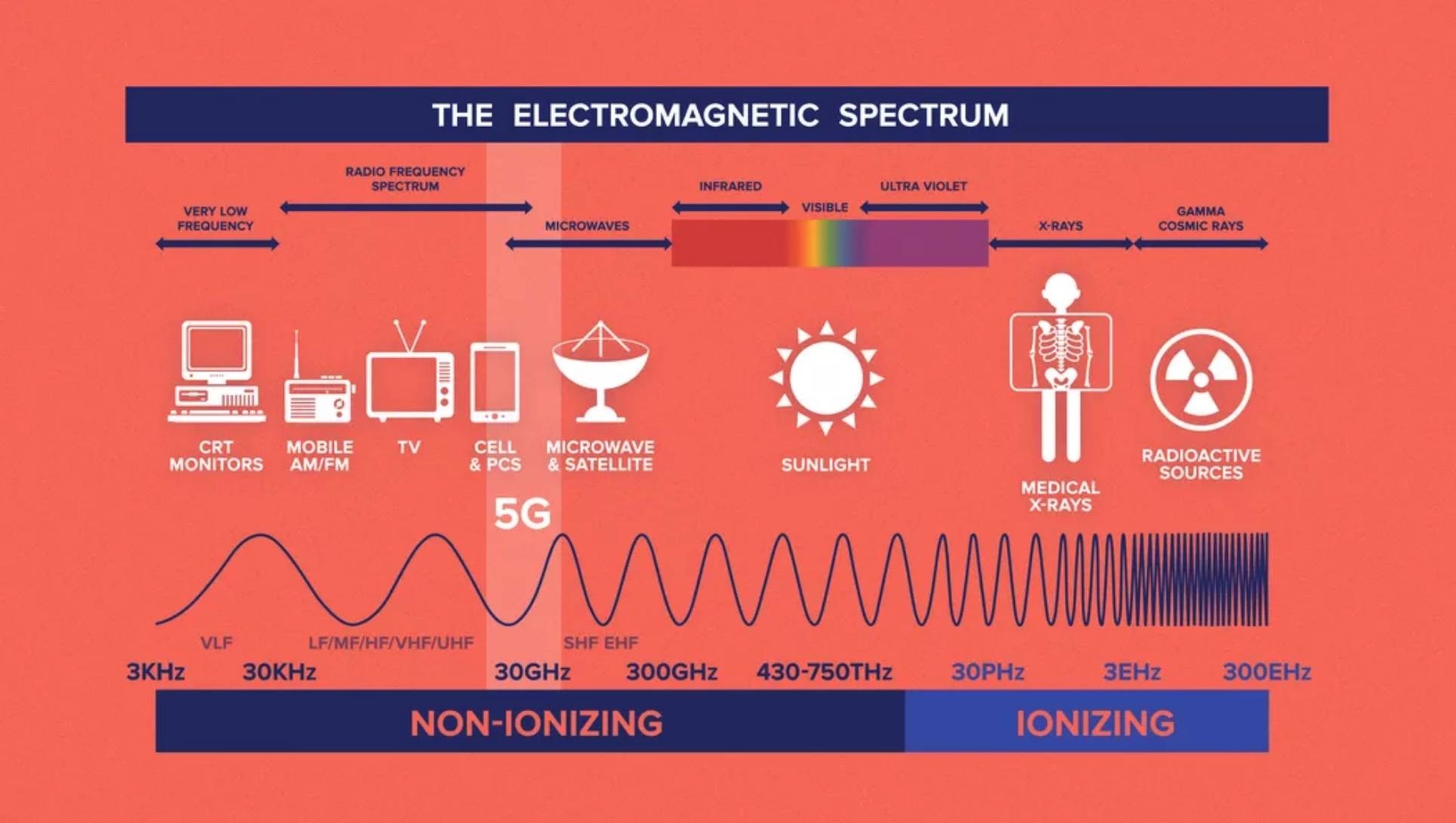
Spectrum is a scarce finite resource, which refers to radio frequencies, needed by telecommunication operators (otherwise referred to as telcos) to transmit and receive radio waves, which enables us to communicate and connect with one another.

First, at the international level, various countries, major players and companies (including regulators, telcos, equipment vendors, smart phone makers etc.), meet at international events like the world radio congress to agree on spectrum usage and its harmonisation in other to deal with issues around cross border interference, international roaming agreements, inter-operability etc.

Then, at the national level, it is regulated by regulators like NCC, who auction the spectrum and provide the licensing conditions as well as roll out obligations for those who obtain such spectrum for use within the country.

5G seems to be the innovation force which would ultimately lead to the digital transformation of various countries. It will be an evolutionary step, with a revolutionary impact, transforming and automating industries like agriculture, mining, transportation, e-commerce, health care, utilities, homes, education, oil and gas, manufacturing, financial services, logistics, etc, as well as hyper and immensely connecting humans to machines, ultimately triggering the birth of the fourth industrial revolution.

For these reasons, and more, the 5G networks have been designed to provide exponential and intelligent connectivity, ultra high bandwidth, faster speeds, low latencies, massive smart connections over large geographic areas etc. For all of these things to happen, 5G networks have been designed to work with three key bands, which will be discussed below. They are the low, mid and high band respectively. 

Figure: Software Defined Networking within a 5G system [29]
Low band: This refers to the lower frequencies in the sub-1GHz e.g. 700MHz. at lower frequencies, signal propagation is excellent and can travel over long distances. The radio signals, at these frequencies, can also pass through dense objects. These frequencies are typically used for coverage and for rural areas. E.g. think of your gsm (2G) signals with good coverage. Frequencies in this band have been pre-assigned for other applications such as TV broadcasting; hence operators cannot obtain ample capacity in this band. This band is for coverage, not capacity. 

Mid band: This refers to frequencies within 1-6GHz. These frequencies are typically used for coverage and capacity, suited for urban areas (with huge capacity demand). The higher frequencies enable the operator to transmit a large amount of data. This band is for both coverage and capacity. 

High band: This refers to frequencies within and above 6GHz. They are termed the mm wave frequencies. They would enable the operator to transmit a very large amount of data but are very limited in terms of propagation distances. This is the band that holds the 5G’s promise of delivering higher speeds. The radio signal by these frequencies can be easily absorbed or blocked by objects within the communication path. This is suited for use in hot spots (with huge capacity demands). This band is for capacity, not coverage. 

Hence, it is important that the spectrum in all three bands are combined in an intelligent way to fulfil the promises of 5G networks by providing for coverage (connectivity over large geographic areas), where needed and/or capacity (faster speeds, exponential and intelligent connectivity, ultra high bandwidth etc.), where equally desirable. 

Definition of terms used

Coverage: refers to the geographic area over which radio communication (in this case) can occur, without any interruption to such communication services.

Capacity: is the amount of traffic (data, voice, sms etc.) a network can handle at a given period.