DD
MM
YYYY

PAGES

DD
MM
YYYY

spot_img

PAGES

Home Blog Page 6119

Nigeria’s Telecom Subscribers Hit 203 Million, MTN Leads

1

Released statistics by the Nigerian Communication Commission (NCC) shows further increase in the number of telecom subscribers. The stats show that active telecom subscribers in Nigeria surged to 203 million in the month of August.

According to the report by the Commission, the increase has put Nigeria’s teledensity at 106.62%. Teledensity is measured by the number of active telecom subscribers per 100 residents of an area.

The result was recorded through the combined line activation of Airtel, Globacom, MTN and 9mobile, though individually, they performed differently. The report indicated an increase of 4.2 million subscribers from the previous month which had a record of 198.9 million subscriptions.

A breakdown of the activities shows that MTN outperformed others to maintain its position as the leading telco in the country. The South African company activated a total of 2.7 million new lines to put its active subscribers at 83 million. Airtel came second with 1.06 million new subscriptions to put its total subscribers at 54.7 million.

On its part, Globacom activated 192,327 new lines to put its subscription-base at 52.9 million, while 9mobile welcomed 214,282 new subscribers, increasing its total to 12.3 million.

For internet subscription, the report shows internet users increased to 149.7 million total, including fixed wired and Voice over Internet Protocol (VoIP) for the month under review. Compared to the data of the previous month, internet subscribers in Nigeria increased by 2.6 million in the reference month.

The report indicated that MTN, Globacom, Airtel and 9mobile maintained their positions in subscribers table of choice, but collectively accounted for 99.7 percent of all internet subscriptions in the country.

According to the regulator’s report, the increase in internet subscription was spurred by the telcos aggressive deployment of the 4G network, and COVID-19 pandemic which forced many Nigerians to go virtual.

However, VoIP covers 433,267 out of the 149.3 million internet subscribers. And for the internet subscriptions, MTN maintains its lead with 1.6 million increase, taking its total of internet subscribers to 63.8 million.

Airtel followed with addition of 738,462 new internet subscribers, which upped its customers-base to 39.7 million. Globacom added 231,341 new internet customers in the same period, bringing its total to 38.5 million. 9mobile stayed at the fourth place as it is in other aspects. The telco gained 32,621 internet subscriptions to move its customer-base to a total of 7.1 million subscribers.

The Commission noted that although voice calls have been leading the telcos revenue generation, internet subscriptions are gradually taking over. This is as a result of increased online activities as many businesses in the country adapt to the new normal.

Nigeria’s telecom industry has shown resilience when other sectors of the economy are taking the hit of the pandemic. The monthly increase in the number of internet and voice subscriptions indicates sustainable growth that will not be disrupted by the current health crisis.

But 9mobile is still lagging far behind others, failing to catch up in both internet and voice subscriptions. However, the recent appointment of Alan Sinfield as its CEO offers hope that the struggling telco can be revamped in the near future. But Sinfield whose wealth of experience speaks success, acknowledged having a mountain of challenge before him.

He said: “The Nigerian telecoms industry is characterized by strong competition, but it is also an industry that is important to people everywhere. I am delighted to join the 9mobile family and look forward to using my experience and unique value propositions to lead the company in the next exciting phase of its journey. The goal is to build on the existing strong foundation of the company to create value that will transform the Nigerian telecoms sector.”

Although there is little increase compared to preceding months, we can only wait and see if the numbers will continue to change for good for the troubled telecom operator in the coming months.

Tekedia Certificate Programs

1

The Tekedia Institute has approved more certificate tracks. The certificate program is completely capstone-based. A capstone is a research paper or a case study exploring a topic, market, sector or a company.  Each certificate track costs N20k or $60. You must have attended, begun, or about attending Tekedia Mini-MBA to qualify.

To learn more and register, click here – https://www.tekedia.com/programs/

Code Program
MINI Tekedia Mini-MBA costs US$140 (N50,000 naira) per person.
MINR Add extra (optional) $30 or N10,000 if you want us to review and provide feedback on your labs.
MINF Annual Package (includes 3 editions of MINI and optional 2 certificate courses): $280 or N100,000.

CERT: Add extra (optional) $60 or N20,000 for each capstone-based Certificate specialty course. You must have attended, begun, or about attending Tekedia Mini-MBA to qualify. The following Certificate tracks are available:

The following are payment options

A Sample Certificate

The Google’s $1 Billion Ignition Gift for Media Houses

1

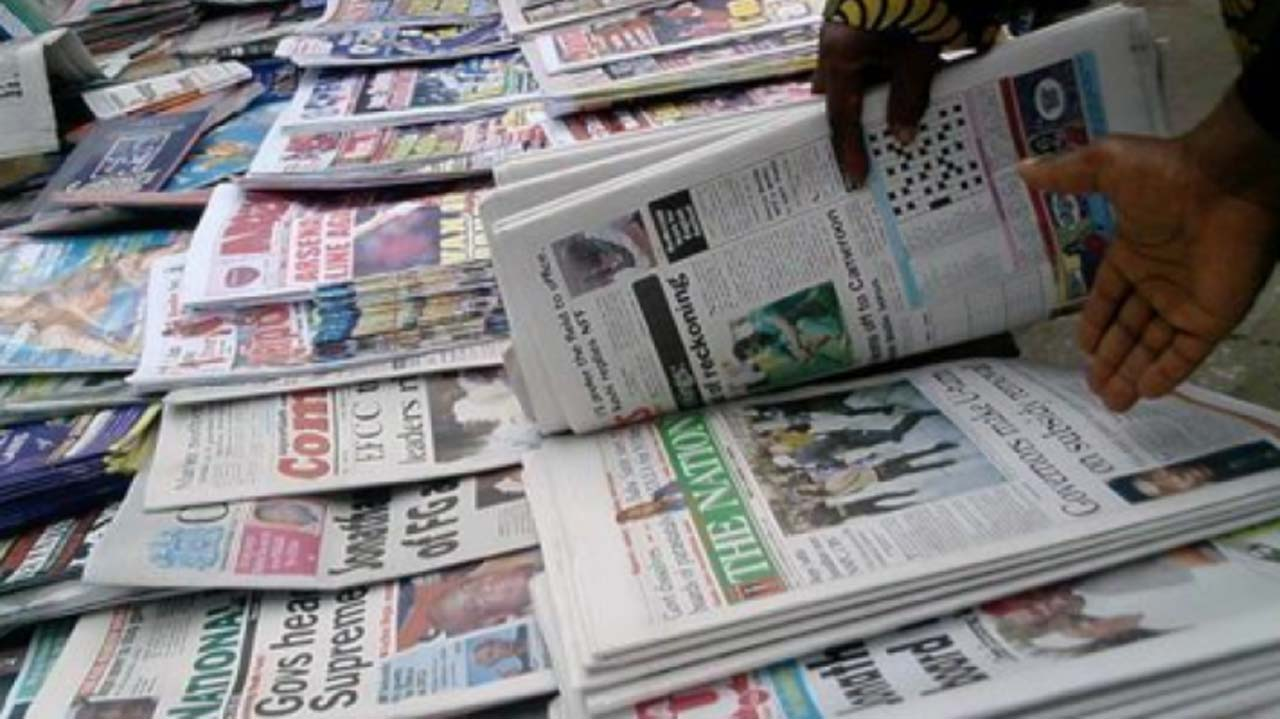
It is a new redesign – Google wants to spread $1 billion to media outlets around the world. Facebook had also flown a similar plan. Yes,  aggregators are providing help to the disintermediated, and that is a good thing. But never think Google has become Father Christmas. It knows the temperature and feels the heat:  the regulators are circling Google, and it needs to stay ahead of them with this ignition gift.

Google is implementing a new licensing program that will enable it to pay news media outlets for their contents. The program will take more than $1 billion over the next three years.

The Silicon Valley giant has signed licensing deals with about 200 publications in select countries with plans to add more and expand geographically.

The program is part of Google’s attempt to address the challenge of poor revenue generation hitting news organizations, especially in the COVID-19 era. The crippling impact the pandemic unleashed on the global economy, forced news organizations to take drastic measures, including downsizing, to stay in business.

Hello Nigeria’s consumer watchdog, a small shaking of Google Nigeria will open this wallet for Punch, Guardian, Thisday, Sun and Vanguard. If not, they get nothing. The problem I have articulated in my “Law of Diminishing Abundance of Internet.” Nigeria needs to make noise to get the attention of Google as it shares this money to save media!

Law of Diminishing Abundance of Internet: It is a construct that some companies become poorer even when they are growing in numbers of customers reached. That applies to industrial sectors like publishing and telecoms. The lesson here is that risk in any business model must be examined from the lens of this mirage abundance which Internet has provided in some sectors.

Chevron Nigeria To Cut 25% of Workforce

2

Our hearts to families affected. I always like to get out of discussing job cuts as I know what a job does in a life, a family and a community. At Alade Avenue, Ikeja, where I lived when I worked in Diamond Bank Lagos, the area boys hanging along the Fela family residence gave me a title “Chairman”.  

Whenever Diamond Bank paid me one of those mammoth salaries – money everywhere – and to celebrate it, I called all the area boys, paid out the mama put and asked them to eat all the food. It was one way of getting even with skipped meals while in college.

That said, learning that Chevron Nigeria is trimming its workforce to a really high number – 25% – is painful. But if you look, Shell is doing the same thing. Royal Dutch Shell Plc plans to cut 9,000 jobs globally, including Nigeria, as part of its cost-cutting measure to manage oil crash.  Largely, the oil & gas sector is going through a structural redesign.

Chevron Nigeria Limited has announced it will lay off a quarter of its work force.

The firm said Friday it was “reviewing its manpower requirements in the light of the changing business environment”.

The company said it will continue to evaluate opportunities to improve capital efficiency and reduce operating costs.

“In this process, the company will be streamlining its workforce and improving service delivery and overall performance at all levels,” the company said in a statement signed by Esimaje Brikinn, General Manager, Policy, Government and Public Affairs.

The statement noted that the aim is to have a business that is competitive and an appropriately sized organisation with improved processes.

[…]

Meanwhile, the Petroleum and Natural Gas Senior Staff Association of Nigeria (PENGASSAN) has vowed to resist the move “with all available tools”.

In a statement issued by Chevron Branch of PENGASSAN and signed by its Branch Chairman, Ete Oyegbanren, and Branch Secretary, Lavin Aghaunor, the union claimed the affected workers have already been locked out from the office by Chevron Nigeria Limited under the guise of COVID-19 restrictions.

Our world is changing rapidly before us, and the oil & gas sector is going through this rapid change, with massive career dislocation at scale. Indeed, this no-fossil future is moving faster than most of us think. Yes, do not be surprised if Shell becomes a renewable energy powerhouse in 30 years as I do think that the future of global energy would be electrons and not carbons.

That the oil sector labour union is protesting is expected. It is a tough one because unlike public sector workers, there is no treasury to tap into, in perpetuity, to cover the bills. Nigeria has only four core sectors – financial services, oil & gas, telecoms & foreign funded startups – that pay good wages. If oil & gas begins to see cracks, the implication would be massive across communities.

Time for that diversification to happen in Nigeria.

Google To Spend $1 Billion On News Media Outlets for Their Contents

0

Google is implementing a new licensing program that will enable it to pay news media outlets for their contents. The program will take more than $1 billion over the next three years.

The Silicon Valley giant has signed licensing deals with about 200 publications in select countries with plans to add more and expand geographically.

The program is part of Google’s attempt to address the challenge of poor revenue generation hitting news organizations, especially in the COVID-19 era. The crippling impact the pandemic unleashed on the global economy, forced news organizations to take drastic measures, including downsizing, to stay in business.

“A vibrant news industry matters – perhaps now more than ever, as people look for information they can count on in the midst of global pandemic and growing concerns about racial injustice around the world. But these events are happening at a time when the news industry is also being challenged financially. We care deeply about providing access to information and supporting the publishers who report on these important topics,” Google said in a blog post.

Google and Facebook lead the web ad revenue generation table by miles, a feat they achieved serving contents from news media outlets among others. The News Media Alliance said in 2019 that Google made $4.7 billion off the news industry in 2018.

To compensate news outlets for the gains, countries like Australia and France started making a case for publishers to get paid for their contents. The subject has long been debated between governments, publishers and Google.

When France made the rules requiring publishers to be paid for snippets of news stories displayed in search results in 2019, Google said it would be displaying only headlines. CNN reported how earlier in April, the French competition authority ruled that removing the snippet amounts to abuse of Google’s market dominance, and ordered the search giant to negotiate with French publishers.

In Australia, Google has been in tussle with the government as it resists the call for search and social media platforms to pay publishers for their contents.

It is against this backdrop that Google announced in June; the new licensing deal that will see some select publishers around the world get paid first, in what seems like a pilot phase of the program.

“Today, we are announcing a licensing program to pay publishers for high-quality content for a new news experience. This program will help participating publishers monetize their content through an enhanced storytelling experience that lets people go deeper into more complex stories, stay informed and be exposed to a world of different issues and interests,” Brad Bender, Google’s VP Product Management for News said.

The program will take off first in Australia, Brazil and Germany. Part of the deal involves removing paywalls from news sites to make monetized articles free for non-subscribers.

The program named News Showcase, took effect on Thursday in Brazil and Germany. The app will be available in the Google News app on Android and subsequently, Apple store, and later expand to the Google’s discover app and Google search.

Bender told CNN that Google will extend the program beyond the three-year commitment and add more funds to the $1 billion. However, he did not say how Google intends to select participating countries and news organizations, or which countries and news outlets will be included in the next phase of the program.

He said publishers will be allowed in the future to include video and audio to News Showcase, not just text and images, as it will give them the opportunity to tell their stories the way they want.

“Depending on the story and how they want to tell it, participating publishers can pick the best template to showcase the best of journalism and tell stories the way they want to. This additional context for users not only helps users understand the story better, but also helps them get to know the publisher’s editorial voice and priorities,” he said.

The move is expected to tune down the prolonged controversy between the news media and Google, and subsequently create more revenue opportunities for publishers.