DD
MM
YYYY

PAGES

DD
MM
YYYY

spot_img

PAGES

Home Blog Page 6122

The #EndSars Saga: Why Nigerians are Unmoved by IGP’s Orders Against SARS

0

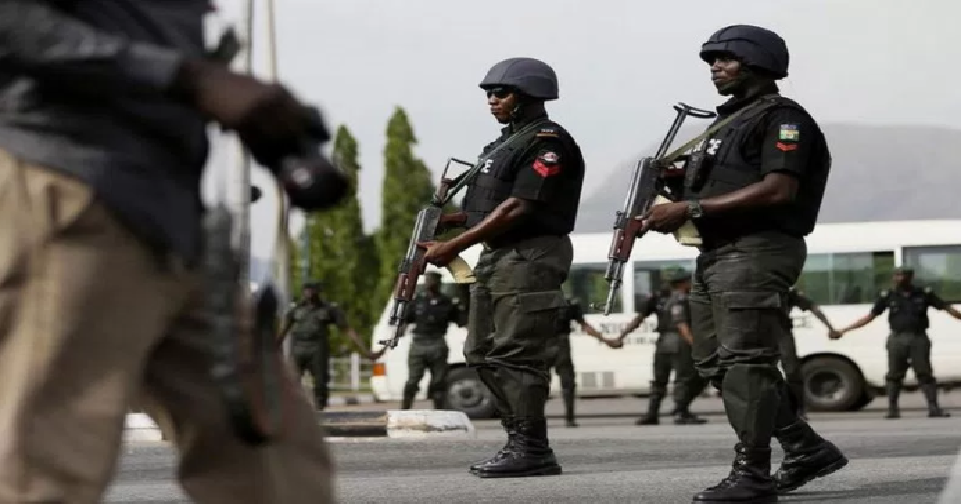
The new phase of the #EndSars campaign triggered by fresh cases of highhandedness and the brutality of the Special Anti-robbery Squad (SARS) and some other special units of the Nigerian police, who went rogue, got Nigerian government’s response in the afternoon of October 4, 2020, through an order from the Inspector General of Police, Mohammed Adamu.

The order restricts police tactical teams that include the STS and IRT from setting up roadblocks, conducting patrol, or stop and search operations. It also restricts them from invading people’s privacy, from phones to homes.

“The Inspector-General of Police, IGP M.A Adamu, has banned the personnel of the Federal Special Anti-Robbery Squad and other tactical squads of the force including the Special Tactical Squad (STS), Intelligence Response Team (IRT), Anti-Cultism Squad and other Tactical Squads operating at the Federal, Zonal and Command levels, from carrying out routine patrols and other conventional low-risk duties – stop and search duties, checkpoints, mounting of roadblocks, traffic checks, etc – with immediate effect,” the order said.

It added that no personnel of the force is allowed to embark on patrols or tactical assignments in mufti, or search people’s mobile phones, laptops and other devices.

The IGP’s order was supposed to bring relief to Nigerian youths and probably an end to the #EndSars campaign. But it didn’t, for reasons that could be traced back to similar events in the past.

In 2018, following relentless outcry and protests from Nigerians over the impunity of SARS, the then IGP, Ibrahim Idris, on the orders of the Vice President Yemi Osinbajo, the then acting President, ordered SARS off the roads, unless they were answering a distress call.

The order included a plan initiated by Osinbajo to overhaul the entire management and activities of SARS. Consequently, Idris set the ball rolling with new rules that forbade the Squad from dealing with the public illegally, and included recommended psychiatric evaluation for every member of the Tactical Squads.

The dream of sane police service started thus, but unfortunately, it died as soon as it began. IGP Idris reached the age of retirement and was succeeded by Adamu, who immediately reversed all the measures taken to address the cruelty of SARS, in fact, he authorized them back to the streets with the new name, Federal Special Anti-Robbery Squad (FSARS), and the outcry for their brutal activities began once again, even with more volume.

Although there is nothing new in their actions, the impunity it thrived on recently is believed to be an indication of approval from the top.

The horrifying stories that greet the social media on the daily speak of a menace that is enabled by impunity and will likely stick around for much longer.

“We have read this before. Some of your officers do not obey you or any Nigerian laws. We have pictures, videos, names & addresses of rogue officers and their victims. Deal with erring officers. They are everywhere committing more crimes against Nigeria. Take action not talk,” said Rapper Ruggedman, who has been actively fighting for victims of SARS corruption.

The belief that the order will only restrain SARS for a while is rooted in several other orders of IGPs that had been ignored by the Nigerian Police, including the order to dismantle roadblocks across highways nationwide, and the Bail Is Free mantra that is boldly written in every police station.

Although the new order makes a threat to hold commissioners of police responsible in cases of the misbehavior of members of the Tactical Squads; saying the Commissioner of Police in charge of State Commands and the FCT as well as their supervisory Zonal Assistant Inspector General of police “will be held liable for any misconduct within their Area of Responsibility,” the concern lies on the honesty of the supposed watchdogs.

The report filed by Amnesty International in the wake of the calls to end SARS back in 2017, said the anti-robbery squad operatives pay as much as N300,000 to their bosses to get posted to some states deemed lucrative, and frequently have to bring returns to keep their posts.

Against this backdrop, there is concern that forcing the rogue units off the street will result in upsurge of crimes as it does not entail the needed reform that will put a permanent end to police corruption.

“Today, the IGP announced a ban on SARS and other tactical units. Do I believe that that is the end of the problem? Oh No!” wrote the former DG of BPSR, Dr. Joe Abah, who has been vocal about police reform. “However, I am a public service reformer. A very important tactic in reforms is to get an anti-reformer to publicly commit to reform.”

… “The next thing that will happen is that following the “ban”, there may be upsurge in crime. Some of the banned officers will ensure that this upsurge happens and worries the public. The IGP will say “Although I committed to banning SARS, I can’t watch armed robbery go up”, he added.

Therefore, while the IGP order should have tuned down the clamor for police reform, it heightened it. The level of pessimism expressed by Nigerians about the development bears a disheartening size of distrust that betrays every sense of security from the Nigerian Police.

Osinbajo said he is angry and very concerned about the maiming and robbing of Nigerian youths by those who are supposed to protect them, and he wants to see reform. But it isn’t the first time he is saying it, and Nigerians appear unmoved by words without actions this time.
This Week in The Nigerian Capital Market: Equity Market Update

0

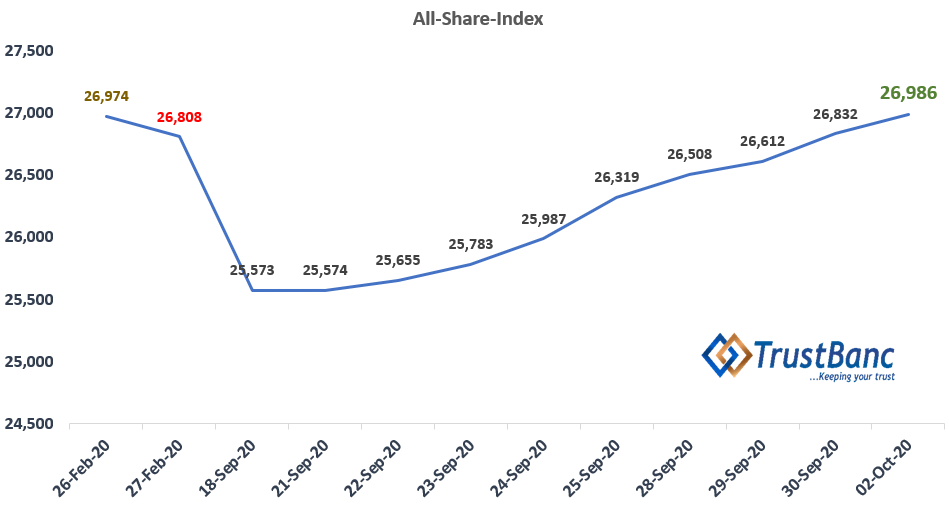
Nigeria’s All Share Index has recouped all its losses as at close of trade on 2nd October 2020, trading higher than 26,808.24 it was on February 27th, the start of the crisis in Nigeria.

In that seven-month period, we have not only seen recovery of the All-Share Index, we have also seen re-allocation of value to the healthcare, telecoms and agricultural sectors from sectors and companies that are far from recovering their pre-coronavirus prices.

In this report, we classified all listed stocks on the Nigerian Stock Exchange (NSE) into sectors and sub-sectors in line with the NSE’s classification. We listed the prices of the stocks as at year end (31st December 2019), pre-coronavirus (26th February 2020) and compared them to closing prices as at 2nd October 2020.

The goal is to establish the ‘legroom’ available for investors to take advantage for long-term investments and possible speculative purposes.

Download the report here.

The concept of ‘Social First’ (SF) platforms and who will be the Non SF after LinkedIn

0

I read this interesting post by Gary Vaynerchuk about how LinkedIn is currently positioned. I did find it a small bit perplexing, –

‘LinkedIn right now is going through a Facebook 2012 moment’ – agree.

‘…thinking about for your LinkedIn profile…add context for the LinkedIn crowd! ‘-agree.

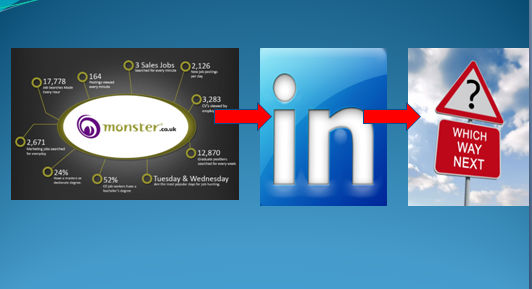
I’ve been on internet since things like AOL and Yahoo IM were category kings as online social drivers. They were displaced by the arrival of Facebook and other richer content platforms. Business jumped in smelling monetization through participation which lead to the rise of the ‘influencer’ But it’s important to remember they were ‘Social First’ (SF). LinkedIn came in initially to contest the ‘job-board’ market. I was in LinkedIn quite early on when it had no feed and members were primarily recruitment agents, hiring managers and jobseekers. Content creation on SF and non SF platforms aren’t the same. Much content doesn’t transfer from one kind to another yielding results. To some extent it does also depend on the results you are looking for. On a non SF platform, taking poorly judged opportunities to participate may create the impression your head is not in ‘the game’ and that’s never good for business.

I consider traction in one of three areas to be essential for contribution fit. These are: 1. Industry Sector(s) 2. Occupation/Technical Understanding. 3. Geo-Market and demonstrating geo soft skills. I work on an 80/20 split on this and try to discipline myself not to go out of scope more than 20% of the time. My opinion is if I give 80% relevance to a chosen community, they will tolerate up to 20% off the mark, and that <20%  gives the opportunity to dimension myself as a ‘person’.

I am C2B so I grow my network fairly deliberately and rather slowly. I only need to gain the attention of a few key needles, not an every ballooning haystack. Gary seems to diverge from his earlier themes a bit towards the end of his video.

One key takeaway for me though is where Gary says: (the golden era of LI) ‘it will go away…. they always do…. it went away… My Space… Facebook… it goes away everywhere…. it’s supply and demand of attention…’

https://www.linkedin.com/posts/garyvaynerchuk_one-final-time-this-thursday-afternoon-activity-6714939332634931200-R-SY

This holds concerns for the future for me because my business model is only well supported by Non SF rather than SF platforms.  You know what they say about failing to plan being planning to fail.. Since LinkedIn came along in 2003, I have seen nothing appear to contest its space. As a non SF juggernaut, if and when LinkedIn goes ‘off the boil’ as Gary suggests is inevitable at some point.. what is the non SF presidential candidate that is waiting in the wings?

Surely, to be prepared, C2B people need to start preparing for that now?

Also Reference:

https://theundercoverrecruiter.com/job-board-history-info/

Law Session Now Posted; Law Faculty Coming To Tekedia Live on Saturday

0

This week at Tekedia Mini-MBA, we are focusing on Law. Our two Faculty members cumulatively hold law degrees in Europe, Africa and the United States. And they have practiced law in many domains. Experience the quality of Tekedia Mini-MBA as two brilliant legal minds take us to an excursion of business & commercial law, covering IP, securities, contracting, negotiation, etc, bringing Harvard Law education, European Law education and the Nigerian law roots in one place.

Business & Commercial Law  – Chukwuemeka Mbah (LLB, BL, LLM) Law, Manager, Sherwin Williams

Contracting, Negotiation and IP – Jeff Chineme Maduka (LLB, BL, LLM), Snr Legal Manager, American Tower

Meanwhile, we are hosting Barrister Mbah at Tekedia Live on Saturday. He will answer your business law questions.

Meanwhile, early registration has started for the next edition of Tekedia Mini-MBA. Do it today and have access to the ebooks and business cases we are publishing as part of our library. Begin here

Tekedia Academic Programs

The Wisdom from Leo Stan Ekeh, Chairman of Zinox, on HealthPlus Ligitation

3

Somebody posted this on the comment section of a post we put on Tekedia regarding the founder-investor investing paralysis in HealthPlus, a Mauritius-based pharmacy chain with operations in Nigeria. The insight was attributed to the Chairman of Zinox Group, Mr. Leo Stan Ekeh. We have copied the insight below, and are asking our community to read it. It has great lessons for everyone. Tekedia remains neutral on this HealthPlus case; we are pushing the contents as part of our passion to inform and educate in this ecosystem.

‘‘Looking for foreign investors is like taking a bank loan locally. You must keep your promises. When you talk about knowledge economy, it means you should be knowledgeable enough to understand what you are going into or pay quality corporate law firms to advise you, but you must listen to them. The money the bank lends to you belongs to depositors and investors and you must do everything to keep to the terms of the loan. Same with foreign investors. They are here to help you build and make money and in the process, you make more than you would have made.

They help you alter your destiny. They are not charity organizations. Sincerely, they add huge value to help you institutionalize corporate governance and make more money than you would have made. I had warned severally in conferences that the failure rate of startups in Nigeria is unbecoming of a nation and an embarrassment. We should respect agreements signed in this 21st century. That is the only way this country can grow. I am a child of trust economy, so I must keep strictly to agreements to grow. We have world class locally owned legal firms to guide us in these partnerships.


The full insight…

from Leo Stan Ekeh, Chairman of Zinox

“I have the highest regards for Mrs. Bukky George. I see her till tomorrow as a miracle child like myself. She is extremely brilliant with great energy and passion to succeed in her sector and there are few such women in Africa and my wife is one of them, so it will be spiritually wrong for me to be against her. I know both parties and simply put, they are all credible parties in partnership. I have known her investors – Alta Sempta Capital for some time before I met Mrs. George and we have had preliminary engagement relating to their potential investment in one of my companies and my ambition to roll out across Africa.

But till date, I do not have a kobo share in any of their different investment vehicles including a kobo in HealthPlus, though anyone has a right to invest in any company of his or her choice without clearance from the general public including investing in any of my companies. I have great passion for the health sector and those around me know my investment and support in that sector locally. It is my prayer they resolve their challenges soonest. I want to keep the several discussions I had with Mrs George private because she is an amazon. I have my highest regards for successful African women and my Group is possibly the only one in the world with five certified women as Managing Directors. You can now understand!”

‘‘Looking for foreign investors is like taking a bank loan locally. You must keep your promises. When you talk about knowledge economy, it means you should be knowledgeable enough to understand what you are going into or pay quality corporate law firms to advise you, but you must listen to them. The money the bank lends to you belongs to depositors and investors and you must do everything to keep to the terms of the loan. Same with foreign investors. They are here to help you build and make money and in the process, you make more than you would have made.

They help you alter your destiny. They are not charity organizations. Sincerely, they add huge value to help you institutionalize corporate governance and make more money than you would have made. I had warned severally in conferences that the failure rate of startups in Nigeria is unbecoming of a nation and an embarrassment. We should respect agreements signed in this 21st century. That is the only way this country can grow. I am a child of trust economy, so I must keep strictly to agreements to grow. We have world class locally owned legal firms to guide us in these partnerships.

I have had at least one major public quoted company as foreign investor and the experience is rewarding. They remain my best friends till today and can vouch for me on major international transactions and they have done this severally even though I bought them out few years ago. We need these people to scale. Nigeria doesn’t have the real financial capacity to build globally rated companies. Trust me on that. Thank you.’’

Source: comment section of Tekedia