DD
MM
YYYY

PAGES

DD
MM
YYYY

spot_img

PAGES

Home Blog Page 6123

Focused and Attentive Leadership: The Lesson of Burning Bush and Call to Mission

1

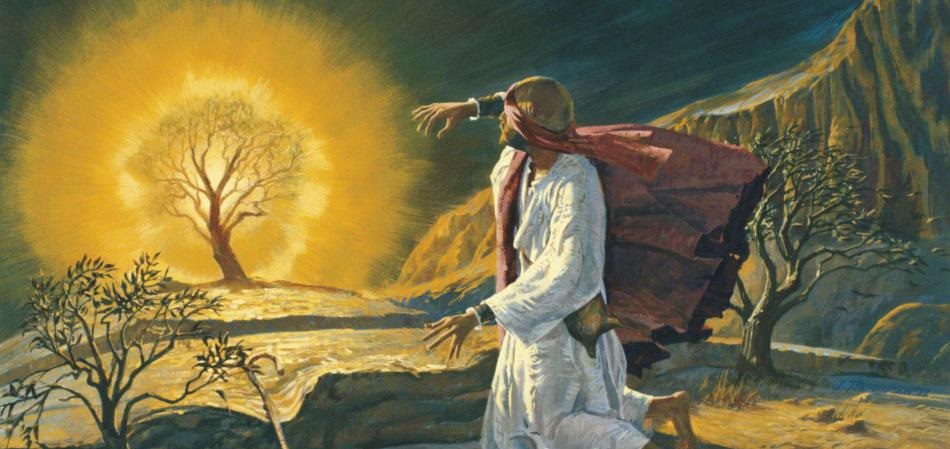
He was on Horeb, and saw a burning bush: the bush was on fire but it did not burn up. So he thought, “I will go over and see this strange sight—why the bush does not burn up.”

First, his attention was needed [undistracted] for a very important message. He needed to be consumed by something uncommon. Second, his bravery was tested: he went over instead of running away when he saw the burning bush.

Then, his God called him “Moses! Moses!” and revealed a mission: “I am sending you to Pharaoh to bring my people the Israelites out of Egypt”.

In companies, only undistracted and attentive people are typically called to execute higher missions – think of new market opportunities and shifts in customer preferences. Companies typically put the selected ones through tests with uncommon KPIs and targets to see how they respond. 

Some workers give up while others take the challenges and look up. Usually, in the middle of that challenge, glory comes [Moses would lead Israel; he has been hired]. In business, the role could be a CEO, Executive Director, etc!

Always remember, your most useful talent is the one that the world knows that you possess. Unless someone knows, that call to mission will not come.

The Call to Mission

Nigeria And Its History Failings

0
Thank you Nigeria
Nigerian flag

As I recently listened to a popular sports show on a local Lagos radio station, it was the same day when the Nigerian domestic football fraternity was celebrating the birthday of one of Nigeria’s most under-recognized – at least- players in person of Victor Ezeji. For starters, Victor Ezeji is a retired professional footballer who duly paid his dues in Nigerian football. This was one of those Nigerian footballers who made a tremendous success of his career playing back home in the Nigerian domestic football league. In fact, Ezeji played for 20 solid years on the domestic front, with a very short stint abroad in Tunisia and is regarded by any above average follower of Nigerian league football as a legend of the game when it comes to home-based professional football.

Therefore, back to the initial discussion. As the radio show went on with the anchor eulogizing the former footballer’s achievement, the turning point for me was when he asked a very vital question of whether it was possible to see images or videos or any other material of Ezeji’s debut league game. There is even a big doubt that the player himself can lay hold of anything of material matter relating to that first game, this is not to even talk of other matches played throughout his career. Statistics as simple as the total number of career goals scored by Ezeji in the league is hard to come by.

This then takes us to the crux of this discourse, which is the disposition and almost ultimate disregard for history as a country. At this point, it goes without saying that Nigeria’s culture of data and record keeping is one that is at an abysmal level, which can summarize the general attitude and regard for History and related matters. Not long before listening to that particular radio show, I had been watching a documentary on the creation of Nigeria. Right From pre and post amalgamation, to pre and post independence and all the in-betweens, a sober moment during that clip was the civil war period.

What actually struck was the effect the war had on the country during that time right up to the present day and upon reflection to discover that the present generation of younger Nigerians have absolutely next to knowledge or interest in this piece of history that still shapes the country till date. Another important moment of Nigerian history was the June 12 1993 elections. 

It is widely regarded as the most credible polls held in the Nigerian history, with the late Chief MKO Abiola regarded as the winner. Not a few experts and commentators have dubbed him fittingly as “the president Nigeria never had”. Despite all this, a critical question comes to mind; that is, how many generations of Nigerians born from the start of the new millennium and later genuinely shows interest or can confidently recount what happened at those periods in Nigeria’s lifetime, which then leads to the next issue.

A couple of years ago, it was public knowledge that History as an academic subject was scrapped from the Nigerian school syllabus. A move that seemed preposterous and seriously ill advised which eventually turned out to be counter-productive.

It took tremendous efforts by a combination of experts and scholars in the field, under the Historical Society of Nigeria as a body to reinstate History back to the learning curriculum- a leading figure for this effort was Professor CBN Ogbogbo, Professor of History at the University of Ibadan and other notable experts. The need for a society to understand their history is a fundamental part of its progress. As it is often said, that ‘history repeats itself’ when we fail/refuse to learn from it which is sadly where Nigeria finds herself as an entity. The disregard and poor attitude to history is not only reflected in the manner of the younger generation, it is also seen in the older set of Nigerians. History is a subject that should never be toiled with in the first place. The significance of recognizing this is that it allows for proper context when trying to plan or think of the next course of action. It is crucial for us as individuals and as a nation to acknowledge the past in our present reality in order to be able to project the future.

The effectiveness of historical awareness reveals itself when crucial subjects of national importance are brought to the front burner. An even recent event in the political scene gives us a glimpse into past occurrences. A peripheral instance is the recent probe into the activities of the Niger Delta Development Commission (NDDC) – an agency established and saddled with the power to handle affairs of the south south region of Nigeria. This is in addition to the Ministry of the Niger-Delta created recently as 2015. A basic knowledge of Nigerian politics will make you realize that there have been several probes in the past by the National Assembly with nothing tangible to show for them except for the usual drama/shenanigans thrown up by the major actors in them. 

At the end of the day, we are back to the proverbial square one!

While it is often said that you cannot change the past, we have the power and ability to change the future, but that ability can only be utilized with proper understanding of the past. A critical look at things will indicate that many challenges we face presently as a country would have been avoided if only we had good students of history at the helms of affairs. 

A former governor of Lagos and current minister of works and housing for the federal Republic of Nigeria, Babatunde Fashola, in a recent meeting with education stakeholders called for a unified version of Nigeria’s history. This means a singular version that can be taught in the various institutions of learning right from the primary level onwards. This suggestion probably represents a good starting point in our quest to correct the misdemeanours of the past in terms of passing on historical knowledge to Nigerians from a tender age and preserve legacies.

Trump Approves Oracle-TikTok and Walmart Deal

0

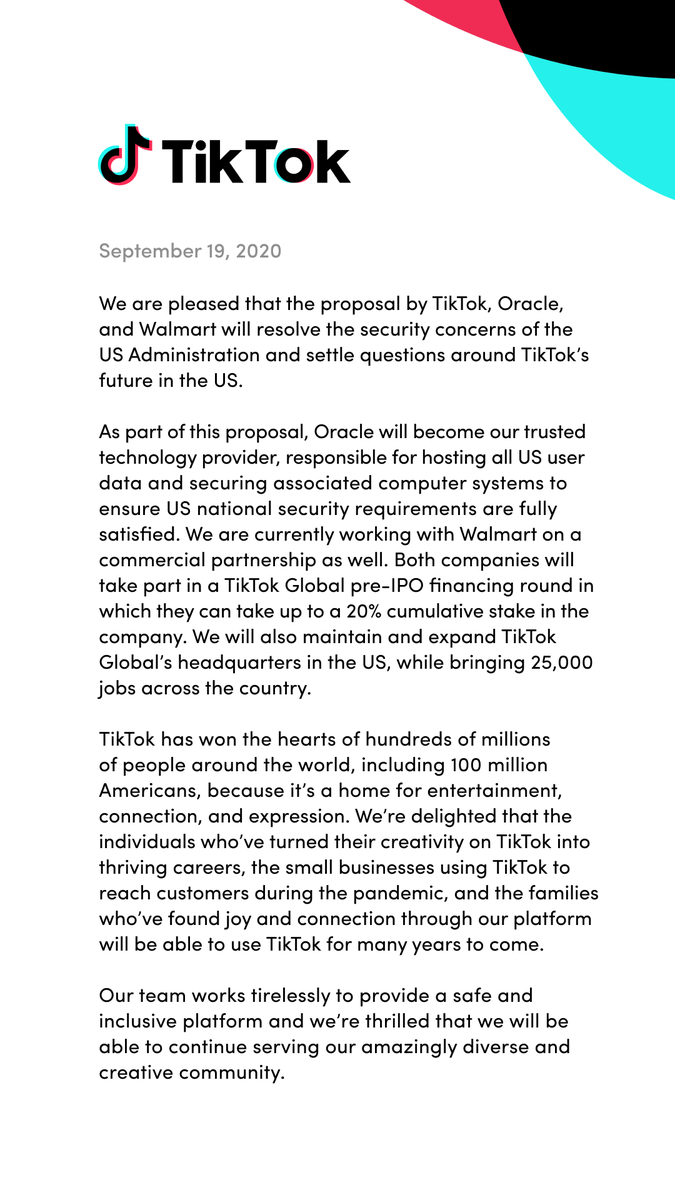
President Donald Trump announced Saturday that he has approved the deal that will see Oracle and Walmart partner with short video sharing app, TikTok.

“I have given the deal my blessing – if they get it done that’s great, if they don’t that’s okay too. I approved the deal in concept,” he told the press.

Oracle confirmed the news, affirming that it has been chosen as TikTok’s secure cloud provider with a 12.5% stake in investment. TikTok confirmed that Oracle has become a minority investor, adding that it’s working with Walmart, who will take a 7.5% stake, in a commercial partnership.

TikTok said that both companies will take part in a pre-IPO financing round in which they can take up to a 20% cumulative stake.

The announcement has ended the speculations that have followed TikTok’s US operations for months now. On Friday, Trump said he was not prepared to sign off on anything as the Committee on Foreign Investment in the United States (CFIU) was getting ready to send him the proposal from ByteDance. He said it must be 100% as far as national security is concerned or nothing.

Washington officials were divided regarding what should be acceptable in the deal. Treasury Secretary Steve Mnuchin thinks it’s a great deal, while Republican senator Josh Hawley said it betrays the national security objective, urging Trump to reject it.

“In any event, an ongoing ‘partnership’ that allows for anything other than the full emancipation of the TikTok software from potential Chinese Communist Party control is completely unacceptable, and flatly inconsistent with the president’s Executive Order of August 6,” he said.

Trump’s decision to approve the deal is said to have stemmed from his personal relationship with Oracle’s CEO Safra Catz, and Chairman Larry Ellison who helped raise funds for his reelection bid earlier in the year.

The deal means that TikTok’s parent company, ByteDance, will own the remaining 80%, according to a person familiar with the matter. CNBC noted that 40% of ByteDance is owned by US venture capital firms, which means the Trump administration can technically claim TikTok Global is now majority owned by US money.

TikTok said it will maintain and expand its headquarters in the US, while bringing 25,000 jobs across the country. Trump said part of the deal means the companies will be making a $5 billion generous donation into the education fund.

“We are going to be setting up a very large fund for the education of American youth and that’ll be great. That’s the contribution I’ve been asking for,” he said.

Trump’s approval of the deal has boosted Oracle’s market position, adding to its cloud management reputation. Oracle provides cloud facilities for 8×8 and Zoom, adding TikTok to the list will push it a step closer to Amazon and Microsoft that dominated the cloud market last year.

However, the deal puts Oracle up to the challenge of protecting America’s national security, and the privacy of American users of TikTok. But Catz said Oracle will ensure that users’ data is safe.

“We are a hundred percent confident in our ability to deliver a highly secure environment to TikTok and ensure data privacy to TikTok’s American users, and users throughout the world. This greatly improved security and guaranteed privacy will enable the continued rapid growth of the TikTok user community to benefit all stakeholders,” Catz said in a statement on Saturday after the deal was announced.

But, the US concern about TikTok is not completely addressed by the deal as the larger stake of the video app is still owned by ByteDance and the algorithm behind the cutting-edge technology remains with China.

Following TikTok’s struggle to stay in business in the United States, China updated its export laws, requiring some tech companies to obtain a license before it could be sold to foreign buyers. It was a move the Trump administration didn’t see coming, and it changed US’ previous dominant position over TikTok.

China Outflanks Everyone As TikTok Survives Trump

1

This has largely come to an end. Yes, Trump has approved a deal among Oracle, Walmart and TikTok’s parent company, ByteDance, CNN reports. So, no ban of TikTok in the United States. Oracle confirmed the news, affirming that it has been chosen as TikTok’s cloud provider with a 12.5% stake in investment. TikTok confirmed that Oracle has become a minority investor, adding that it’s working with Walmart, who will take a 7.5% stake, in a commercial partnership. More so, the deal means that TikTok’s parent company, ByteDance, will own the remaining 80%, according to a person familiar with the matter. CNBC noted that 40% of ByteDance is owned by US venture capital firms, which means the Trump administration can technically claim TikTok Global is now majority owned by US money.

President Donald Trump said Saturday he has approved a deal between TikTok’s parent company, ByteDance, and Oracle (ORCL), temporarily averting a ban on TikTok in US app stores.

The Commerce Department confirmed in a statement Saturday evening that it would delay — by one week — restrictions that were originally to take effect on Sunday.
ByteDance will continue to be majority owner of TikTok under the agreement Trump said he approved, according to a person familiar with the matter.
Speaking to reporters, Trump said he approved the deal “in concept.”
“I have given the deal my blessing,” Trump said. “If they get it done, that’s great. If they don’t, that’s okay, too.”
The deal will also include Wal-Mart (WMT), Trump said, adding that “the security will be 100 percent. They’ll be using separate clouds and very, very powerful security.”

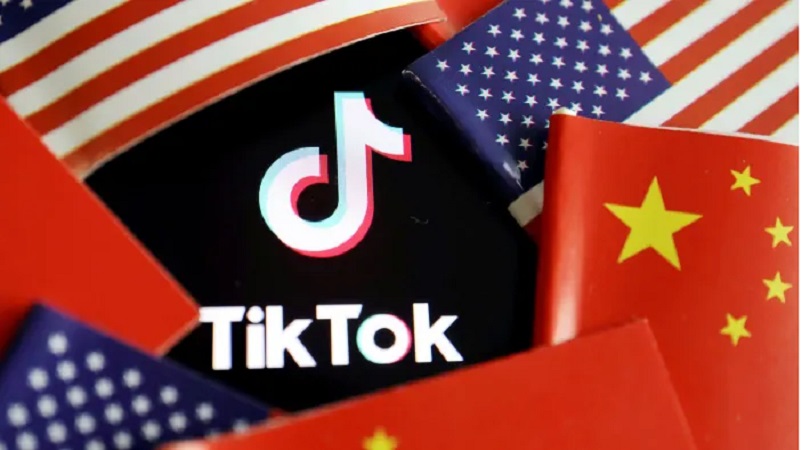
But if you check, the x-factor here is China, and the nation has shown how thinking ahead can help national entities. Without the emergency export control rules that China recently put in place, the U.S. would have single handedly driven this playbook. But with the new export regulations, making it clear that the real juice here – yes, the algorithms which power TikTok – cannot leave China under any circumstance, the chess game was altered. Magically, the U.S. could not control all game plans without considering the Beijing regulations. Yes, simple things and strategic positioning can help nations support their citizens and companies. China saved TikTok in America and that is the lesson for everyone in African capitals. 

This is a pure Beijing outflanking from all angles: TikTok Global simply raised more money from the U.S. and will be listed in New York in the next coming months. Largely, ByteDance did not lose anything. Yes, Oracle gets cloud contracts and will invest along with Walmart. Through Walmart, TikTok will expand its footprints to more American homes. Left and right – who will not like an investment from Walmart with millions of potential customers that come with it? Trump has simply strengthened TikTok at the end of this show.

Oracle and Walmart have agreed to acquire a 20% stake in TikTok’s global business as part of a pre-IPO financing round, the ByteDance owned video-sharing platform announced in a press release on Saturday, moments after President Donald Trump told the press that he had given his “blessing” to the deal.

Meanwhile, a U.S. judge has blocked the WeChat ban: “A federal judge has temporarily blocked President Donald Trump’s executive order banning WeChat downloads in the United States.”

In issuing the preliminary injunction, Judge Laurel Beeler wrote that the plaintiffs — a group of US-based WeChat users who stand to be affected by Trump’s ban — had shown “serious questions” in their claim that the executive order threatens the users’ First Amendment rights.
“The plaintiffs’ evidence reflects that WeChat is effectively the only means of communication for many in the community, not only because China bans other apps, but also because Chinese speakers with limited English proficiency have no options other than WeChat,” Beeler wrote.

LinkedIn Comments on Feed

Comment: This is like a media narrative, where each journalist chooses what to see and report, it’s then left for discerning minds to put all the pieces together, to get the full picture.

Trump asked for changes, he didn’t like the previous ownership structure, China panicked, because it knows that Trump wasn’t bluffing; and now China is taking the credit for getting some hold in the deal? Aside from Trump, which leader or nation even gets China to panic? This idea of making China appear invincible is what I am yet to grasp, it has no basis in reality, from what I have seen in its tussle with Trump in the last two years.

Well, 40 and 60 aren’t the same, plus a shift on data storage; the former is called minority, and the latter is called majority. I do not care about anything China wishes to spin to the public, at the end of the day both nations will be claiming victory, which is actually a good thing.

I just want my African leaders (rulers) to know that there’s still a beautiful and fulfilling life out there, without absurd romance with China, US or EU; that is how they should be thinking, and not this numbing feeling of ‘we are doomed without them’, that is what I find insulting and embarrassing.

Trump can rattle anyone.

My Response: He got nothing from TikTok. The only core difference was that Google lost a cloud business contract for Oracle. Yes, Oracle will now host TikTok, replacing Google. And Walmart paid some money and will provide its users for a piece of the TikTok Global. There is nothing material that changed from old TikTok structure expect that it got more money from U.S. and more users. More so, this money will be shipped to Beijing to pay the AI engineers who will keep TikTok working.

Ericsson to Buy Wireless Networking Firm, Cradlepoint for $1.1b As It Pushes to Offer Cheaper 5G Services

0

Ericsson has reached an agreement to buy Cradlepoint, a U.S.-based wireless networking company in a $1.1 billion deal, the company announced on Friday. Cradlepoint which sells wireless routers and subscription-based wireless networking service will become a subsidiary of Ericsson, Reuter reported.

The Swedish telecom giant is seeking to expand its 5G potential by establishing its technology to access tools that can connect devices using Internet of Things (IoT) over 5G network.

Ericsson’s finance chief Carl Mellander told Reuters that the company hopes to provide income opportunities for its customers through the deal.

“We think this will give our customers a chance to generate new income sources within the enterprise segment,” he said.

Ericsson’s intention is to use B2B model to sell Cradlepoints products to its mobile operator customers who will in turn sell to their business clients. As part of its expansion plan, Ericsson will push to take the products to other countries in North America, taking Cradlepoint’s focus off the United States. But it plans to keep Cradlepoint as a standalone business having its own sales team.

“Where we have struggled in the past is when we have started to integrate on the sales side. That’s when you lose track of all your go-to-market channels and customer interactions,” said Ericsson CEO Borje Ekholm.

The deal is expected to close before the end of this year, and will dent Ericsson’s operating margins by about 1% in 2021 and 2022. But the company expects operating cash flow in 2022 as the takeover starts yielding revenue.

“The acquisition is expensive, but the price tag is tolerable given high underlying growth rates and Ericsson’s potential for revenue expansion in the enterprise market,” said Societe General analyst Aleksander Peterc.

Filling Huawei’s role in 5G deployment comes with a huge financial responsibility. Sweden’s Ericsson and Finland’s Nokia are expected to fill the roles as more countries part ways with the Chinese telecom giant. The two European companies are looking for ways to mitigate the cost.

So far, Ericsson has 109 commercial 5G agreements, 59 publicly announced 5G contracts and 61 live 5G networks. The telecom giant has been using innovative technique, Ericsson’s Spectrum Sharing, which enables an easy and fast way to introduce 5G in low band. It removes the need for challenging spectrum reframing projects and cuts the cost of deployment.

“To manage both 5G and 4G, our 5G Core is designed to support both systems in one common software platform. Built using cloud native technology it reduces complexity while keeping operating expenses low,” the company said.

Ericsson’s partnership values involve standalone operations that are aimed at increasing revenue generation, a model it has applied in the Cradlepoint deal. The company’s 5G Core architecture combined with the Services Automation helps to facilitate increasing revenues in new market segments, enabling a wider partner ecosystem for services innovation.

The cost effective technique also means switching between 4G and 5G without increasing the network infrastructure energy consumption.

“And when your network is ready for the next step, you can fast-track to 5G standalone while securing zero-interruptions when switching between 4G and 5G, 6x faster access to higher data rates and significant savings in network infra-structure,” the company explained.

The model gives room for building a smart 5G deployment that enables operators to realize energy savings by preparing the network with technology solutions that use energy-saving software, building 5G with precision and operating site infrastructure intelligently, Ericsson said.

Huawei has the cheapest 5G network infrastructure that puts a challenge on Nokia and Ericsson to lower the cost of their 5G deployment, as many countries seek their services following the disengagement of the Chinese company.

The dismantling of Huawei’s 5G infrastructure in the UK is expected to up the cost of its 5G roll out to 7 billion pounds. With governments around the world already at the mercy of COVID-19 pandemic, Ericsson and Nokia are looking for strategies that will replicate the cost standard set by Huawei.