DD
MM
YYYY

PAGES

DD
MM
YYYY

spot_img

PAGES

Home Blog Page 6128

The Labour’s Missing Strike

0

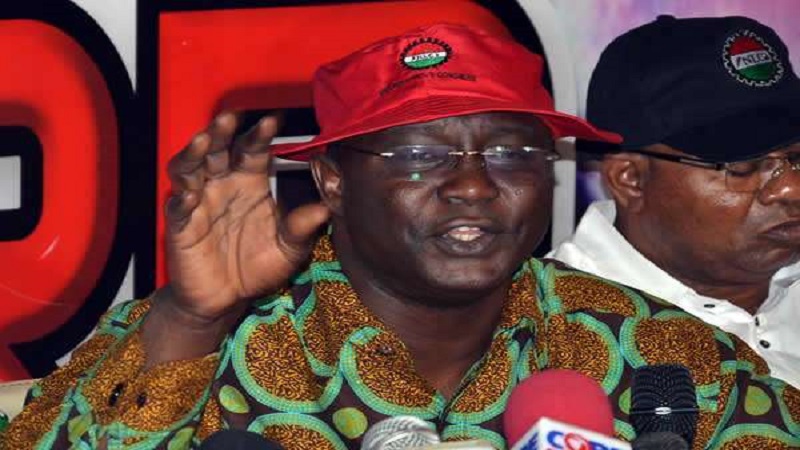
Ayuba Wabba, the President of the Nigeria Labour Congress (NLC) seems to be the most important person in Nigeria now. Did you see the promises from the National Assembly? Did you see how the governors are panicking? Even the presidency is confused. Yet, it is a tough call. I admire Labour but it has yet to choose the most important fight: demanding free and fair elections by shutting down Nigeria after the circus called federal elections. 

If they begin to do that, seasonal strikes may not be necessary. In engineering, we have what we call root cause analysis – ‘a systematic process for identifying “root causes” of problems or events and an approach for responding to them’. Yes, the bottom of all paralyses in Nigeria is how we choose our leaders, and Labour has not found a call to demand electoral improvements at scale!

In the next coming hours, Mr Wabba will get a document with some signatures. In three months, Labour will issue a warning press release: those agreements have not been implemented, and we plan to begin a strike soon. The last I checked, university teachers are still protesting over agreements signed with Obasanjo Administration, a government which ended in 2007. Politicians are smart – they keep shifting the goalposts, knowing that they would be gone when you wake up.

Labour, demand for real reforms on electoral systems, and you will get better outcomes!  Of course, I support Labour any day even though I do not support this particular proposed strike. Fixing the root cause of Nigeria’s problem – electoral mess – is the missing strike in Labour’s calendar of strikes. It has to make it a priority!

First, I support NLC because if you look at data, Nigerian workers are getting poorer seasonally due to rising inflation, currency deterioration, etc, which are worsening faster than pay increments. Yet, the root causes of these paralyses are what Labour is protesting against. If we remove fuel subsidy (killing the institutionalized corruption along), Labour will benefit. More so, if we get electricity to the point where pricing is at parity and evidently reflective, investors will come to fix our electricity supply industry.

Indeed, we need to get Labour to understand that the government’s call on prices of petrol and electricity is necessary to structurally improve Nigeria. We have been trying subsidies on electricity and petrol since 1960, with nothing to show. Labour needs to allow this new experiment for at least two years.

Labour needs to strike for real electoral reforms, and many Nigerians will join them. They do not need to strike for any particular election to avoid tarnishing their non-partisan and neutrality philosophy. They just need to push for reforms because all the problems in Labour today are tied to the quality of our political leadership. If Nigeria can attract its best in politics, Labour will not have to be speaking via strikes.

The Challenge Ahead in Nigeria with Labour’s Planned Protest
Tekedia CollegeBoost To Support A Leading College in Ghana

0

CollegeBoost is a management innovation program which is structured to help post-secondary education students master the mechanics of markets and management systems. Tekedia CollegeBoost mirrors Tekedia Mini-MBA, but it is more streamlined, requiring shorter time for completion. It is open for schools, alumni groups, students unions, etc. It has two components:

  • The Innovation of Firms (Part A): 4 weeks
  • The Wealth in Nations (Part B): 4 weeks

Institutions in Ghana, Cameroon and broad CEMAC region should connect with Tekedia Institute Regional Partner, Amzill , led by Fadilah Tchoumba.

Tekedia Institute offers the following programs:

  • Tekedia Mini-MBA for individuals, company sponsored or personally funded.
  • Tekedia Mini-MBA for Corporates, for institutions.
  • Tekedia Mini-MBA for Governments, for governments.
  • CollegeBoost for schools.

For full Tekedia programs, click here.

Week 8 Session

2

Notes: We have started approving topics for the Certificate programs’ capstones. Tekedia LIVE  Wed | 7pm-8pm | Business Process & Leadership – Ayodeji Oyebola, Saint Mary’s | Zoom link Fri | 7pm-8pm | HealthTech – Enoh John, CEO, Lafiya TeleHealth | Zoom Link Saturday | 11am – 12noon | Survival Fund Grant & General  – Echa, Segla, Ekekwe […]

This post is only available to members.

Week 5 Session

0

Notes: None Tekedia LIVE Wed | 7pm-8pm | Business Process & Leadership – Ayodeji Oyebola, Saint Mary’s | Zoom link Fri | 7pm-8pm | HealthTech – Enoh John, CEO, Lafiya TeleHealth | Zoom Link Saturday | 11am – 12noon | Survival Fund Grant & General  – Echa, Segla, Ekekwe | Zoom Link *all time WAT Week Theme: Logistics […]

This post is only available to members.

The Promotion at Patmos

1

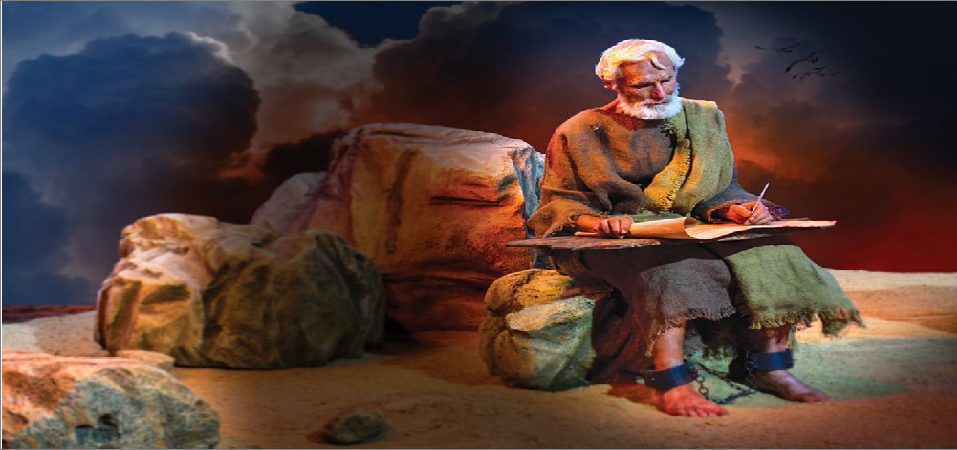
He was under the persecution of Roman emperor Domitian. They banished him to the Island of Patmos (Greece), a common punishment during the imperial era. When boiling oil could not touch John, every attendee in the Colosseum accepted John’s message. 

When I visited Kos Island, I was informed that Patmos was five hours away with a ferry, and Kos itself about an hour from Thessaloniki. John wrote the Revelation: revealing and totally ecclesiastical with stars, horns, trumpets and kingdoms.

From Rome, John has been sent to Patmos to be forgotten. The emperor did not want to risk another loss of subjects; he could not predict the next miracle. But it was in that Patmos that John did his most important work: writing the Revelation. In the Scripture Union in secondary school, I have called it the Book of the Future.

It happens in some companies: the most brilliant staff members have strong visions. Many people are threatened. So, to stop them, they would conspire to send them to far away branches where they would be forgotten.  

Interestingly, like John, those great workers, right in those branches would see great revelations of the companies. Yes, from the branches, they would understand the companies better. That is it – in the wilderness of those far away branches, we can see a future, unbounded by the noise of the headquarters. Like John who saw a big vision of the future more than anyone, we can do great things for where we work or in our sector. John who later served as Bishop of Edessa (Turkey) triumphed: the banishment promoted him to see a bigger world than Rome, and wrote the Revelation. 

Going to “Patmos” could be necessary in a globalizing world. When they send you out, do not be troubled. Your revelation to career ascension may come from it. Yes, when Patmos comes, it could be the path to the mountaintop.

LinkedIn Comment on Feed

The core lesson here is the responsibility to continue to work harder even when sent to that branch, and find a vehicle to ensure your work is visible. John was writing even in Patmos when there was none to preach; he adapted his playbook to account for his environment.

For you, even in that branch, you could still be producing strategy documents, sharing with colleagues. That you are warehoused in a rural branch should not stop that thought-leadership in this internet era. When I was in a Lagos Bank,  there was a manager in the Makurdi branch. Everyone knew he was brilliant with his reports on business. 

The key is this: there is no excuse whether in a village, branch or HQ to find a mechanism to make your talent continue to shine. They took out John’s voice, but he pivoted to his hands. You need to adapt when sent to that branch or rural area.

Yes, one thing is evident: being sent as part of future leadership preparation is different from “banishment”