DD
MM
YYYY

PAGES

DD
MM
YYYY

spot_img

PAGES

Home Blog Page 613

BlockDAG’s $395M Presale Leave PEPENODE’s $500K Raise & Lyno AI’s $18K Momentum in the Dust!

0

PEPENODE and Lyno AI are drawing early attention in 2025, each with distinct models that highlight different opportunities. PEPENODE has raised more than $500K by introducing a mine-to-earn structure with deflationary burns that reduce supply while rewarding participation.

Lyno AI has also started to build traction through its AI-powered arbitrage system. Early tokens priced at $0.05 are fueling steady sales, and the project is positioning itself as a smarter approach to cross-chain trading. These features are helping both projects generate notable buzz in presale circles.

On the other hand, BlockDAG (BDAG) separated itself from the rest. With $395M raised, more than 25.7B coins sold, and a standardized $0.0013 presale price introduced at the BDAG Deployment Event, it offers unmatched scale and fairness. The new flat-rate model ended tiered bonuses, ensuring transparency and equal access for all participants.

PEPENODE Gains Traction With Deflationary Design

PEPENODE has passed $500K in presale funding with tokens priced close to $0.001. Its mine-to-earn model allows users to build rigs, upgrade nodes, and stake tokens for rewards. Over 80% of the supply is already staked, while 70% of tokens used for upgrades are burned, creating early scarcity. Analysts project near-term targets of $0.0014 to $0.0023 in 2025.

Longer-term projections are even stronger, with $0.0072 forecast in 2026 and $0.0244 by 2030. Combining meme culture with functional tokenomics, PEPENODE is positioned to rival other meme tokens while offering more sustainable growth.

Lyno AI Targets Arbitrage With Early Presale

Lyno AI’s presale has sold more than 350,000 tokens, raising nearly $18,000 at $0.05. The next stage is set at $0.055, with the project positioned as an AI-powered arbitrage system capable of executing trades across 15 blockchains. By making advanced arbitrage accessible through a tokenized model, it offers a product with clear appeal.

Audits by Cyberscope are complete, and governance rights will soon be integrated for holders. Incentives include a $100,000 giveaway for large buyers, fee-sharing, and liquidity rewards. Lyno AI is presenting itself as a presale with a solid structure and forward-looking potential.

BlockDAG’s Deployment Event Ignites Final Countdown

BlockDAG’s presale has already surpassed $395M, with pricing standardized at $0.0013 in the run up to the BlockDAG Deployment Event. This strategic shift replaced bonus promotions with a transparent flat rate, creating clarity and fairness for all buyers in the final presale phase.

Early participants from Batch 1 who entered at $0.001 are already sitting on 2,900% returns, while new buyers still have a confirmed path to upside with the $0.05 listing target. Unlike smaller projects that rely purely on hype, BlockDAG has combined bold marketing with proven delivery and adoption on a global scale.

With more than 3M miners active on the X1 app, thousands of X10 hardware devices shipped, and exchange listings already secured, BlockDAG has built the infrastructure to support long-term growth. For those searching for scarcity and scale in one presale, the BDAG Deployment Event marked the last major shift before launch.

Key Insights

The PEPENODE forecast points to strong upside with $500K raised, staking activity tightening circulation, and projections showing potential for long-term growth. Lyno AI is also gaining traction through its AI-driven arbitrage model, early token sales, and structured incentives that are keeping momentum alive. Both carry appeal, though they remain in the early stages where execution risk is high.
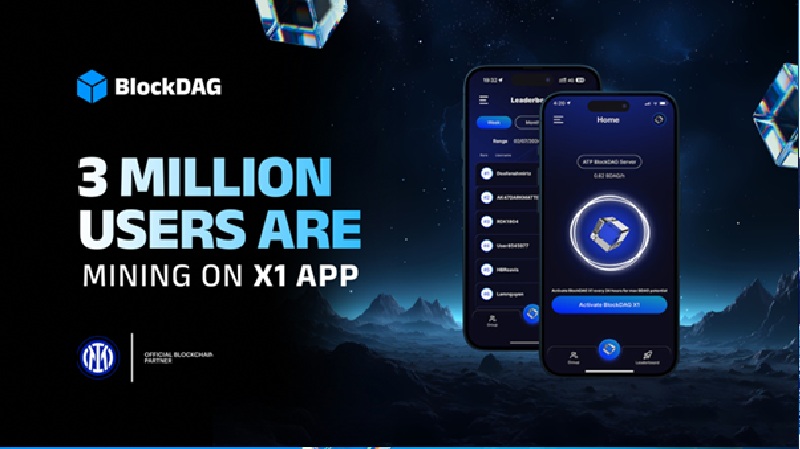
BlockDAG has already moved far beyond that stage, securing $395M, selling 25.7B coins, and setting a flat presale price of $0.0013 through the BDAG Deployment Event. This final pricing phase reinforces fairness, transparency, and accessibility while highlighting BlockDAG as the most advanced presale in 2025.

With more than 3M active miners, confirmed exchange listings, and global visibility, it stands apart as the top crypto presale and the clearest path to future adoption.

Presale: https://purchase.blockdag.network

Website: https://blockdag.network

Telegram: https://t.me/blockDAGnetworkOfficial

Discord: https://discord.gg/Q7BxghMVyu
Mastering Cryptocurrency Investment Opportunities: A Guide

1

Cryptocurrency Investment Guide!

Introduction: The Global Cryptocurrency Boom

Imagine being part of a global financial revolution that’s expanding at an astonishing rate. This is the current state of cryptocurrency. Cryptocurrencies are gaining traction worldwide, attracting countless investors. Whether you’re a novice investor or an experienced veteran, you can’t ignore the investment opportunities that cryptocurrencies bring.

If you haven’t invested in cryptocurrencies this year, you might be missing out on many profitable opportunities. Cryptocurrencies like Bitcoin and Ethereum offer significant returns due to their price volatility. As more financial institutions embrace them, this trend is expected to continue.

Now, let’s dive into the world of crypto investment and see how you can leverage this emerging opportunity.

Your Crypto Investment Partner

For those who want to invest in crypto but don’t know where to start, there is a choice: a platform that offers cryptocurrency investment services, designed to help investors find the best opportunities in the crypto market. You can register on their official website: https://shopin8.shop/#/index

Official Website: shopin8.shop

WhatsApp: +13212879380

Telegram: t.me/Fidelity012

App Download: http://app.xiebao3.cn/app/index.html

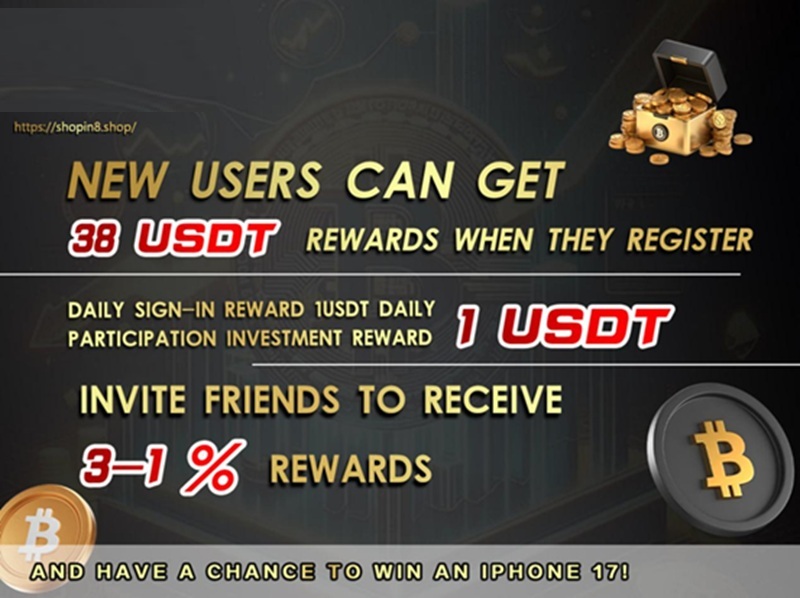
The firm not only provides crypto investment opportunities but also offers numerous incentives. For instance, upon registering with the system, you will receive a 38 USDT bonus. Additionally, you can get a daily reward of 1 USDT and 20 points just for logging in. These rewards can be used to invest in more cryptocurrencies, helping to increase your investment returns.

The firm also offers a chance to get a free Apple 17, a new cryptocurrency with great appreciation potential. If you’re looking to try a new investment opportunity, this is one you shouldn’t miss.

Conclusion: Seize the Crypto Investment Opportunity

Cryptocurrency investment is undoubtedly one of the hottest investment topics today. Investors worldwide are looking for opportunities in this new market, hoping to earn significant returns. However, for most people, crypto investment is still a new field that requires more understanding and learning.

This is where the firm provides value. By offering crypto investment opportunities and incentives, the firm helps investors better utilize this emerging market. Whether you are a newcomer to crypto investment or an experienced investor looking for more opportunities, the firm can provide the help you need.

In summary, crypto investment is a market full of opportunities and challenges. To succeed in this market, you need sufficient knowledge and a reliable investment partner, like we have offered. So don’t hesitate, join the ranks of crypto investors today!

Official Website: shopin8.shop

WhatsApp: +13212879380

Telegram: t.me/Fidelity012

Official Channel: t.me/MNJBVF

App Download: http://app.xiebao3.cn/app/index.html

Implications of the $3.4B BTC Whale Rotation to ETH

0

A massive Bitcoin whale, holding nearly $6 billion in assets, has reportedly shifted over $3 billion into Ethereum (ETH), with significant purchases made through platforms like HyperUnit.

This whale, identified as a long-dormant Bitcoin “OG,” sold thousands of BTC to acquire ETH, with total holdings now exceeding 800,000 ETH, valued at around $4 billion, much of which is staked for rewards.

On August 31, 2025, the whale sold 4,000 BTC for 96,859 ETH (~$433 million), and on September 1, sold 2,000 BTC for 48,942 ETH (~$215 million). This rotation aligns with broader market trends, as Ethereum ETFs saw $3.87 billion in net inflows in August 2025, while Bitcoin ETFs faced $751 million in outflows, signaling growing institutional and whale interest in ETH.

Analysts suggest this move reflects Ethereum’s appeal due to its staking yields and smart contract capabilities, with some predicting a potential ETH price surge toward $4,800 or higher if resistance levels are breached. However, the whale still holds over $5 billion in BTC, indicating diversification rather than a complete exit from Bitcoin.

The whale’s move signals growing confidence in Ethereum’s long-term value, potentially influencing retail and institutional investors to follow suit. This could bolster ETH’s market dominance, especially as Bitcoin ETF outflows ($751M in August 2025) contrast with Ethereum ETF inflows ($3.87B).

Increased ETH buying pressure, especially from large players, may drive prices toward key resistance levels like $4,800, as analysts suggest. However, the whale’s remaining $5B BTC holdings indicate a balanced strategy, potentially stabilizing BTC’s price while boosting ETH.

Large-scale rotations can temporarily increase volatility in both BTC and ETH markets. ETH’s liquidity may improve with heightened trading activity, but sudden whale movements could trigger short-term price swings.

The shift underscores Ethereum’s appeal for its smart contract functionality and staking rewards, reinforcing its role in DeFi and Web3. This could attract more developers and projects, enhancing network utility.

While Bitcoin remains a store of value, the rotation highlights Ethereum’s edge in generating passive income via staking, potentially challenging BTC’s dominance if similar trends continue.

Benefits of ETH Staking to the Market

Staking locks up ETH to validate transactions on Ethereum’s Proof-of-Stake (PoS) network, enhancing security. As of September 2025, over 28% of ETH’s supply (~33M ETH) is staked, reducing circulating supply and potential sell pressure.

Staking reduces available ETH for trading, which can dampen downward price pressure and support long-term price appreciation, benefiting investors. Stakers earn ~3-5% annual yield (depending on network conditions), attracting long-term holders, including whales like the one in question (with 800,000 ETH staked). This incentivizes holding over selling, stabilizing the market.

Staked ETH can be used in liquid staking protocols (e.g., Lido, Rocket Pool), providing stETH or similar tokens for use in DeFi. This boosts liquidity in decentralized markets, fostering growth in lending, trading, and yield farming.

High staking participation signals trust in Ethereum’s scalability and upgrades (e.g., post-Merge improvements). This draws institutional interest, as seen with ETF inflows, and supports broader crypto adoption.

PoS staking makes Ethereum environmentally sustainable compared to Bitcoin’s energy-intensive mining, improving its appeal to ESG-focused investors and regulators. The $3.4B BTC-to-ETH rotation reflects Ethereum’s growing prominence, driven by staking and ecosystem utility.

Staking benefits the market by enhancing security, reducing circulating supply, and fostering DeFi innovation, while signaling long-term confidence that could propel ETH’s price and adoption. However, Bitcoin’s enduring value suggests a diversified crypto market rather than a zero-sum shift.

Forbes Excludes Satoshi Nakamoto from Billionaire Lists

0

Forbes excludes Satoshi Nakamoto from its billionaire list primarily because they cannot verify whether Nakamoto is a living individual or a group, and there’s no identifiable legal entity tied to the pseudonym.

Despite Nakamoto’s estimated 1.1 million BTC, worth over $121 billion at $110,302 per Bitcoin, Forbes’ methodology requires a confirmed identity, passport, or paper trail, which Nakamoto lacks—unlike other billionaires who use offshore trusts or shell companies but are still traceable to a legal entity.

The transparency of Nakamoto’s blockchain-based wealth, visible to anyone with a blockchain explorer, contrasts with Forbes’ reliance on traditional markers of wealth like stocks or corporate filings. Critics argue this approach is outdated in the digital era, where pseudonymous wealth is verifiable on-chain, and suggest Forbes risks irrelevance by not adapting to decentralized finance.

Some propose Forbes could include pseudonymous wallets in supplemental lists to reflect this shift. Forbes’ exclusion of Satoshi Nakamoto, despite their estimated 1.1 million BTC (worth over $121 billion at $110,302 per BTC), signals a reluctance to fully recognize cryptocurrency as a legitimate form of wealth.

This could undermine the perceived validity of digital assets in traditional finance, potentially slowing mainstream adoption. Forbes’ methodology favors conventional assets (stocks, real estate, corporate holdings) tied to verifiable identities or legal entities.

This biases their rankings against pseudonymous or decentralized wealth, which is transparent on blockchains but lacks traditional markers like passports or corporate filings. It risks alienating a growing segment of wealth holders in the crypto space.

The exclusion highlights a disconnect between old-school financial reporting and the decentralized finance (DeFi) era. As crypto wealth grows—potentially surpassing $10 trillion by 2030, per some estimates—Forbes may face pressure to adapt its criteria or risk becoming irrelevant to a new generation of investors and wealth creators.

Nakamoto’s anonymity embodies Bitcoin’s ethos of decentralization and privacy. Forbes’ insistence on identity verification clashes with this philosophy, potentially alienating crypto communities who view pseudonymity as a feature, not a flaw. This could fuel alternative wealth rankings by crypto-native platforms.

By not acknowledging pseudonymous wealth, Forbes misses a chance to lead in redefining billionaire lists for the digital age. Including figures like Nakamoto in supplemental lists (e.g., “Pseudonymous Wealth Holders”) could enhance their relevance and appeal to crypto audiences.

How Forbes Verifies Crypto Wealth

Forbes’ verification process for crypto wealth aligns with its traditional methodology but struggles to accommodate the unique nature of cryptocurrencies: Forbes requires a verifiable identity tied to a legal entity (individual, trust, or company).

For crypto billionaires like Changpeng Zhao or Brian Armstrong, Forbes links their wealth to known holdings in exchanges (e.g., Binance, Coinbase) or documented wallets, corroborated by public records, corporate filings, or interviews. Pseudonymous figures like Nakamoto, lacking a confirmed identity, are excluded.

For identified individuals, Forbes may use publicly disclosed wallet addresses or exchange data to estimate holdings, cross-referencing with blockchain explorers. They apply current market prices (e.g., $110,302 per BTC as of now) to estimate the value of verified crypto holdings.

Forbes often applies discounts to crypto wealth due to volatility and liquidity constraints, unlike stocks or real estate, which can lower reported net worth. Forbes relies on exchanges, blockchain analytics firms (e.g., Chainalysis), or industry insiders to confirm holdings. For example, they might verify a billionaire’s stake in a crypto exchange through equity disclosures or public statements, but pseudonymous wallets lack such corroboration.

Nakamoto’s 1.1 million BTC is traceable on the blockchain, with early mining wallets widely attributed to them. However, Forbes cannot confirm if these belong to a single living person, a group, or if the keys are still accessible. This uncertainty, combined with their identity requirement, leads to exclusion.

Forbes has included crypto billionaires like the Winklevoss twins, who hold significant Bitcoin, because their identities and holdings are verifiable through legal entities and public disclosures. Yet, Nakamoto’s transparent but pseudonymous wealth doesn’t meet Forbes’ threshold, exposing a gap in their methodology for DeFi-era assets.

Forbes’ approach reflects caution but also rigidity. Blockchain transparency allows anyone to verify Nakamoto’s holdings, unlike opaque offshore trusts used by traditional billionaires. Posts on X suggest growing frustration with Forbes’ outdated criteria, with some calling for crypto-native wealth lists that prioritize on-chain data over identity.

As crypto wealth grows, Forbes may need to evolve or cede influence to platforms that embrace decentralized verification methods.

Scale AI sues rival Mercor and ex-employee over alleged theft of confidential documents

0

Scale AI, the fast-rising company that helps tech firms prepare data to train their artificial intelligence models, has launched a legal battle against one of its former sales employees and competitor Mercor.

The lawsuit, filed Wednesday, alleges that the employee, Eugene Ling — who recently joined Mercor — “stole more than 100 confidential documents concerning Scale’s customer strategies and other proprietary information,” according to a copy of the suit reviewed by TechCrunch.

The case centers on claims of trade secret misappropriation against Mercor and breach of contract against Ling. Scale contends that Ling was actively pitching Mercor to one of Scale’s largest customers, referred to in the filing only as “Customer A,” before formally leaving his position at Scale.

Mercor co-founder Surya Midha pushed back, insisting the company had no use for Scale’s confidential material. In an emailed statement to TechCrunch, he acknowledged Ling may have been in possession of some documents but said they were never accessed.

“While Mercor has hired many people who departed Scale, we have no interest in any of Scale’s trade secrets and in fact are intentionally running our business in a different way. Eugene informed us that he had old documents in a personal Google Drive, which we have never accessed and are now investigating,” Midha said.

Midha added that Mercor had contacted Scale six days earlier to propose a resolution: “We reached out to Scale six days ago offering to have Eugene destroy the files or reach a different resolution, and we are now awaiting their response.”

Still, Scale claims the materials Ling allegedly held could directly enable Mercor to serve Customer A and other top-tier clients. The company asked Mercor to provide a complete list of files in Ling’s drive and to bar him from working with Customer A. According to the filing, Mercor refused.

The complaint notes that if Mercor were to secure Customer A, the contract would be worth “millions of dollars.” Though the customer’s identity is not revealed, the implication underscores how valuable Scale considers the relationship.

The case comes against the backdrop of a fierce race in the LLM training industry, where talent poaching has become the norm. Even with Meta’s $14.3 billion investment in June for a 49% stake in Scale — which included hiring away its founder — Mercor has been gaining ground. TechCrunch has previously reported that Meta’s core AI unit, TBD Labs, continues to use Mercor and other providers despite its multibillion-dollar bet on Scale.

Mercor’s strategy is distinctive: it hires content specialists, often PhDs, to label and structure data in their areas of expertise. This approach has helped the smaller company carve out a reputation for quality in a field dominated by players with massive funding.

Scale, meanwhile, has endured some turbulence. After Meta’s investment, several of Scale’s largest customers — themselves rivals to Meta in AI — reportedly severed ties, concerned about potential conflicts of interest. That exodus has heightened the pressure on Scale to protect existing contracts and prevent rivals like Mercor from siphoning off business.

Analysts believe this lawsuit illustrates a trend likely to accelerate: as AI companies battle for scarce talent, employee poaching will increasingly raise risks of trade secret theft and confidential document leaks.

In Silicon Valley and beyond, companies are aggressively hiring engineers, researchers, and specialists from one another. That churn makes it difficult to draw clear boundaries between what knowledge workers carry in their heads versus what they might take in files or emails — a gray area that often leads to courtroom disputes.

While intellectual property battles are not new in tech, the stakes in AI are particularly high. The data pipelines and client relationships underpinning LLM training can be worth millions per contract, and losing them could tilt the balance in an industry still in its formative years.

Ultimately, the Scale–Mercor case is not just about one ex-employee’s Google Drive. Many believe it underscores how fragile competitive advantages are in the AI industry, where a single leak of confidential strategies can shift the balance of power despite billions of dollars in investment.