DD
MM
YYYY

PAGES

DD
MM
YYYY

spot_img

PAGES

Home Blog Page 6133

Indian Smartphone Market to Witness New Wave of Competition

0
Social media is huge in India

Apple suppliers, Foxconn, Wistron and Pegatron are planning to invest nearly $900 million in India in the next five years. The move is masterminded by a new production-linked incentive (PLI) that is designed to encourage Indian export.

Reuters reported that the PLI scheme has $6.65 billion cash incentives that encourage companies to increase sales of locally-made smartphones over the next five years, compared with 2019-20 levels. According to sources who spoke to Reuters on anonymity, the three Apple suppliers are planning to invest under the scheme.

The sources said Foxconn has applied to invest about 40 billion rupees ($542 million), while Winstron and Pegatron are investing about 13 billion rupees and 12 billion rupees respectively.

The initiative will be a big boost for Apple, though it’s not clear if the deal will involve other smartphone makers. Foxconn and Winstron make devices for other companies globally, while Pegatron makes for Apple only.

India is planning to transform into an export manufacturing country through the PLI scheme, and sources said the vast majority will be focused on expanding iPhone manufacturing.

According to one of the sources, Wistron is planning to double the assembling of second-generation iPhone SE from 200,000 to 400,000 monthly in India. Under the PLI scheme, it will cater to export demand of iPhones from India. The move is expected to create 10,000 jobs.

While there are Chinese companies to contend with, Apple seems to be the focus. One of the sources explained that Foxconn, which also assembles devices for Xiaomi in India, already has the manufacturing capacity that fits any export plan, meaning that the PLI will be largely about Apple.

One of the sources said Pegatron is yet to start operation in India but is in talks with several states, with Tamil Nadu in the south emerging as a frontrunner for a planned plant to manufacture Apple devices.

The PLI will help Apple to take a position beside Xiaomi and Samsung in the Indian market, and diversify its supply chain beyond China. In China, Foxconn is Apple’s main iPhone assembler and has been largely responsible for Apple’s iPhone production in Zhengzhou. The Chinese city has come to be known as “iPhone city” because half of the world’s iPhones are made there.

As Apple is working to meet the deadline on the release of iPhone 12 and three other editions, Foxconn appears to have Indian operations in mind to boost Apple’s supply chain from India. Apple is preparing its supply chain for 75 million iPhones this year, which is in tandem with the orders of last year’s iPhone 11.

But it could be more than that, with its record of yearly increment in sales, orders for iPhone 12 could go far higher than expected despite the impact of COVID-19 pandemic, and that means a need to operate another large manufacturing hub away from Zhengzhou.

Local manufacturing has become a strategy for smartphone producers to cut the cost of devices, and a large market like India deserves a manufacturing plant for Apple.

“India is key to Apple’s global ambitions as it expands beyond China. It offers a strategic market to them where skilled labor is cheaper as compared to other manufacturing destinations, the size of the internal market is huge and the export potential is enormous,” said Tarun Pathak, an associate director at tech researcher Counterpoint.

Local manufacturing helps companies to avoid import-based taxes and produce more affordable smartphones. Apple started to assemble a low-cost phone in India in 2017, through Wistron’s local unit in the tech hub of Bengaluru. In 2019, it involved Foxconn and Wistron as it started to assemble iPhones.

The PLI has thus opened a new wave of local production competition between smartphone manufacturers. Samsung has a mega mobile phone manufacturing plant in New Delhi, where it tests new devices and assembles them for export.

With the smartphones giants taking on online stores in India to maintain sales in the face of the pandemic, the Indian market competition is about to take a new turn.


The Amazon Magic – Pay Bills By Waving Your Palm

1

Call it one of the evolutions out of Covid-19. Yes, no one wants to touch anything. And if you can avoid a credit card swipe, even better. So, the latest news is that Amazon has created a way for people to pay with waving their palms. Of course, that palm has to be linked to a loaded bank or credit card account. The system simply uses the biometrics on the palm to validate the payer and allows payment to go through.

Amazon has been working on making cashiers redundant for years, and that effort just got one step closer. This week the e-retail giant introduced Amazon One, allowing customers at its Amazon Go stores to pay with a scan of their palm prints, which is linked to a credit card on file (read how it works here). The innovation could allow for more shopping convenience but raises privacy concerns around allowing a major corporation to collect biometric data. It also begs the question of what happens to the millions of Americans employed as cashiers.

To all the privacy advocates, as I say, you are fighting a lost battle because humans are increasingly “un-privacytizing” themselves at scale. And they seem to be fine with that trajectory.  A few decades ago, resumes were confidential documents, today, here we are on LinkedIn. When you count  that people stream when they are brushing teeth on YouTube, you get the idea.

Now, Amazon takes it to another level: drop the plastics, we have got palms. Why not like a world without card plastics?

I predict in 10 years, most will ask for a biochip on their foreheads so that the palm can be playing games on their phones while the forehead does the paying. But note one thing: wave hand, show foreheads, etc the bank account must be loaded for the payment to go through. Not sure any invention is coming soon to override that requirement!


Challenges Teachers and Students are Facing as Nigerian Schools Reopen

0

I went to my children’s school the day it reopened after the pandemic and was surprised to see how quiet the classes were. I looked into the classrooms as I headed to the Headmistress office and couldn’t help but laugh at what I saw: the children were seriously trying to copy down what was on the board into the notebooks. It’s heartbreaking as I think of it now. But then, the amount of concentration I saw in those pupils clicked something off my brain: they have forgotten how to write.

I later approached my 7-year old son’s teacher and inquired of how the students were performing. She hissed, shook her head and said, “You won’t believe it if I tell you most of them have forgotten how to write A B C D to Z.” And this is Primary 2.

This young lady’s encounter is also faced by many teachers across the country; for those that have resumed anyway. Many students and pupils have forgotten what they were taught in school before the pandemic. Some are even beginning to readjust to the school environment. In fact, both teachers and their students/pupils are working hard to shake off the effect of the pandemic on education.

But then, the pandemic wasn’t the cause of this problem; it only created an opportunity for us to see it. Our education system has always had issues and that is why students struggle with their academics in this country. Academic activities are always made to look like war, our classrooms are given the face of a battle ground, and the students are made to believe that they must win those battles. We no longer send our children to school in order to pick up knowledge about the things in the environment; we send them to school to compete with their peers. For that, the only things they do there are to cram whatever the teacher said, pour them out on exam scripts, pick up good grades, and then forget everything that was taught. This cycle repeats itself the following term and the term after that and so it continues.

Today, teachers are paying for the mistakes committed by everyone: teachers, parents, pupils and the government. The teachers have their own share of the blame because they rush through their works in order to cover up their schemes. For that, they devise improper and outdated teaching methods that will instil sentences into the students and not knowledge. Hence, when these students forget the sentences, the underlying knowledge fizzles out with them.

We as parents have also contributed to this problem. We want our two-year old children in pre-nursery to start reading comprehension passages and writing two-paged compositions. If a school authority decides to take it easy with them so that they will learn at their pace, we either tell them to hurry up or we will withdraw our children to miracle-working schools, where teachers have mastered the act of mechanical teaching and learning. Hope we’re enjoying that now.

The government that packs up a lot of topics and subjects for children to study also has their share in the blame. How many times have their inspectoral bodies gone round to supervise how these children are taught? The Ministry of Education and Nigerian Educational Research and Development Centre (NERDC) should consider reducing the number of topics pupils in Primary 1 to 3 do in every subject. Five topics in a subject per term, as against ten or more that is obtainable now, is enough for these children. That way, teachers can spread a topic to two or three weeks and take their time to make sure that the students understood and assimilated what they learnt.

As for we parents, let’s concentrate on teaching our children how to improve on themselves and not how to compete with their classmates. Most of the great men and women in history were not the best in their classes; some of them were even marked off by their teachers. But look at them today, history remembers and will continue to remember them. Let your child learn to be a winner and not a competitor.

And then for teachers and school owners, I think it’s time we changed our teaching methods. Enough with teaching without aid; enough with asking students/pupils to keep repeating what you said until they cram it; enough with spending time to teach on making the students copy voluminous notes so that it will look as if you were very industrious. We all are paying the price of past mistakes; it’s time to make a change.

Sterling Bank Goes Holdco As Nigerian Banks Explore New Models

0

Sterling Bank joins the holdco (holding company) bandwagon before GTBank which I expect to get there in weeks. GTBank has a different incentive: the GCEO is hitting his 10th CEO tenure (max by regulations) and to remain as boss, he needs a holdco to control the bank. Update: the news is that Access Bank Nigeria has also received approval to turn into a holdco.

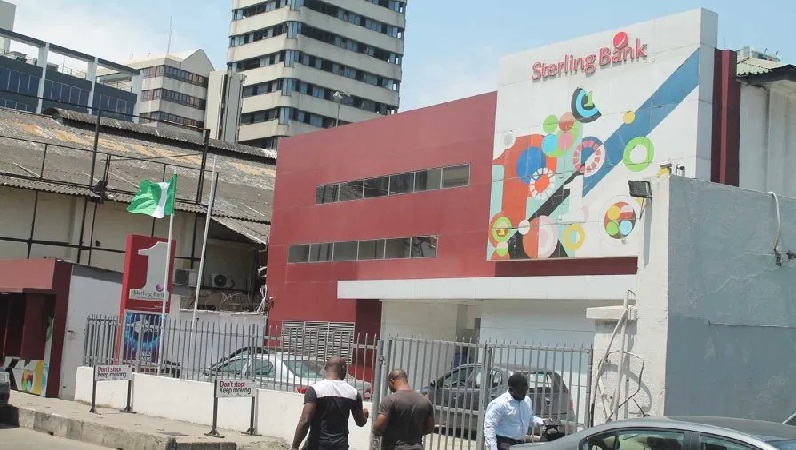
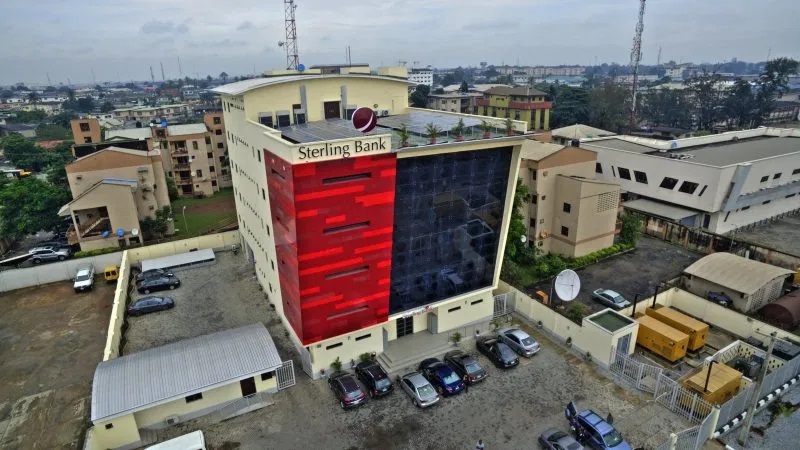
Sterling Bank has got the Central Bank of Nigeria (CBN)’s approval to move from stand-alone commercial bank to a holding company (holdco).The Nation reported that the bank is on the verge of obtaining the final approval to convert to a holding company.

According to the report, Sterling Bank, in accordance with banking regime requirement, has divested from its non-bank subsidiaries. The regime requires banks with non-bank subsidiaries to divest or adopt holdco structure.

Explaining the structure, Sterling Bank CEO, Abubakar Suleiman said the bank’s desire to operate as a holding company was driven by its plan to spin off its non-interest banking window which became operational in January 2014 into an autonomous entity.

He explained that the holdco structure enables the non-interest bank and other non-core businesses achieve greater results based on focused management of the distinct businesses while there would be improved efficiency resulting from the consolidation of key functions such as compliance, risk management and other support functions, yielding improved prospects for individual business growth.

For Sterling Bank, I do not think holdco is the fix it needs. Sterling Bank made N5.4 billion in net profit in H1 2020 when Zenith Bank went home with N104 billion. By the law of business, Sterling has a real challenge ahead as banks become platforms where the strongest could get stronger. Yes, it is a positive continuum now. 

I had proposed years ago for Sterling Bank to buy Paystack, a fintech, when it was cheap. My postulation was based on one thing: a challenger banking institution in Nigeria cannot be a bank using technology, but a tech company that offers banking services. Sterling Bank, standalone or holdco, does not meet the marginal cost acidic test of that tech nativity. And that is the issue.

Sterling Bank Nigeria Gets CBN’s Approval to Convert to A Holding Company

1

Sterling Bank has got the Central Bank of Nigeria (CBN)’s approval to move from stand-alone commercial bank to a holding company (holdco).The Nation reported that the bank is on the verge of obtaining the final approval to convert to a holding company.

According to the report, Sterling Bank, in accordance with banking regime requirement, has divested from its non-bank subsidiaries. The regime requires banks with non-bank subsidiaries to divest or adopt holdco structure.

Explaining the structure, Sterling Bank CEO, Abubakar Suleiman said the bank’s desire to operate as a holding company was driven by its plan to spin off its non-interest banking window which became operational in January 2014 into an autonomous entity.

He explained that the holdco structure enables the non-interest bank and other non-core businesses achieve greater results based on focused management of the distinct businesses while there would be improved efficiency resulting from the consolidation of key functions such as compliance, risk management and other support functions, yielding improved prospects for individual business growth.

Abubakar said Sterling Bank believes the proposed structure incorporates efficiencies around operations and financing efforts that will support the individual businesses in reaching full potential through increased portfolio diversification and improved efficiency among others.

He further explained that the group would also benefit from enhanced corporate governance, which serves to promote a consistent culture across the group and quality of service to customers, thereby facilitating sustainability of earnings.

Suleiman added that the holdco structure would also facilitate better access to capital by leveraging the consolidated financial strength of the group which would have been otherwise difficult for each individual subsidiary company.

“Going into the holding company structure, our desire is to entrench our business model premised on social capitalism where we believe that private sector capital and market-based tools will offer the best types of solutions to Nigeria’s most pressing social and environmental challenges. The holding company gives us the structure to explore our business model further,” he said.

Suleiman explained that the holding company is designed to operate on three major premises of specialization, partnership and digitization.

He said while the conventional bank will focus on building skills and using technology to provide solutions in the areas that are critical to development in the country including health, education, agriculture, renewable energy, transportation (HEART), the non-interest bank will focus on building partnerships that connect individuals and businesses leveraging technology to create business optimization while solving for individual daily financial need.

“The overall business will focus on social impact, corporate responsibility and religious compliance in its dealings. Our digitization drive will create an enabling environment for both financial institutions to grow while providing services and support to build efficiencies in different ecosystems. The execution of our plans is fully dependent on our interwoven operating model of agility, specialization and digitization,” he said.

Recent changes by the CBN, including the downward review of their charges for account maintenance on deposit money, have impacted the revenue generation of some Nigerian banks.

Sterling Bank is among the banks affected badly by the impact of the apex bank’s decision. Compared to its revenue in Q2 2019 (N4.1bn), the bank lost nearly half of its revenue (N2.4b) in the Q2 of 2020. For the first half of 2020, Sterling Bank made N5.4 billion in profit, below what it made (N5.7bn) in the same period in 2019.

However, the bank also went above the benchmark to record a loan to deposit ratio of 68.2% in Q2 of 2020, and met capital and liquidity requirements at 15.2% and 33.5% respectively.

The strains of COVID-19 pandemic took a toll on the financial industry, plummeting gains and prospects. But Sterling Bank’s Tier-2 improved its income by 9.6% between Q1 and Q2 despite the challenges. However, high interest rates became an obstacle that cannot be overlooked.

Naira Metrics reported that Sterling’s proportion of interest expense to interest income is at 40.9%, which provides insight that the Tier-2 bank failed to generate sufficient cheap deposits and borrowings to run the bank’s business with.

These developments of losses, including the need for digitization, emphasized the need for diversification for Sterling, and going ‘holdco’ which has been in the pipeline was hastened.